Color recognition Adding up to 50 Worksheets for Ages 8-9
3 filtered results
-
From - To
Discover the fun and educational "Color Recognition Adding up to 50 Worksheets" tailored for children ages 8-9! These engaging worksheets combine crucial math skills with colorful, visually appealing designs to enhance learning. Students will practice addition, strengthen their color recognition abilities, and improve their overall math proficiency through interactive exercises. Each worksheet is designed to captivate young learners and make math enjoyable. Watch as your child flourishes in their confidence and skills while exploring numbers up to 50 and identifying vibrant colors. Perfect for home or classroom use, these worksheets provide a comprehensive and joyful learning experience. Start their mathematical journey today!
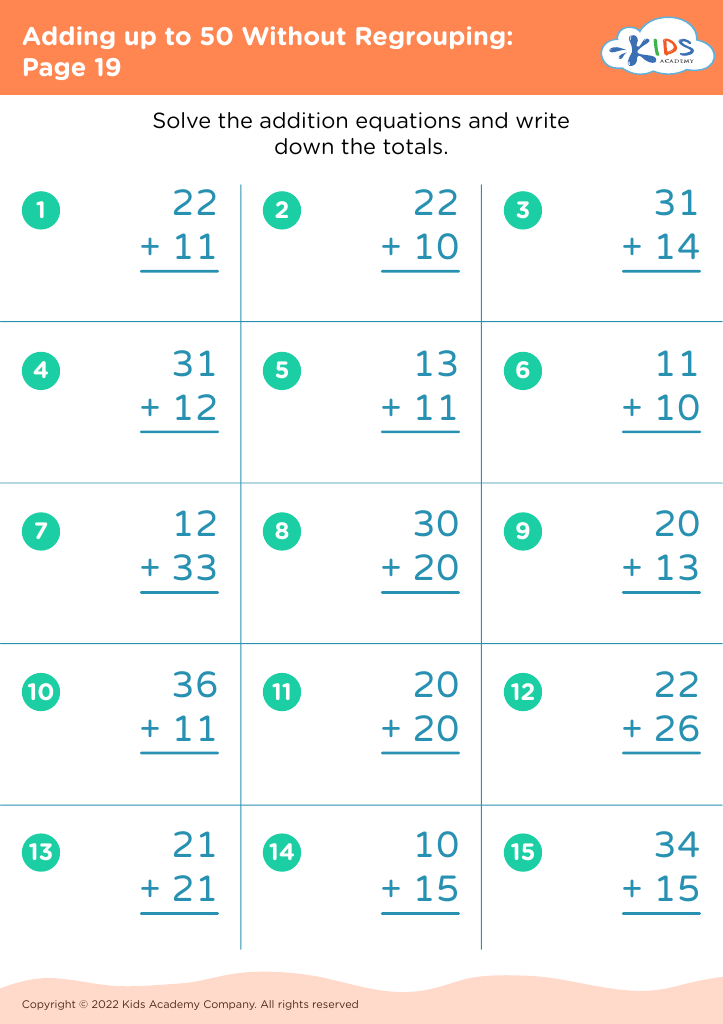
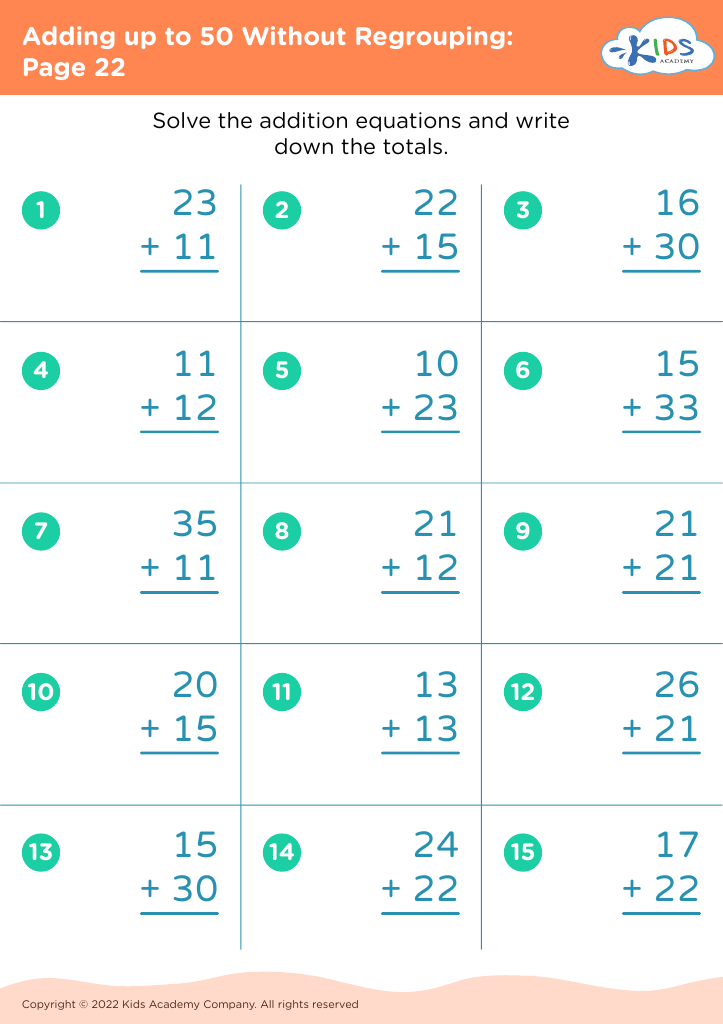
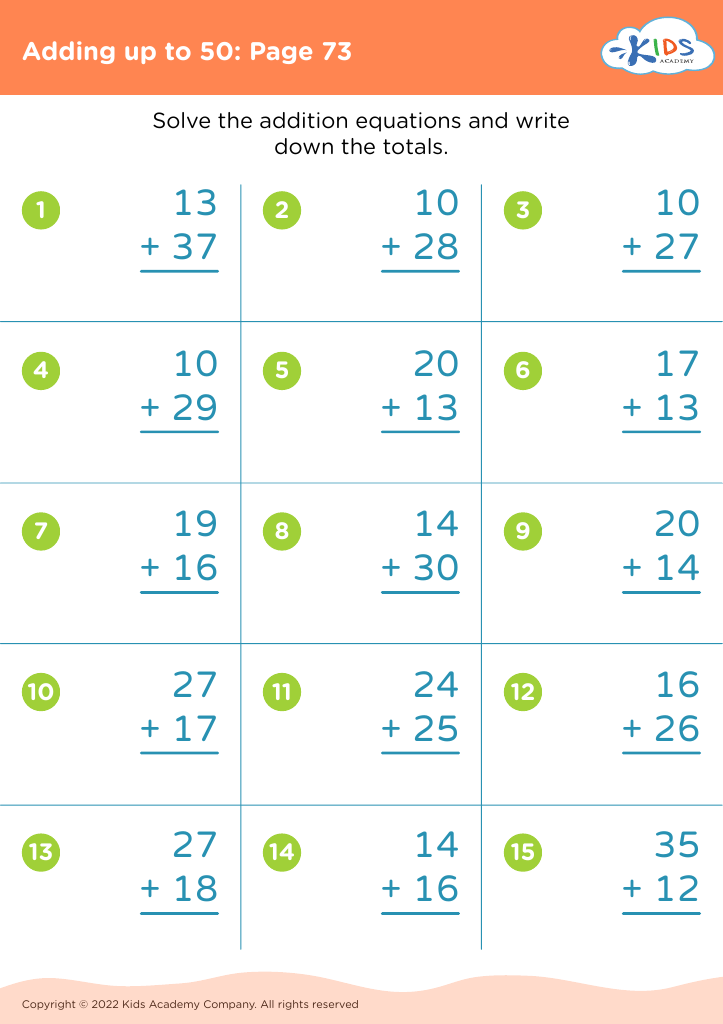




Color recognition and mathematics skills, such as adding up to 50, are vital components of a child's development between the ages of 8 and 9. Firstly, color recognition enables children to engage more holistically with their environment, enhancing their ability to distinguish between different objects and making learning more interactive and enjoyable. As they explore different colors, children develop their observational skills, which are essential for critical thinking and creativity.
Moreover, mastering addition up to 50 is crucial for building a strong mathematical foundation. At this age, children begin to move from simple arithmetic to more complex problem-solving skills. Knowing how to add efficiently supports their confidence and prepares them for future math concepts, including multiplication and division.
By connecting color recognition activities with math exercises, parents and teachers can create integrated learning experiences that are both fun and educational. For instance, using color-coded items during math lessons can help children visualize and comprehend addition more effectively. This approach fosters engagement while reinforcing the idea that learning is multifaceted. Ultimately, promoting these skills helps children develop essential cognitive abilities, laying the groundwork for success in both academic and everyday contexts.








