Compare fractions Adding up to 50 Worksheets for Ages 8-9
3 filtered results
-
From - To
Discover our engaging "Compare Fractions Adding Up to 50 Worksheets" designed specifically for children aged 8-9! These educational resources provide a fun and interactive way for young learners to enhance their fraction comparison skills while tackling addition problems that total up to 50. Each worksheet encourages critical thinking and reinforces math concepts through visually appealing activities. Perfect for teachers and parents, these printable worksheets create an ideal learning environment both in the classroom and at home. With step-by-step instructions and vibrant visuals, students will develop confidence in their math abilities. Explore our collection and watch your child excel in fractions today!
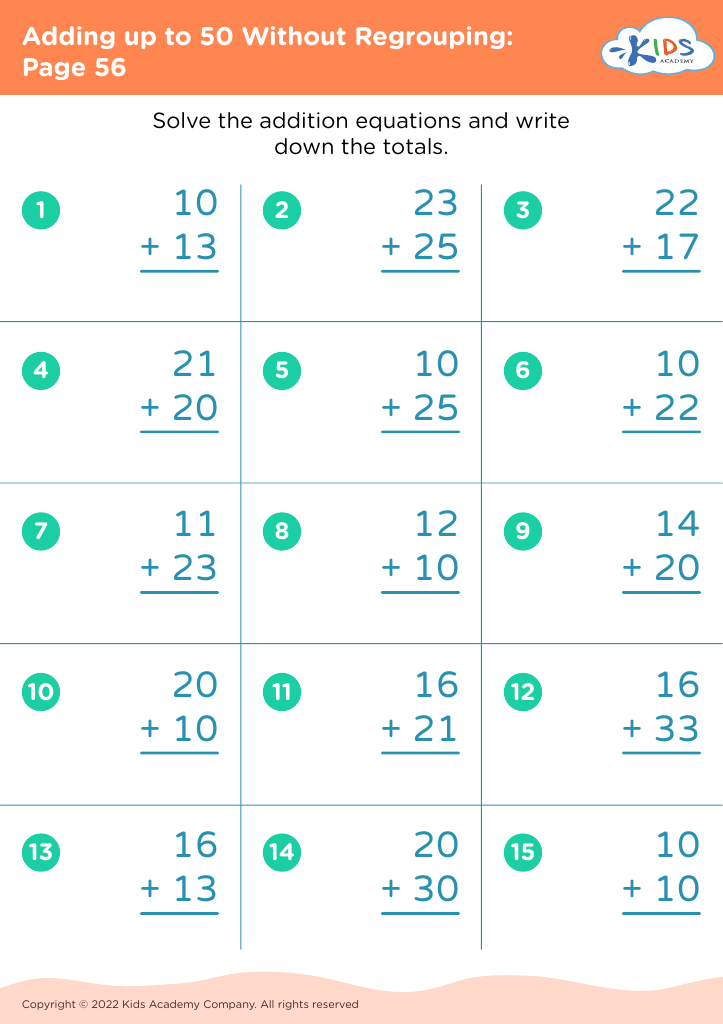
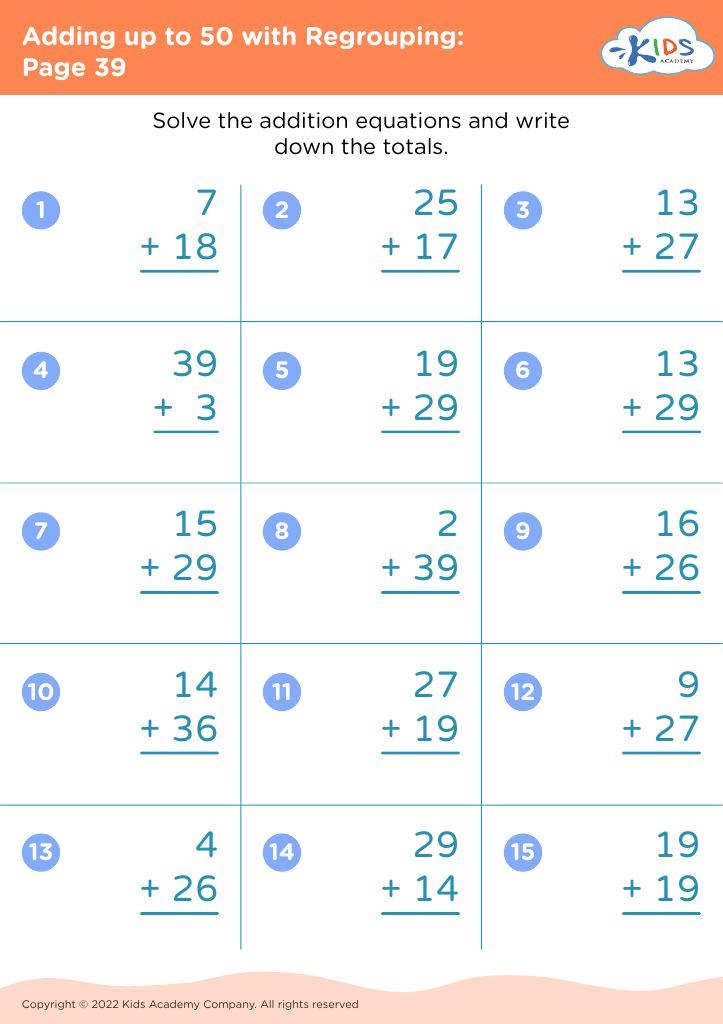
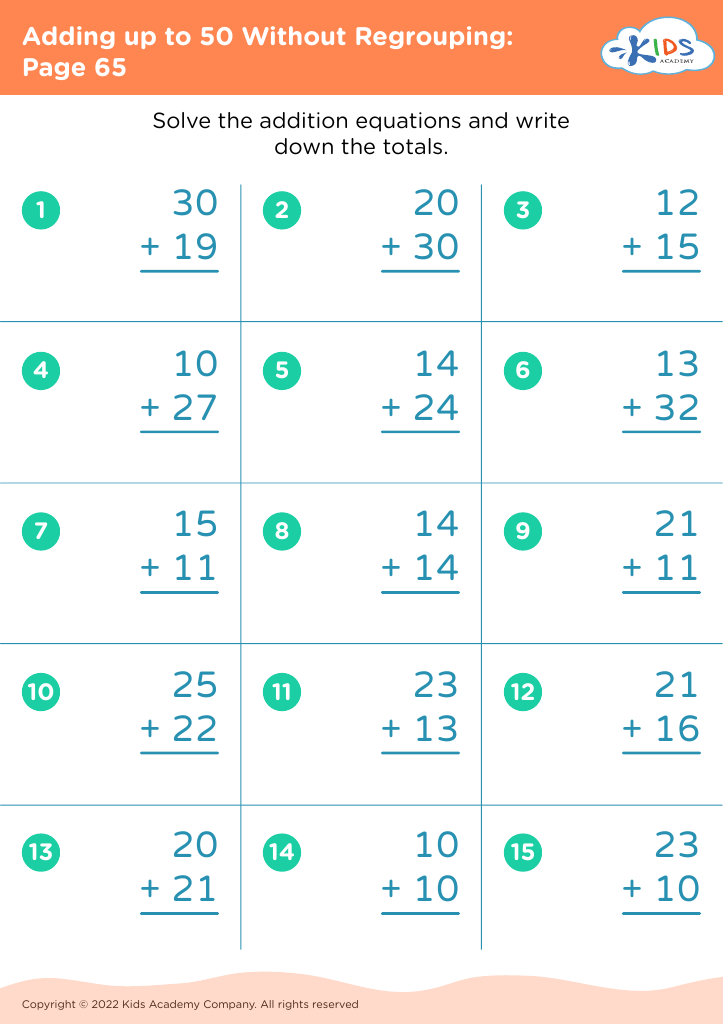




Teaching children to compare fractions, especially when adding up to 50, is crucial for several reasons. First, understanding fractions is a foundational math skill that supports future learning in diverse areas, including algebra and geometry. For ages 8-9, mastering comparing fractions helps them build confidence in their mathematical abilities, fostering a positive attitude towards learning.
Engaging with fractions enhances critical thinking and problem-solving skills, as students learn to assess different fractional values. When children practice adding fractions that total up to 50, they develop number sense and a deeper comprehension of how numbers interact.
Moreover, fractions are relevant in real-world contexts—cooking, shopping, and sharing equally—all situations where children will encounter fractions. When parents and teachers emphasize these skills in their curriculum, they prepare children to make informed decisions, ensuring they can handle practical tasks with ease.
Finally, by investing time in understanding fractions, parents and teachers can greatly aid children in developing a foundational skill set essential for academic success, thereby impacting their overall educational journey positively.








