Comparing Fractions Adding up to 50 Worksheets for Ages 8-9 - Page 2
30 filtered results
-
From - To
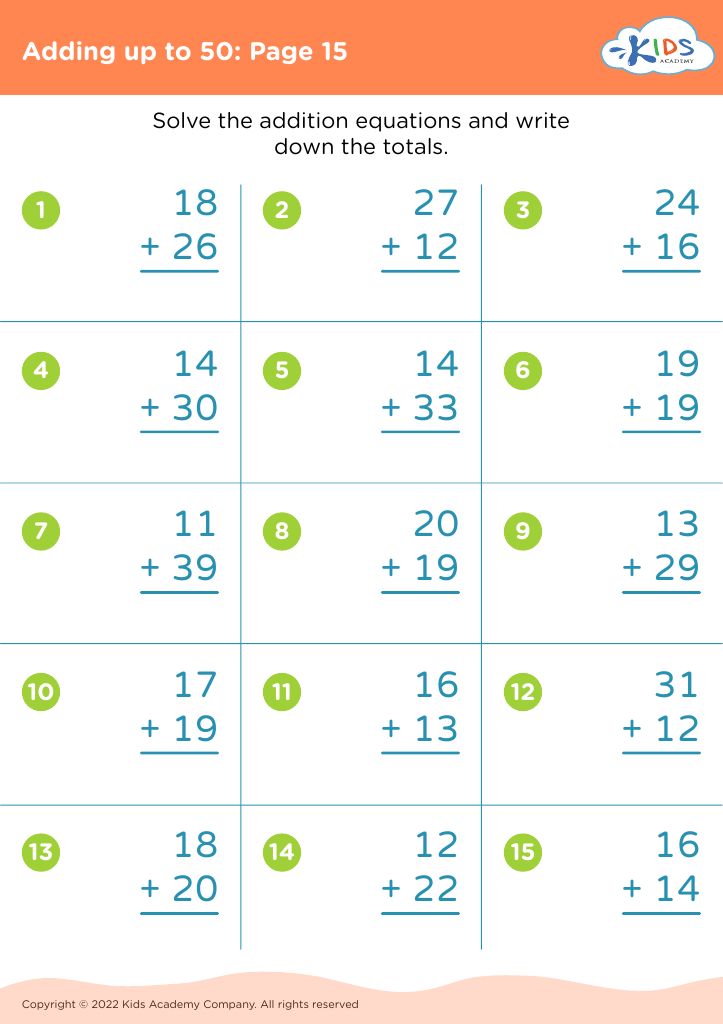
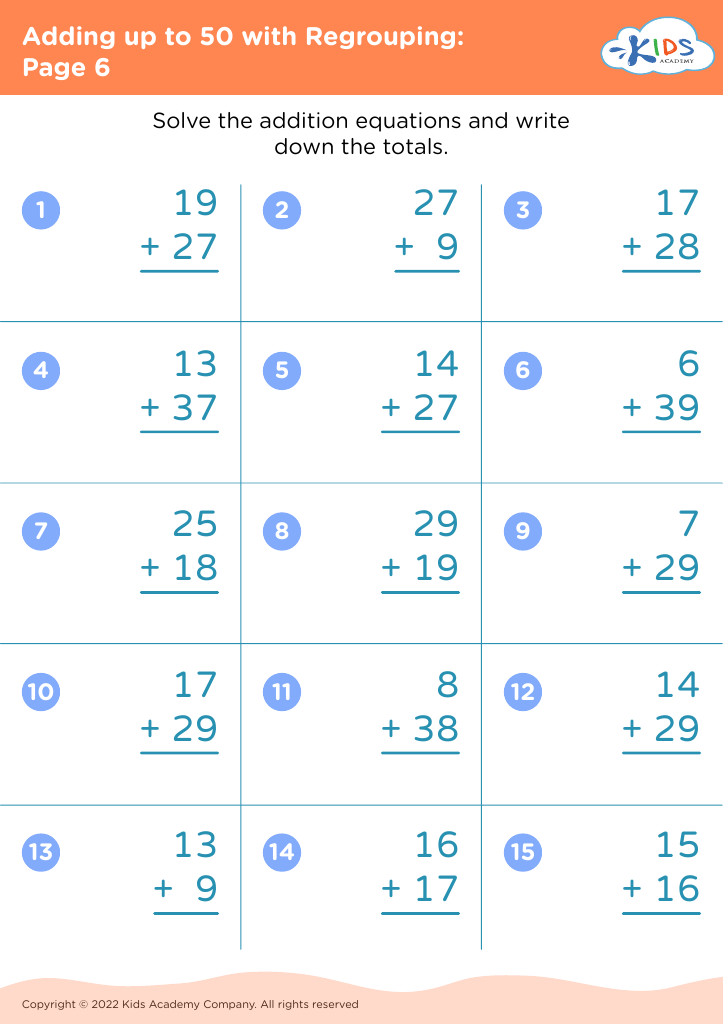
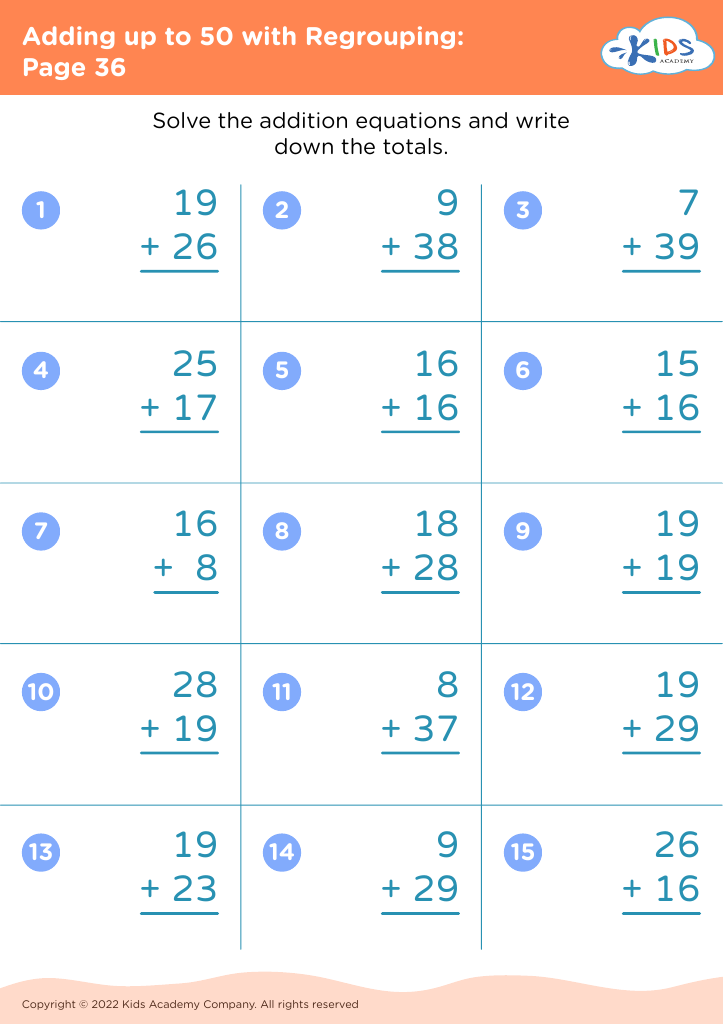
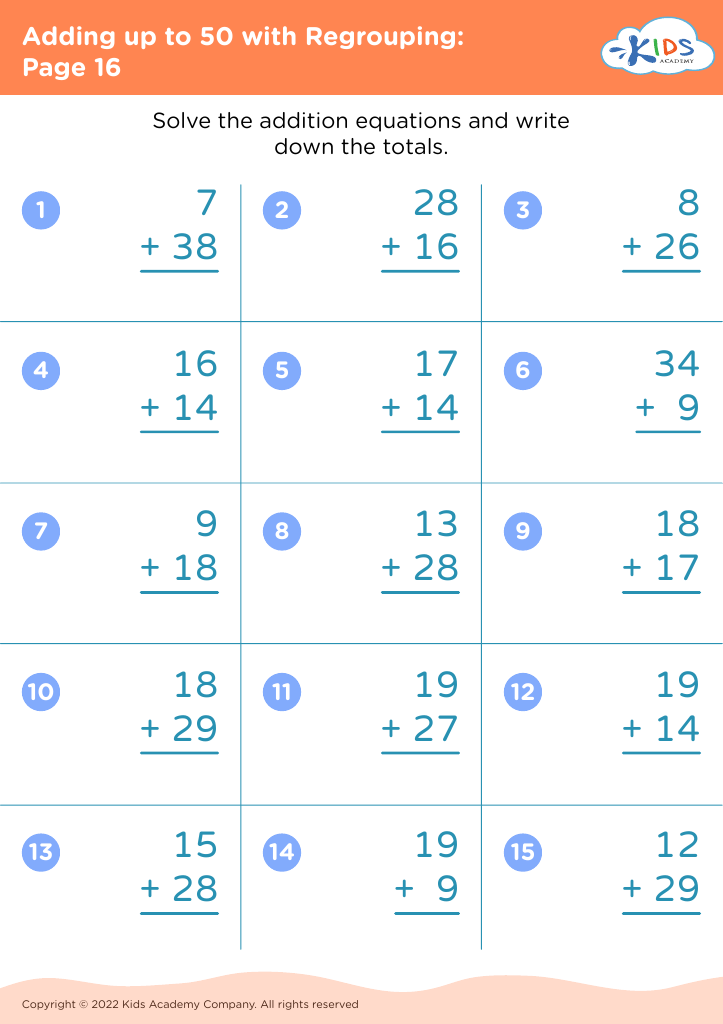
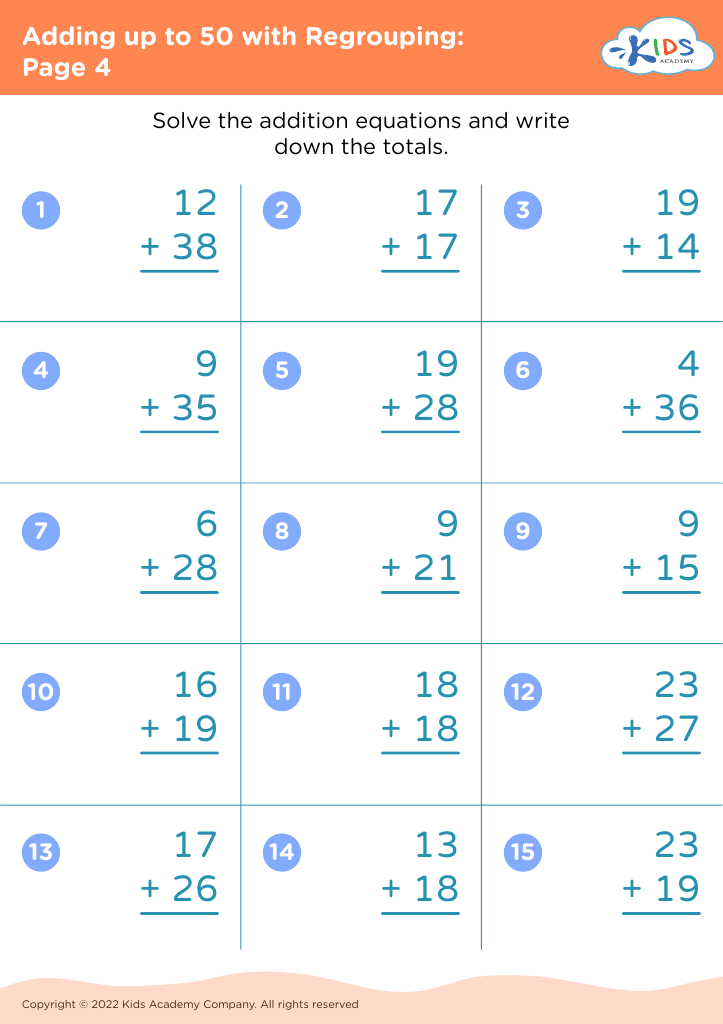
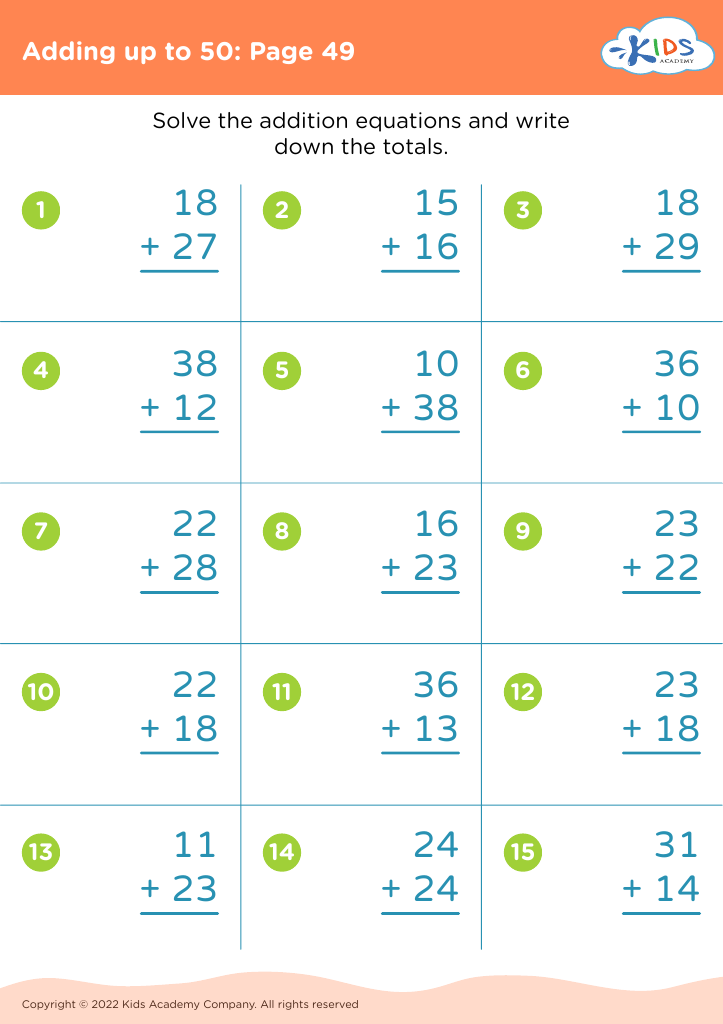




Comparing fractions, particularly when the sum is 50, is crucial for 8-9-year-olds as it lays the foundation for strong mathematical understanding. At this stage, children are developing their ability to comprehend numerical relationships, which is an essential skill in problem-solving. Understanding how to compare fractions enhances their ability to make sense of concepts like 'greater than' or 'less than,' which are foundational for future mathematics, including algebra and data analysis.
For parents and teachers, facilitating the mastery of comparing fractions can also stir interest and engagement in mathematics. It encourages children to visualize fractions, assess values accurately, and develop strategies for establishing relationships between numbers. This skill not only builds confidence but also fosters critical thinking and decision-making skills.
Furthermore, real-world applications arise from this knowledge, such as cooking measurements or managing expenses, making fractions relatable and practical. Equals fractions maturity bolster their overall academic success and set the stage for higher-level math concepts in the later grades. Therefore, investing time in comparing fractions equips students with essential skills that transcend the classroom, ultimately shaping their overall cognitive development and future career possibilities.








