Fraction comparison Adding up to 50 Worksheets for Ages 8-9
7 filtered results
-
From - To
Discover our engaging "Fraction Comparison Adding up to 50 Worksheets" designed specifically for children ages 8-9. These worksheets foster essential math skills by helping kids understand and compare fractions in a fun and interactive manner. With a variety of exercises focusing on adding fractions together to reach a total of 50, children will strengthen their mathematical reasoning and problem-solving abilities. Each worksheet features colorful visuals and clear instructions, making it easy to incorporate into daily learning routines. Perfect for both classroom settings and home practice, these worksheets provide an excellent way to build confidence and proficiency in fraction comparison. Get started today!
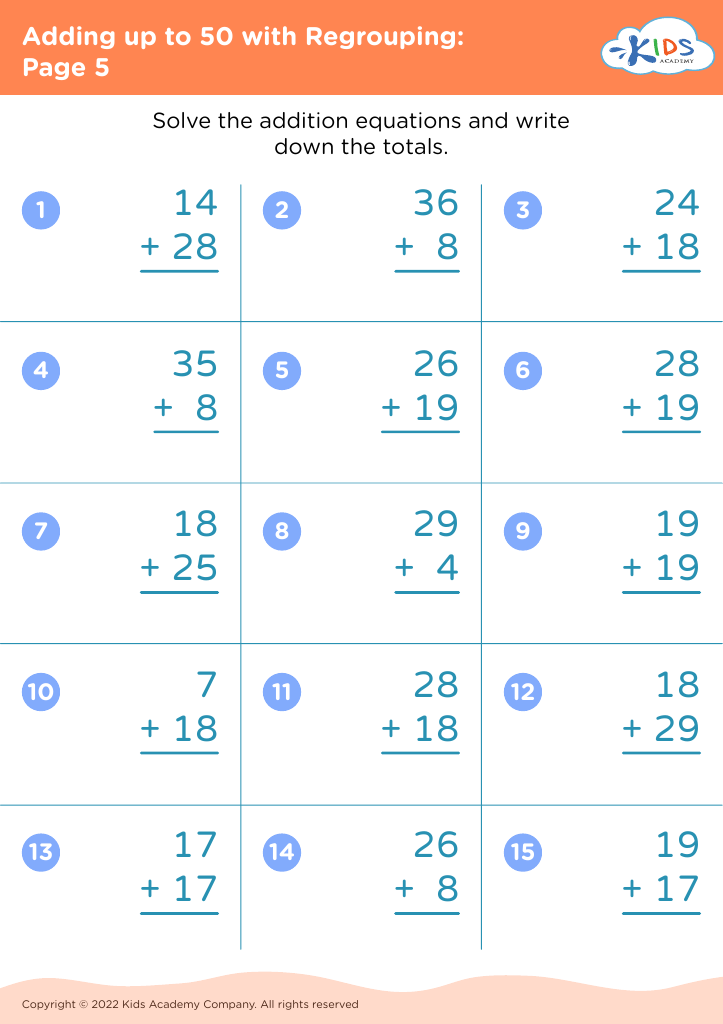
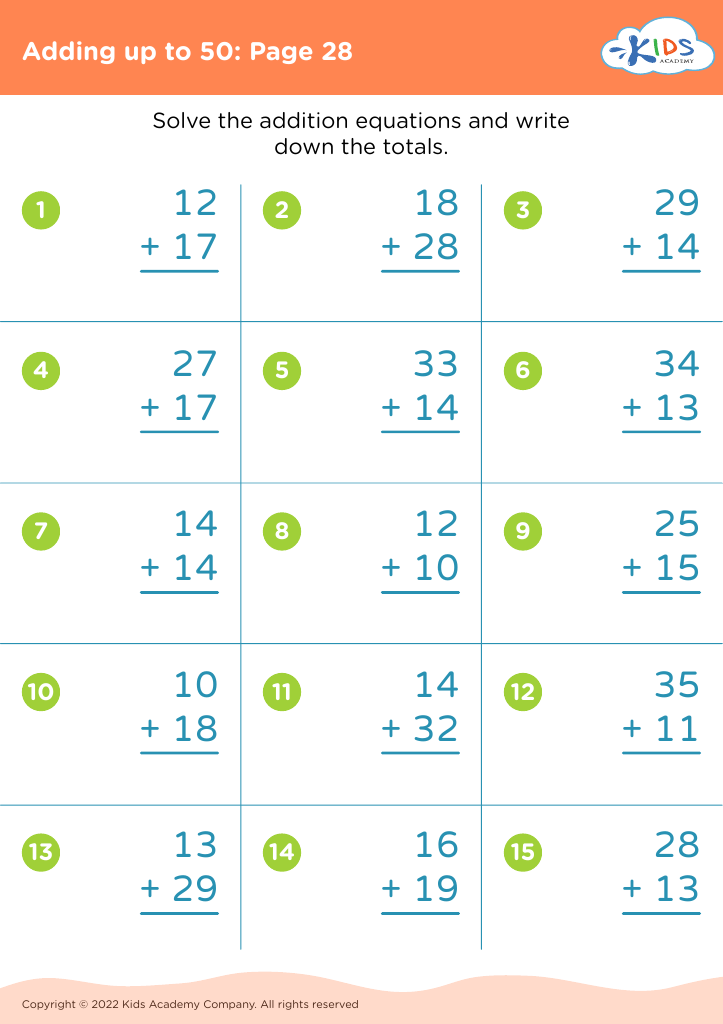
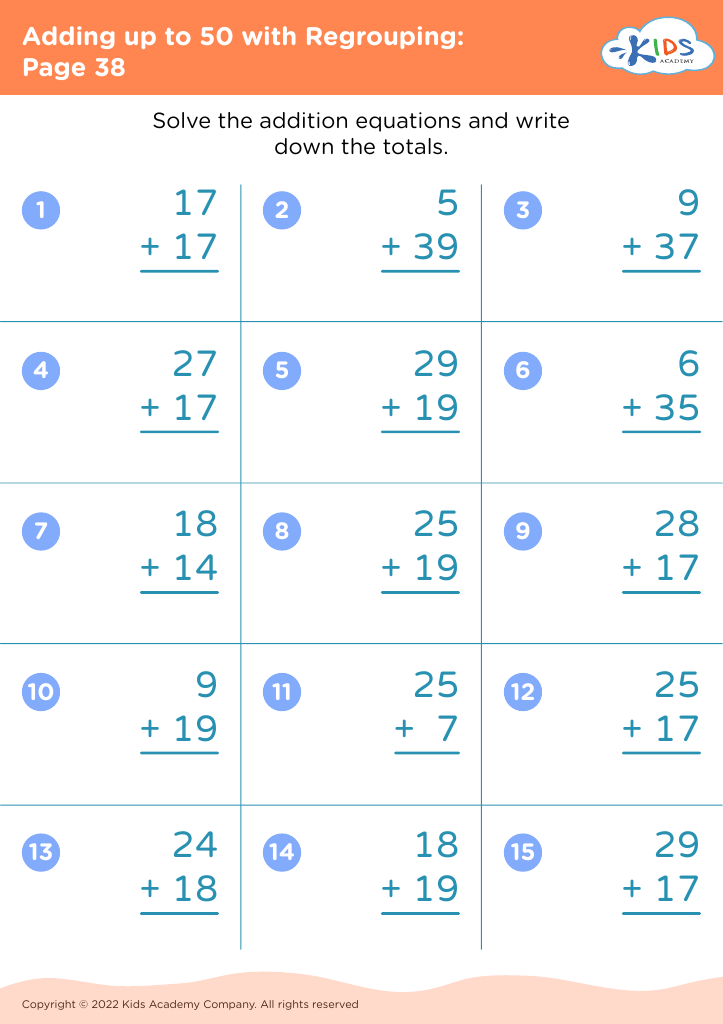
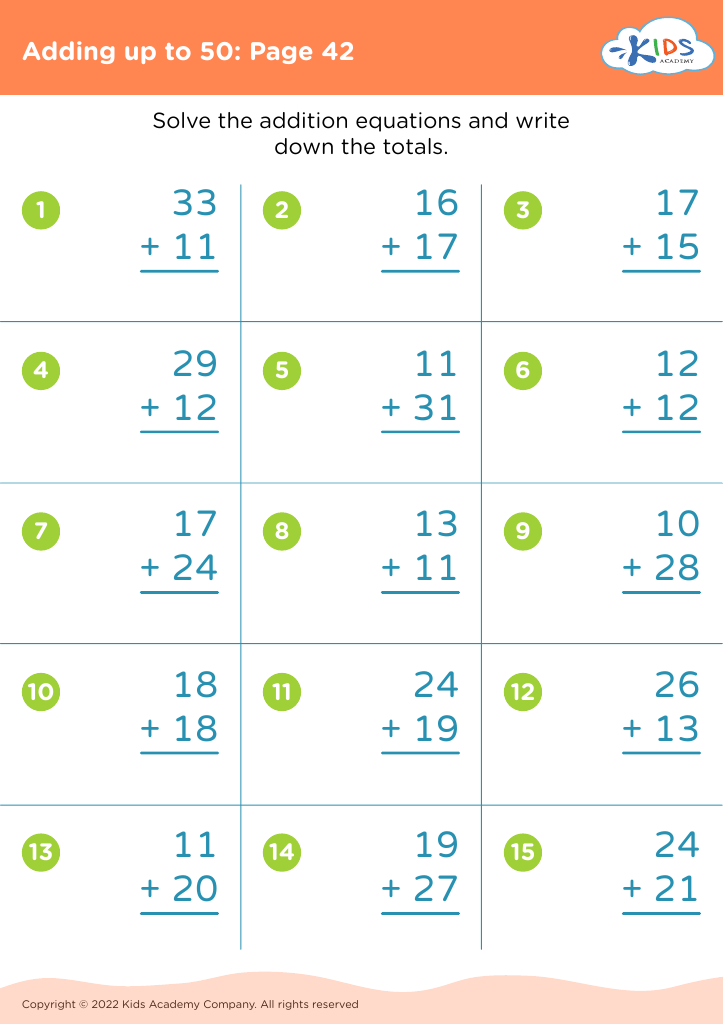
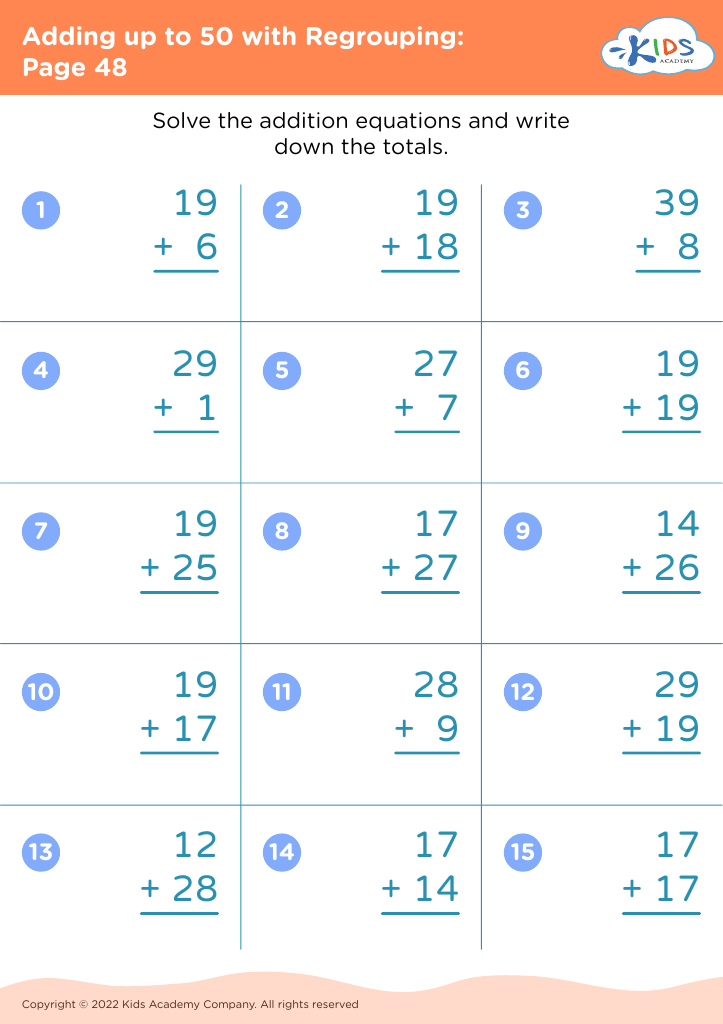
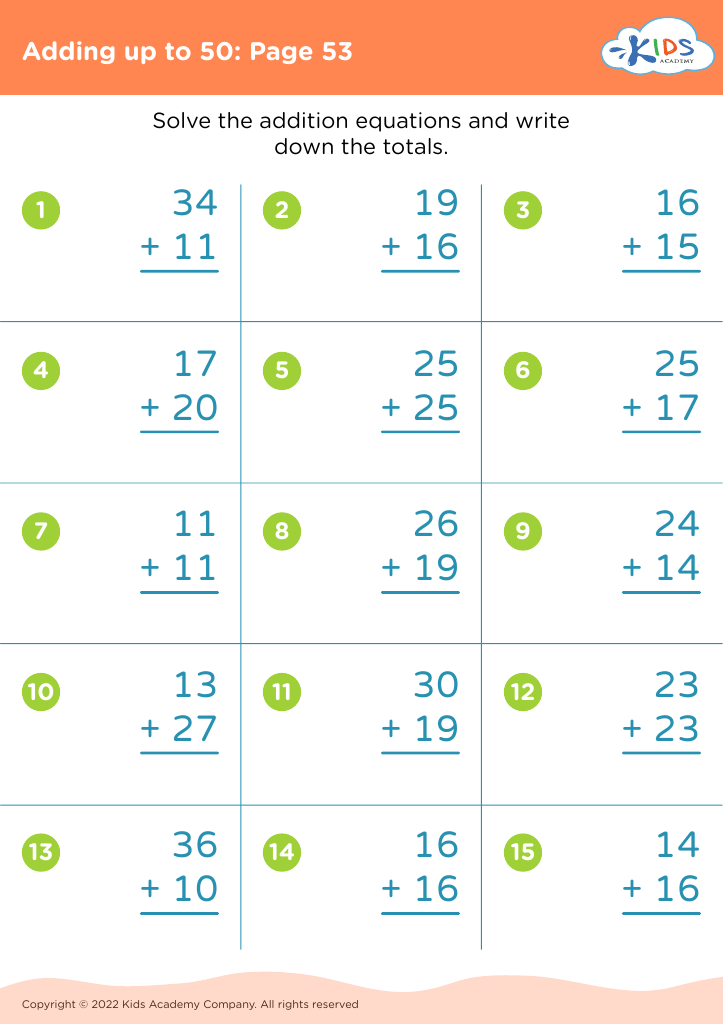
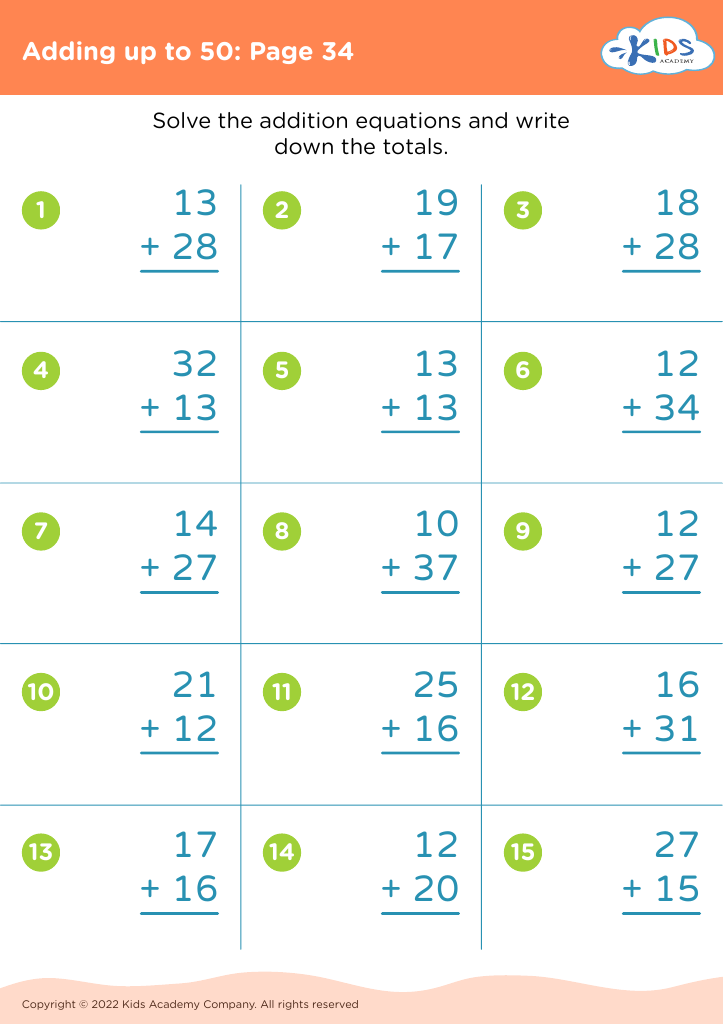




Understanding fraction comparison is crucial for children aged 8-9, particularly when it involves adding up to 50. At this age, students are starting to develop their mathematical reasoning and problem-solving skills, which are foundational for higher mathematics. Teaching them how to compare fractions helps them grasp the concept of size and value in relation to different quantities.
By learning to manipulate fractions, children also build a strong foundation for understanding ratios, rates, and proportions—skills that they will use in real-life situations such as cooking, shopping, and budgeting. This understanding fosters critical thinking and enhances their ability to communicate mathematical ideas effectively.
Engaging kids in fraction comparison activities encourages precision and attention to detail, which are essential skills in any academic discipline. Additionally, this knowledge is vital for team-based math projects, reinforcing social skills and cooperative learning.
Finally, parents and teachers serve as role models; showcasing enthusiasm and support for mathematics can foster a lifelong love of learning, confidence, and resilience in students. Fostering these skills will prepare children for future academic challenges and help them navigate the complexities of everyday life.








