Fraction identification Adding up to 50 Worksheets for Ages 8-9
3 filtered results
-
From - To
Welcome to our engaging "Fraction Identification: Adding up to 50 Worksheets" designed for children aged 8-9. These worksheets aim to enhance students' understanding of fractions and their practical applications in addition problems totaling up to 50. With a variety of exercises, kids will practice identifying and working with fractions in fun and interactive ways. This resource supports foundational math skills, fostering critical thinking and problem-solving abilities. Perfect for classroom use or at-home learning, these worksheets encourage exploration and mastery of fractions while maintaining an enjoyable learning environment. Discover the joy of learning fractions through our thoughtfully crafted activities!
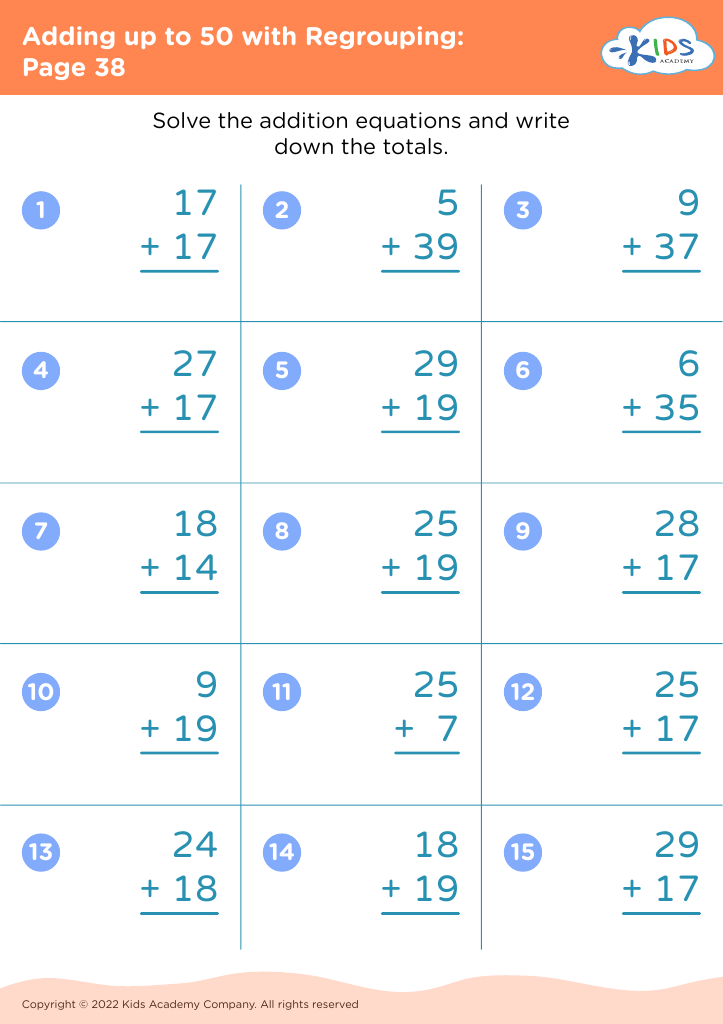
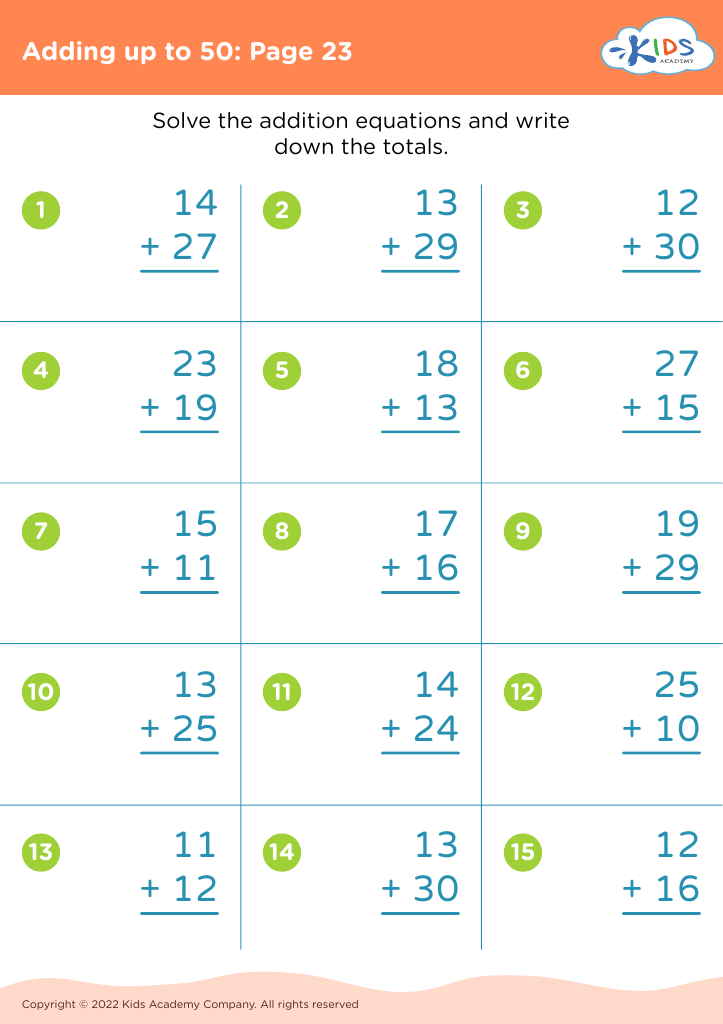
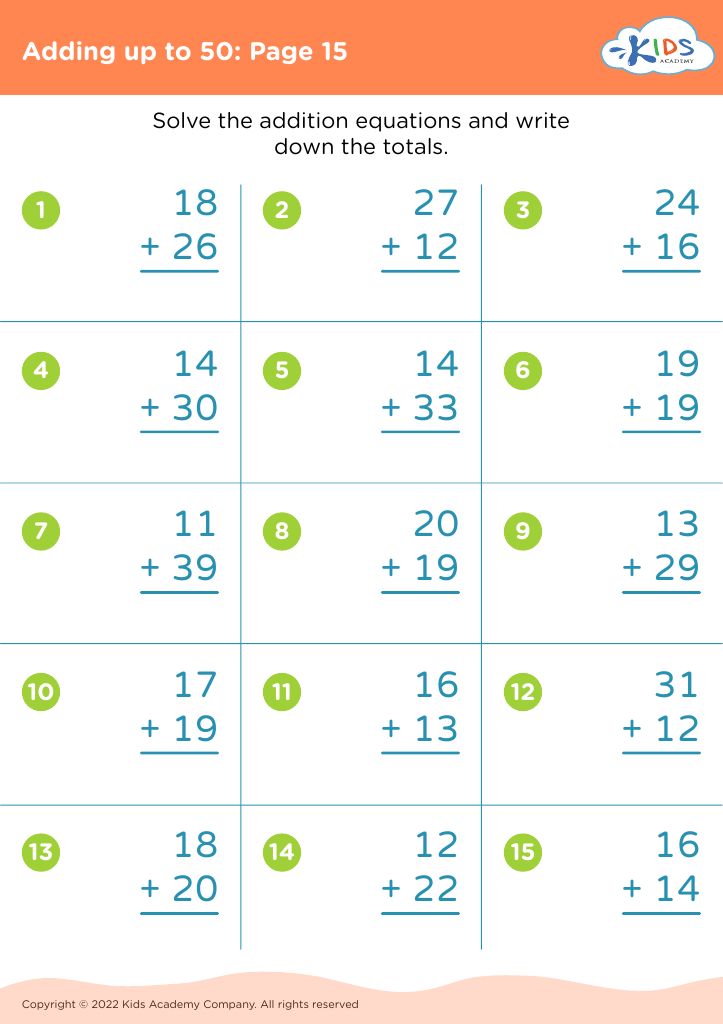




Understanding fractions and mastering addition within the context of fractions are crucial skills for children aged 8-9. At this developmental stage, children are transitioning from basic arithmetic to more complex mathematical concepts, making it essential to grasp the fundamentals of fractions. This knowledge lays the groundwork for future learning in higher mathematics.
Parents and teachers should care about fraction identification and adding them up to 50 because these skills enhance critical thinking and problem-solving abilities. When students understand fractions, they can better approach real-life scenarios that require measurement, division, and resource sharing. This capability promotes confidence and a positive attitude toward math.
Moreover, mastering these concepts can aid in identifying learning difficulties early, allowing for timely intervention. Fractions are foundational for more advanced math topics of middle and high school, such as algebra and ratios, so ensuring students have a firm grasp of fractions can set them up for success.
Incorporating engaging activities and real-world examples can make the learning process enjoyable, fostering a love for mathematics. By focusing on these skills, parents and teachers not only support academic achievement but also equip children with practical tools they can utilize in daily life.








