Filters

20 filtered results

Clear all filters
Favorites
With answer key
Interactive

20 filtered results

Difficulty Level

Grade


Discover our "Fraction Simplification Adding Up to 50 Worksheets" designed specifically for children ages 8-9. These engaging resources help young learners grasp the essential skill of simplifying fractions while practicing addition up to 50. Our worksheets feature colorful, interactive exercises that make math fun and intuitive, guiding students through step-by-step problem-solving techniques. Perfect for classroom activities or at-home learning, our worksheets foster critical thinking and enhance arithmetic abilities. Watch your child build confidence in their math skills as they manipulate fractions and develop a strong foundation for future mathematical concepts. Download your worksheets today and make math a delightful experience!
Check out this FREE Trial Lesson on Adding up to 50 for age 8-9!

A

Favorites
With answer key
Interactive
  • 8-9
  • Fraction simplification
  • Adding up to 50
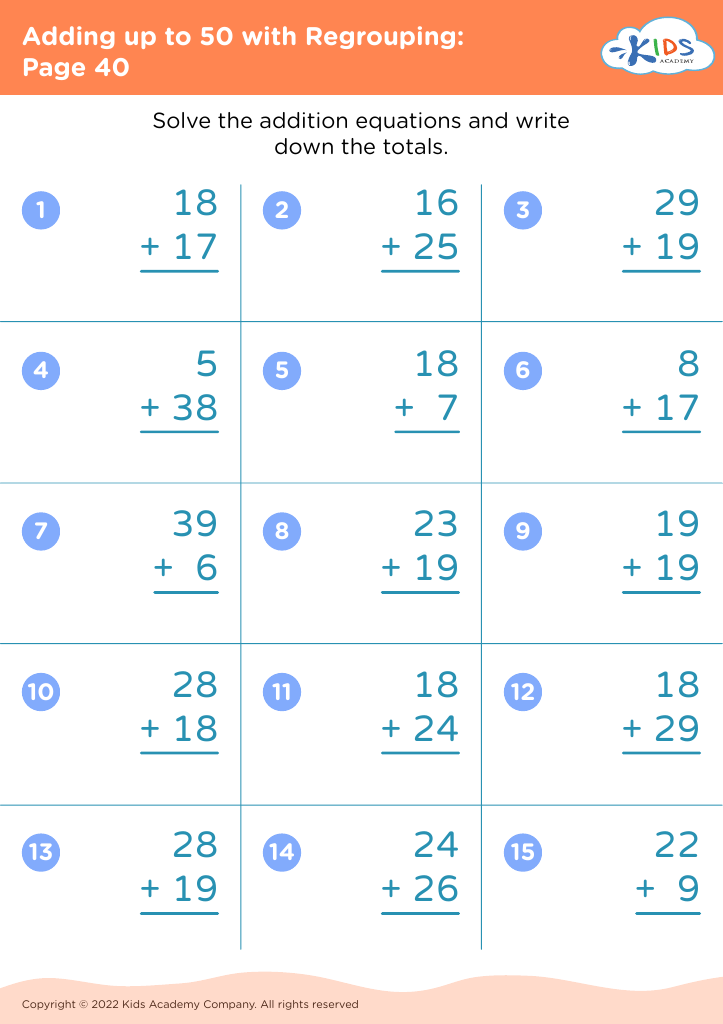
Adding up to 50 with Regrouping: Page 40
Worksheet
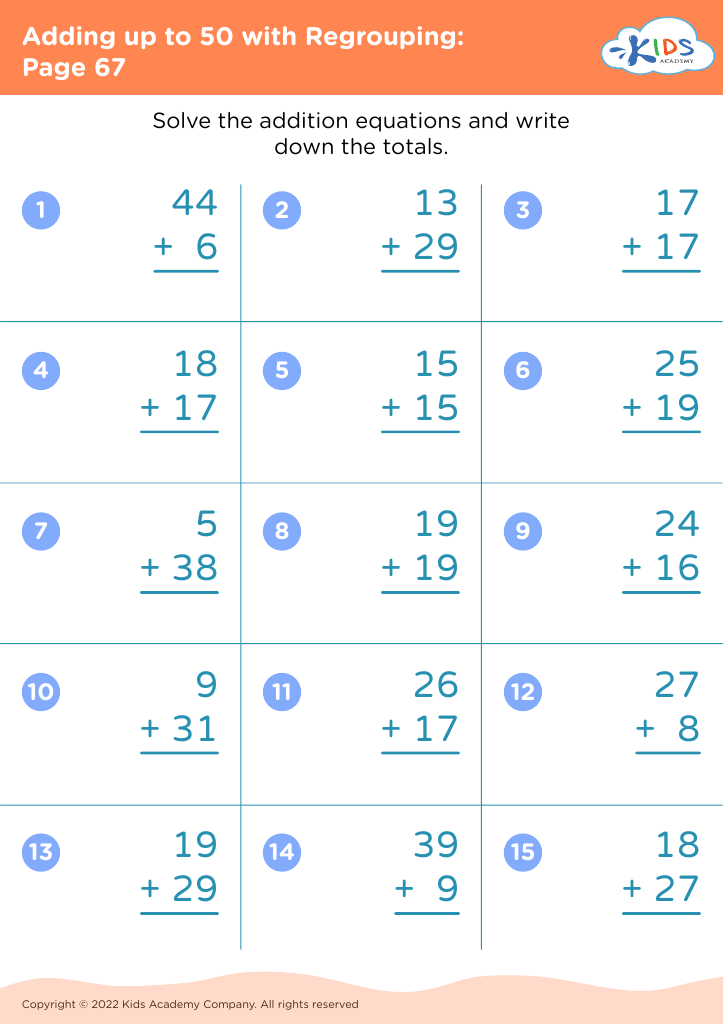
Adding up to 50 with Regrouping: Page 67
Worksheet
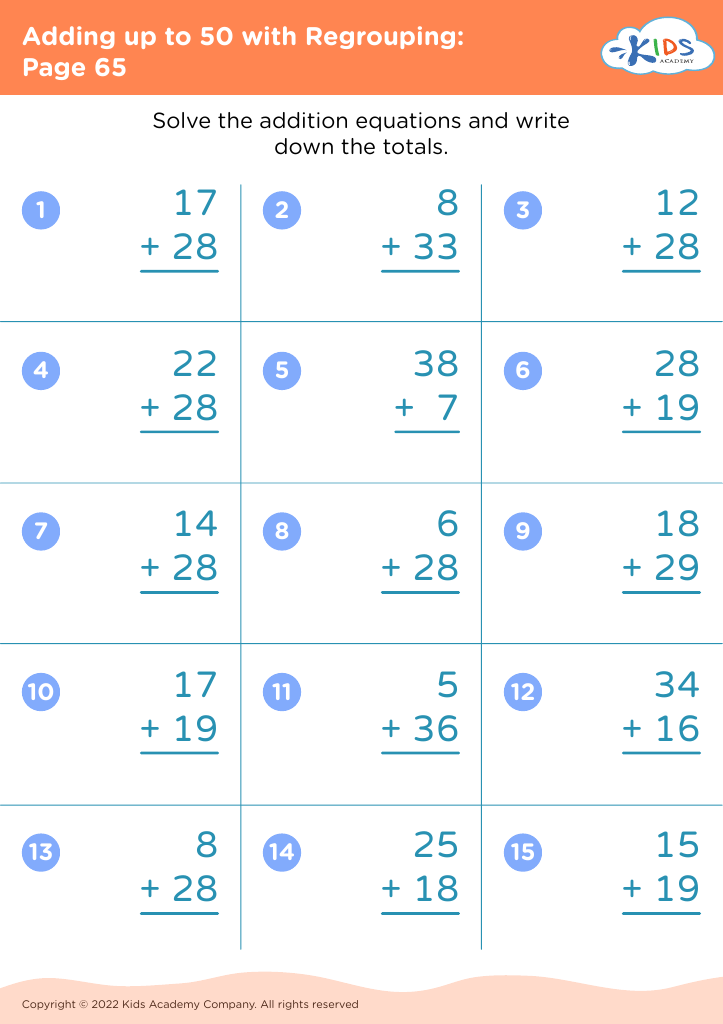
Adding up to 50 with Regrouping: Page 65
Worksheet
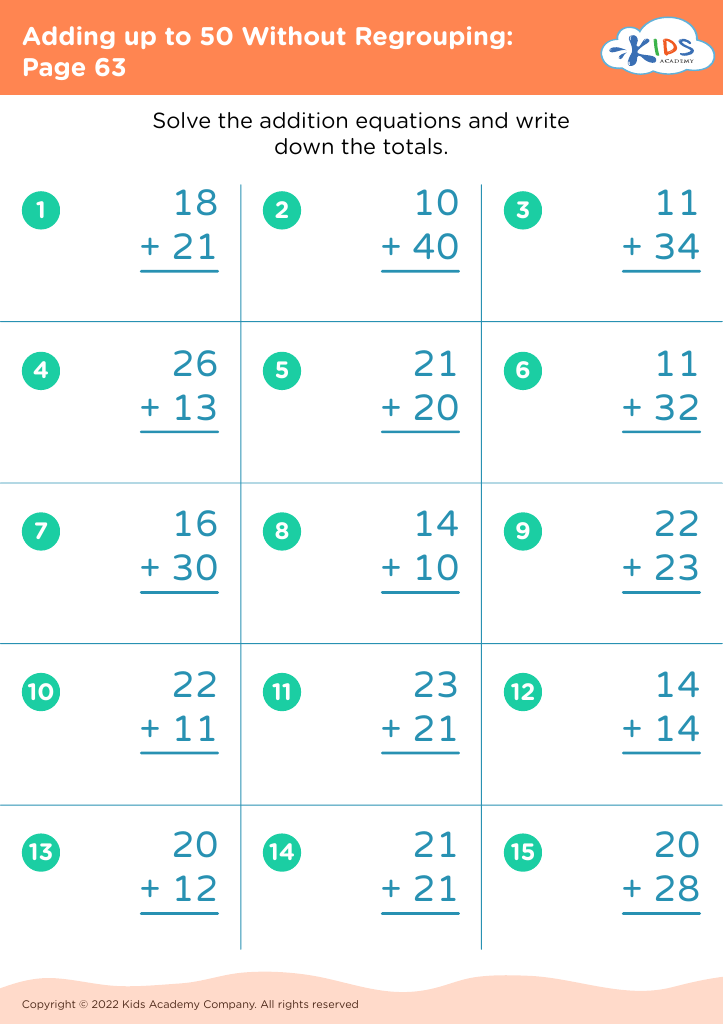
Adding up to 50 Without Regrouping: Page 63
Worksheet
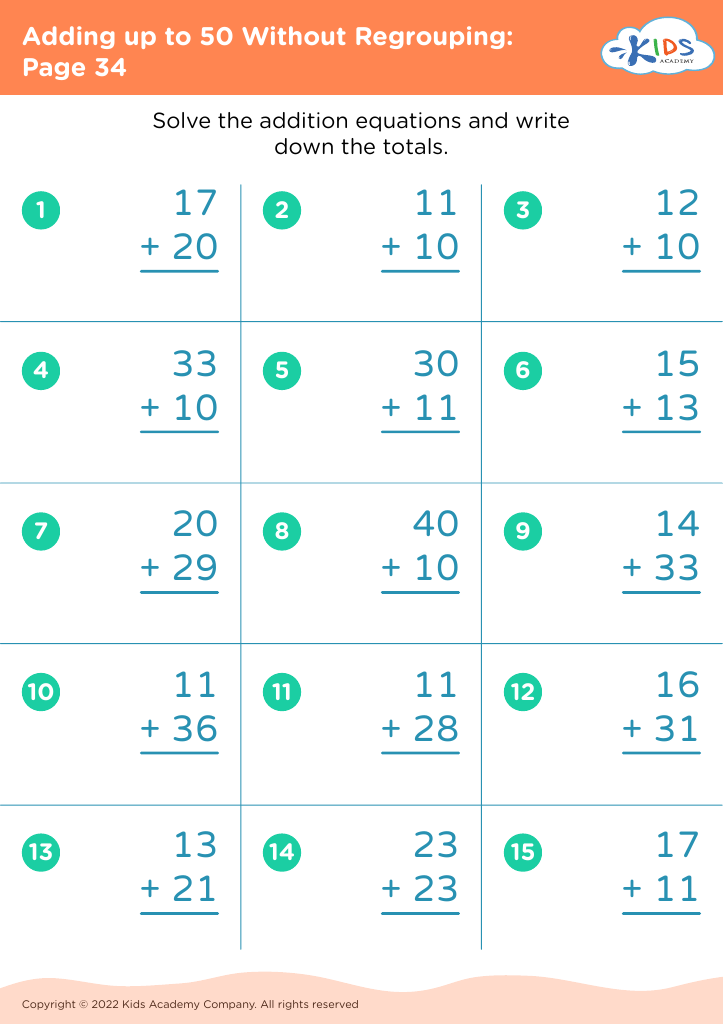
Adding up to 50 Without Regrouping: Page 34
Worksheet
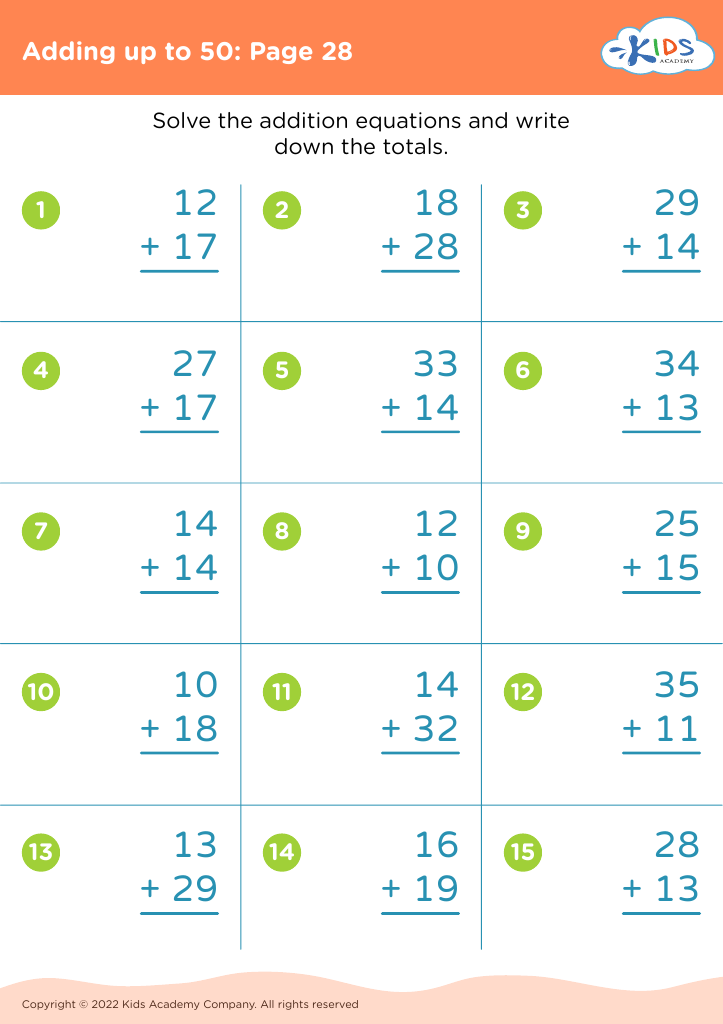
Adding up to 50: Page 28

Adding up to 50: Page 28

Adding up to 50: Page 28
Worksheet
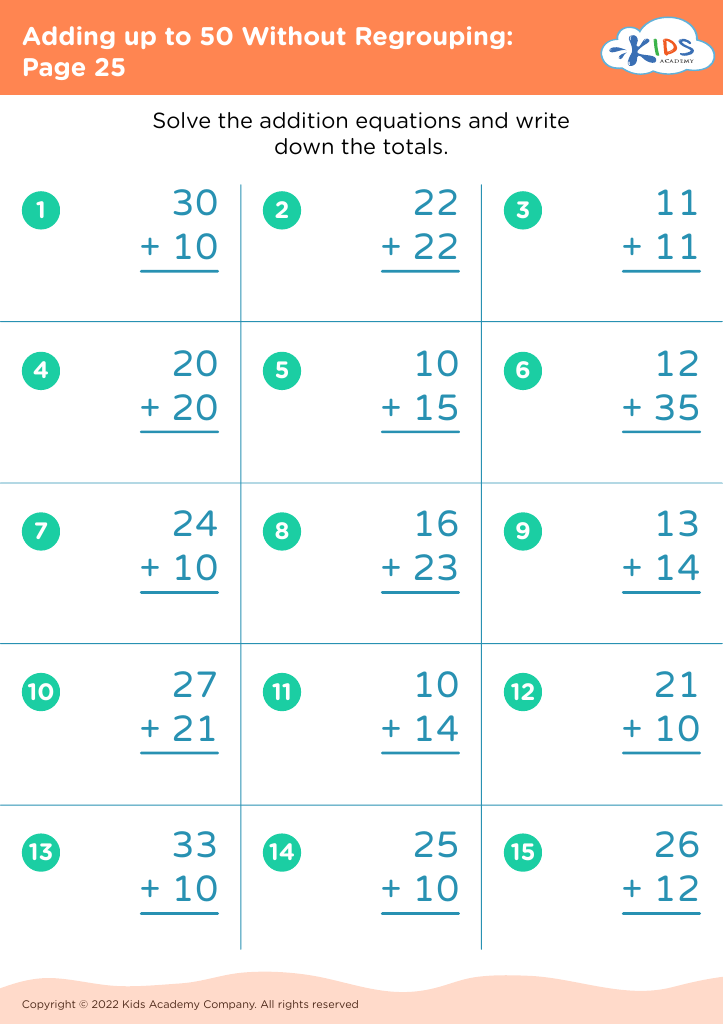
Adding up to 50 Without Regrouping: Page 25
Worksheet
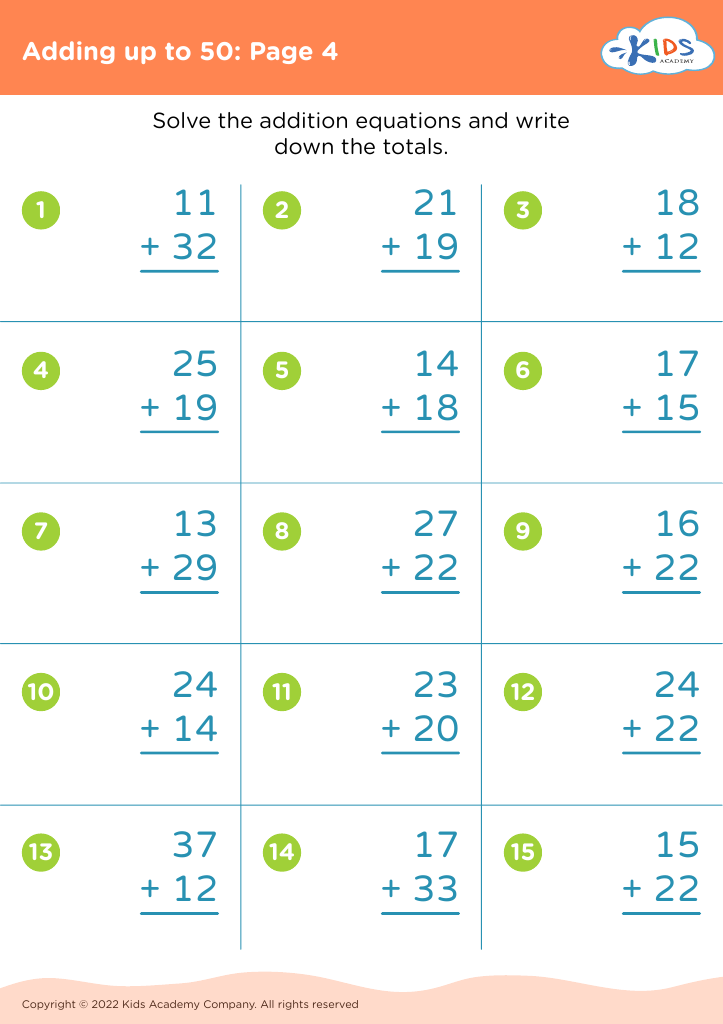
Adding up to 50: Page 4

Adding up to 50: Page 4

Adding up to 50: Page 4
Worksheet
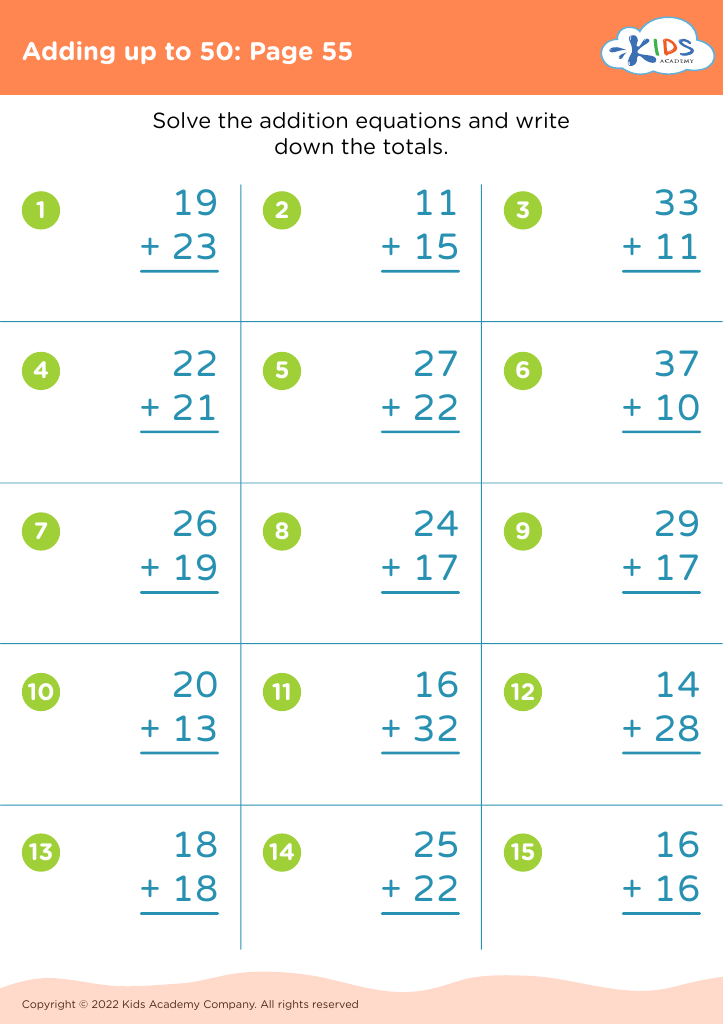
Adding up to 50: Page 55

Adding up to 50: Page 55

Adding up to 50: Page 55
Worksheet
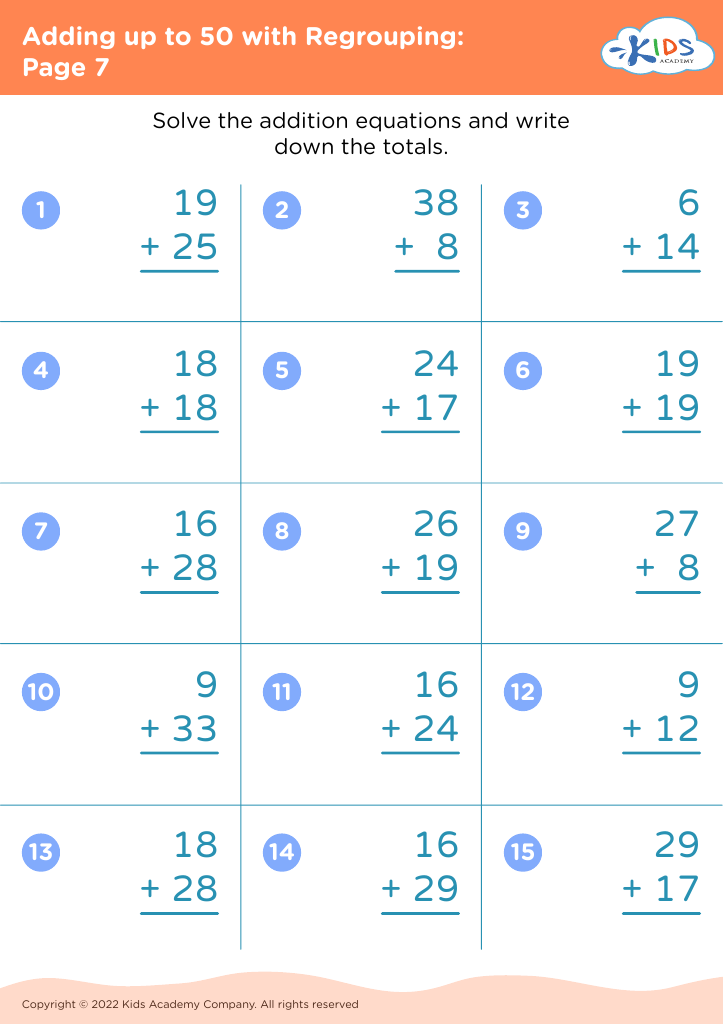
Adding up to 50 with Regrouping: Page 7
Worksheet
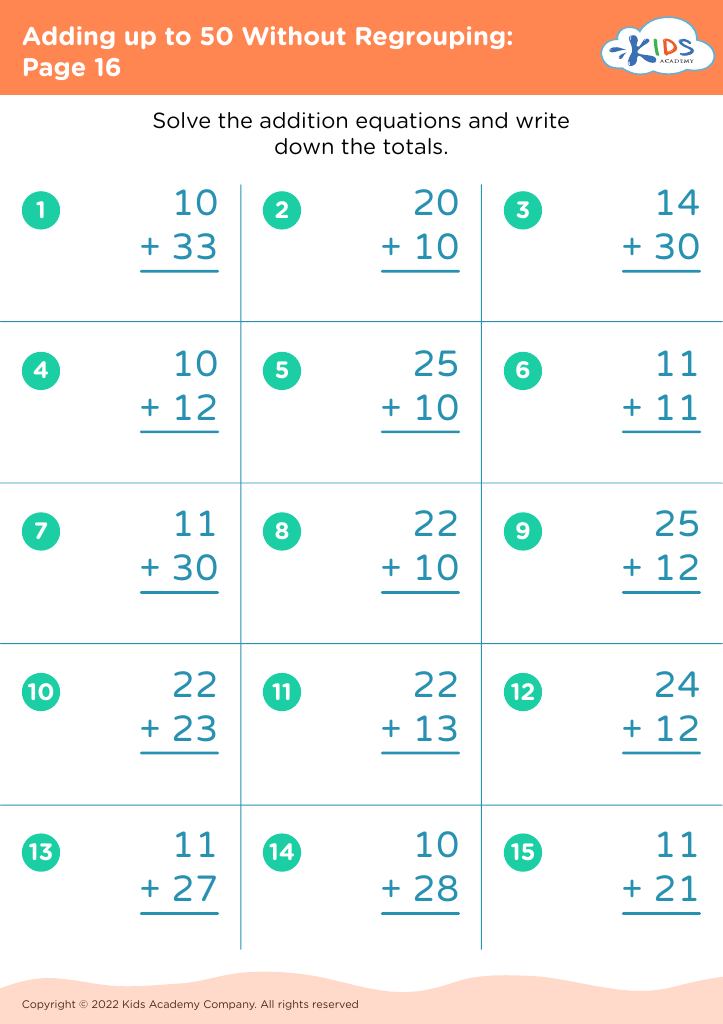
Adding up to 50 Without Regrouping: Page 16
Worksheet
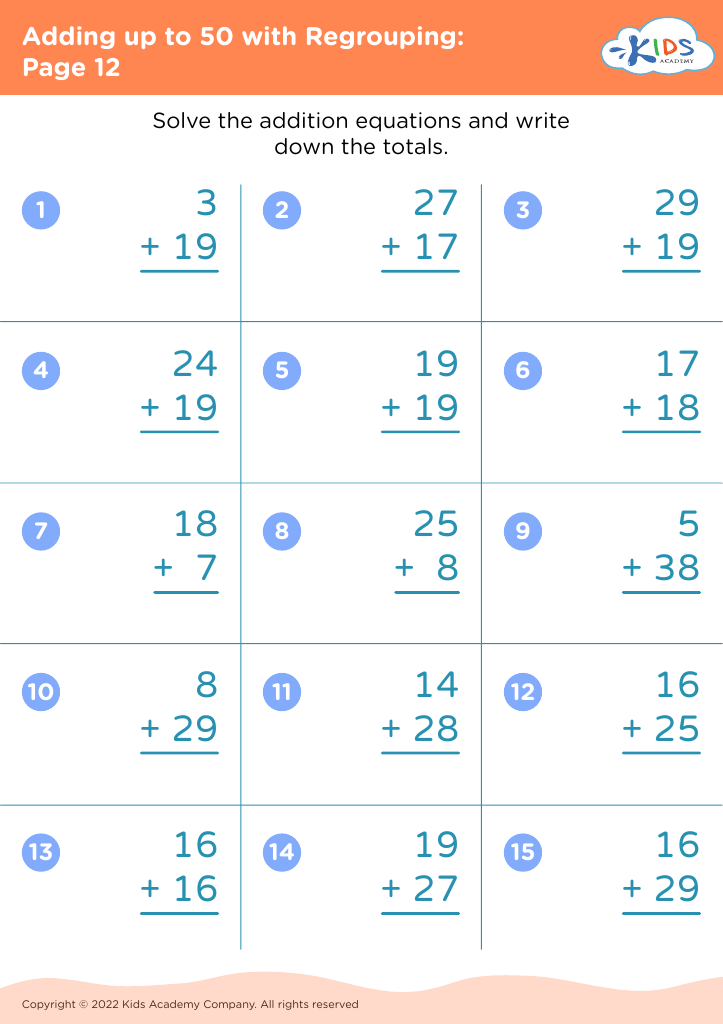
Adding up to 50 with Regrouping: Page 12
Worksheet
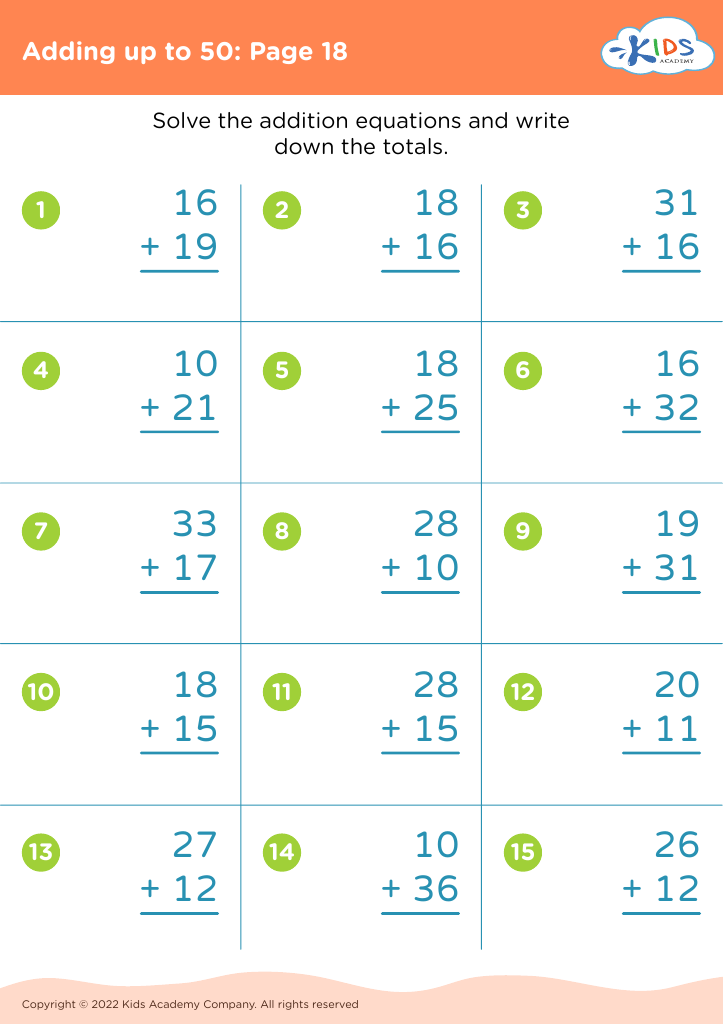
Adding up to 50: Page 18

Adding up to 50: Page 18

Adding up to 50: Page 18
Worksheet
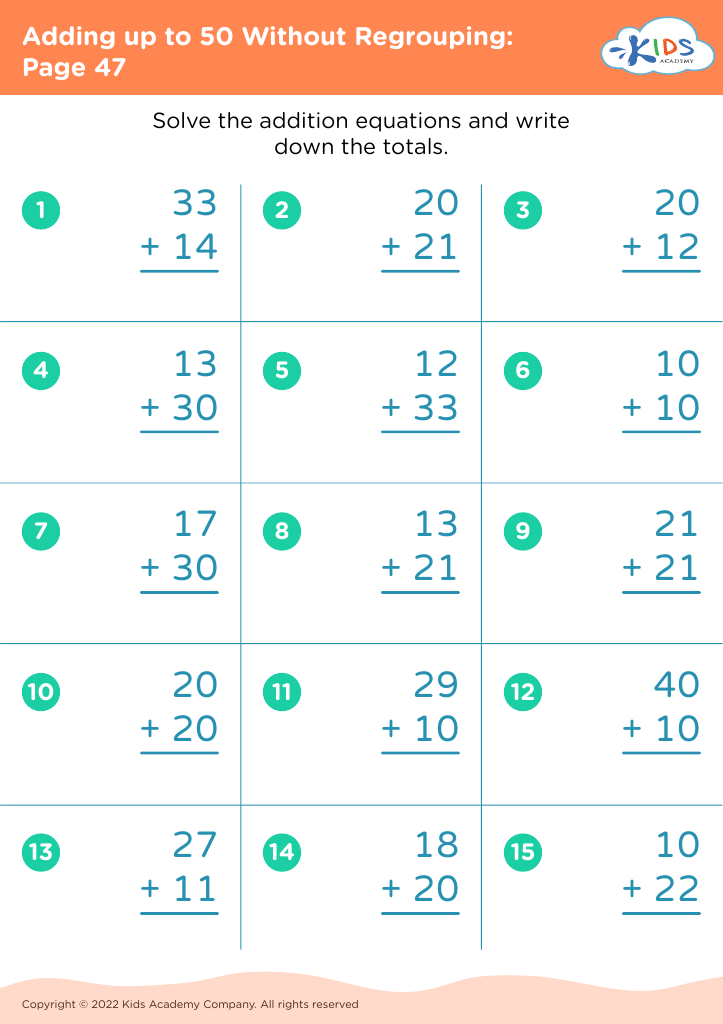
Adding up to 50 Without Regrouping: Page 47
Worksheet
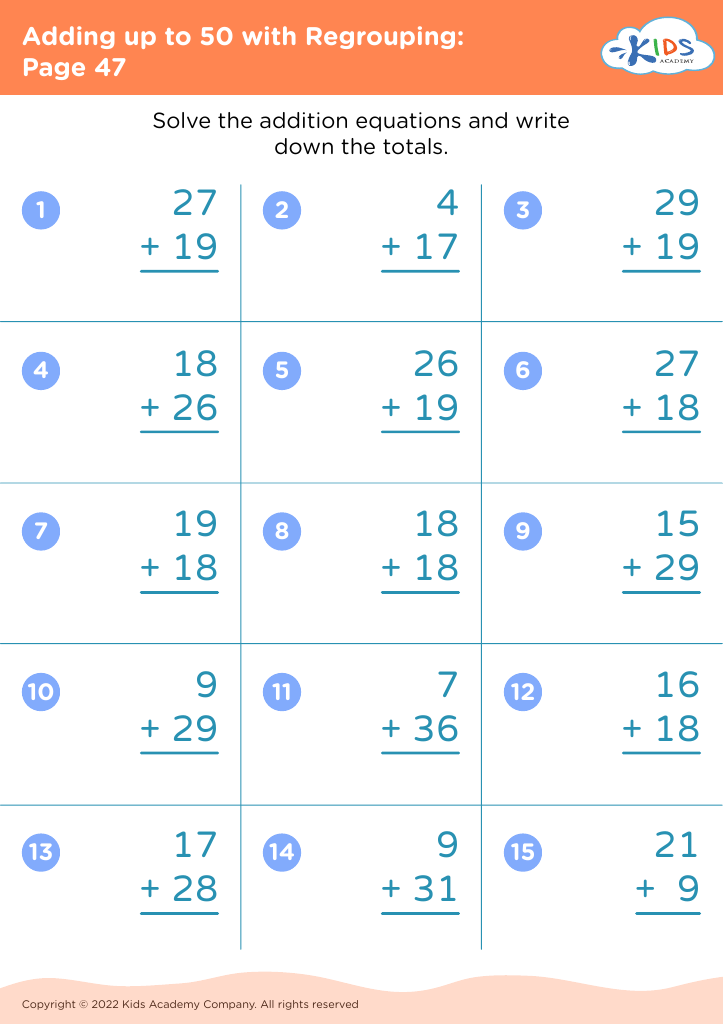
Adding up to 50 with Regrouping: Page 47
Worksheet
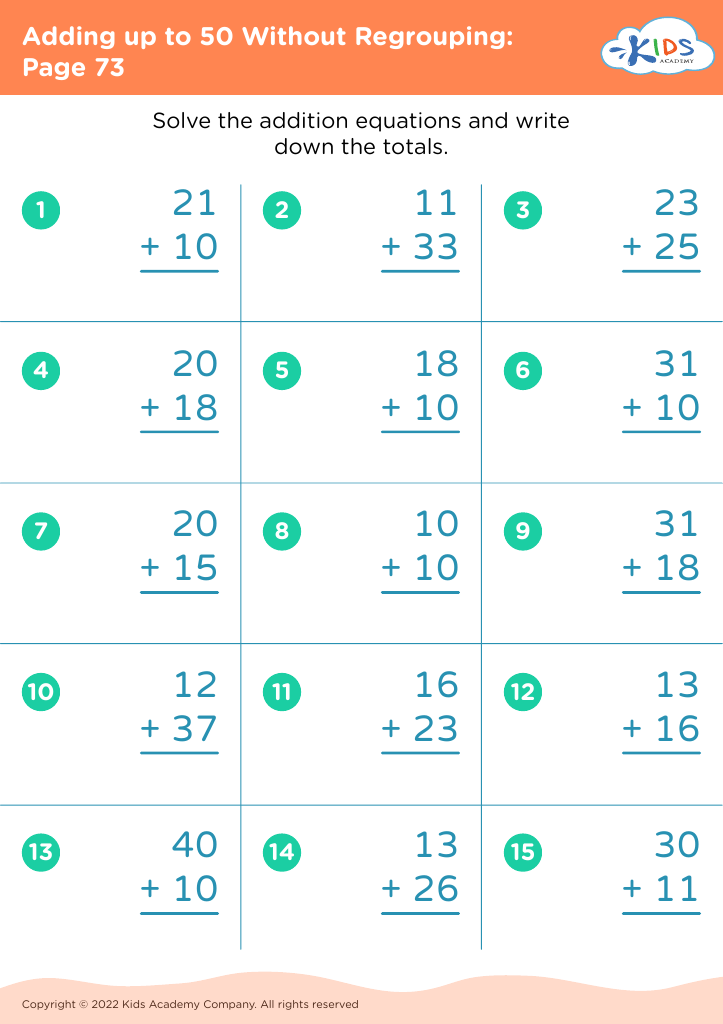
Adding up to 50 Without Regrouping: Page 73
Worksheet
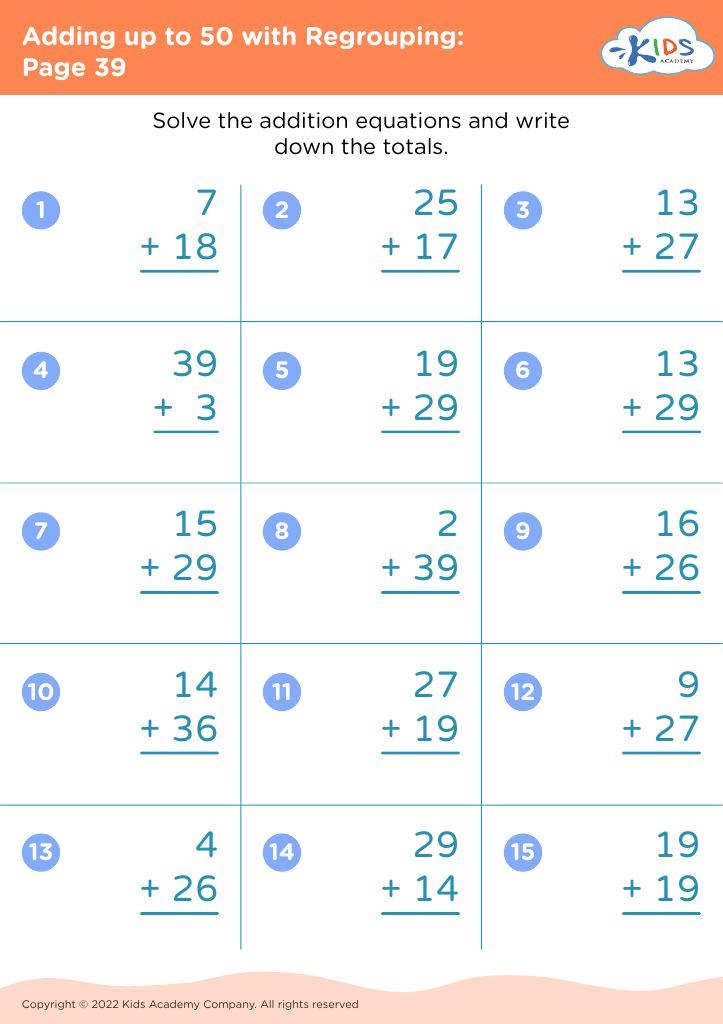
Adding up to 50 with Regrouping: Page 39
Worksheet
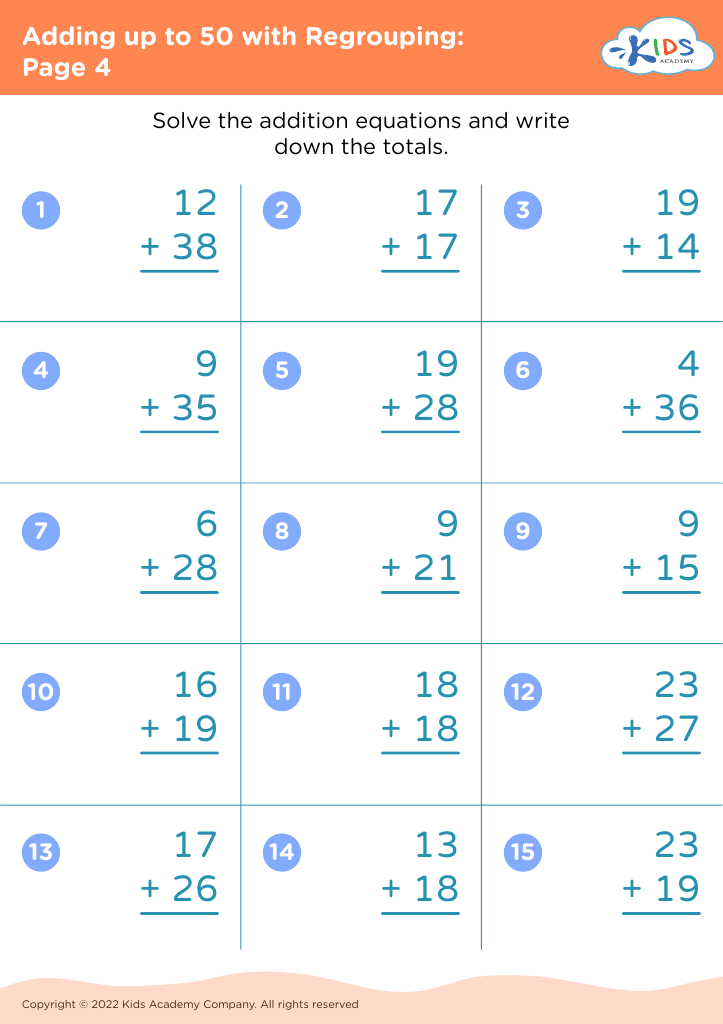
Adding up to 50 with Regrouping: Page 4
Worksheet
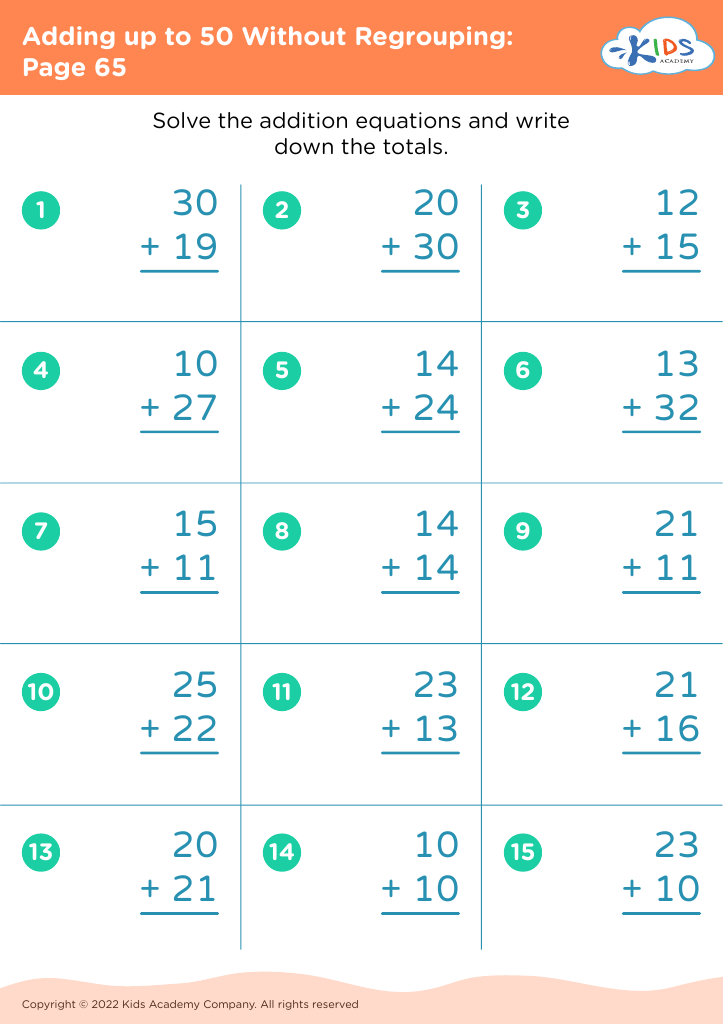
Adding up to 50 Without Regrouping: Page 65
Worksheet
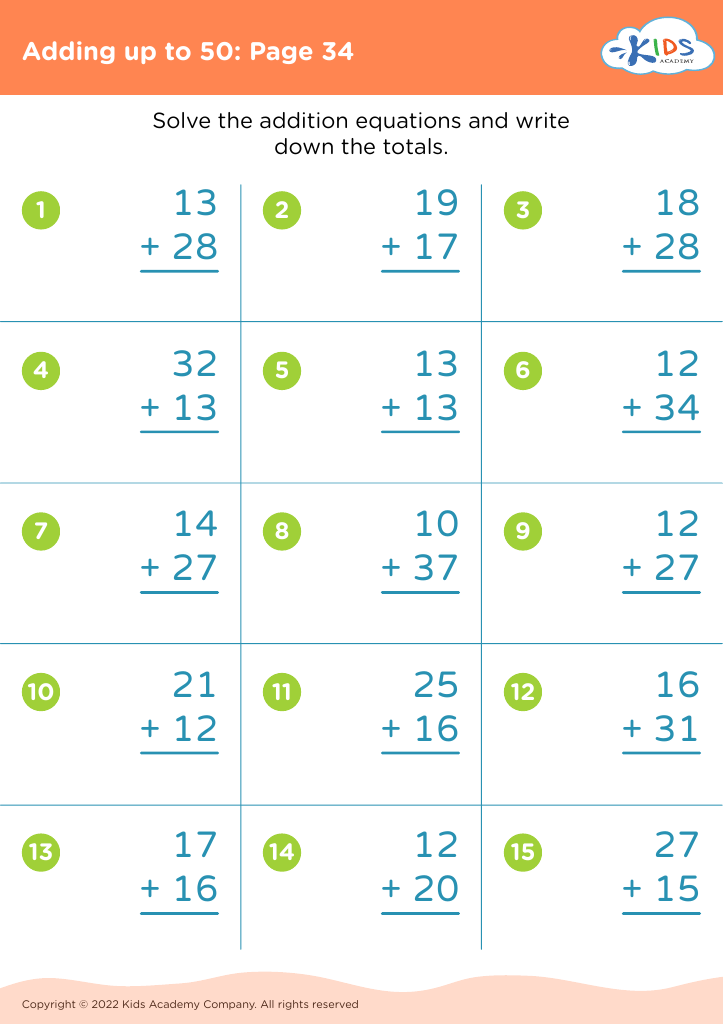
Adding up to 50: Page 34

Adding up to 50: Page 34

Adding up to 50: Page 34
Worksheet


Parents and teachers should care about fraction simplification and addition for ages 8-9 because these concepts lay the groundwork for students’ mathematical understanding and problem-solving skills. At this age, children are transitioning from concrete to abstract thinking, making it an ideal time to introduce the idea of fractions as parts of a whole.

Simplifying fractions helps students recognize equivalent fractions, which fosters a sense of number relationships and helps with operations involving fractions in the future. For instance, understanding that 1/2 is the same as 2/4 makes solving complex problems much easier.

Adding fractions, particularly when the denominators are the same, enhances critical arithmetic skills. It prepares students for more advanced math topics, including mixed numbers and fraction comparisons. Moreover, mastering these concepts instills confidence in children, motivating them to tackle greater challenges later on.

In lush lessons, integrating hands-on activities, visual aids, and tangible examples can make these abstract concepts more relatable, engaging students' interest in math. Ultimately, a solid understanding of fractions leads to success in not just math, but in developing logical thinking, which is essential across various subjects and real-world applications.