Improve math skills Adding up to 50 Worksheets for Ages 8-9
4 filtered results
-
From - To
Boost your child's math skills with our "Adding Up to 50" worksheets, specially designed for ages 8-9. These engaging activities make learning addition fun and interactive, helping young learners master their math fundamentals with confidence. Each worksheet features a variety of exercises that reinforce addition concepts and enhance problem-solving abilities. As kids practice adding numbers up to 50, they will develop essential skills to excel in future math challenges. Ideal for classroom use or at-home learning, our worksheets provide a structured way to make math mastery accessible and enjoyable. Get started today and watch your child's skills grow!
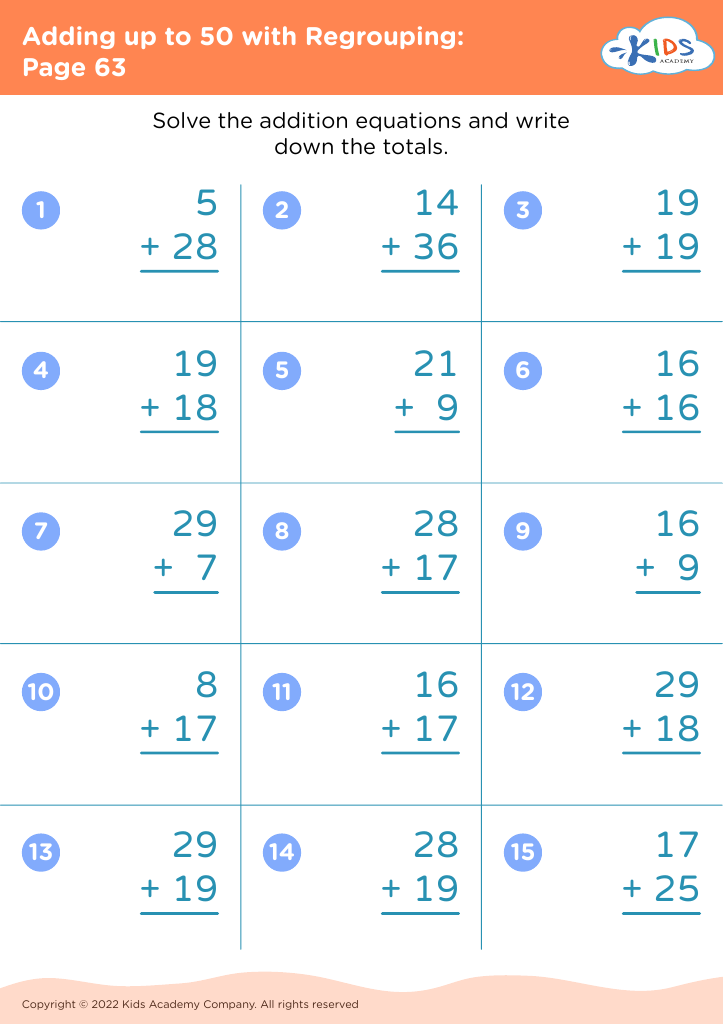
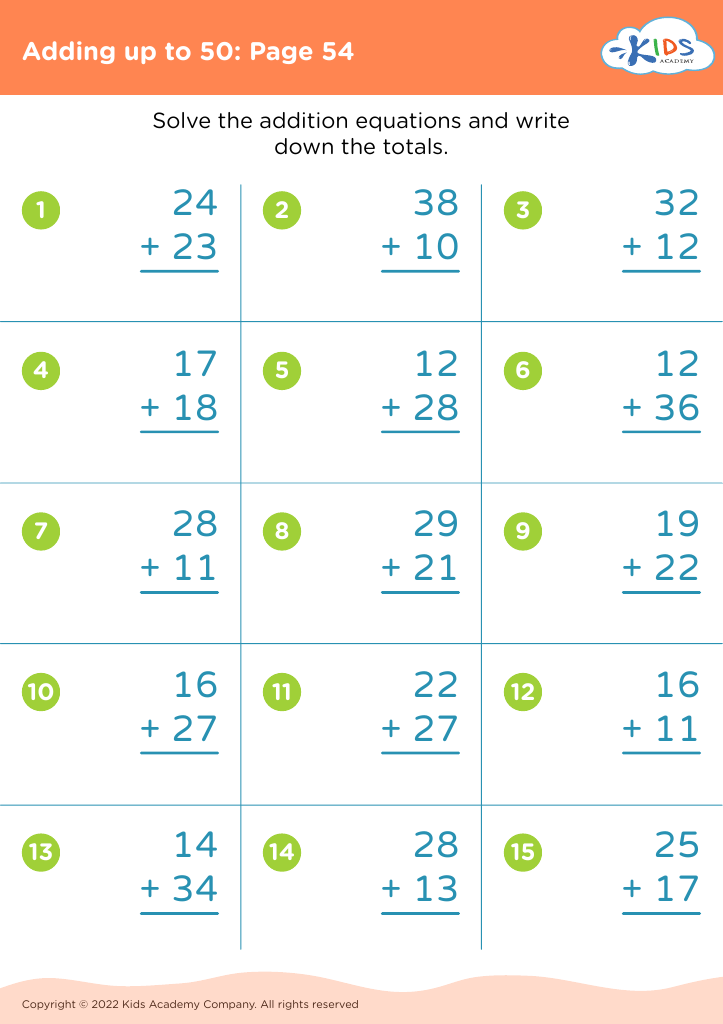
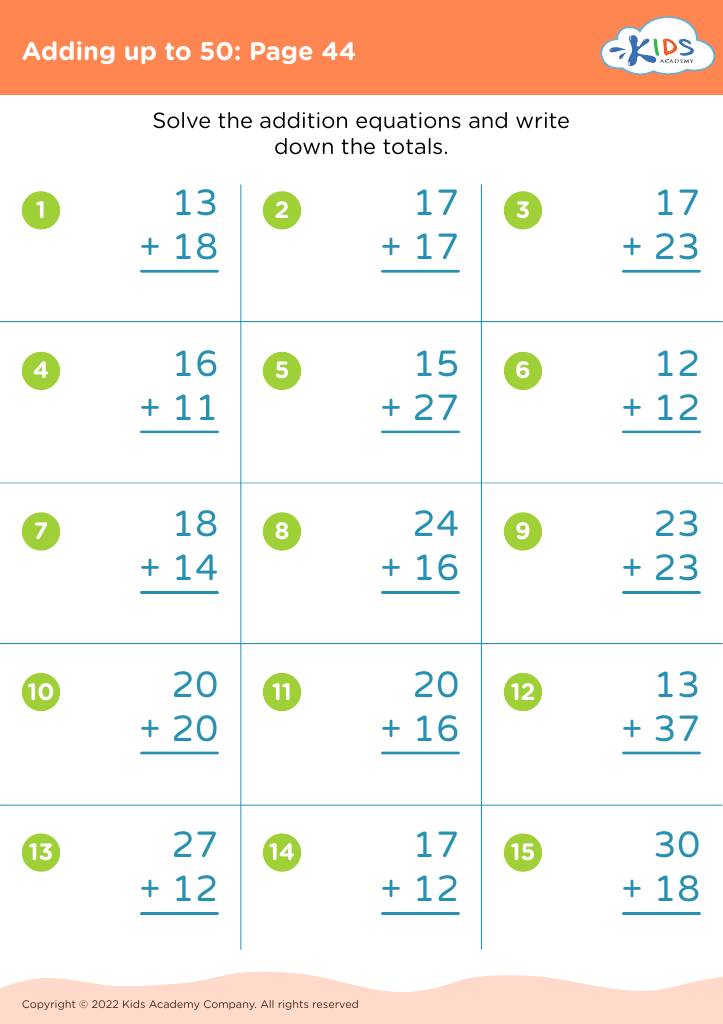
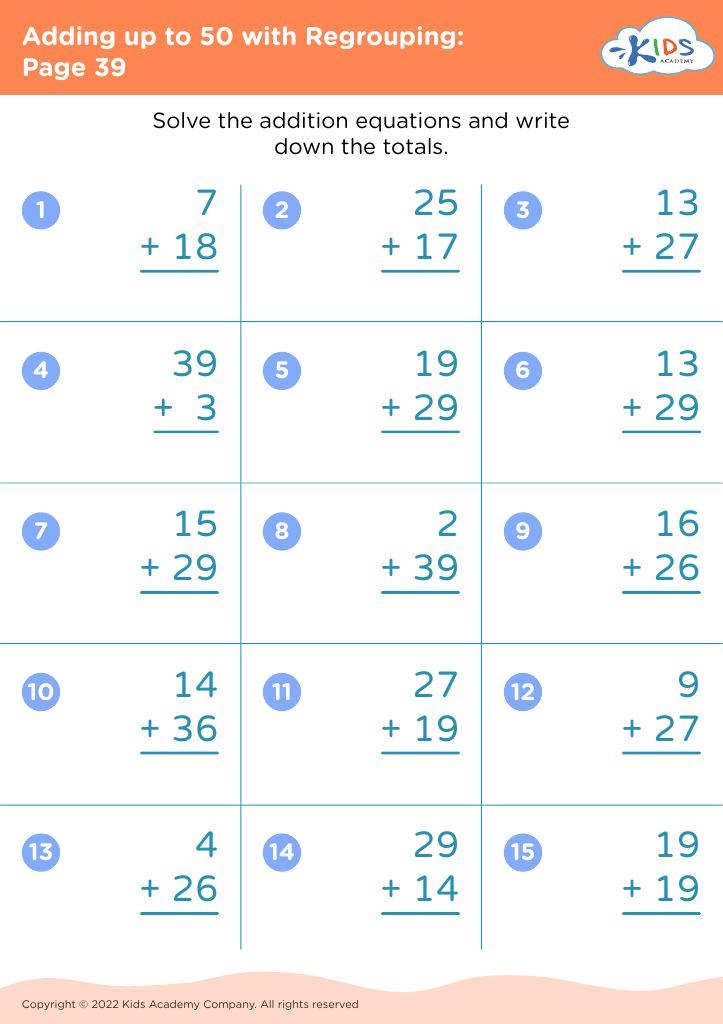




Improving math skills, specifically the ability to add up to 50, is crucial for children aged 8-9 as it forms the foundation for their overall mathematical understanding and problem-solving abilities. At this age, students are transitioning from concrete arithmetic to more abstract mathematical concepts. Mastery of addition helps develop number sense, an essential skill for later topics such as multiplication, division, and fractions.
Additionally, strong addition skills build confidence and promote a positive attitude towards math. When children feel proficient in basic operations, they are more likely to engage in math-related activities, fostering a love for the subject. This engagement is vital, as positive attitudes toward math can lead to higher academic achievement and increased opportunities in the future.
Moreover, in real-life situations, the ability to add up to 50 is practical—whether it's managing money, understanding time, or solving everyday problems. Encouraging parents and teachers to focus on this skill not only benefits children academically but also prepares them for practical applications outside of school. Ultimately, supporting the development of addition skills leads to well-rounded students who can thrive both academically and in everyday life.








