Mathematical reasoning Adding up to 50 Worksheets for Ages 8-9
4 filtered results
-
From - To
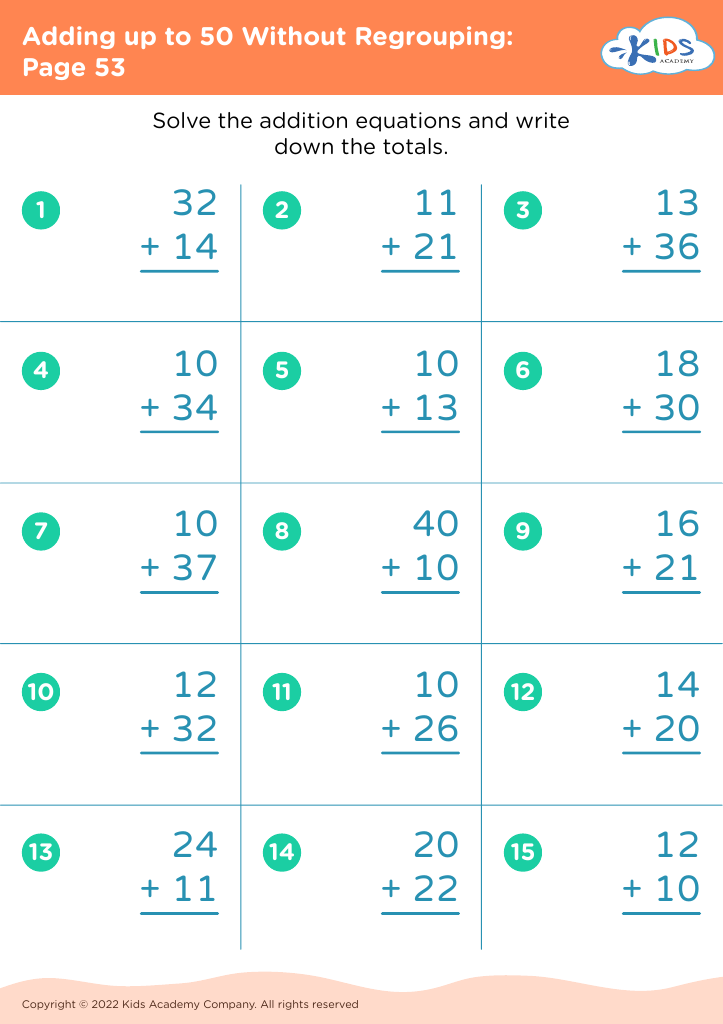
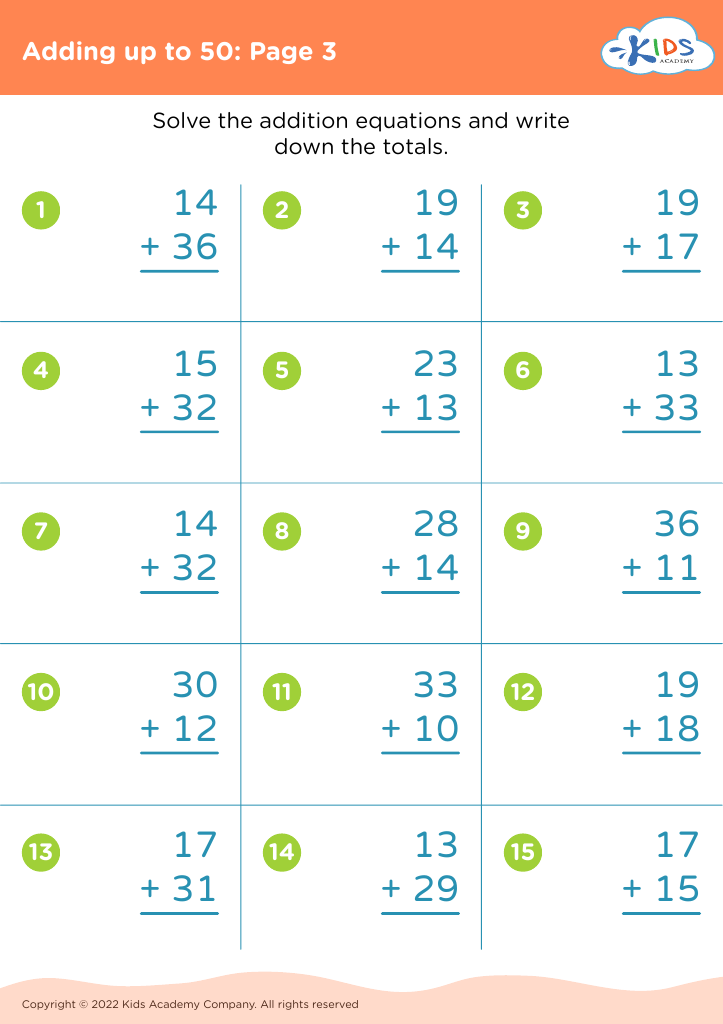
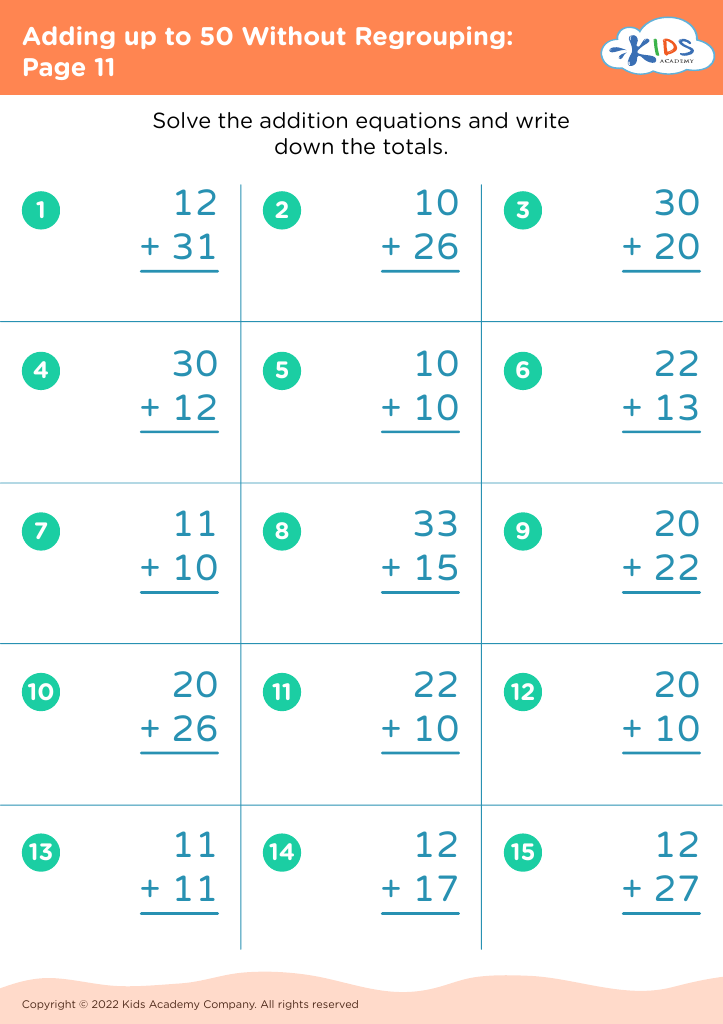
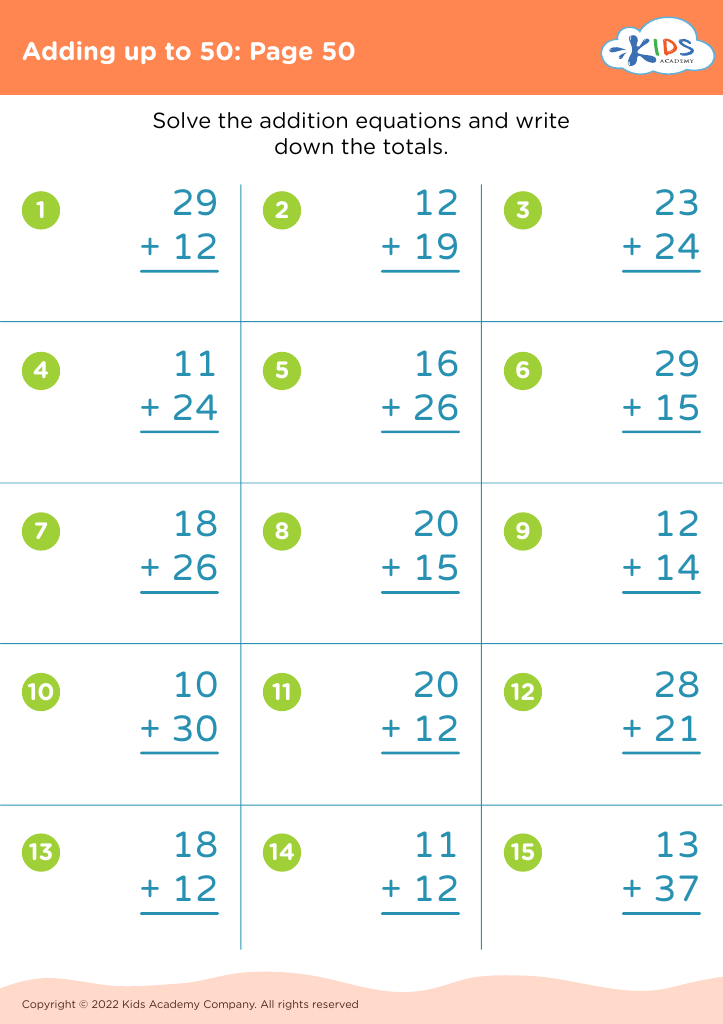
Boost your child's mathematical reasoning skills with our "Adding Up to 50" worksheets designed specifically for ages 8-9. These engaging worksheets encourage young learners to practice addition through a variety of exercises, helping them grasp important math concepts while building confidence in their abilities. Each activity focuses on enhancing critical thinking and problem-solving skills, making math both fun and educational. With interactive challenges suitable for different learning styles, our resources cater to every child's needs. Download these printable worksheets today and watch your child's multiplication and addition skills flourish as they add their way to mastering numbers up to 50!




Mathematical reasoning is crucial for children aged 8-9 as it lays the foundation for critical thinking and problem-solving skills. At this age, students begin to explore more complex concepts, including addition strategies, patterns, and relationships between numbers, particularly with sums reaching 50. By emphasizing reasoning in math, teachers and parents encourage children to understand the ‘why’ behind mathematical processes, rather than just memorizing facts.
When children engage in adding up to 50, they learn to recognize different ways to combine numbers, which enhances their number sense. This skill fosters independence and confidence, allowing them to tackle more challenging math problems in the future. Additionally, reasoning in mathematics promotes a growth mindset; children learn to view mistakes as opportunities for improvement rather than failures.
Moreover, mathematical reasoning supports connections to real-world applications—such as budgeting or planning—which are essential life skills. By nurturing this reasoning process, parents and teachers not only support academic success in mathematics but also contribute to overall cognitive development, preparing children for future educational and personal challenges. Engaging children in meaningful mathematical conversations can solidify their understanding and foster a lifelong appreciation for math.








