Problem-solving abilities Adding up to 50 Worksheets for Ages 8-9
4 filtered results
-
From - To
Enhance your child's math skills with our "Adding Up to 50" worksheets, specially designed for ages 8-9. These engaging resources focus on boosting problem-solving abilities, ensuring students not only practice addition but also develop critical thinking skills. Each worksheet offers a variety of challenges that encourage logical reasoning and creativity, making math fun and approachable. Children will learn to apply their knowledge in real-world scenarios, fostering a deeper understanding of relationships between numbers. Ideal for both classroom and home use, these worksheets provide the perfect opportunity to nurture confident problem solvers while reinforcing essential math concepts. Start your child's journey to math mastery today!
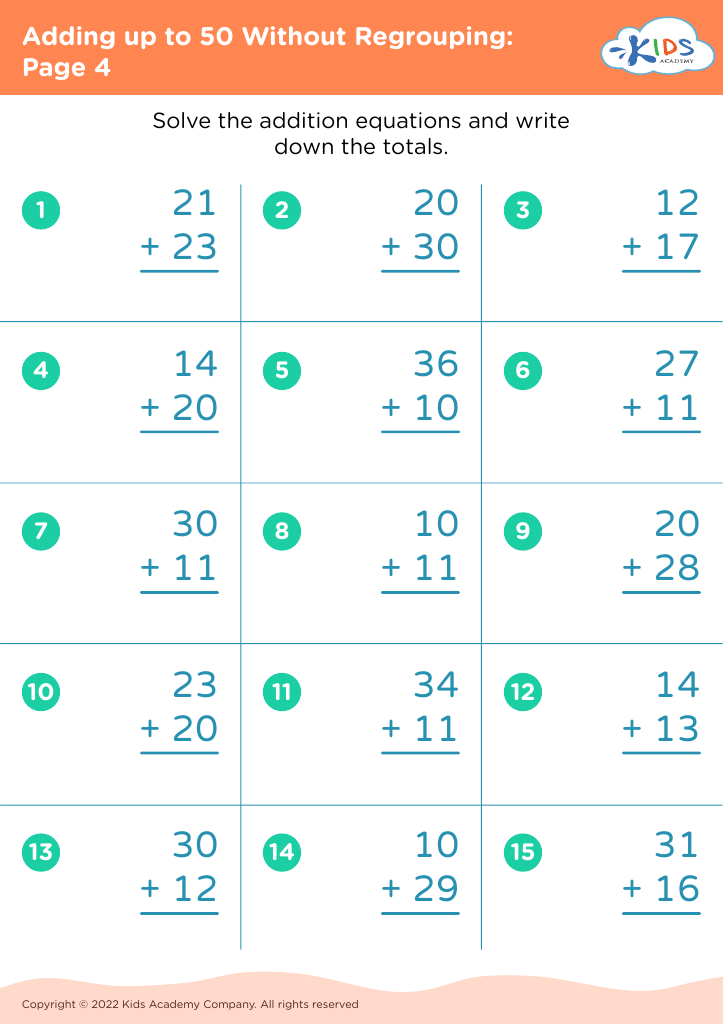
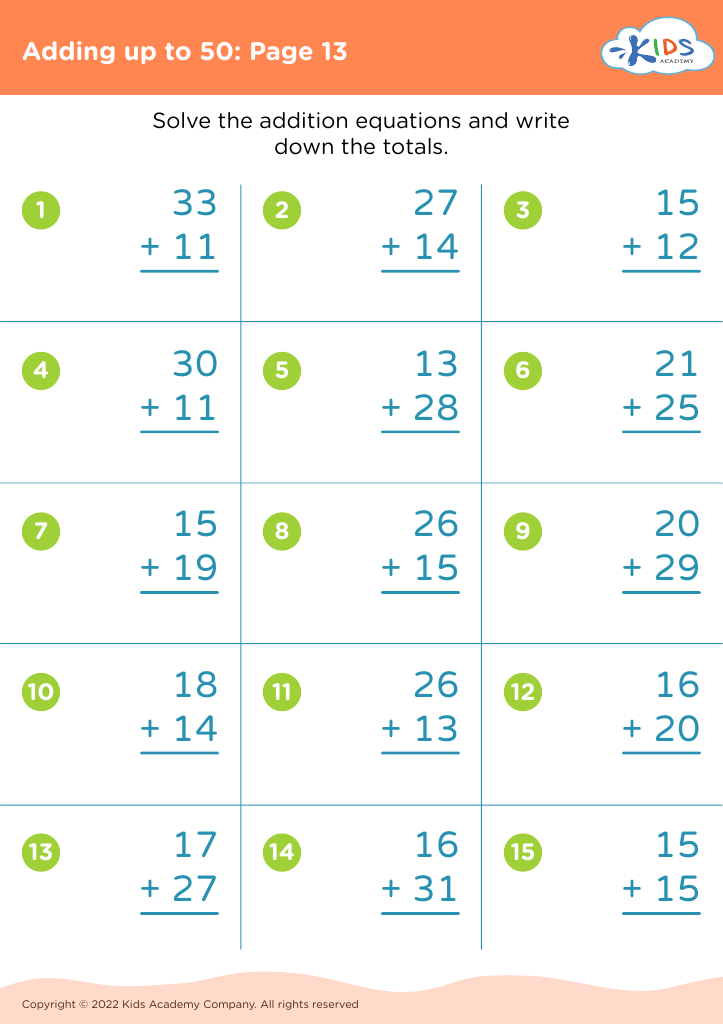
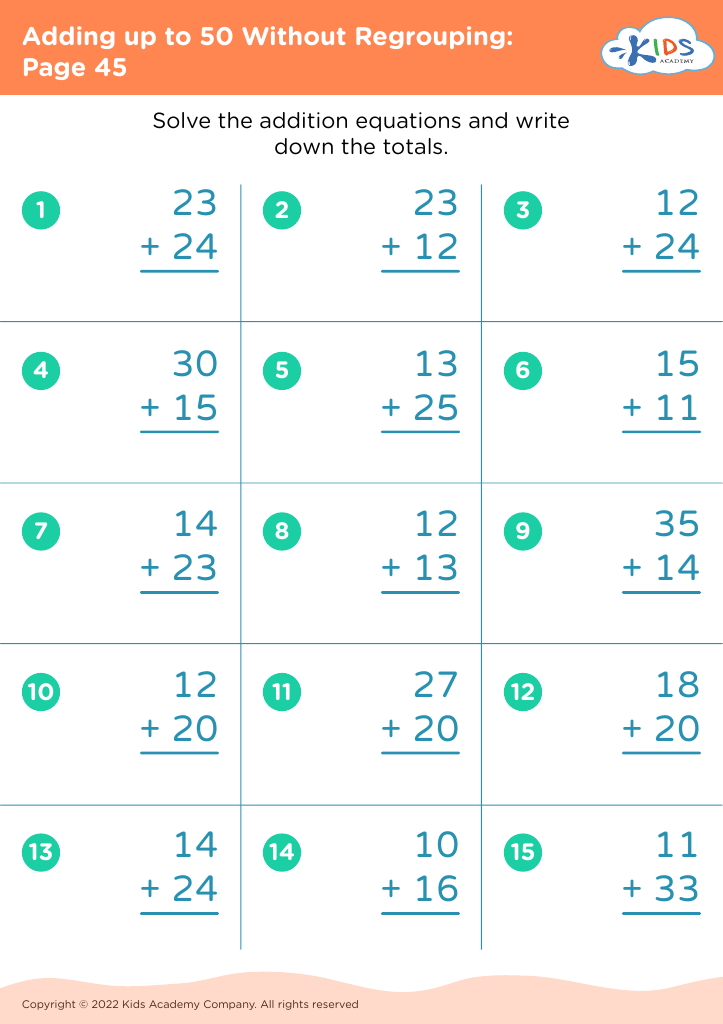
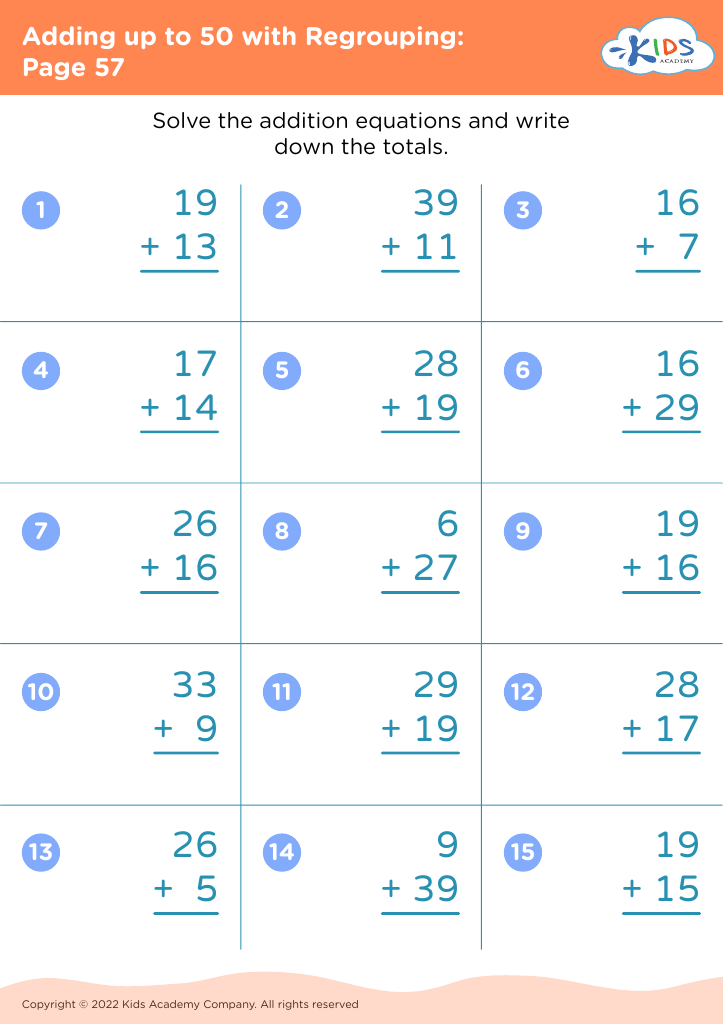




Parents and teachers should prioritize the development of problem-solving abilities that involve adding up to 50 for children aged 8-9 because these skills lay a vital foundation for future academic success and everyday decision-making. At this age, children are transitioning from concrete to more abstract thinking. Mastering addition within this range helps them grasp more complex math concepts, boosts their confidence, and fosters a positive attitude toward learning.
Problem-solving encourages critical thinking, logical reasoning, and creativity. When children engage in challenges that require them to reach a target sum, they learn to analyze multiple approaches, recognize patterns, and evaluate which strategies work best. This not only enhances their mathematical acumen but also helps them build resilience when faced with setbacks.
In addition, developing problem-solving abilities enhances collaboration and communication skills. Working with peers to solve addition-based problems teaches negotiation and the importance of different perspectives. Furthermore, competency in basic arithmetic is essential in daily life, from budgeting allowance to cooking. By focusing on these skills now, parents and teachers equip children with lifelong tools to navigate complex challenges both in school and beyond. Overall, nurturing these abilities at a young age sets the groundwork for academic achievement and personal growth.








