Problem-solving practice Adding up to 50 Worksheets for Ages 8-9
3 filtered results
-
From - To
Enhance your child’s math skills with our "Problem-solving Practice: Adding Up to 50" worksheets, specially designed for ages 8-9. These engaging activities not only strengthen addition skills but also develop critical thinking and problem-solving abilities in a fun way. Each worksheet includes a variety of challenges, ensuring that your child will stay motivated and engaged. Tailored to meet educational standards, our resources make learning exciting and score exceptional confidence when tackling math problems. Ideal for supplementary practice at home or in the classroom, these worksheets provide a solid foundation for your child's math journey. Start exploring the world of numbers today!
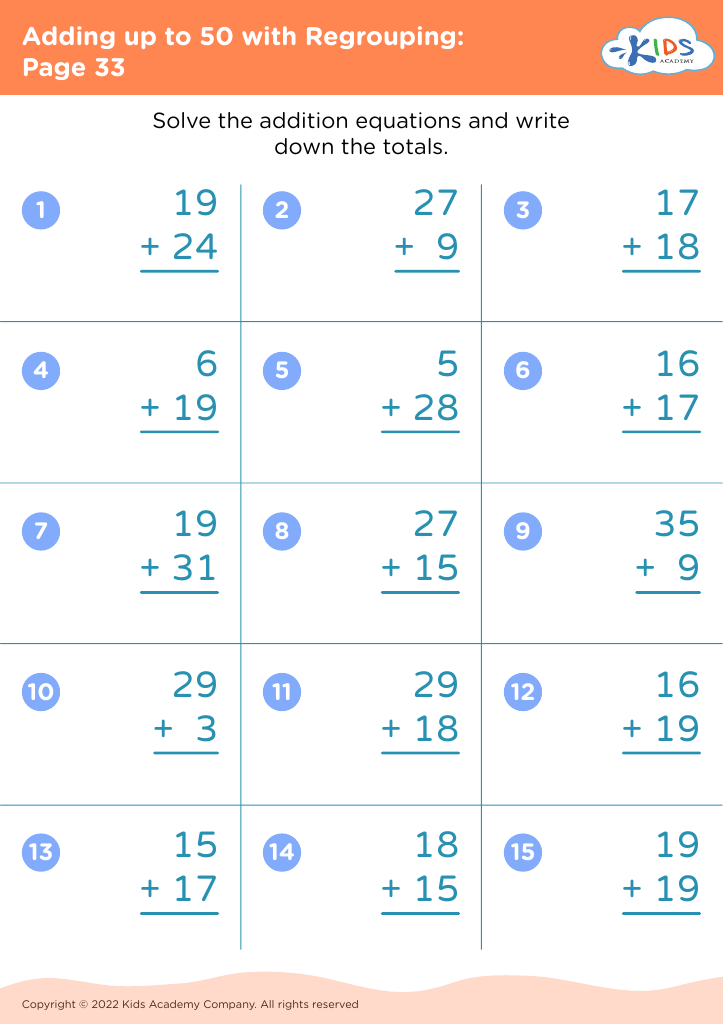
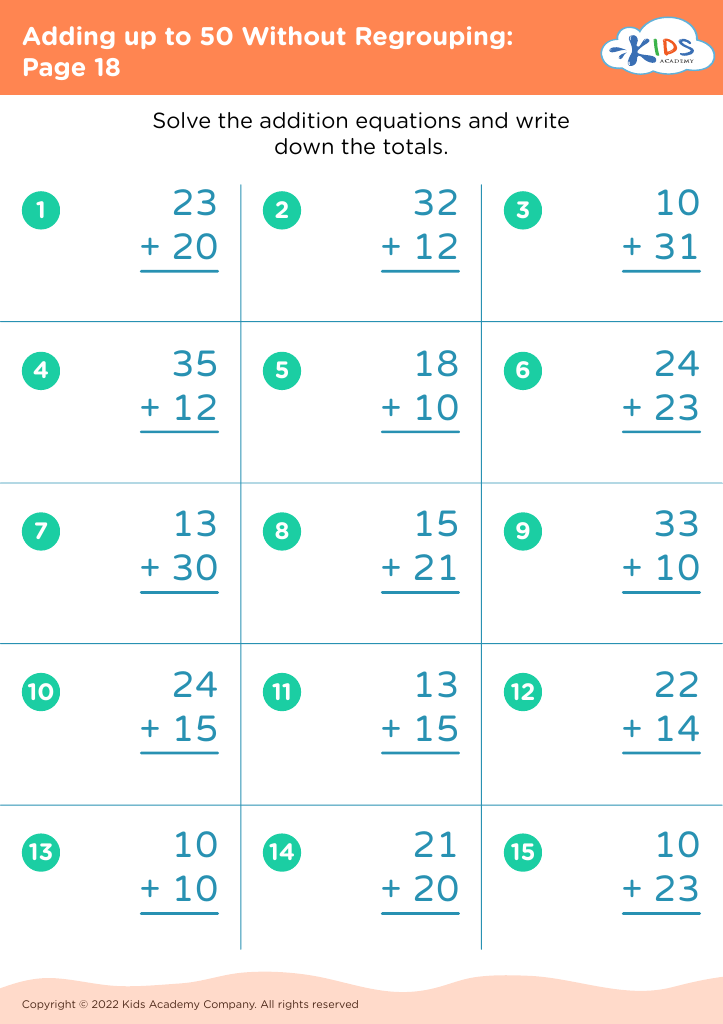
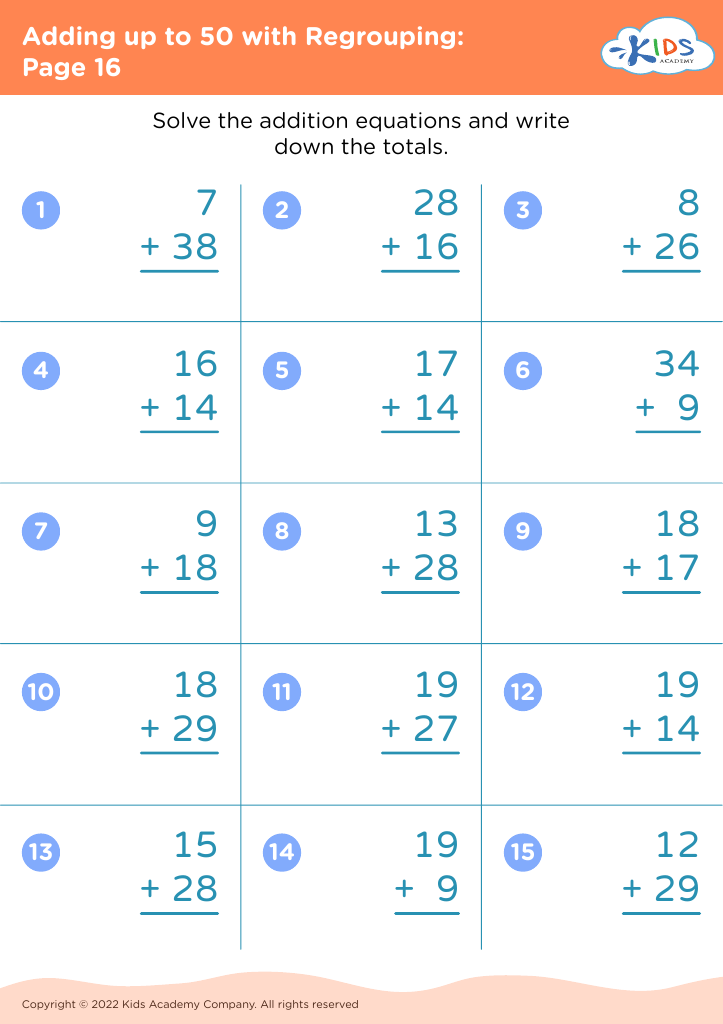




Problem-solving practice, such as adding up to 50, is crucial for children aged 8-9 as it enhances both mathematical skills and critical thinking. At this age, students are transitioning from basic arithmetic to more complex problem-solving, which sets the foundation for future learning. Engaging in these practices helps children develop fluency in addition, as well as an understanding of number sense, which is essential for grasping more advanced concepts such as multiplication and division.
Moreover, problem-solving tasks encourage logical reasoning and help children learn to approach challenges methodically. By working to find different combinations of numbers that sum to 50, children not only practice their computation skills but also learn to explore multiple strategies and reflect on their thought processes. This fosters a growth mindset, as they become resilient in facing math-related challenges.
For teachers and parents, focusing on this skill promotes a positive attitude towards math, reduces anxiety associated with math tasks, and helps children make real-world connections to what they are learning. Ultimately, investing time in problem-solving practice empowers children with the skills they need to succeed in math and develops crucial cognitive skills that benefit them across all subjects.








