Problem-Solving Skills Adding up to 50 Worksheets for Ages 8-9
26 filtered results
-
From - To
Enhance your child's problem-solving abilities with our engaging "Problem-Solving Skills Adding up to 50 Worksheets for Ages 8-9." Designed specifically for young learners, these worksheets offer a fun and educational way to practice addition problems up to 50. Each worksheet presents a variety of real-life scenarios, challenging students to apply their math skills while boosting their critical thinking and analytical capabilities. Perfect for home or classroom use, these worksheets align with educational standards, ensuring that your child gains essential math competencies. Empower your 8-9-year-old to solve problems with confidence and precision today!
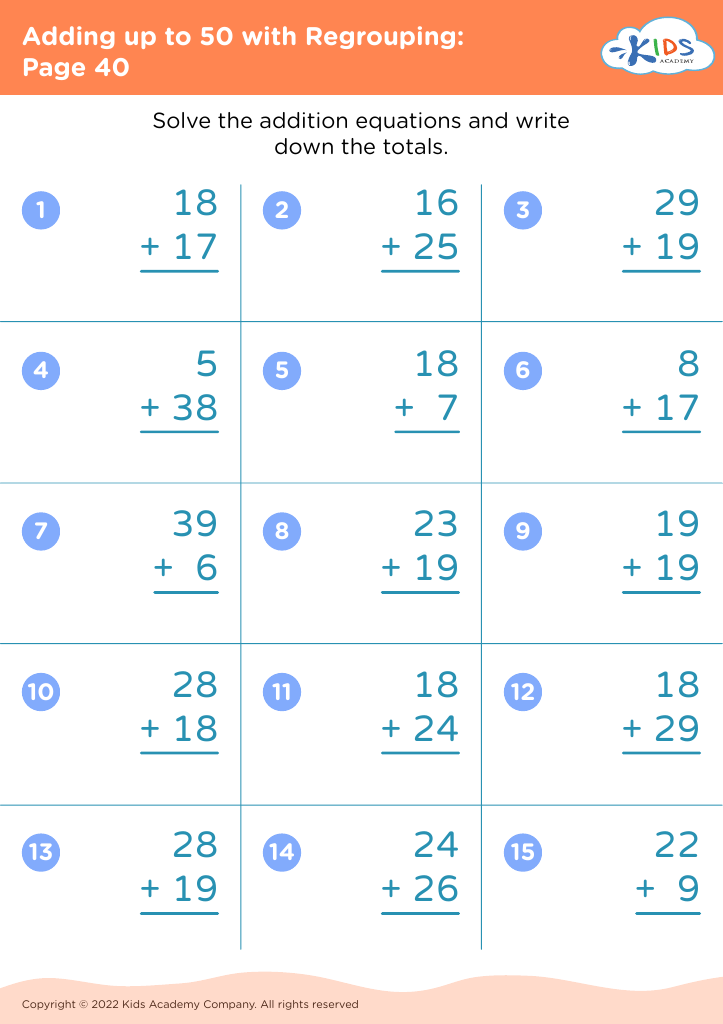
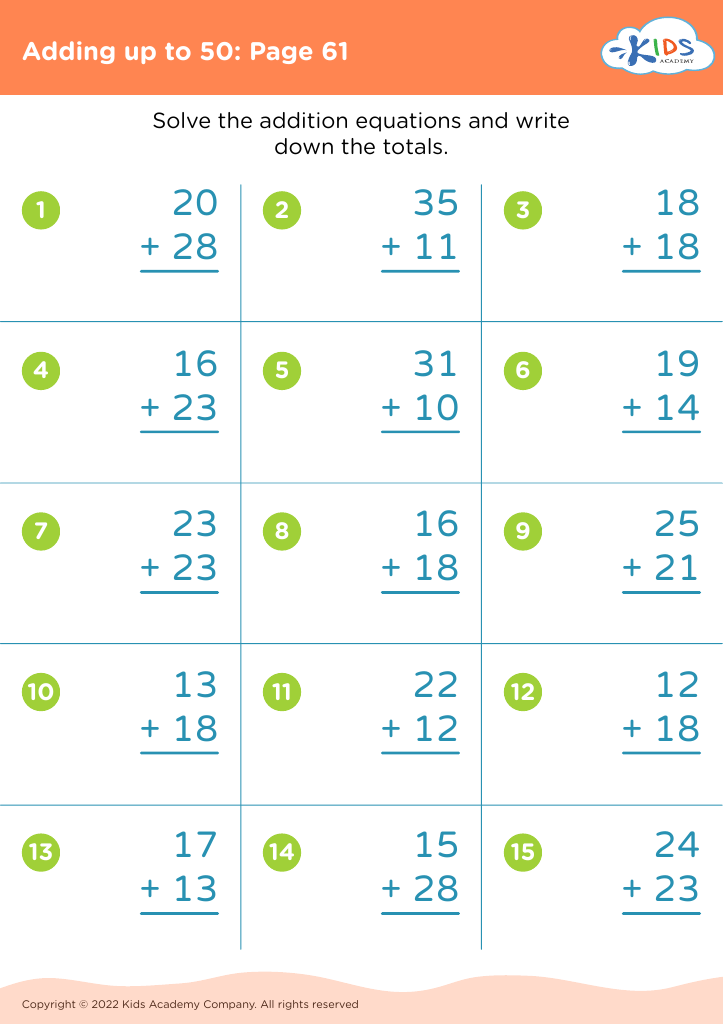
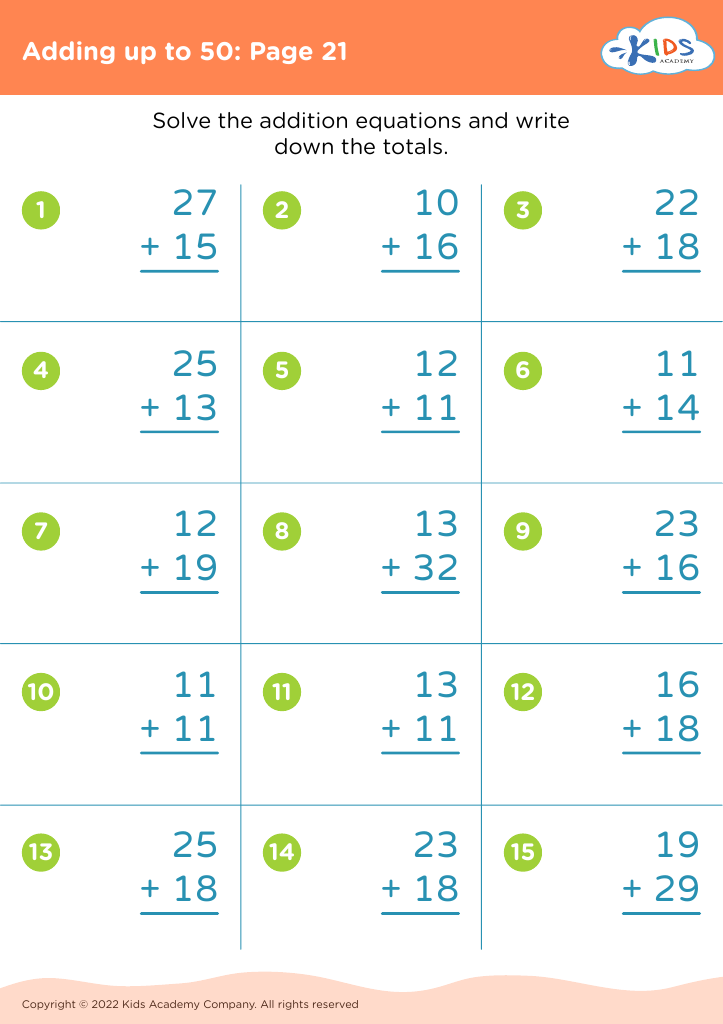
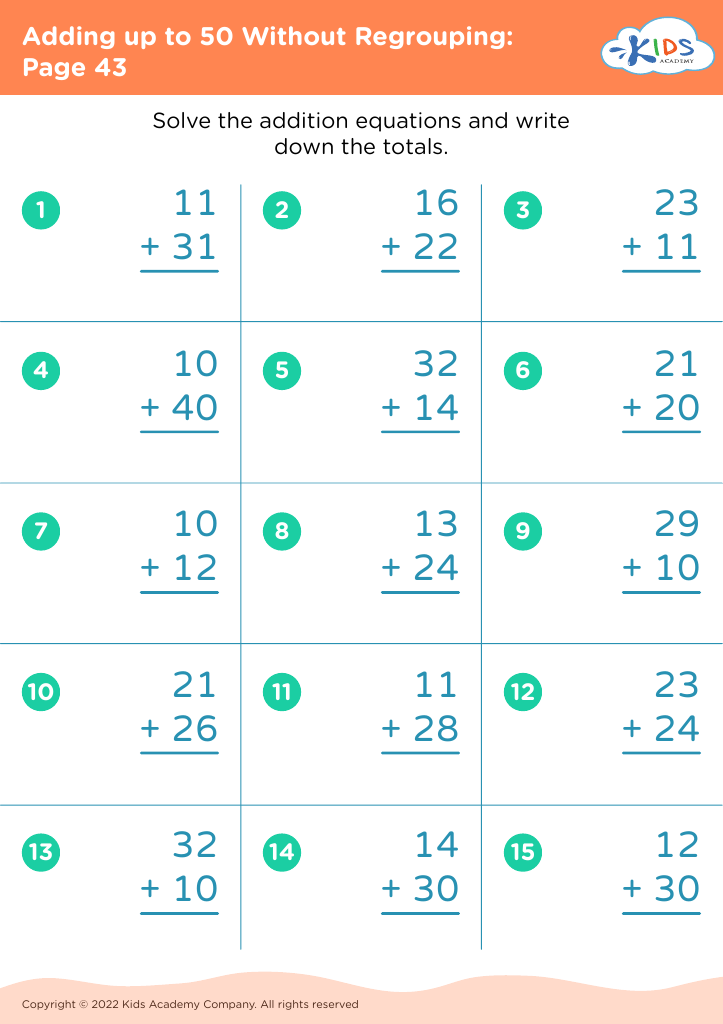
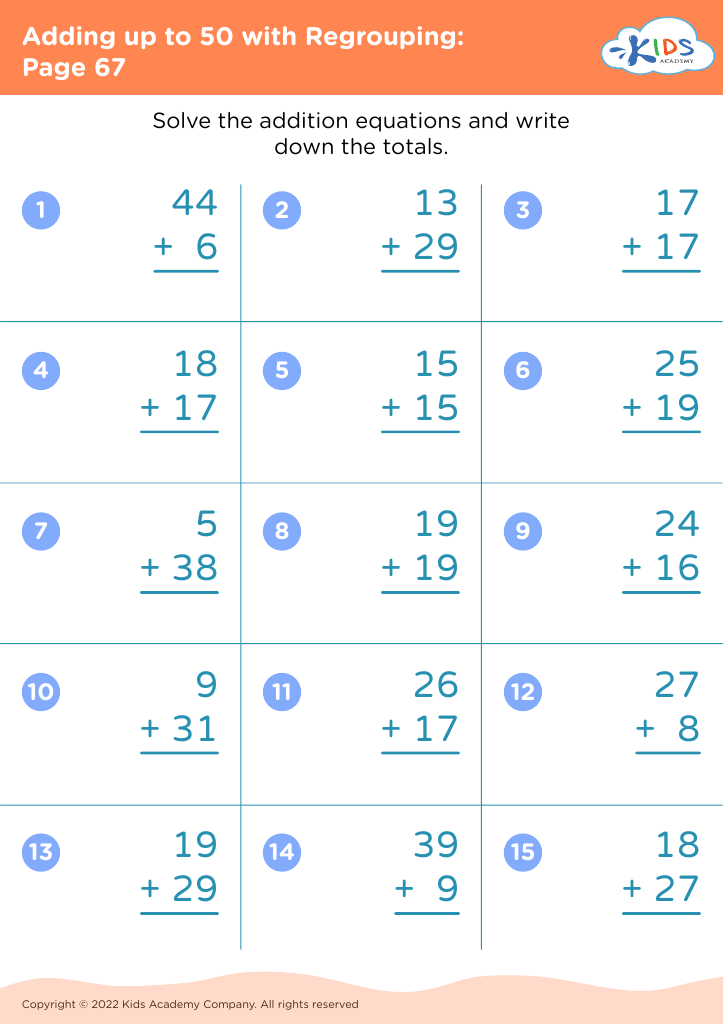
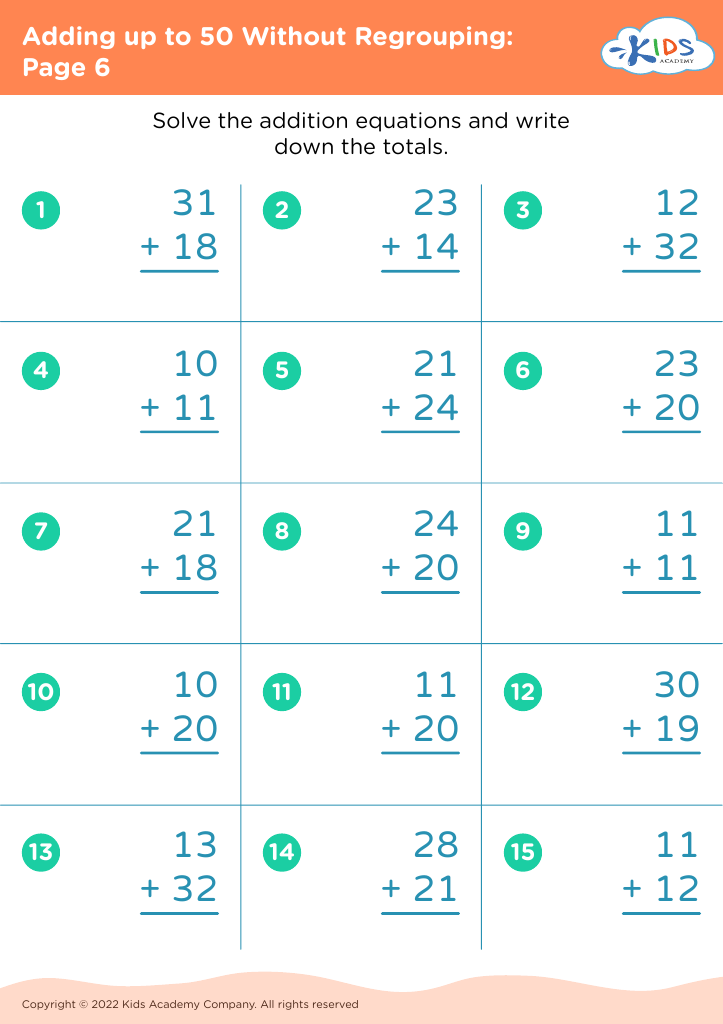
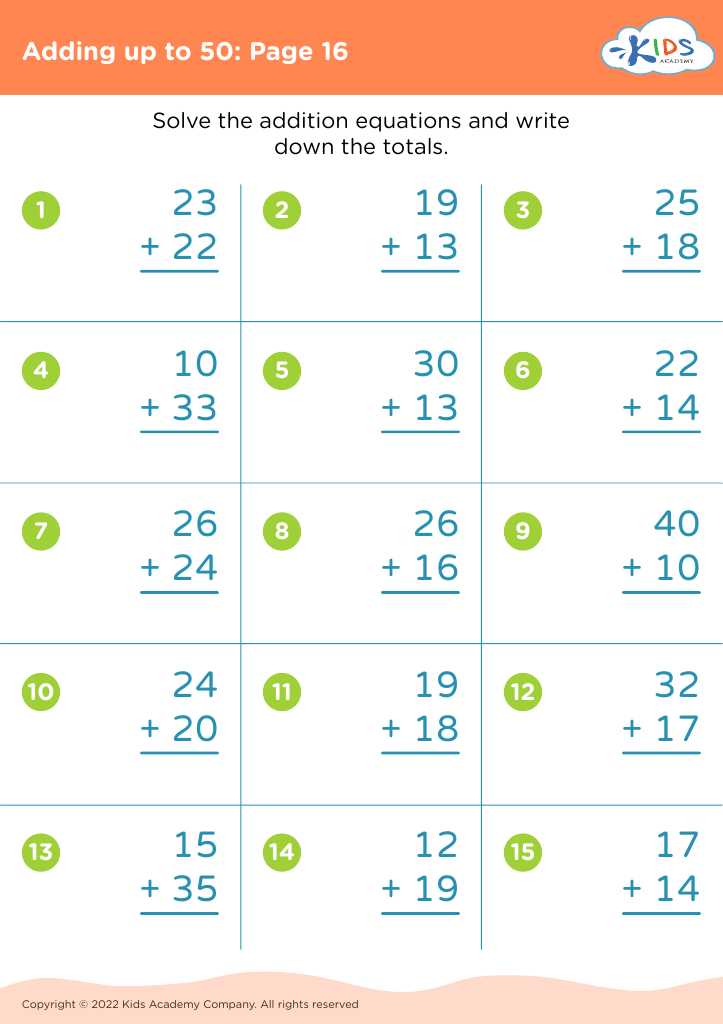
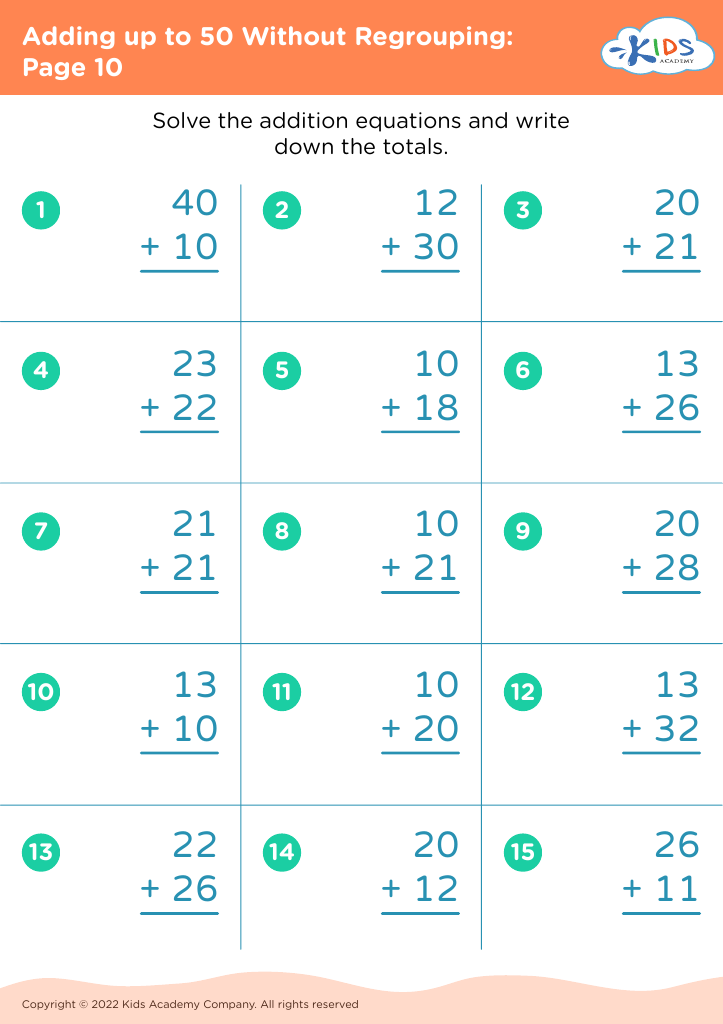
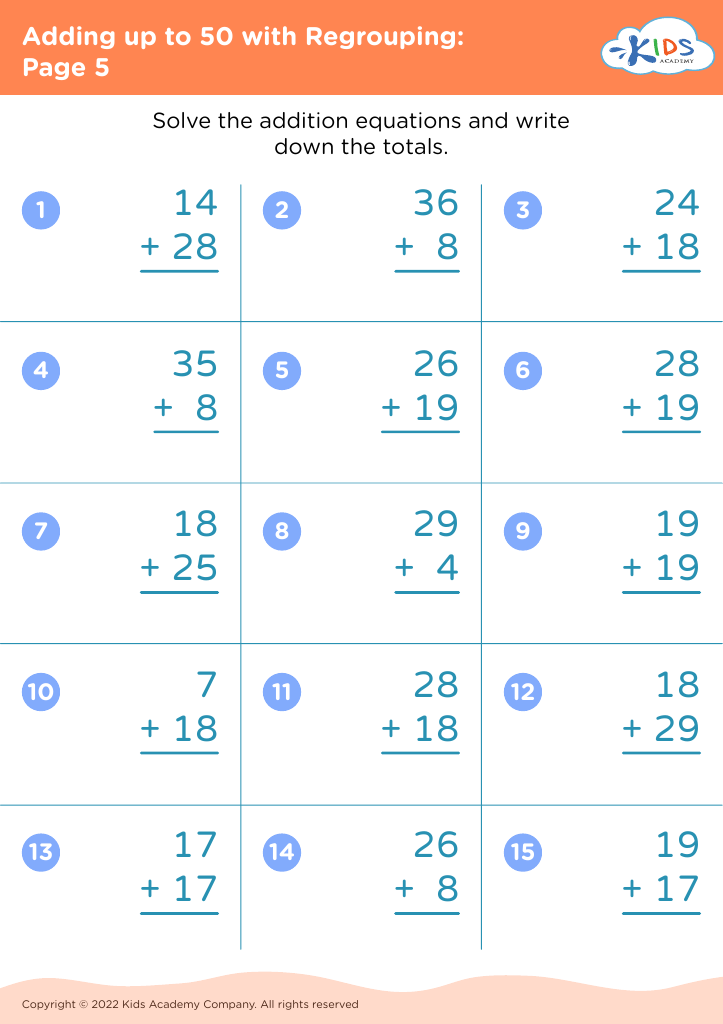
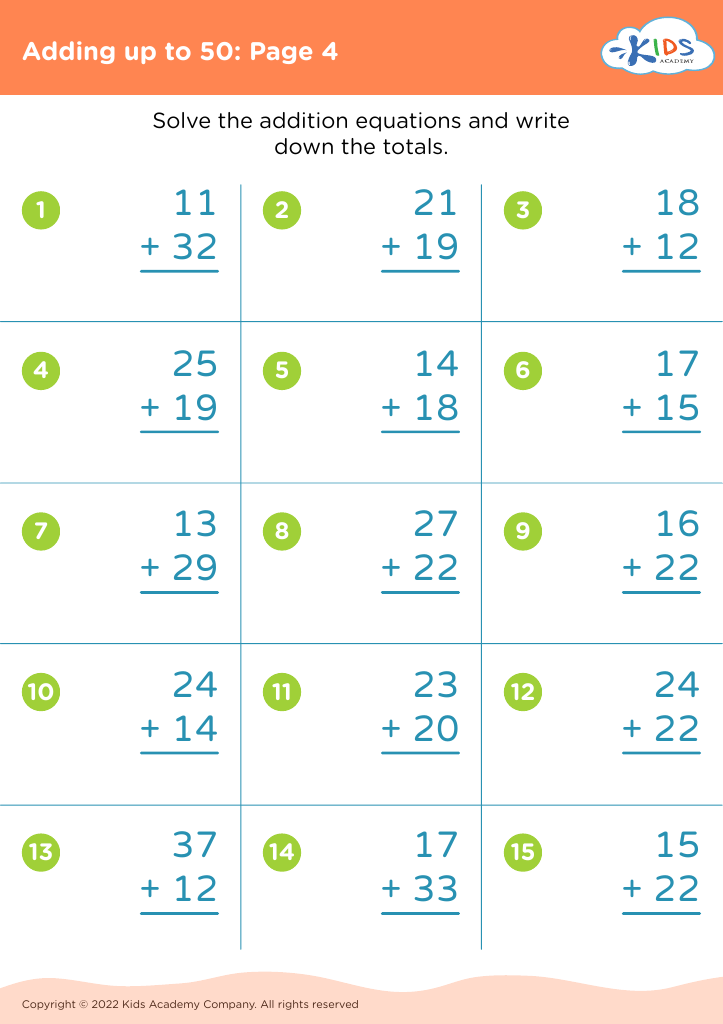
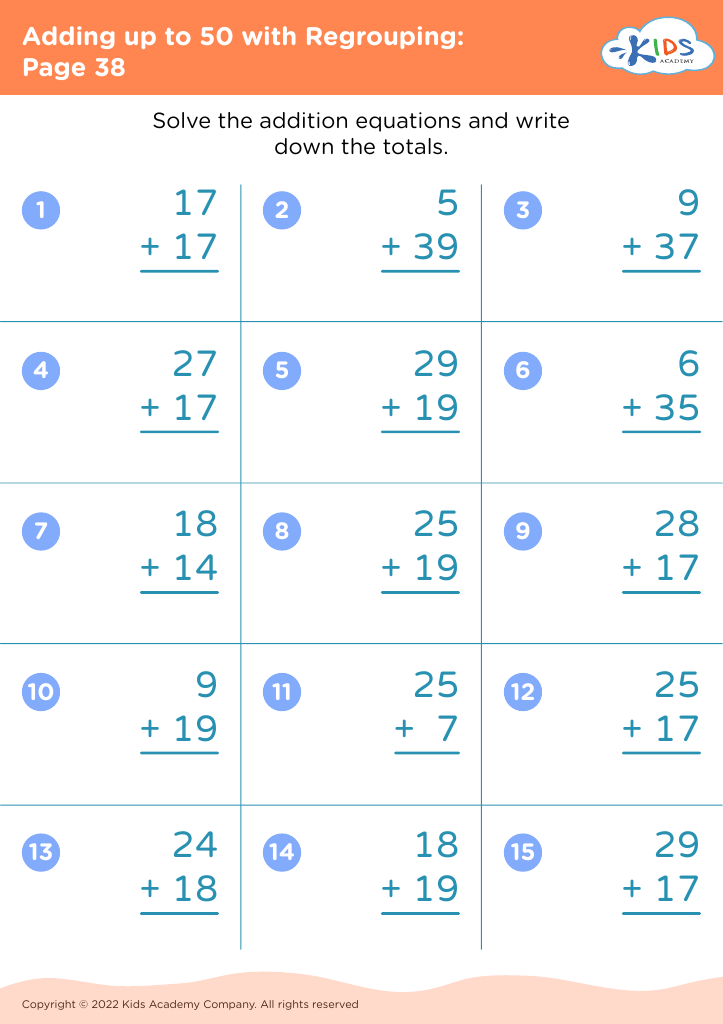
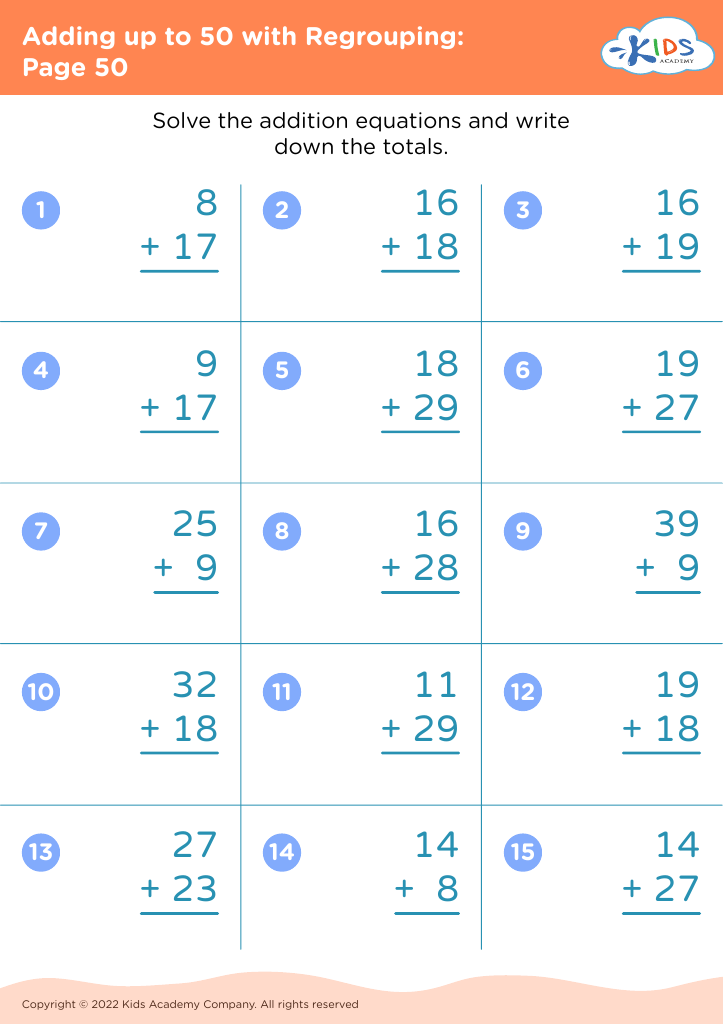
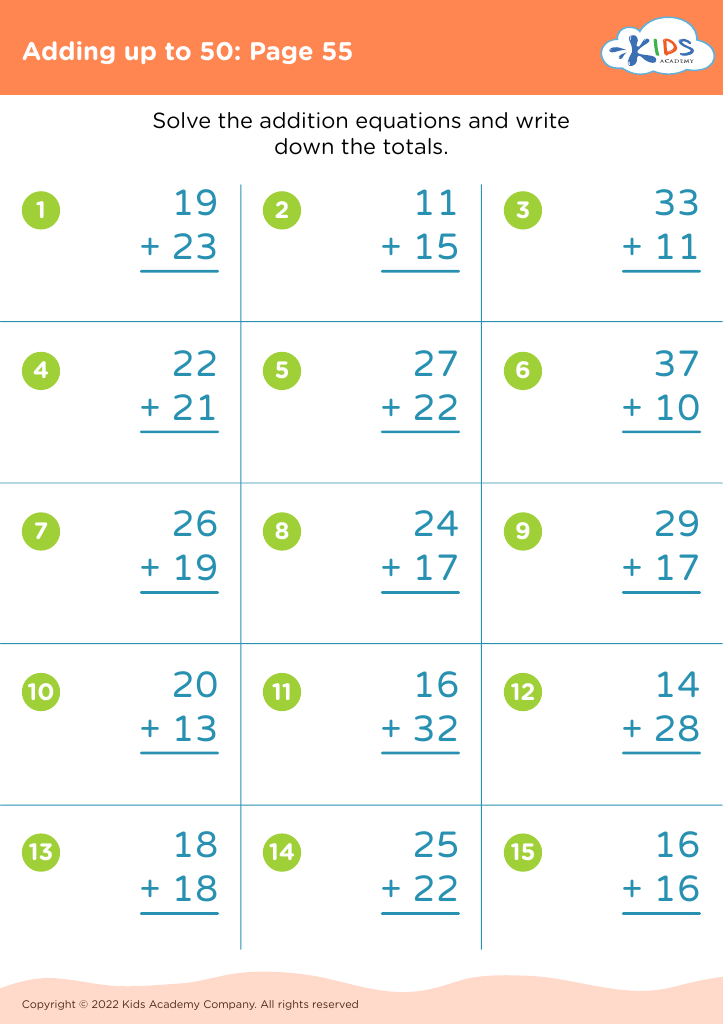
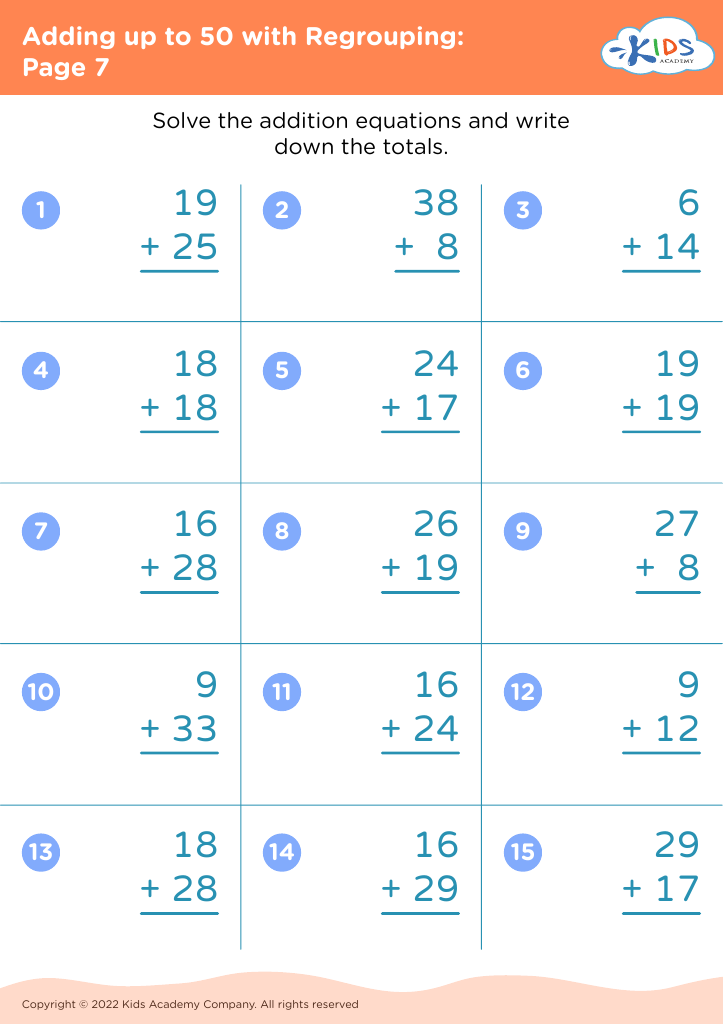
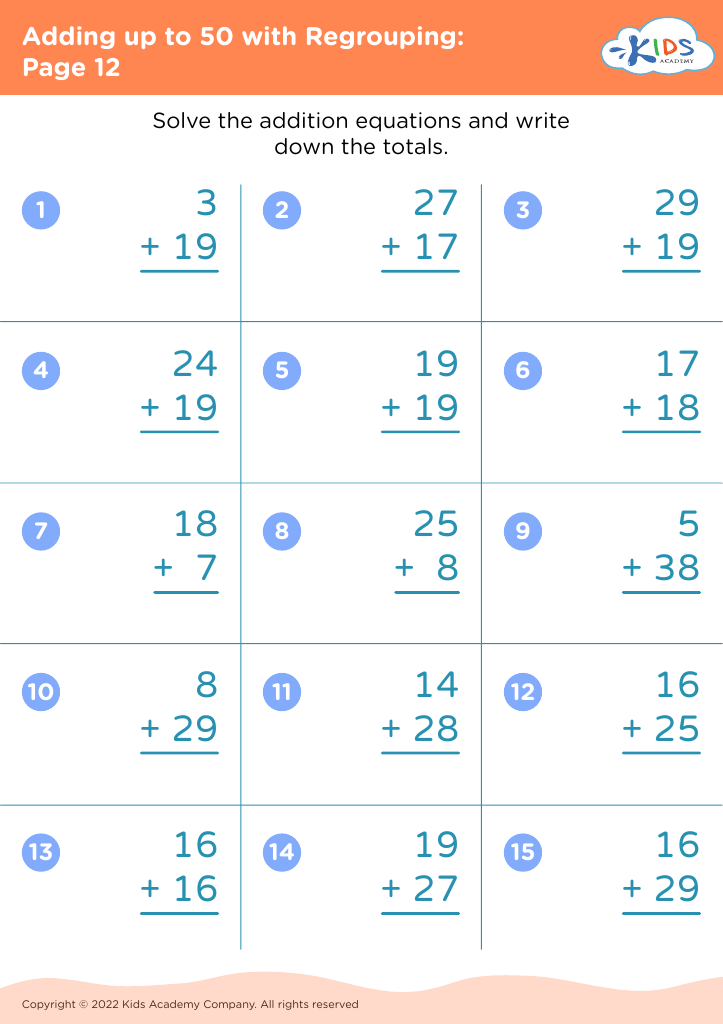
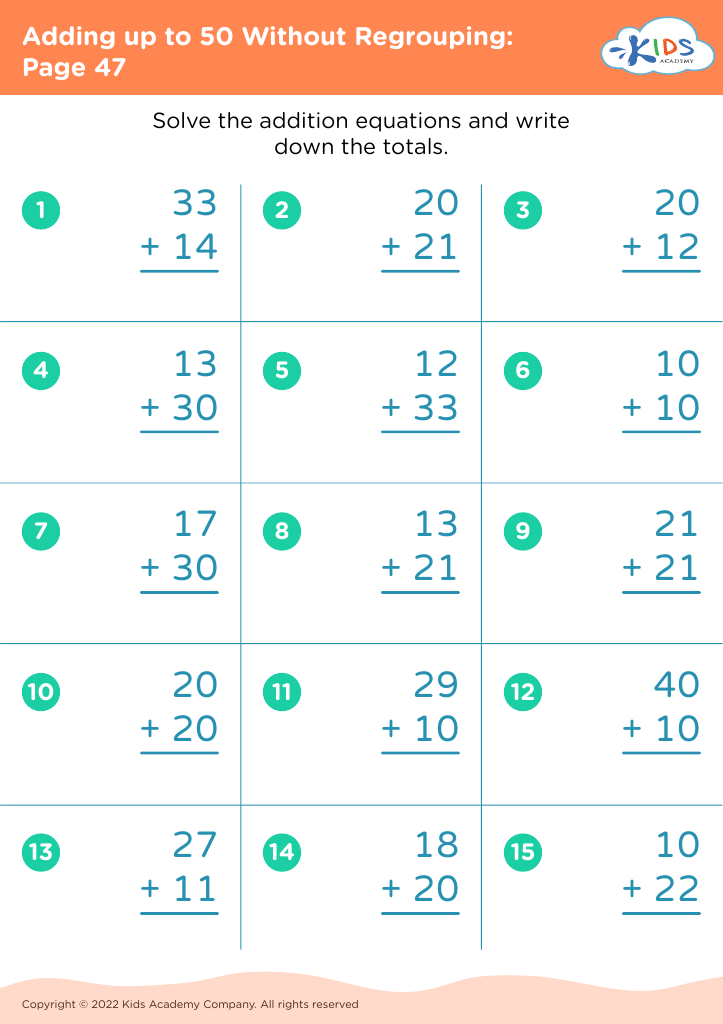
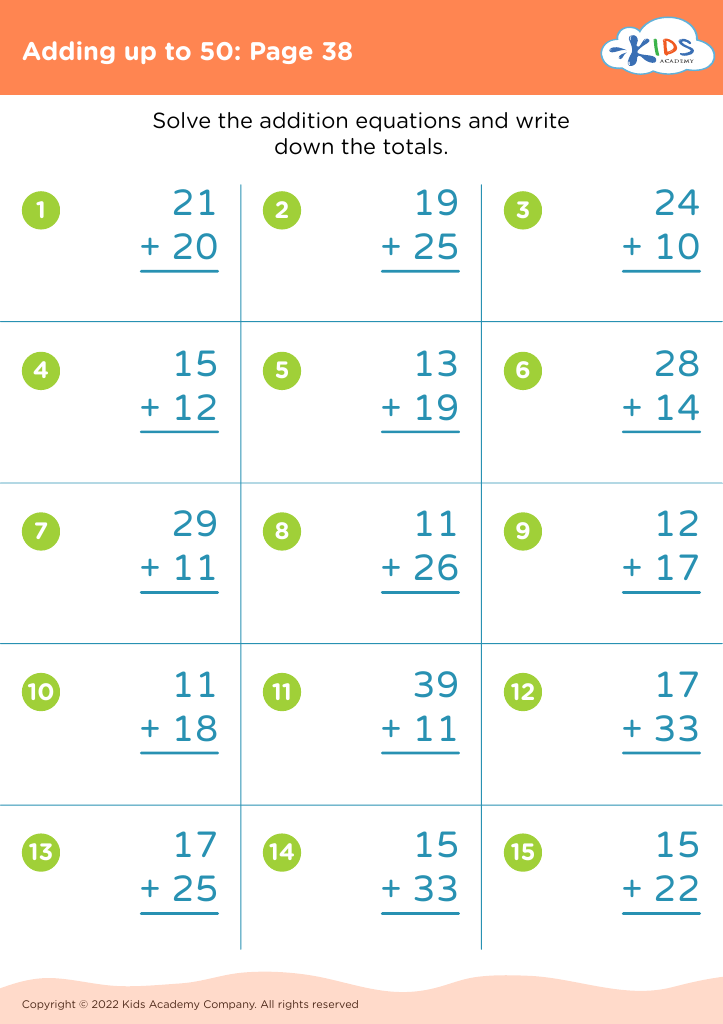
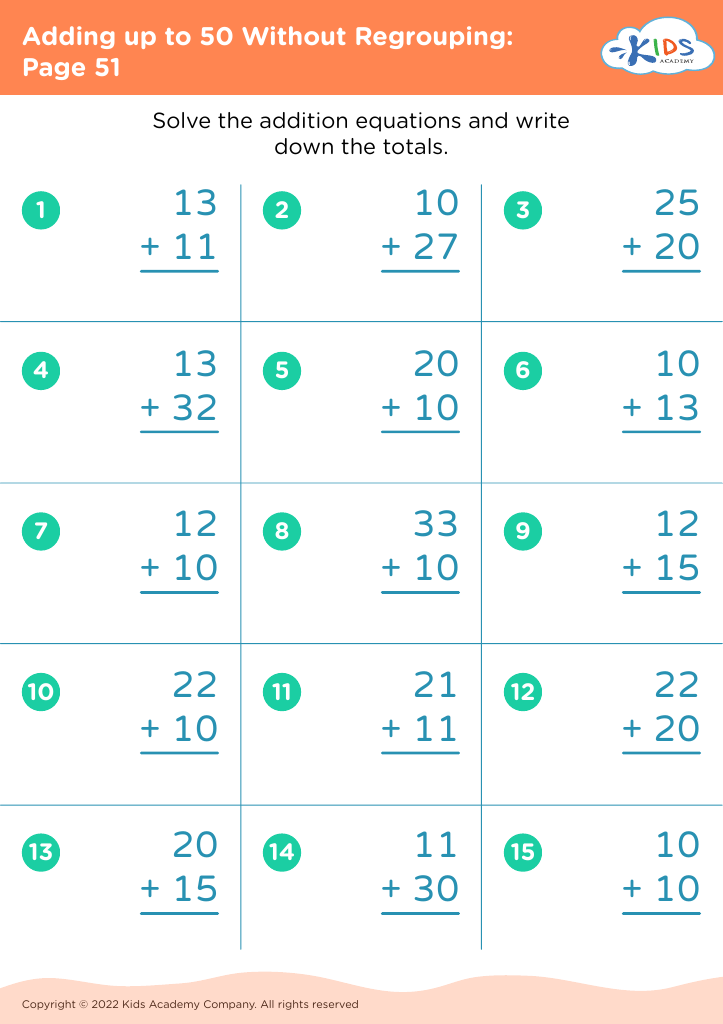
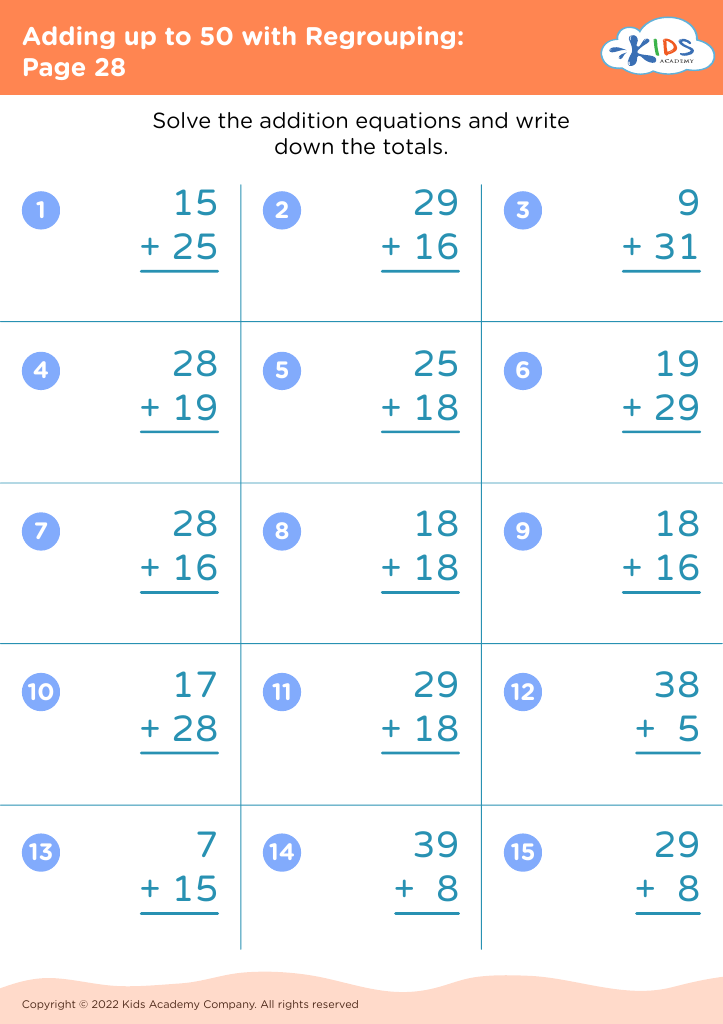
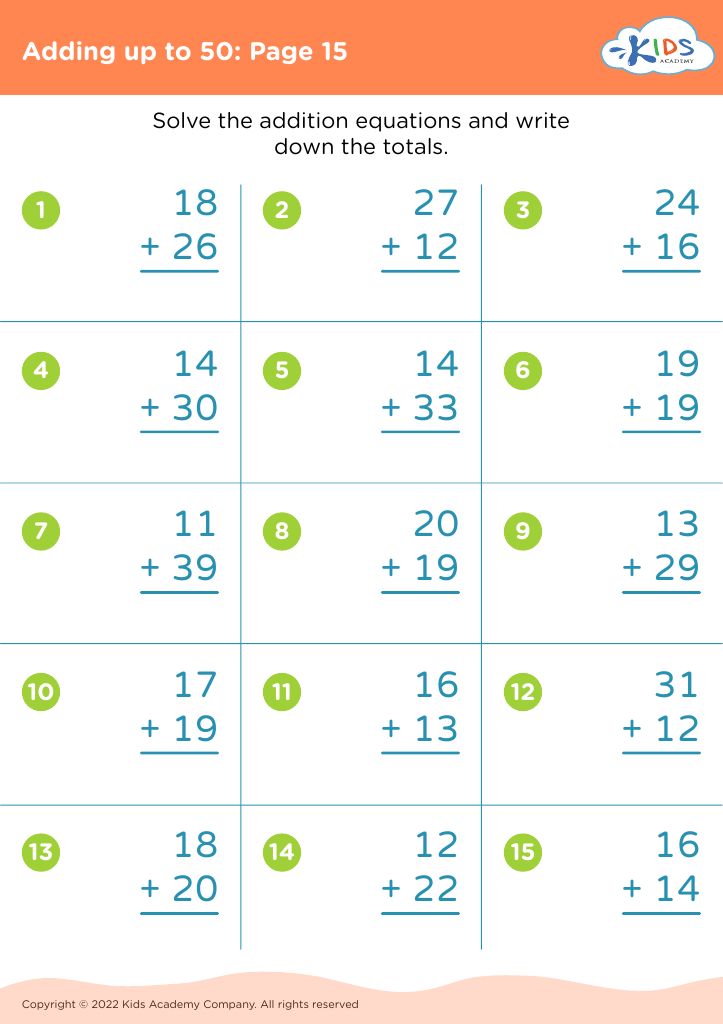
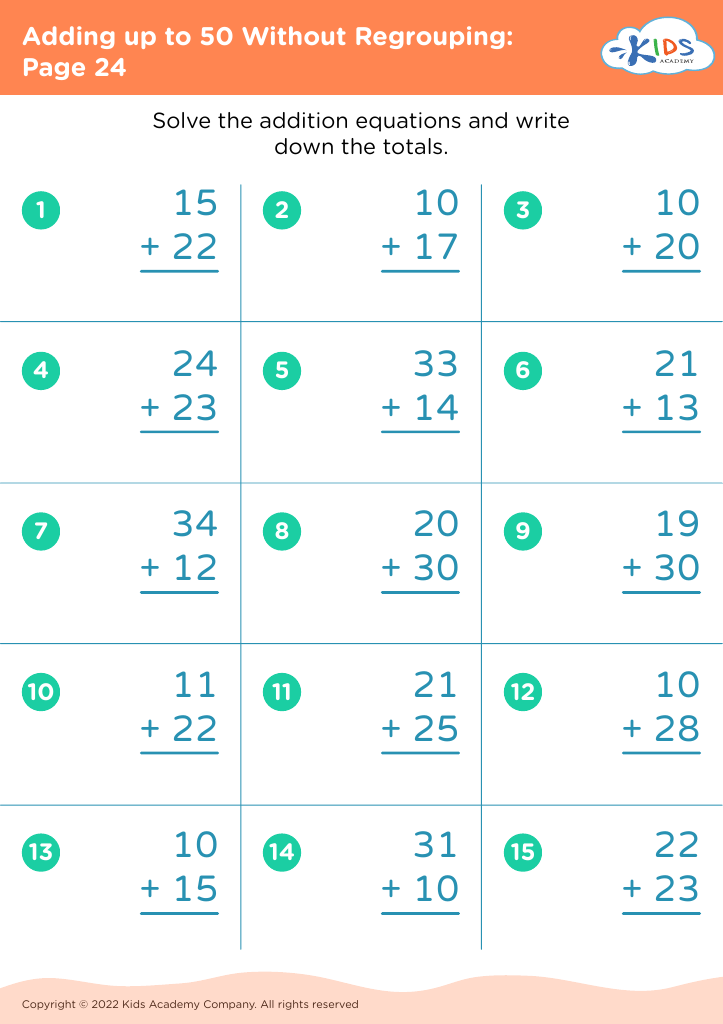
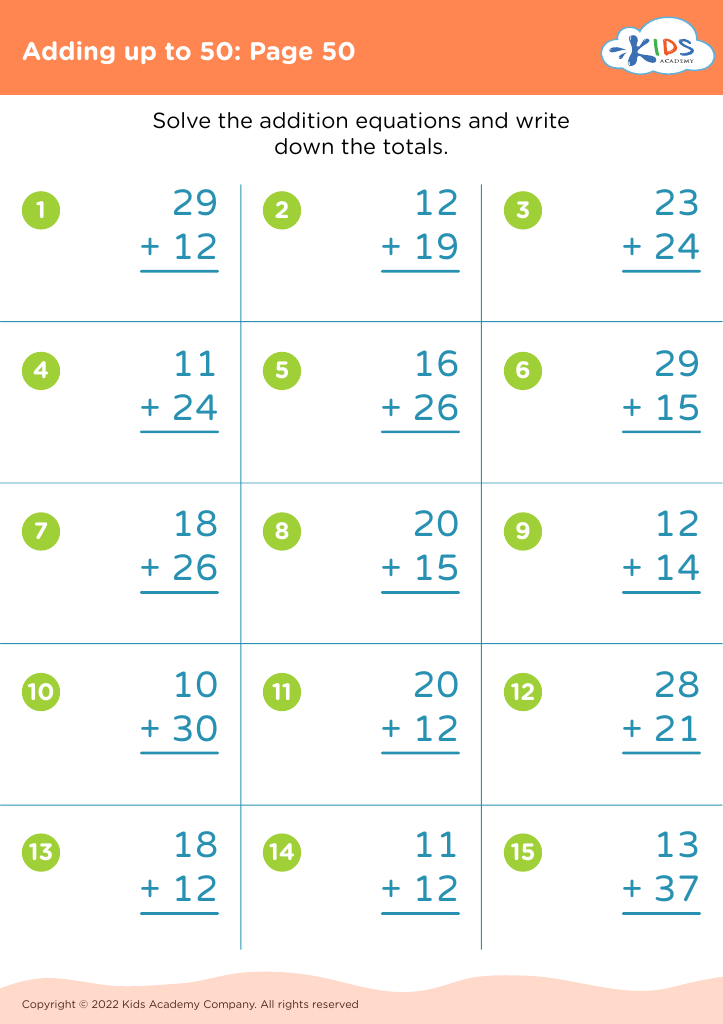
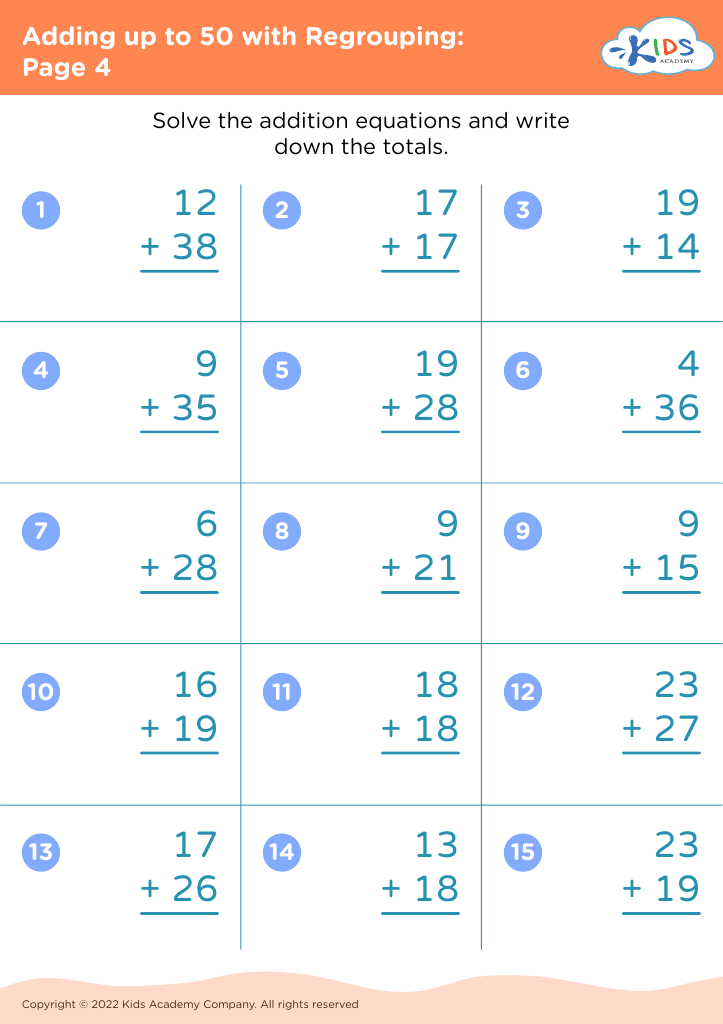
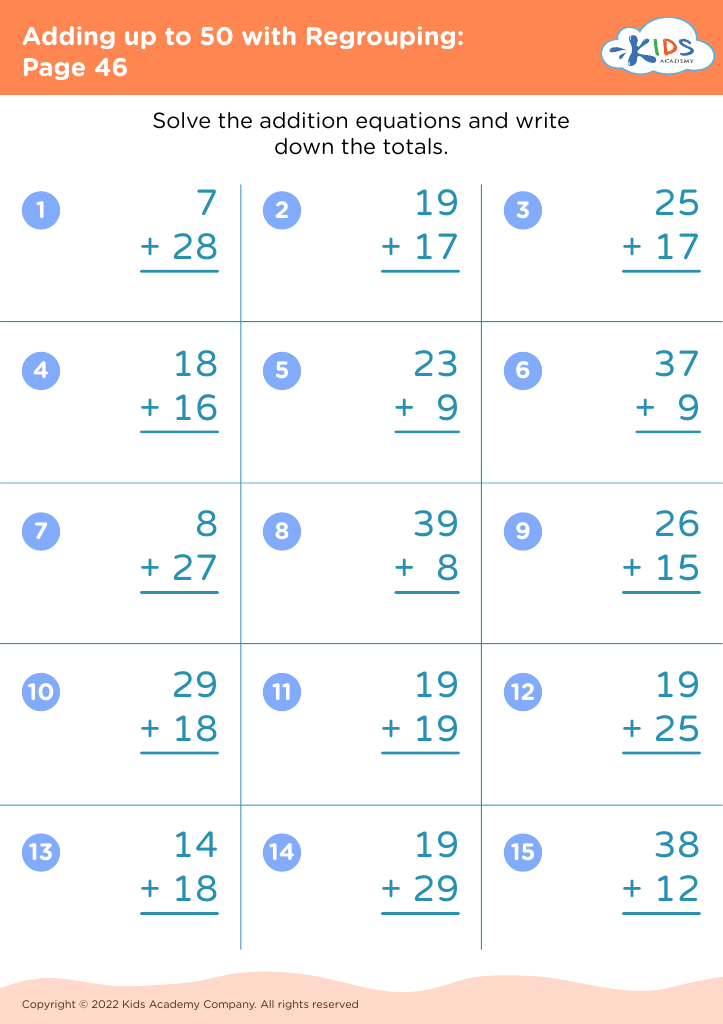




Parents and teachers should prioritize problem-solving skills that involve adding up to 50 for children aged 8-9 because this foundational math ability nurtures essential cognitive and practical skills. At this developmental stage, children's brains are rapidly developing, and engaging in exercises that require them to solve addition problems boosts their cognitive flexibility and number sense.
Problem-solving skills in addition stimulate critical thinking as children learn to analyze problems, apply logical reasoning, and systematically work through solutions. It fosters a deeper understanding of mathematical concepts behind simple addition, which is crucial for more advanced arithmetic and math learning. This foundational knowledge helps build a strong base for future learning in subjects like algebra, problem-solving, and logic.
Furthermore, these skills are practical in everyday scenarios. Whether it is helping to make sense of numbers in real life, budgeting small amounts, or simply enhancing mental math agility, mastering adding up to 50 is markedly beneficial. It also improves perseverance and attention-to-detail by encouraging children to seek solutions and verify their accuracy.
Prioritizing these problem-solving skills aids in fostering a positive, confident attitude towards math, mitigating math anxiety. It equips children with key tools not just for academic success, but for practical, everyday problems they will encounter. Thus, parents and teachers play a crucial role in nurturing these abilities, creating lifelong learners and problem solvers.








