Recognizing equivalent fractions Adding up to 50 Worksheets for Ages 8-9
3 filtered results
-
From - To
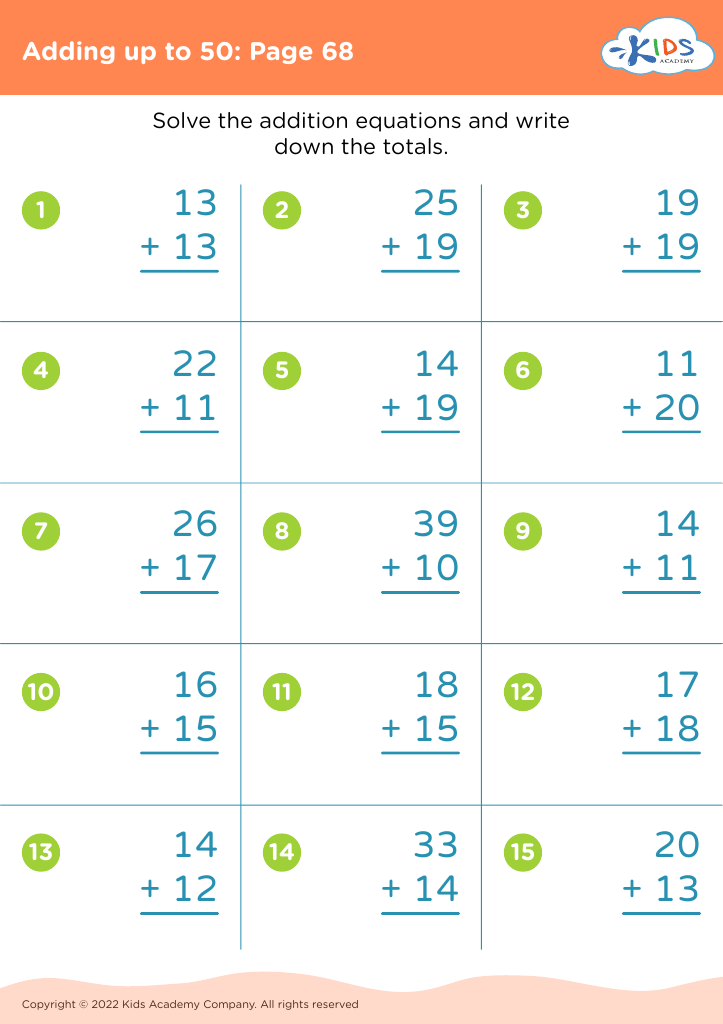
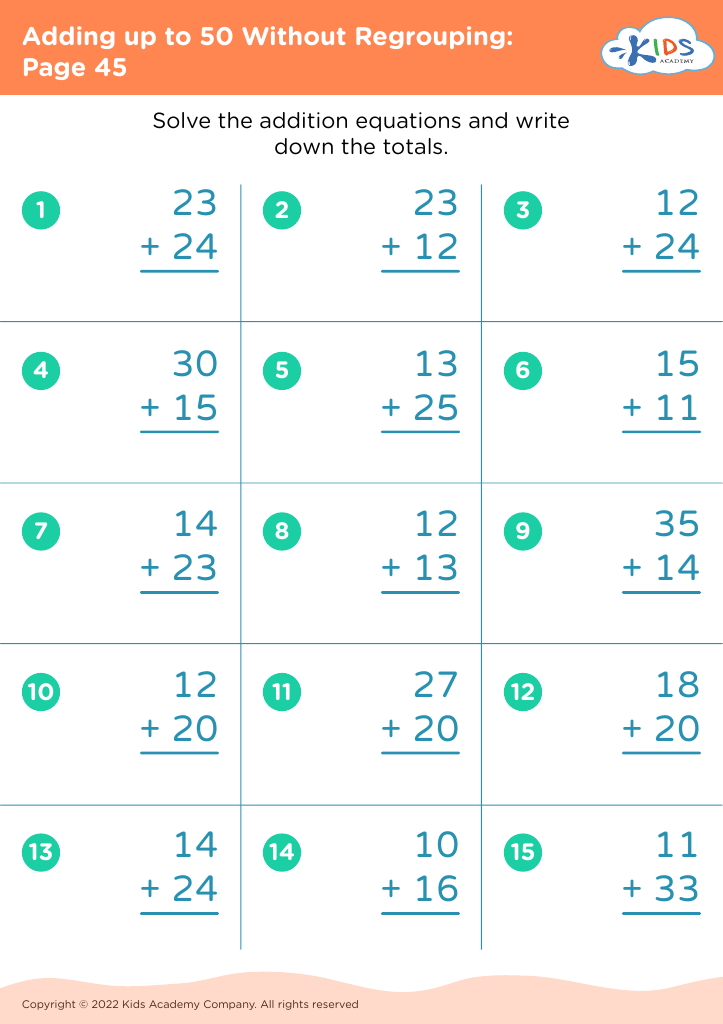
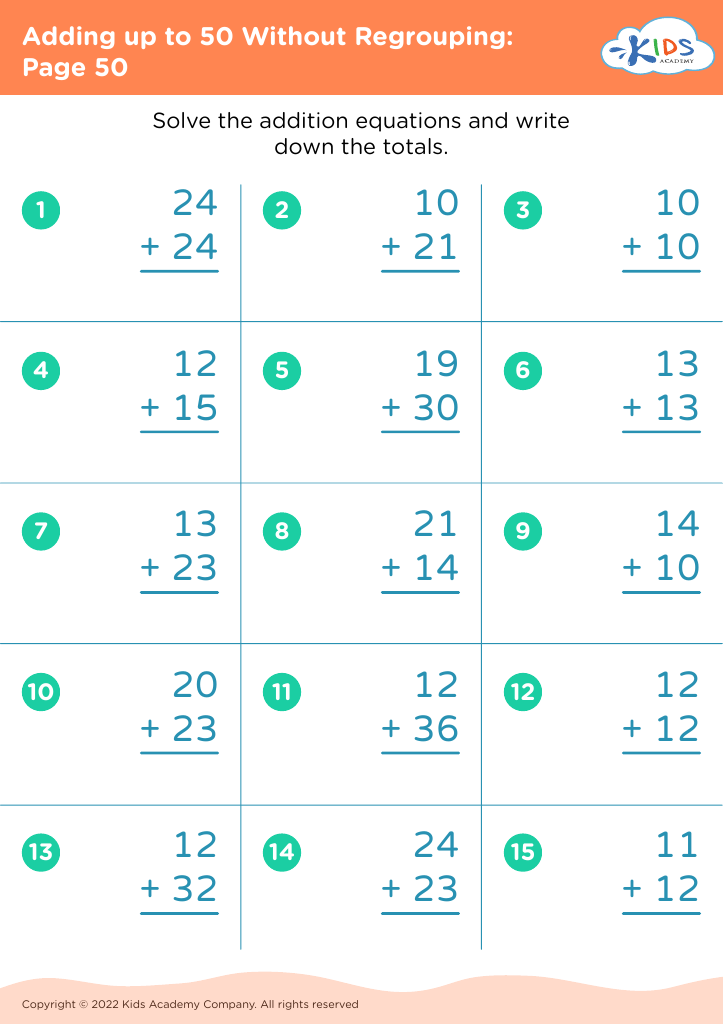
Boost your child's math skills with our engaging "Recognizing Equivalent Fractions Adding Up to 50 Worksheets" designed for ages 8-9! These interactive worksheets help young learners understand the concept of equivalent fractions while practicing addition with sums up to 50. Each activity incorporates vibrant illustrations and relatable examples, making math fun and accessible. By completing these worksheets, your child will enhance their fraction recognition, improve critical thinking, and build a solid foundation in mathematical operations. Perfect for classroom use or at-home learning, these resources support educational growth in a playful, stress-free environment. Download and start exploring the world of fractions today!




Recognizing equivalent fractions is an essential mathematical skill that lays the foundation for more complex concepts in arithmetic and algebra. For children ages 8-9, understanding equivalent fractions helps them grasp the idea that different fractions can represent the same value, fostering critical thinking and problem-solving skills. This concept not only supports their ability to simplify fractions but also enhances their overall number sense, making it easier for them to tackle topics like addition, subtraction, and comparison of fractions.
Parents and teachers should care about this skill, especially in the context of adding up to 50, as it connects to real-world applications like cooking, budgeting, and measurement, allowing children to see the relevance of mathematics in daily life. Further, this understanding enables students to approach computations with confidence, supporting positive attitudes toward math.
An early emphasis on this concept builds self-esteem and a strong mathematical foundation as students progress through their education. By investing time in recognizing equivalent fractions, parents and teachers can help children become proficient in mathematics, ensuring they are well-prepared for the higher-level math concepts they will encounter in later grades. This skill is not just about numbers; it's about developing a mindset of flexibility and critical thinking that students will benefit from in many areas of learning.








