Simplifying Fractions Adding up to 50 Worksheets for Ages 8-9
8 filtered results
-
From - To
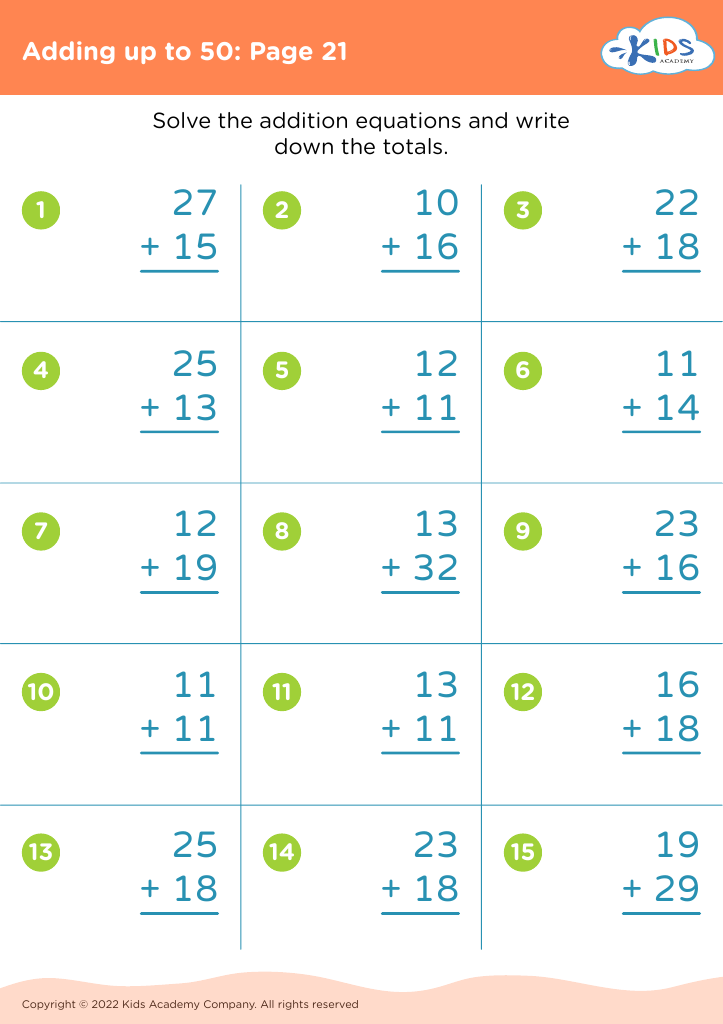
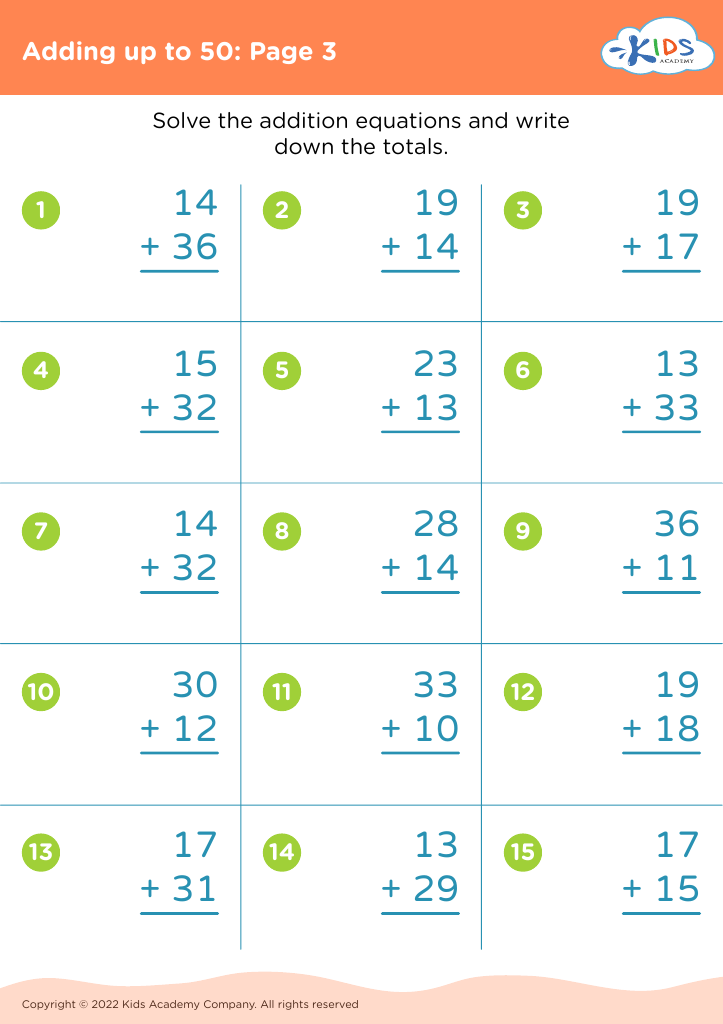
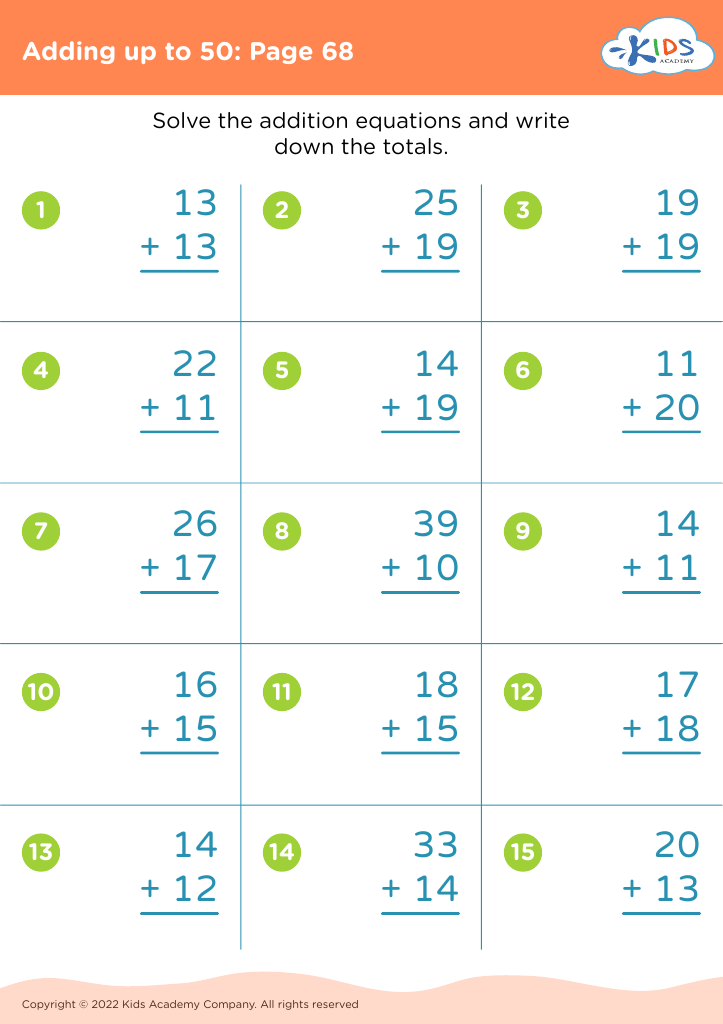
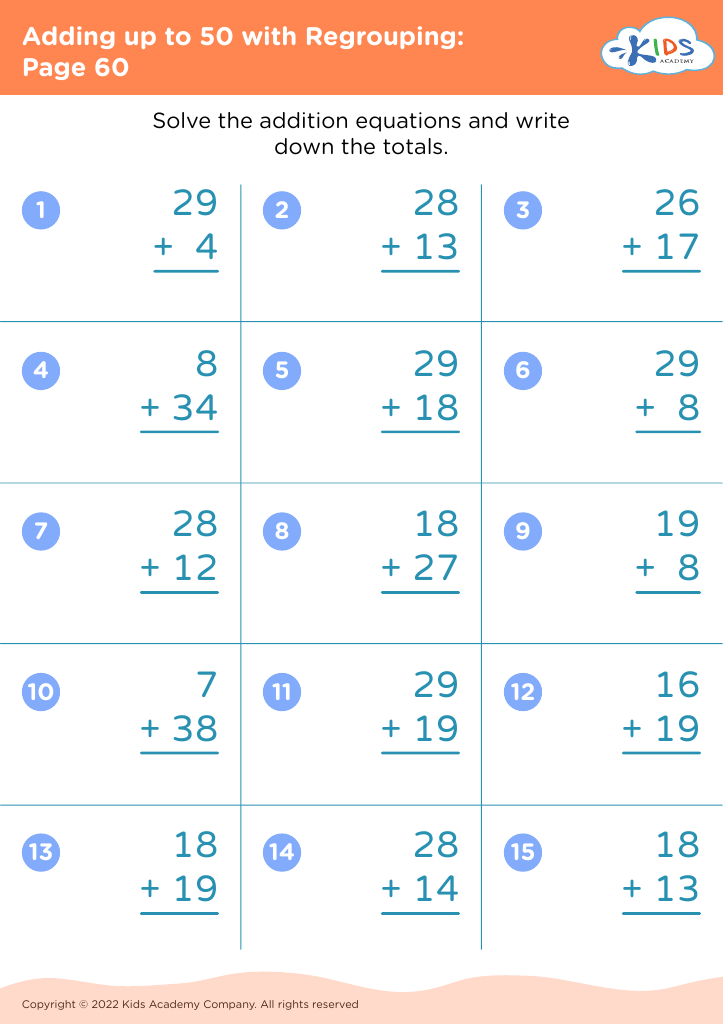
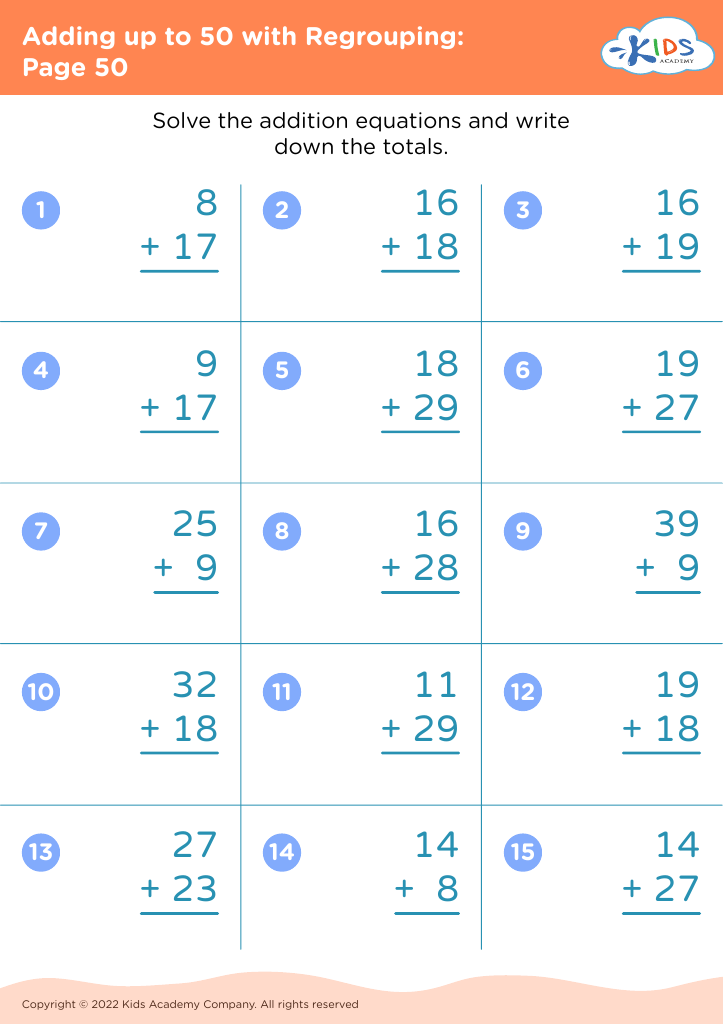
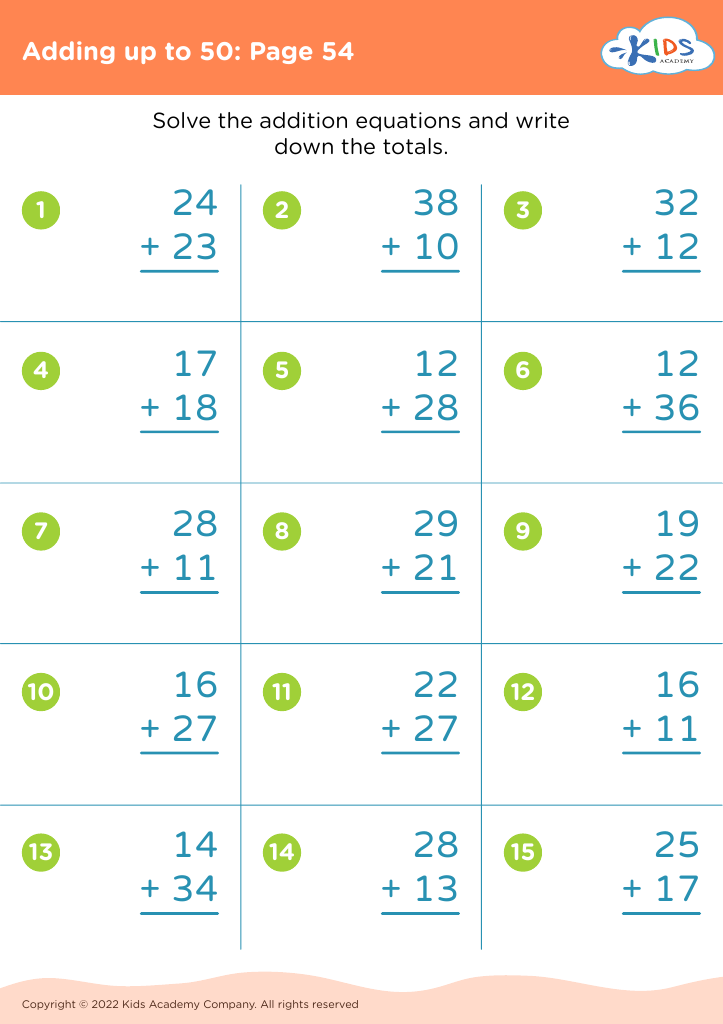
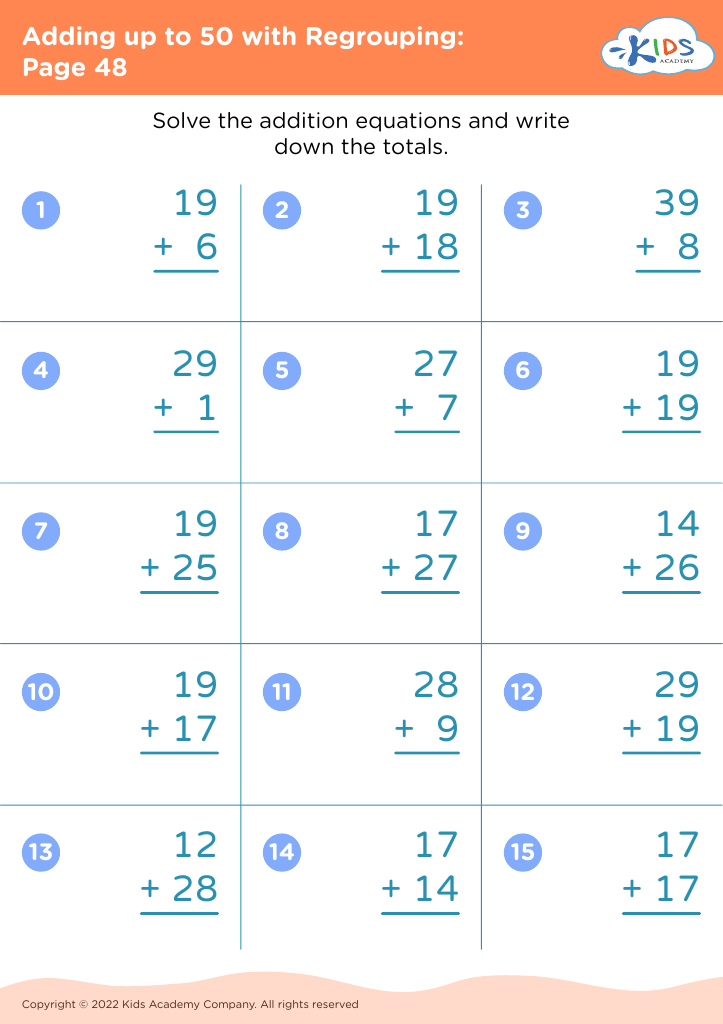
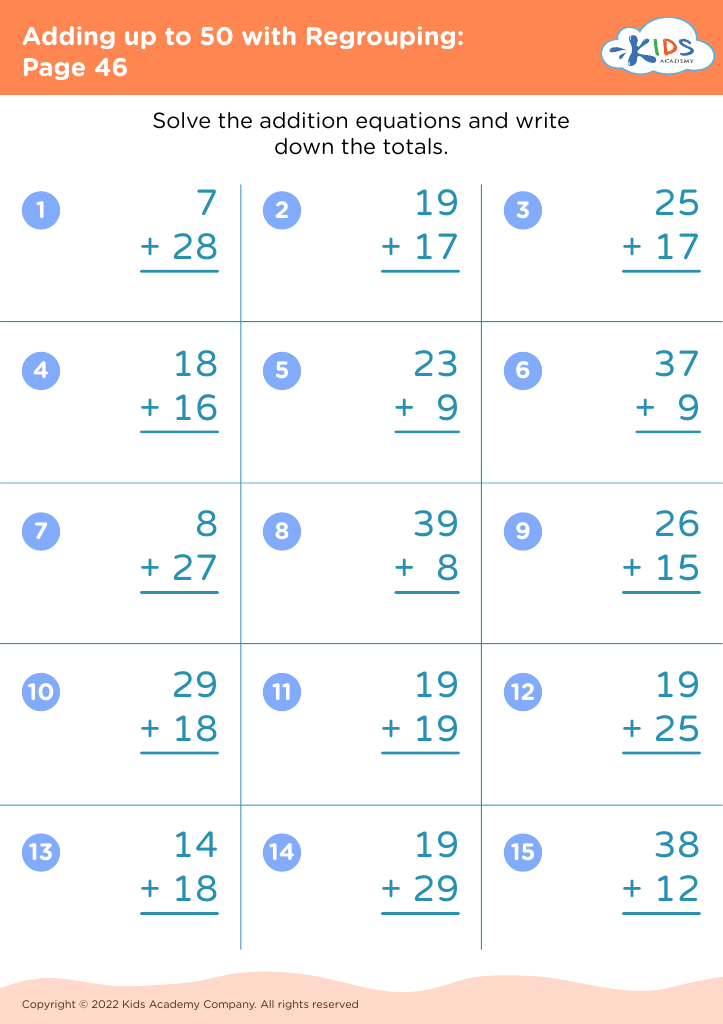
Simplify your child's understanding of fractions with our "Simplifying Fractions Adding up to 50 Worksheets" designed for ages 8-9. These engaging exercises develop essential math skills, helping young learners practice simplifying fractions through hands-on activities. Perfect for reinforcing classroom learning, these worksheets promote confidence by guiding students step-by-step to break down complex fraction problems. With clear instructions and vibrant visuals, our resources make learning fractions fun and accessible. Ideal for parents and teachers alike, these printable worksheets are a valuable tool for boosting comprehension and ensuring success in mastering the fundamental concept of simplifying fractions.




Simplifying fractions is a crucial math skill that fosters a strong numerical foundation, which is vital for kids aged 8-9 who are at a critical stage of cognitive development. When parents and teachers emphasize simplifying fractions, they are helping children develop number sense, an understanding of basic mathematical principles, and the ability to work with numbers flexibly and accurately.
Understanding how to simplify fractions builds problem-solving skills and enhances logical thinking. For instance, when students simplify (\frac{10}{20} \text{ to } \frac{1}{2}), they recognize relationships and patterns within fractions and numbers. This process strengthens their ability to approach more complex mathematical concepts like ratios, proportions, and algebra with confidence later on.
Furthermore, from a practical perspective, simplifying fractions teaches children to see parts of a whole and to more easily engage in everyday activities like cooking, dividing objects, or handling money. Teachers and parents who stress these skills set a foundation for academic success across a range of subjects, as these strategies extend beyond the math classroom.
Focusing on fractions that add up to 50 allows students to practice within a meaningful and manageable number range, making abstract concepts more concrete and easier to grasp. This nurtures a positive attitude toward math, encouraging lifelong learning and curiosity.








