Subtraction practice Adding up to 50 Worksheets for Ages 8-9
3 filtered results
-
From - To
Discover engaging subtraction practice with our "Adding up to 50 Worksheets" specially designed for children ages 8-9. Perfect for honing math skills, these printable resources challenge young learners to subtract using sums up to 50. Expertly crafted to cater to Grade 2 and Grade 3 curricula, our worksheets improve arithmetic fluency and confidence. Each sheet includes varied exercises with colorful images, puzzles, and word problems to keep your child motivated and learning. Maximize your child's math potential with Kids Academy's fun and educational subtraction worksheets. Download now to help your child excel in subtraction!
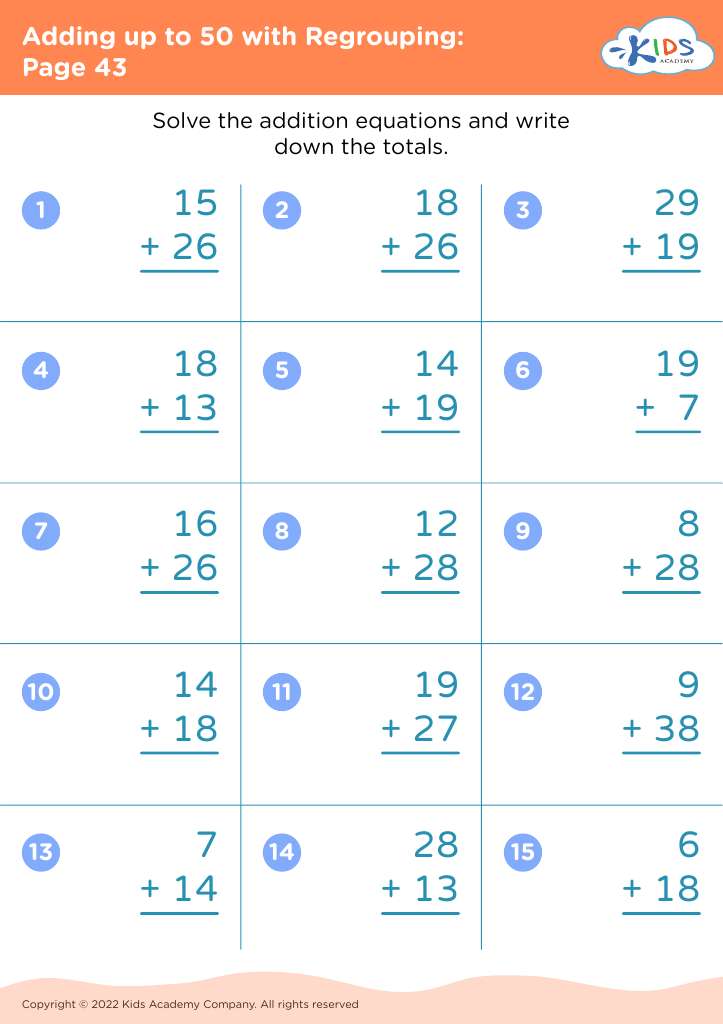
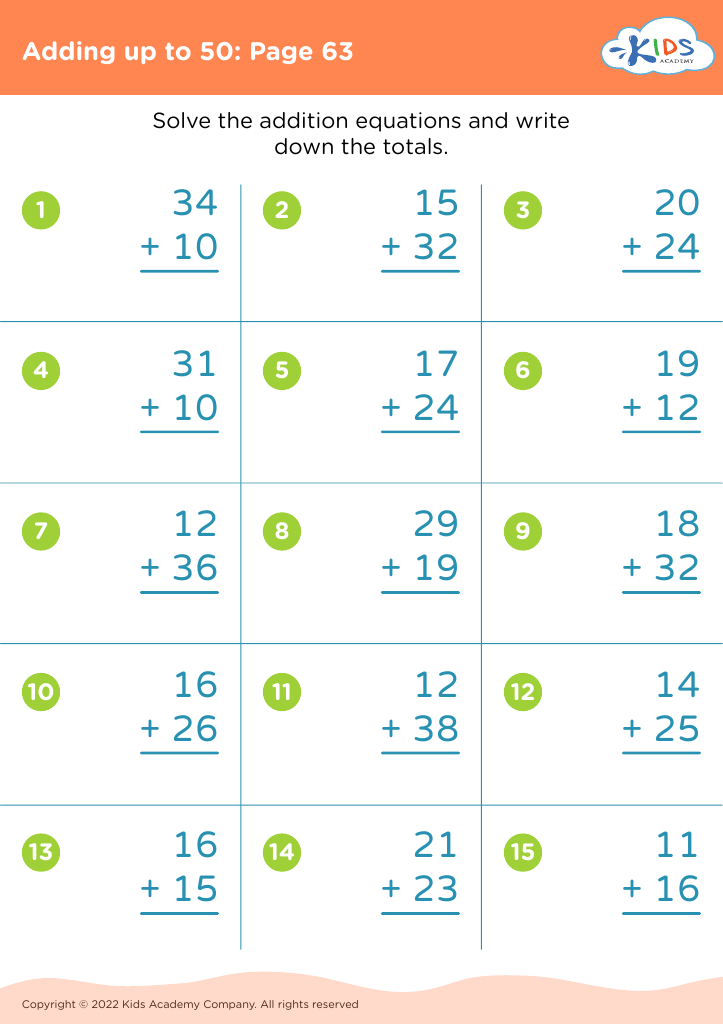
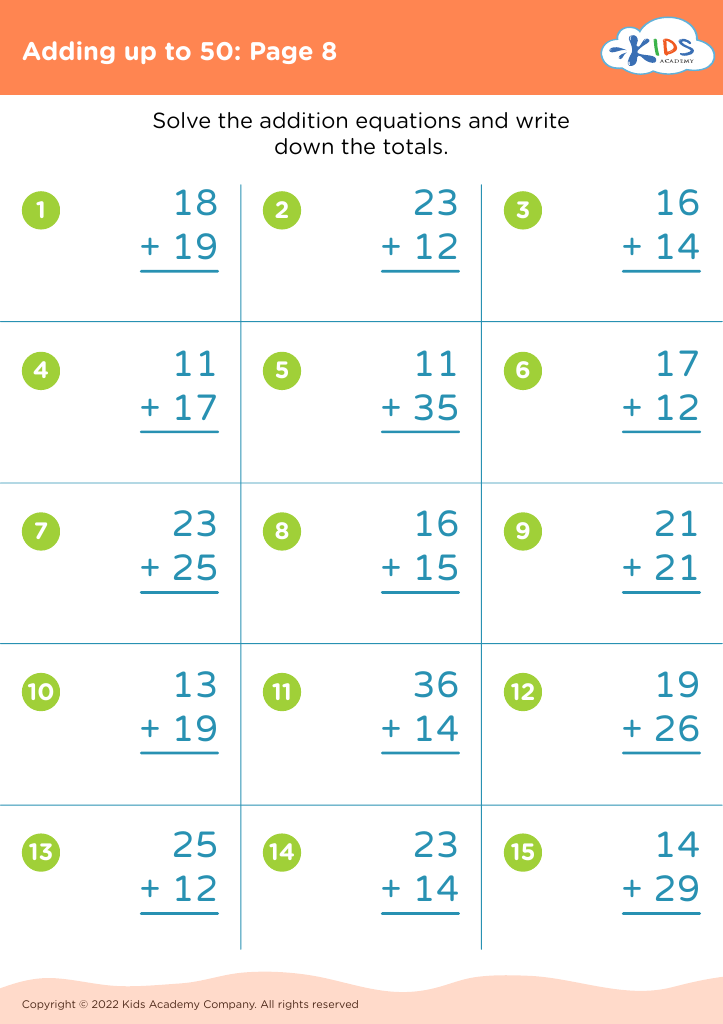




Subtraction practice up to 50 for ages 8-9 is a cornerstone in building foundational math skills crucial for a child's future academic success. Firstly, understanding and mastering subtraction not just enhances their numerical fluency but also strengthens overall arithmetic capabilities necessary for more complex math concepts encountered later on. At this age, children transition from simple counting to more advanced calculations, so consistent practice helps cement these essential skills.
Moreover, subtraction fosters critical thinking and problem-solving abilities. Children learn to approach problems methodically, breaking them down into manageable steps, which is a valuable lifelong skill. It encourages logical reasoning and the ability to see relationships between numbers, a vital aspect of math literacy.
For parents and teachers, prioritizing subtraction practice up to 50 not only aligns with educational standards but also plays a role in boosting a child's confidence. Mastery in subtraction helps to reduce math anxieties as they feel more capable and resilient in the face of challenging problems. It feeds into a positive attitude towards STEM subjects later in education, influencing potentials for career paths in science, technology, engineering, and mathematics fields. Therefore, an investment in subtraction fluency is an investment in a child's overall cognitive development and future academic achievements.








