
Understanding adjectives Adding up to 50 Worksheets for Ages 8-9
4 filtered results
Difficulty Level
Grade
Age
-
From - To
Subject
Activity
Standards
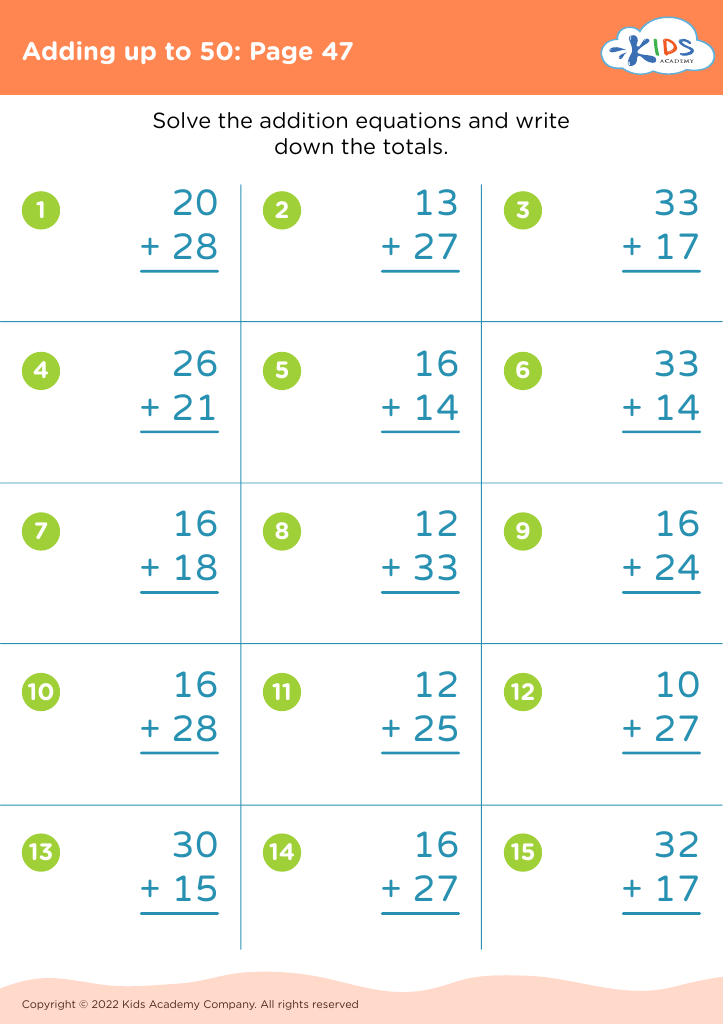
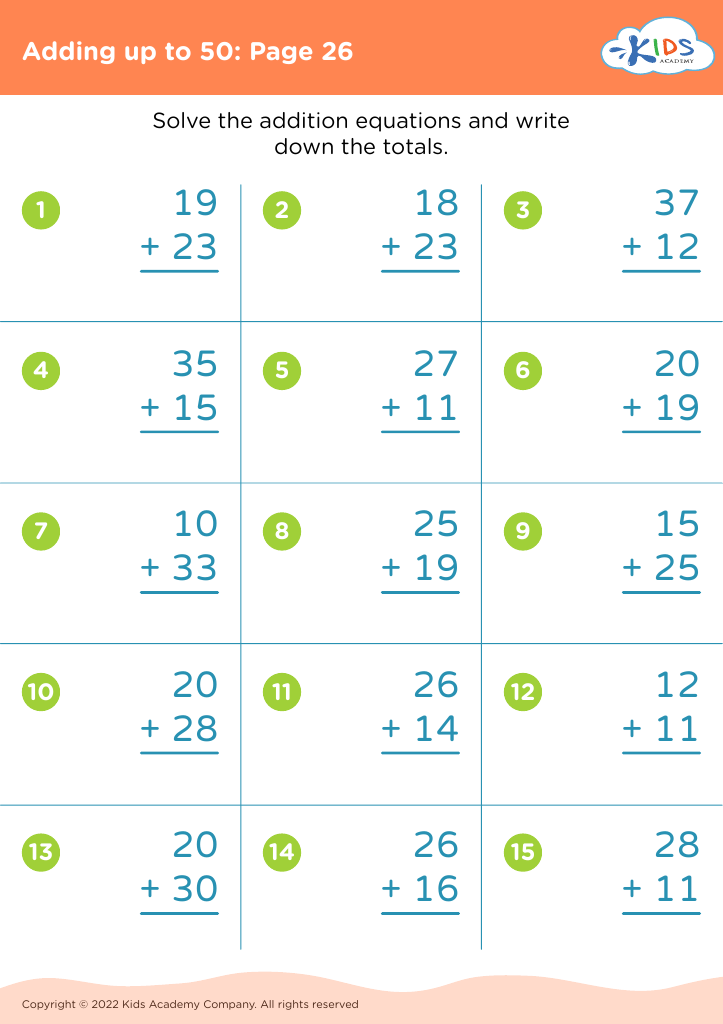
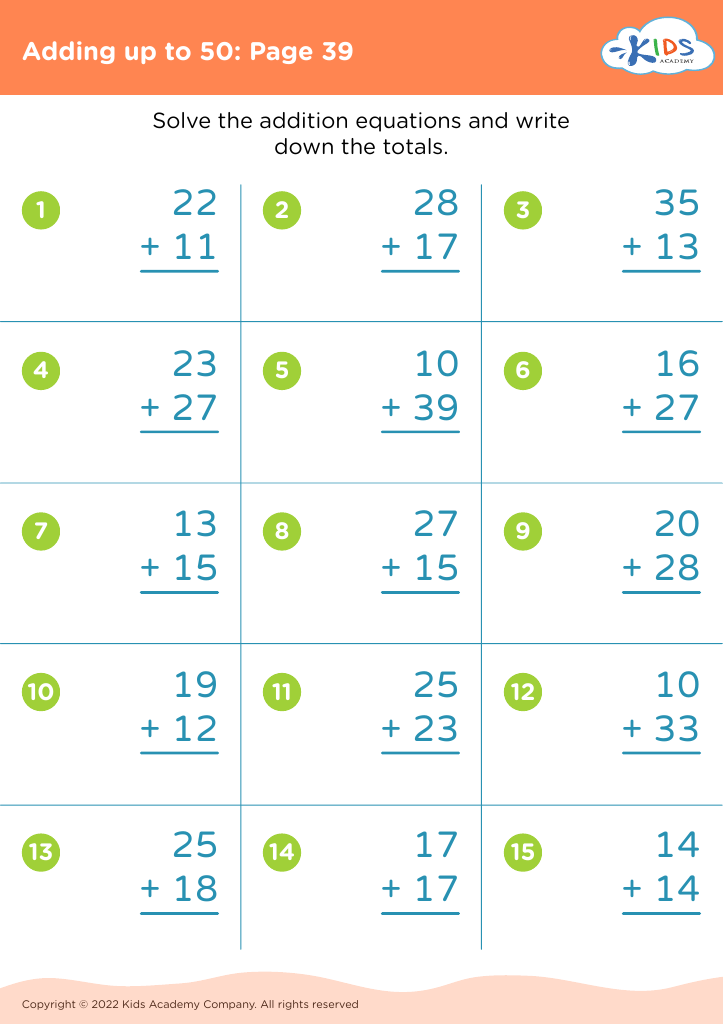
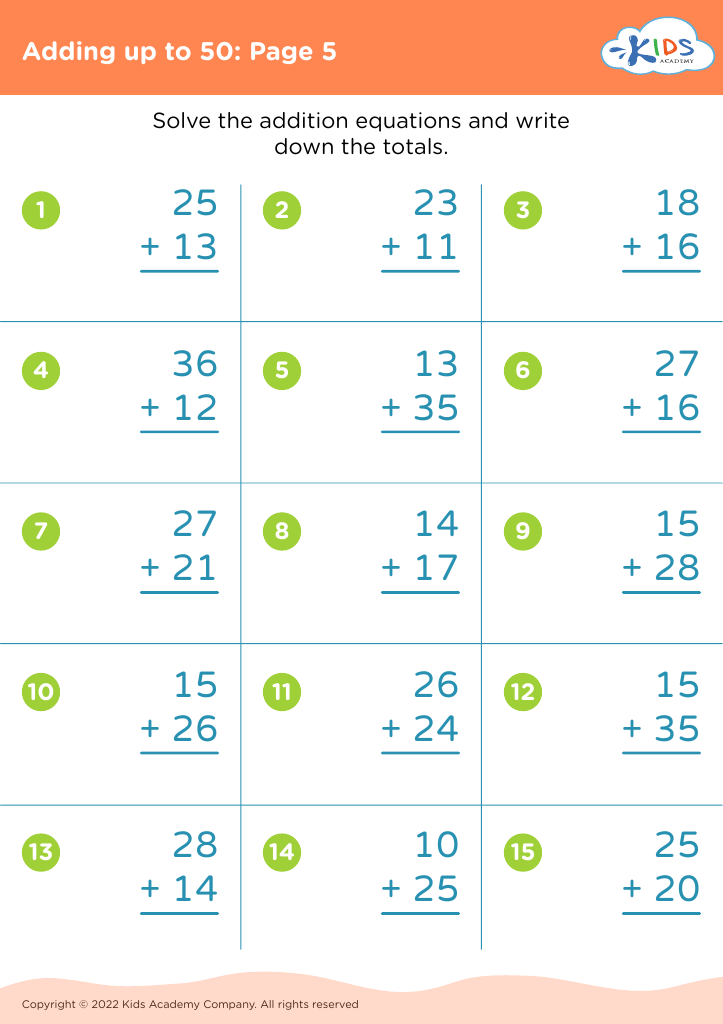
Discover the perfect blend of language and math with our "Understanding Adjectives Adding Up to 50 Worksheets" for children aged 8-9. These engaging worksheets help young learners enhance their vocabulary and grammatical skills by incorporating adjectives into math exercises focused on adding numbers up to 50. Designed to ignite creativity, students will describe colorful images and math scenarios using precise adjectives, making learning interactive and fun! Ideal for reinforcing classroom concepts or as a supplemental resource at home, these worksheets will not only sharpen your child’s math skills but also enrich their language development. Join us in transforming learning into excitement!
Favorites
With answer key
Interactive
Join Kids Academy for Free
Who is primarily going to use this learning content?




Understanding adjectives and mastering addition—specifically concepts like "adding up to 50"—are fundamental skills for children aged 8-9 that contribute significantly to their overall development.
Firstly, adjectives are essential for language development. They help children describe and express their thoughts clearly. By understanding their use and meaning, children can enhance their communication skills, improving their writing and verbal expression. This ability fosters creativity and imagination, allowing them to write engaging stories and adequately articulate their feelings and observations.
Second, proficient math skills, like adding up to 50, are critical as children develop their numerical understanding. Mastering addition lays the foundation for more advanced mathematical concepts, helping them become confident in their problem-solving abilities. It nurtures logical thinking and analytical skills, which are essential for everyday decisions and overall academic success.
Moreover, both language arts and mathematics are interconnected disciplines that promote holistic learning. When children can express mathematical concepts using adjectives—like "four big apples" or "seven small toys"—they engaged in appreciating the integration of math in real-world contexts.
Ultimately, encouraging proficiency in both adjectives and addition equips children with vital tools, opening doors to more advanced subjects while building their confidence and communication skills. For parents and teachers, supporting these competencies positively affects a child's lifelong learning and adaptability.








