Understanding fractions Adding up to 50 Worksheets for Ages 8-9
47 filtered results
-
From - To
Welcome to our "Understanding Fractions: Adding Up to 50" worksheets designed specifically for kids aged 8-9! These engaging worksheets provide a fun and interactive way for young learners to grasp the concept of fractions and how they relate to addition. Through a series of thoughtfully crafted exercises, children will develop their skills in adding fractions while ensuring the sums stay within 50. Perfect for reinforcing classroom lessons, these worksheets promote critical thinking and problem-solving abilities. With clear instructions and visually appealing designs, your child will build confidence in their math skills while enjoying the learning process. Download now for endless fun!
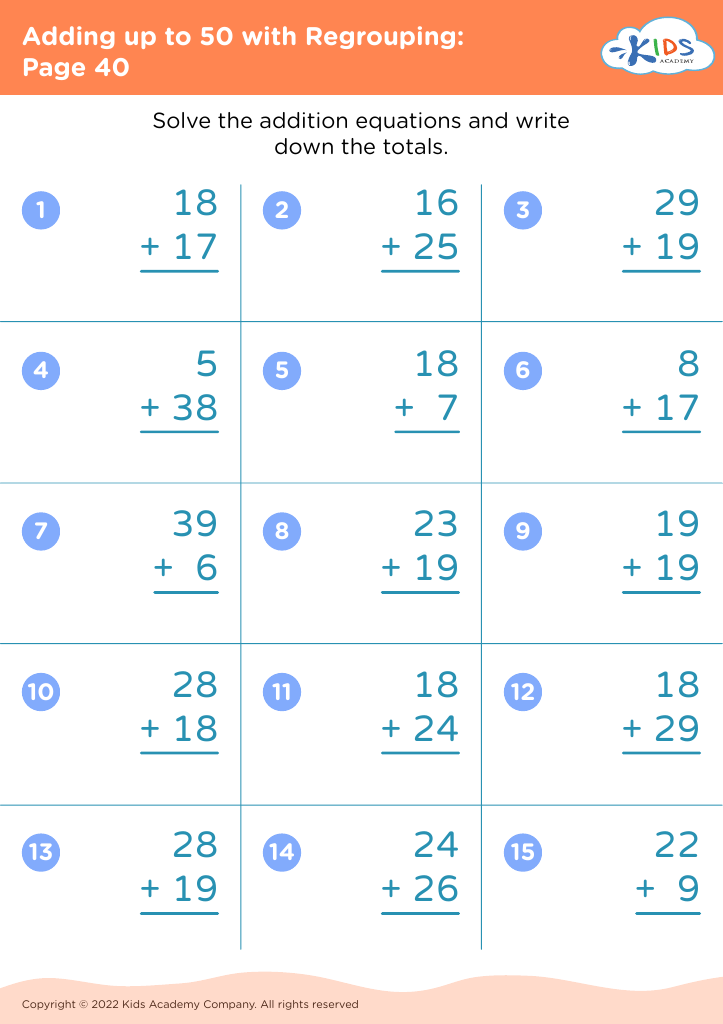
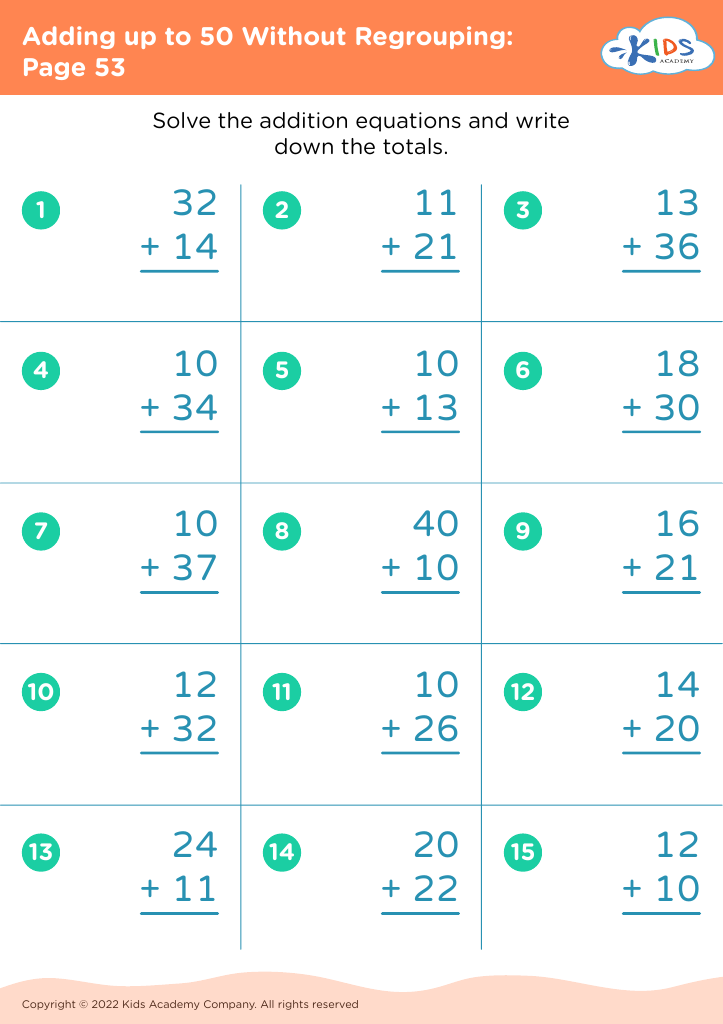
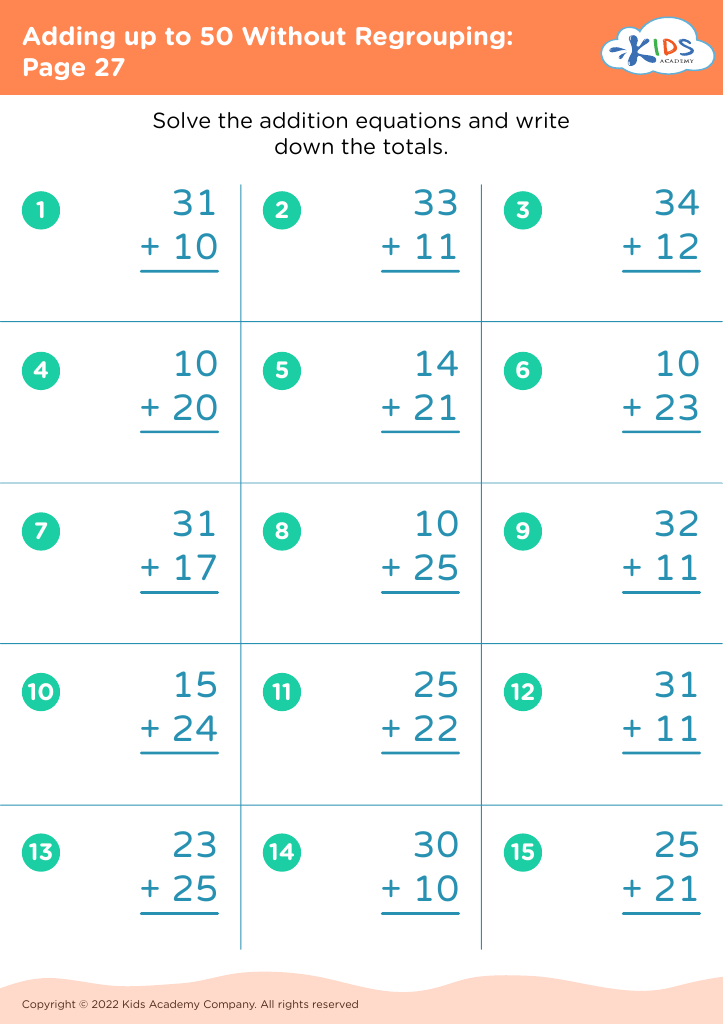
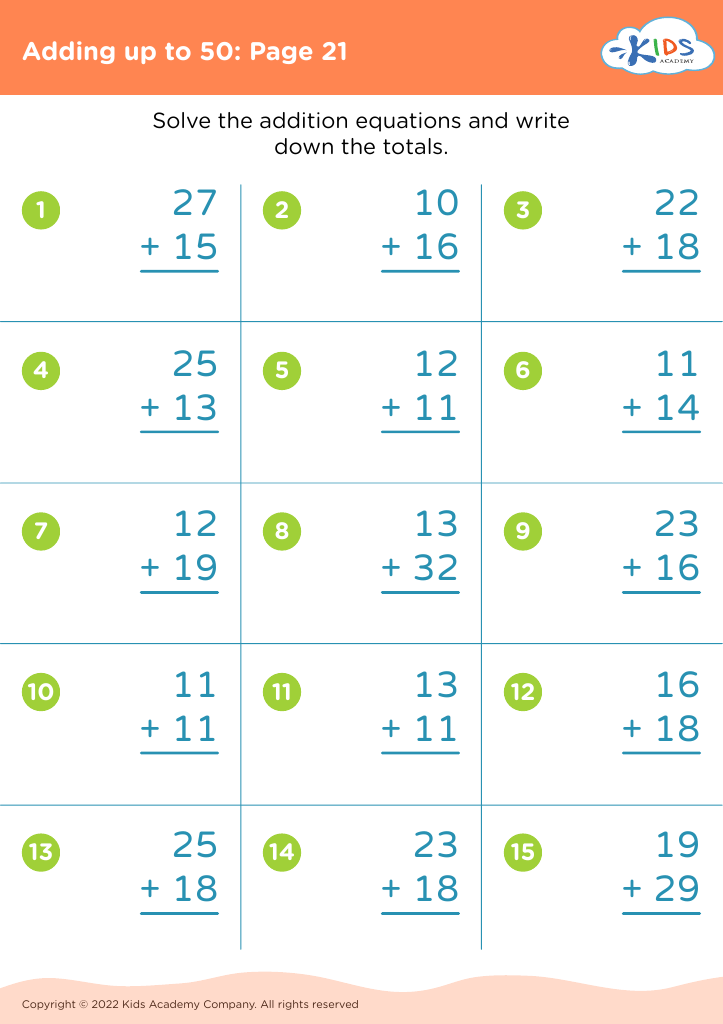
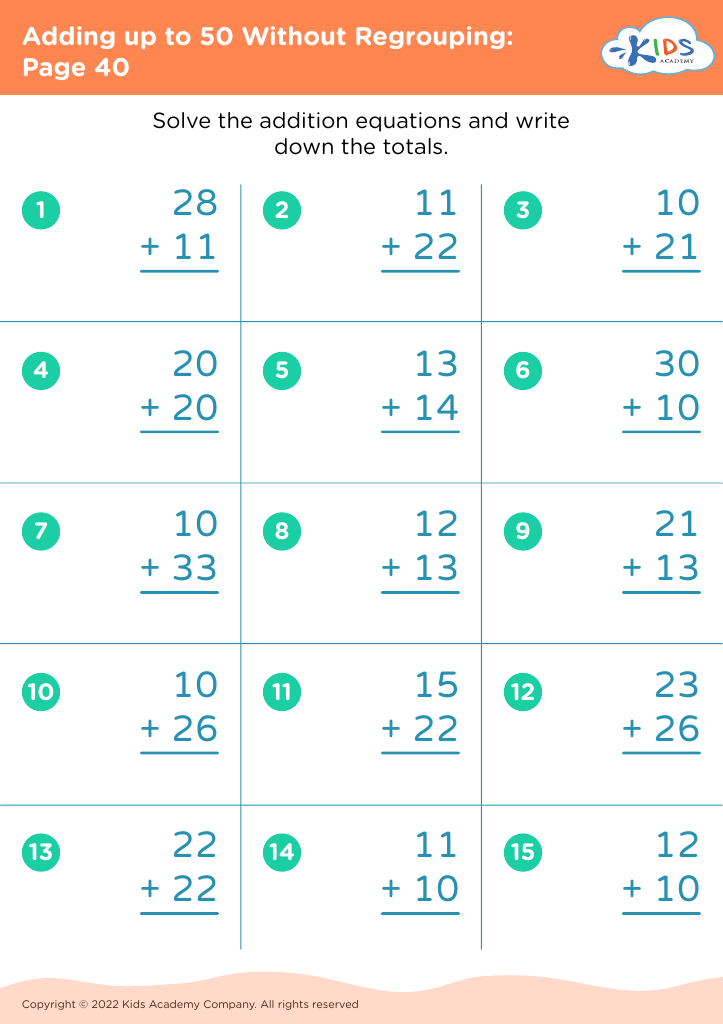
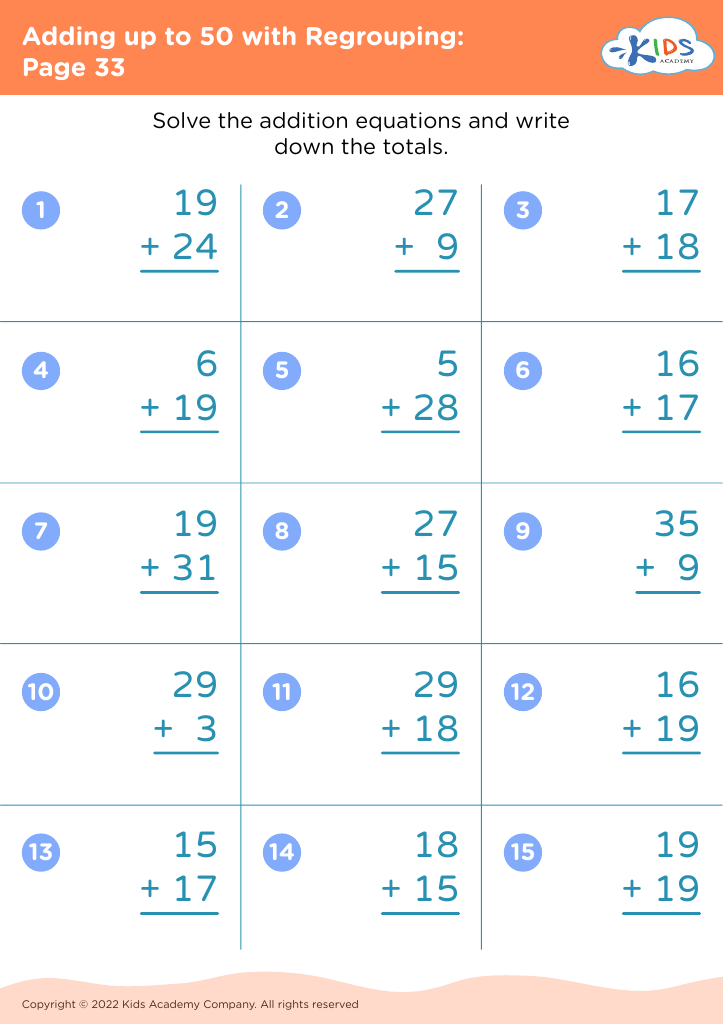
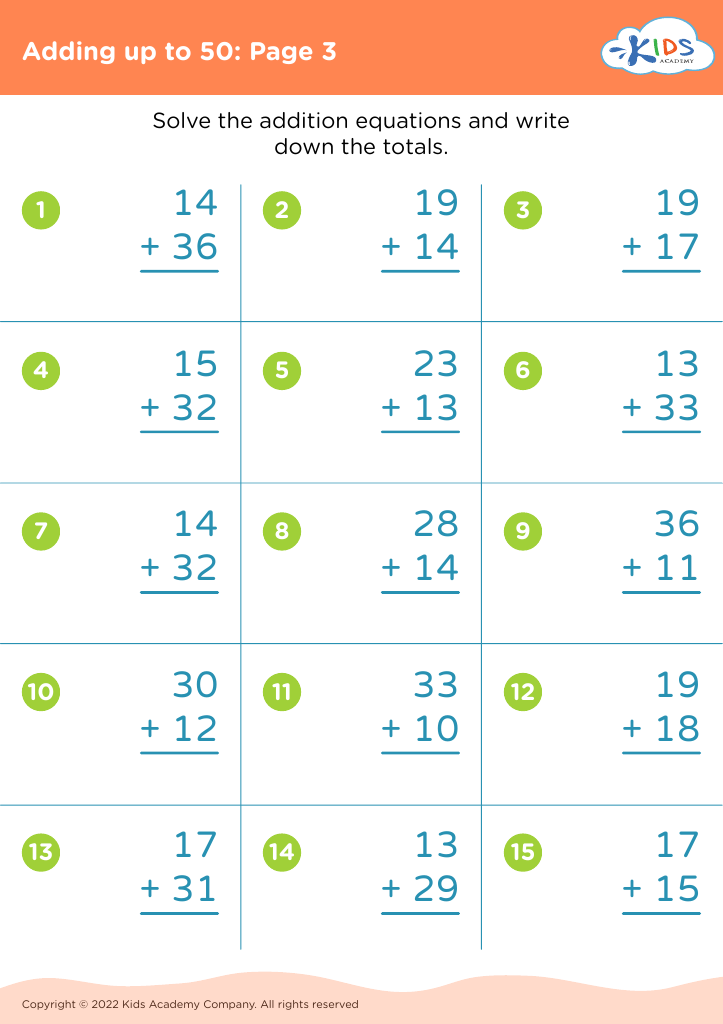
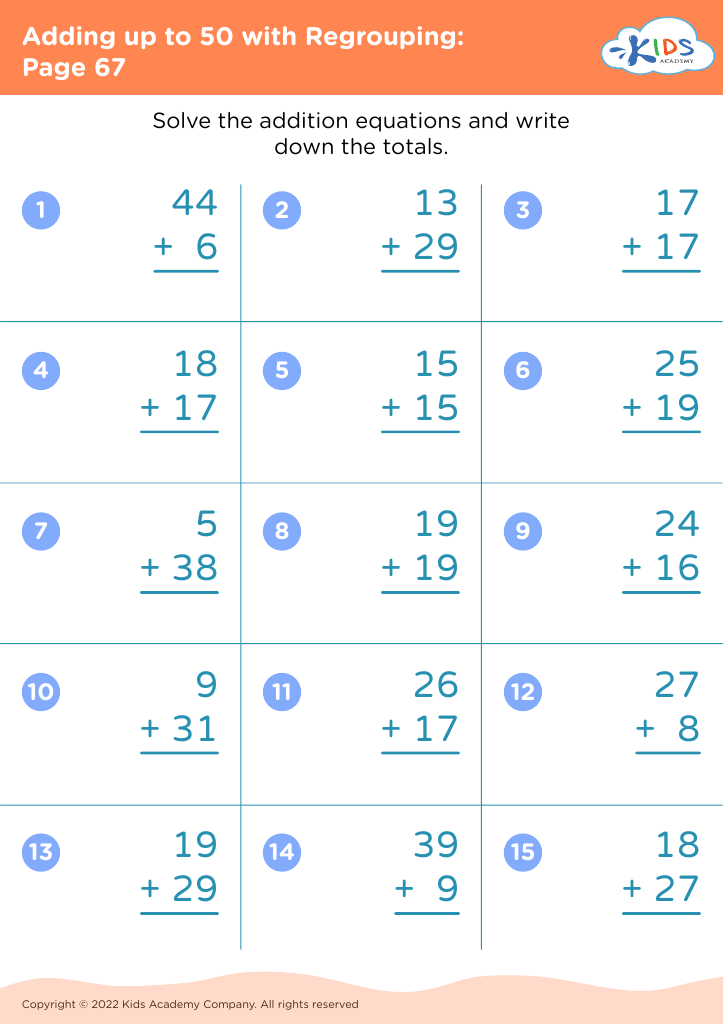
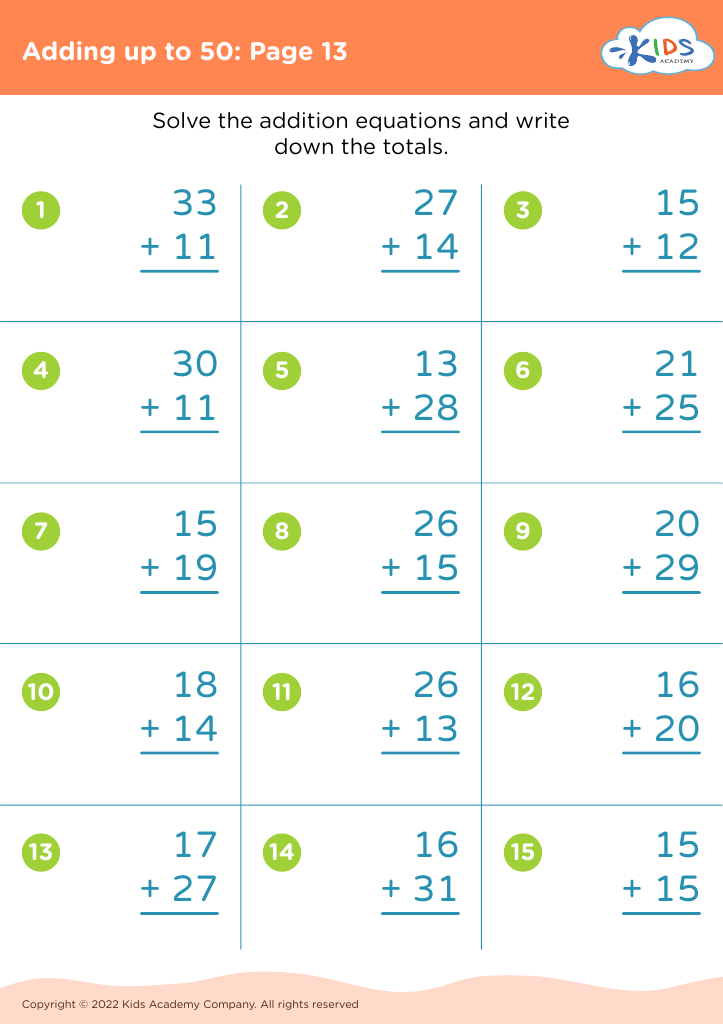
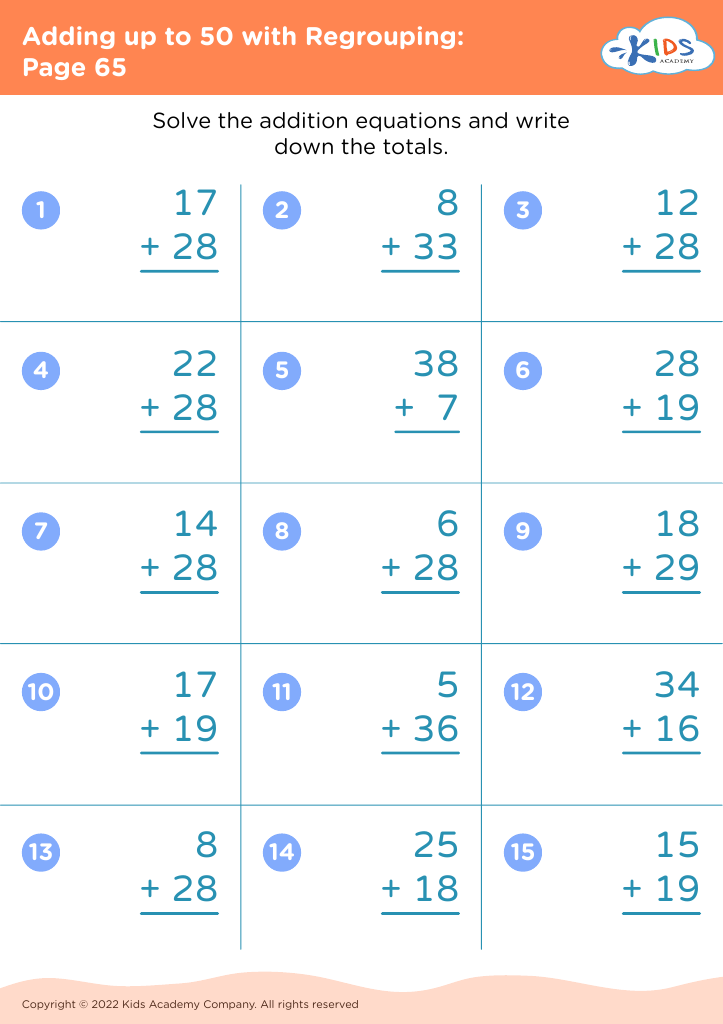
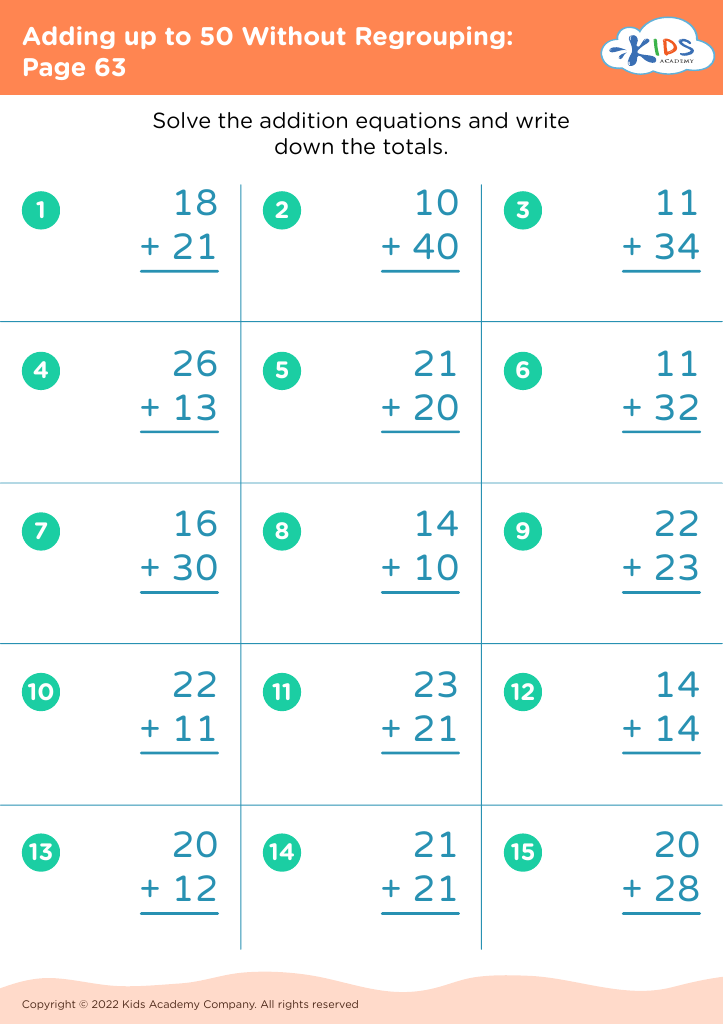
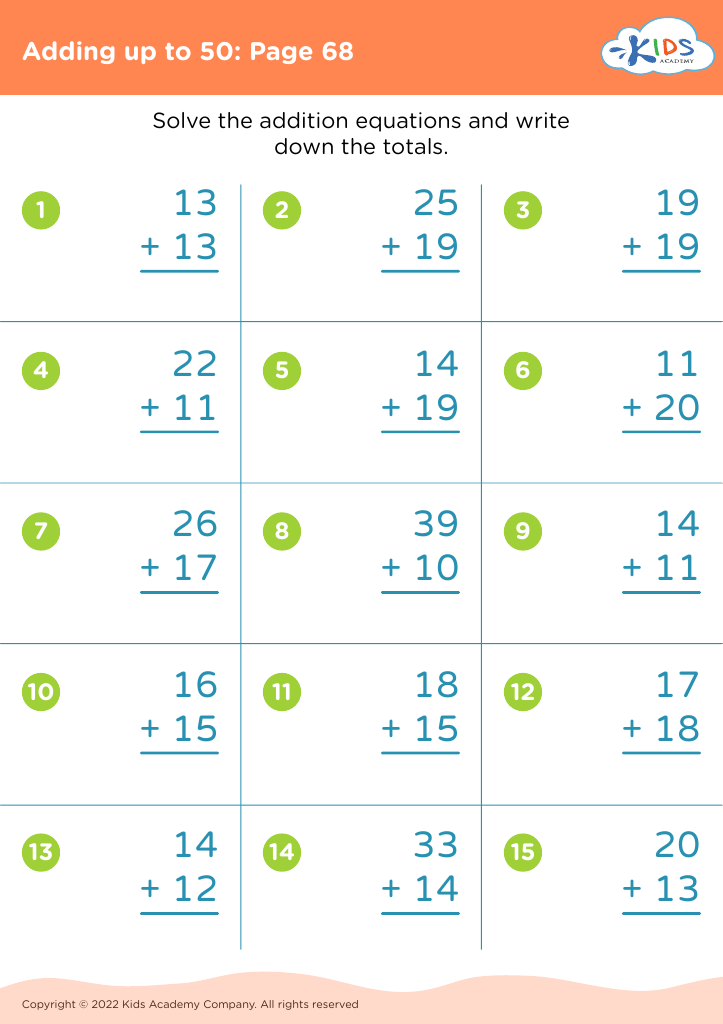
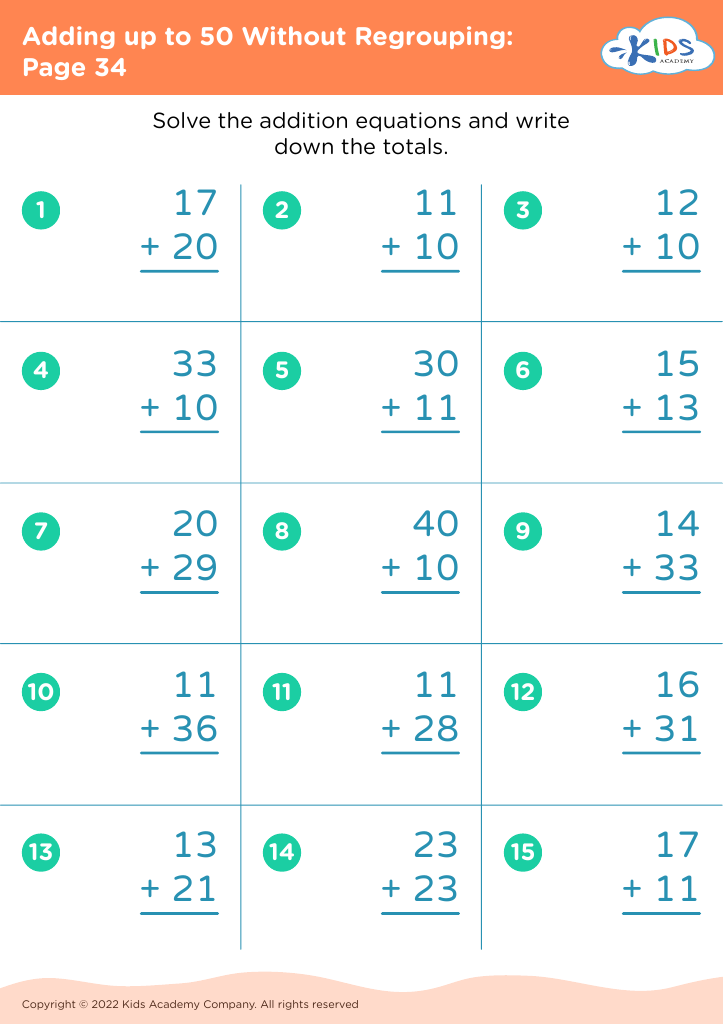
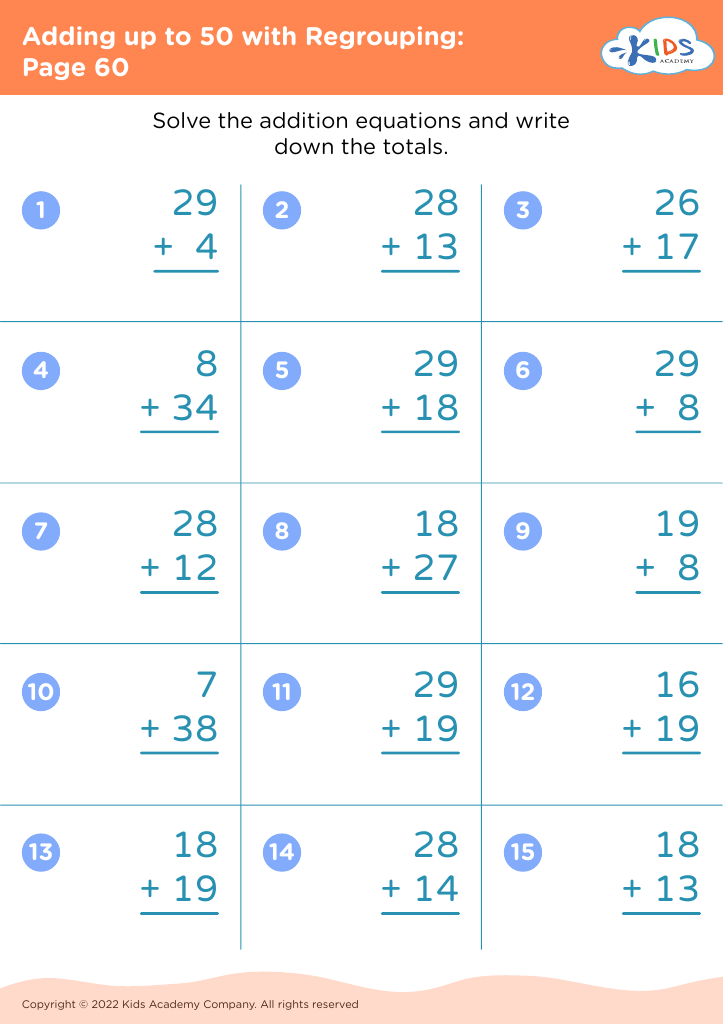
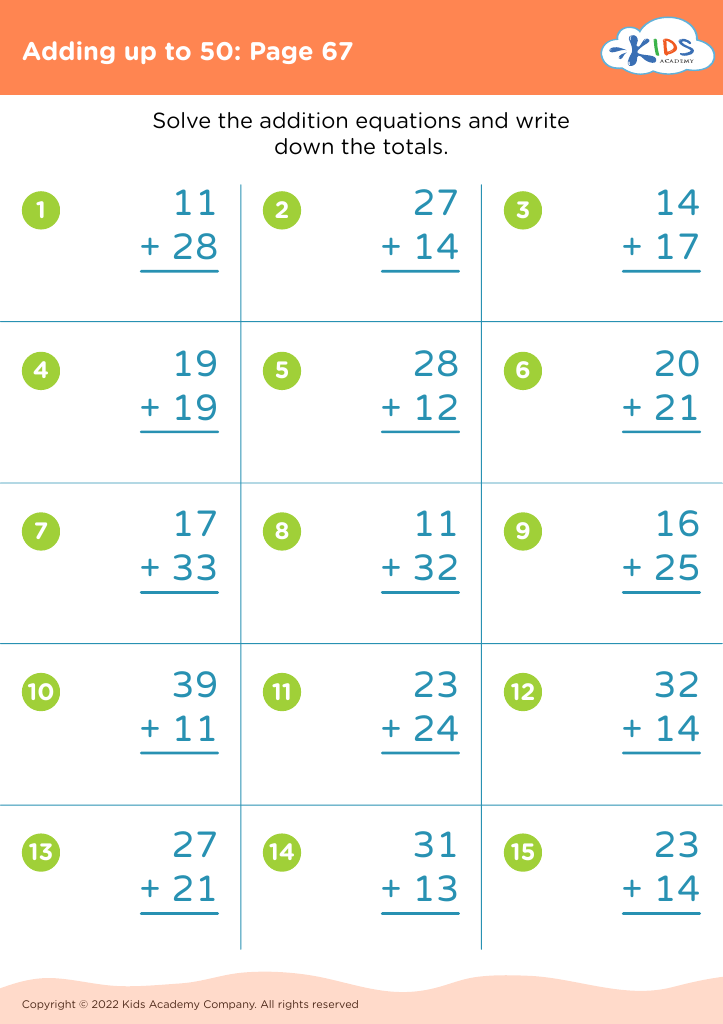
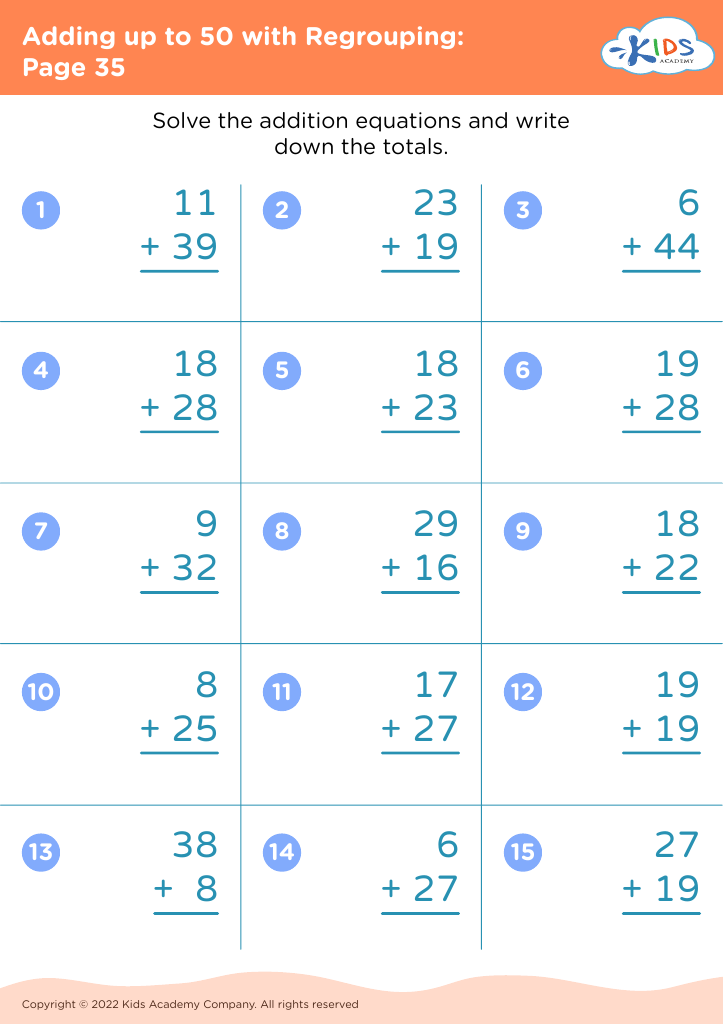
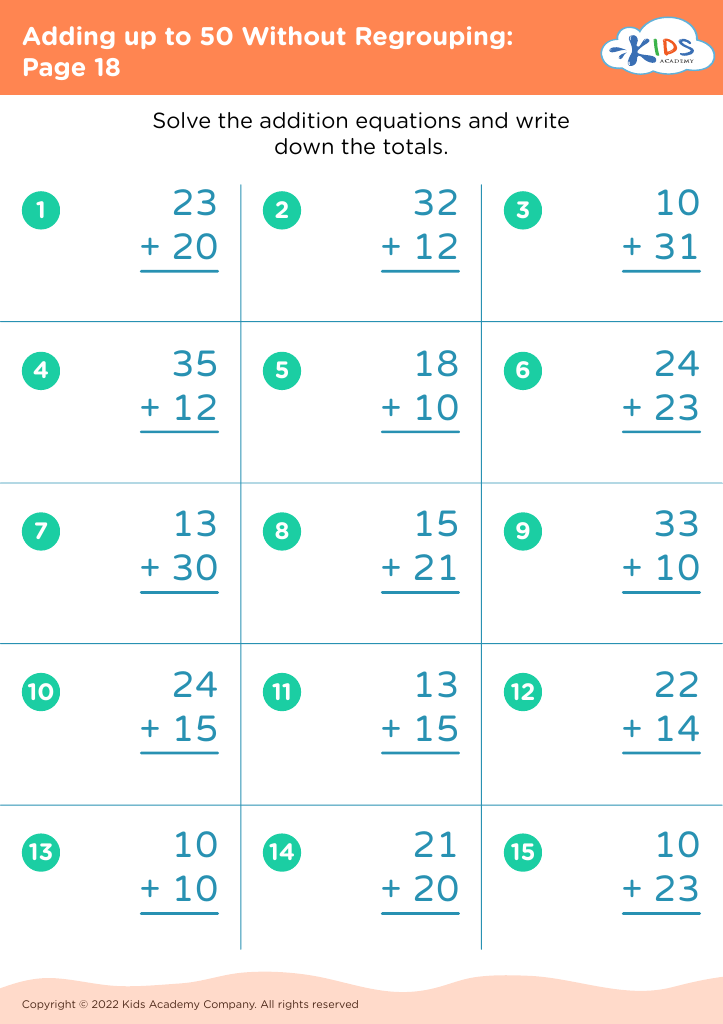
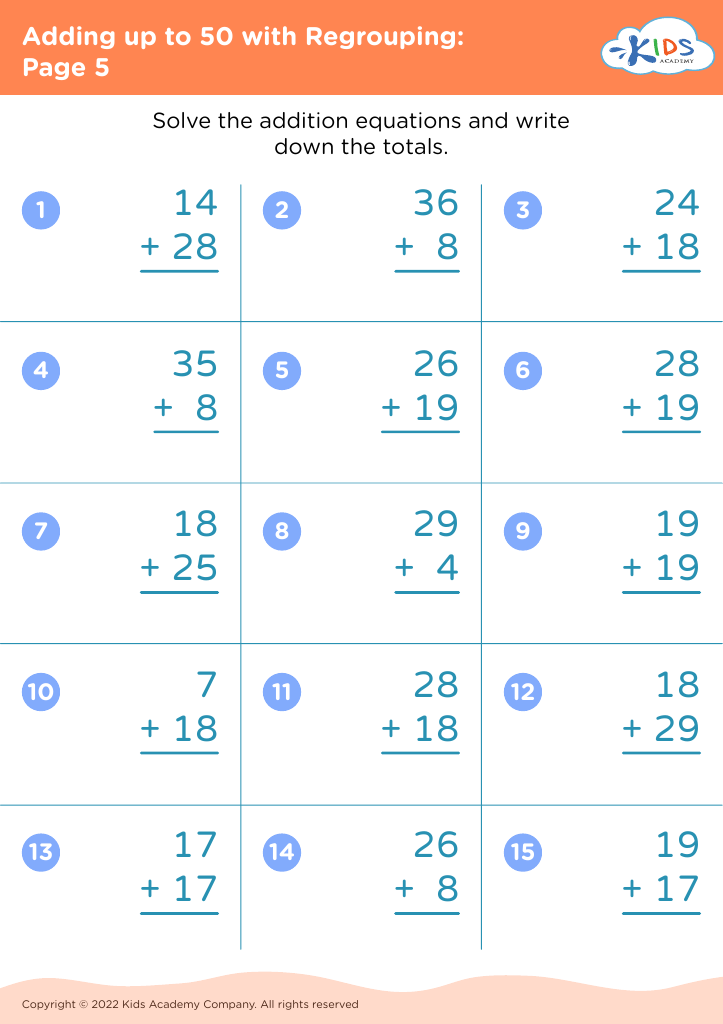
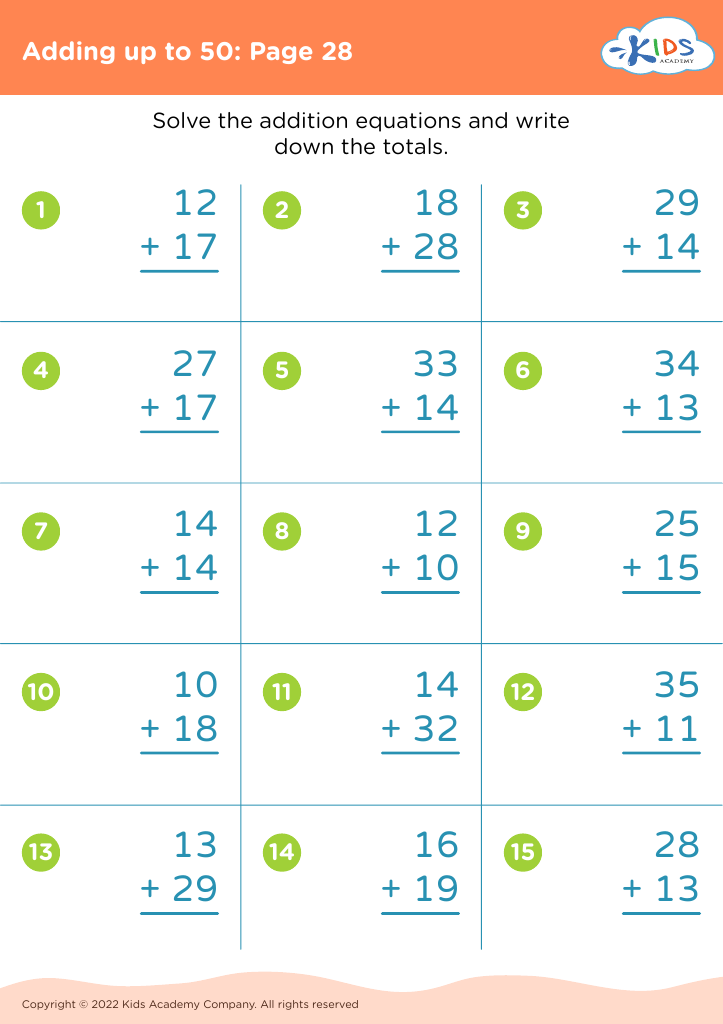
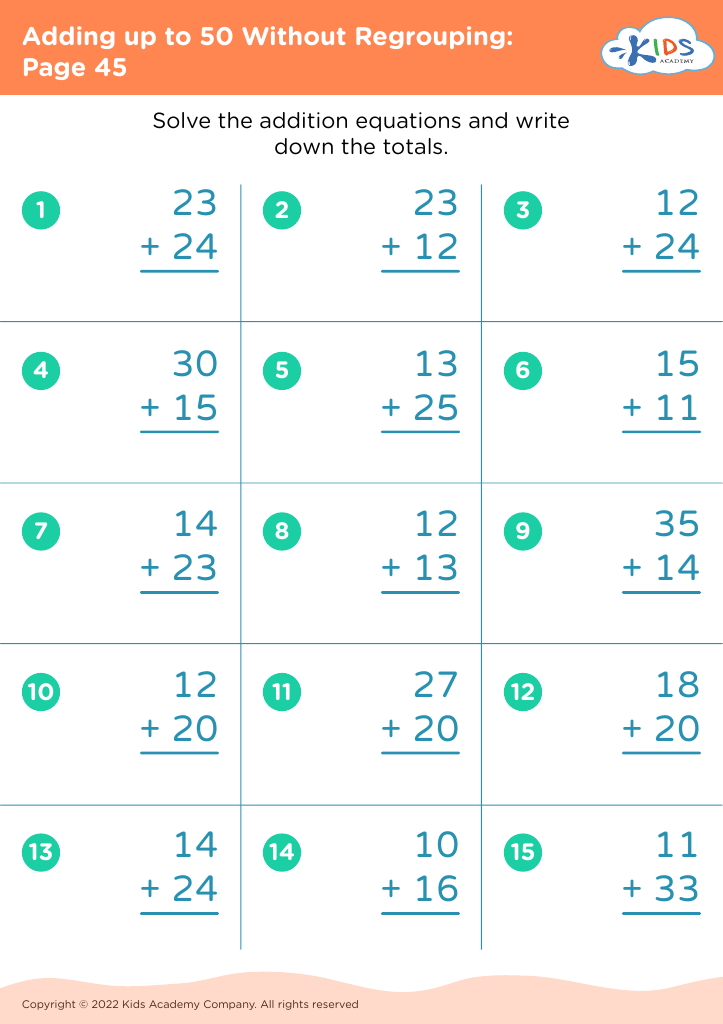
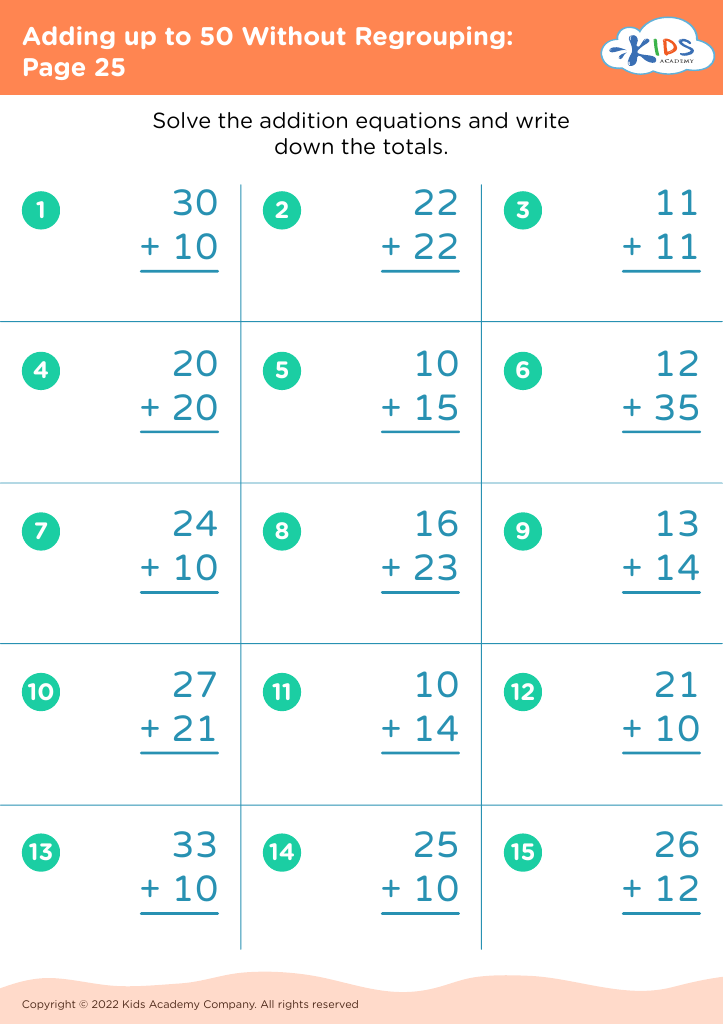
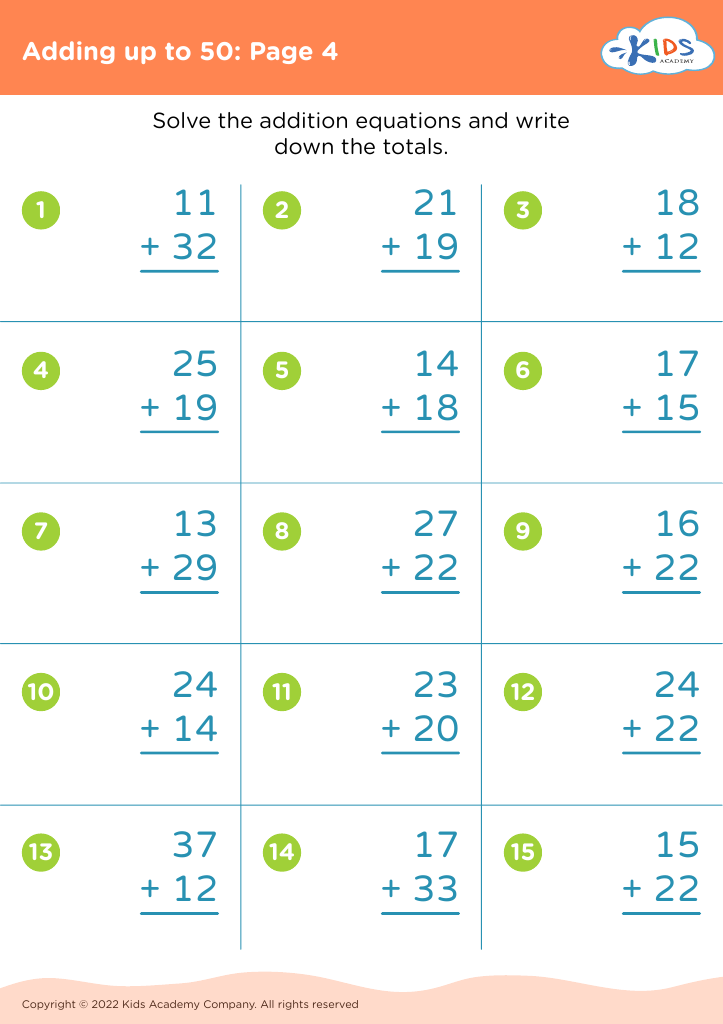
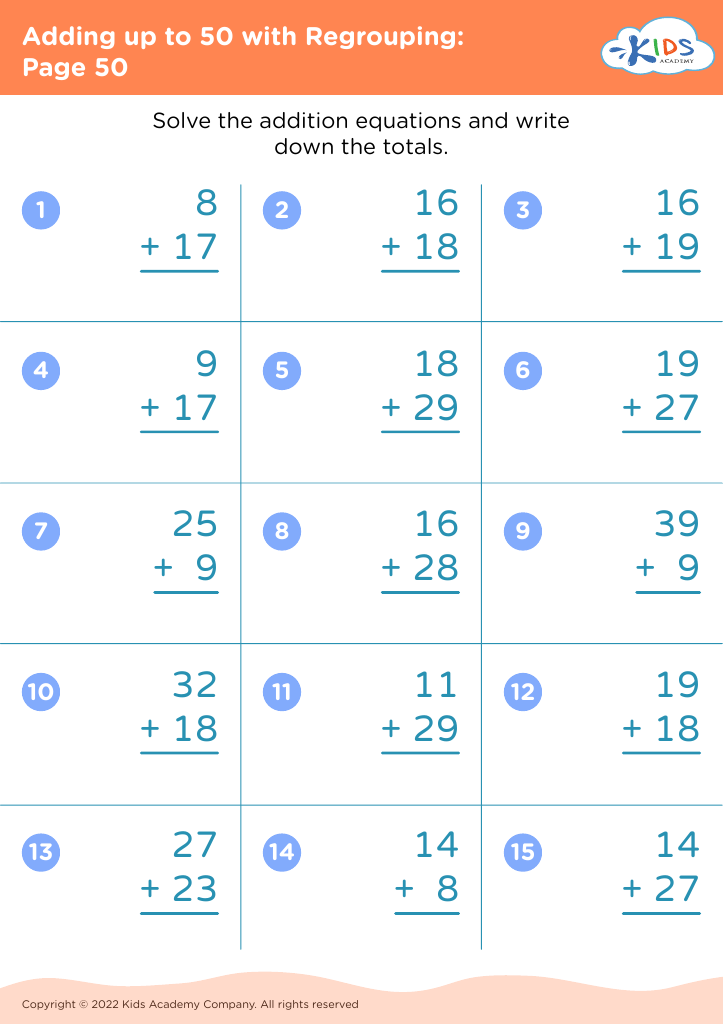
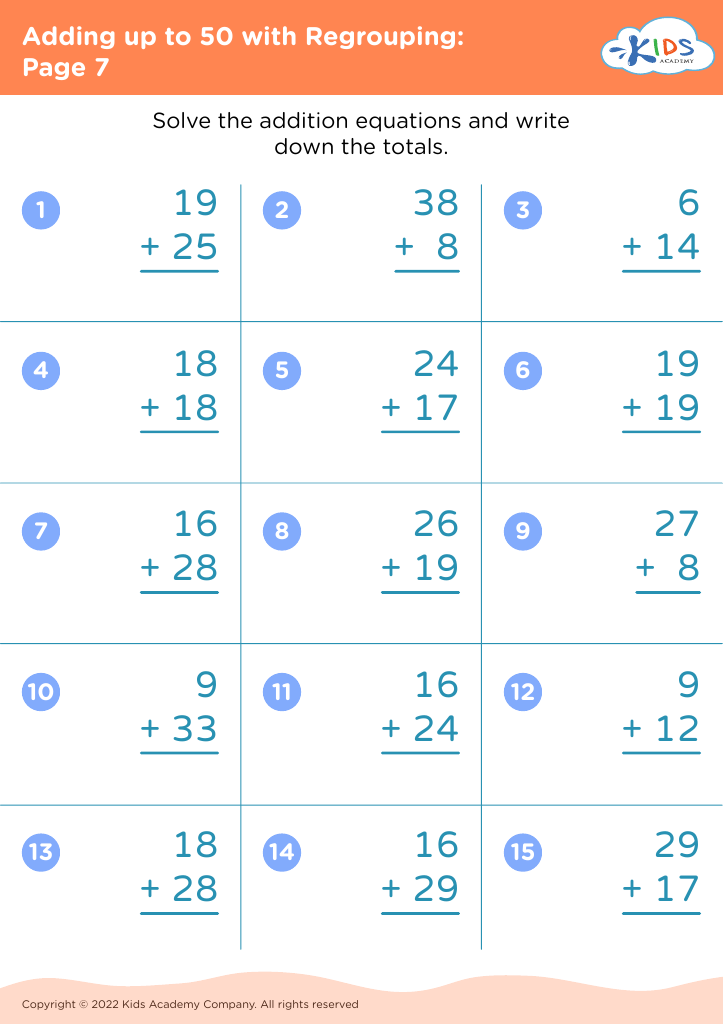




Understanding fractions, particularly in the context of adding up to 50, is essential for students aged 8-9 for several reasons. First, fractions are foundational to mathematics, introducing concepts of parts and wholes that are prevalent in everyday life. When children grasp adding fractions that sum to a whole, like 50, it fosters their ability to work with both proper and improper fractions confidently.
Secondly, this knowledge is crucial for real-world applications, such as cooking or budgeting, helping children understand how to divide resources fairly or measure ingredients effectively. For parents and teachers, developing this skill in children promotes strong mathematical thinking, critical problem-solving, and boosts their confidence in math.
Moreover, understanding fractions lays the groundwork for more advanced math topics, including ratios, percentages, and algebra, that students will encounter in later grades. Therefore, by investing time and effort into teaching and reinforcing fractional concepts now, parents and educators equip children with essential tools for their academic journey and future real-world challenges. Encouraging a solid understanding of fractions during this crucial developmental stage can significantly impact a child’s overall mathematical fluency and eagerness to engage with the subject.








