
Vocabulary expansion Adding up to 50 Worksheets for Ages 8-9
3 filtered results
Difficulty Level
Grade
Age
-
From - To
Subject
Activity
Standards
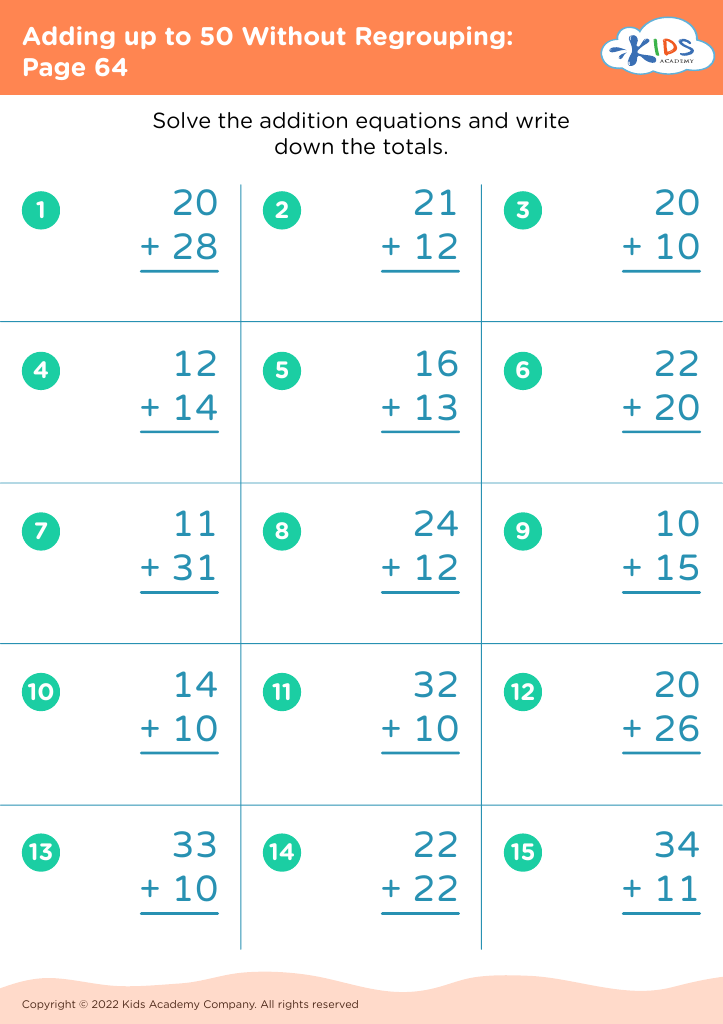
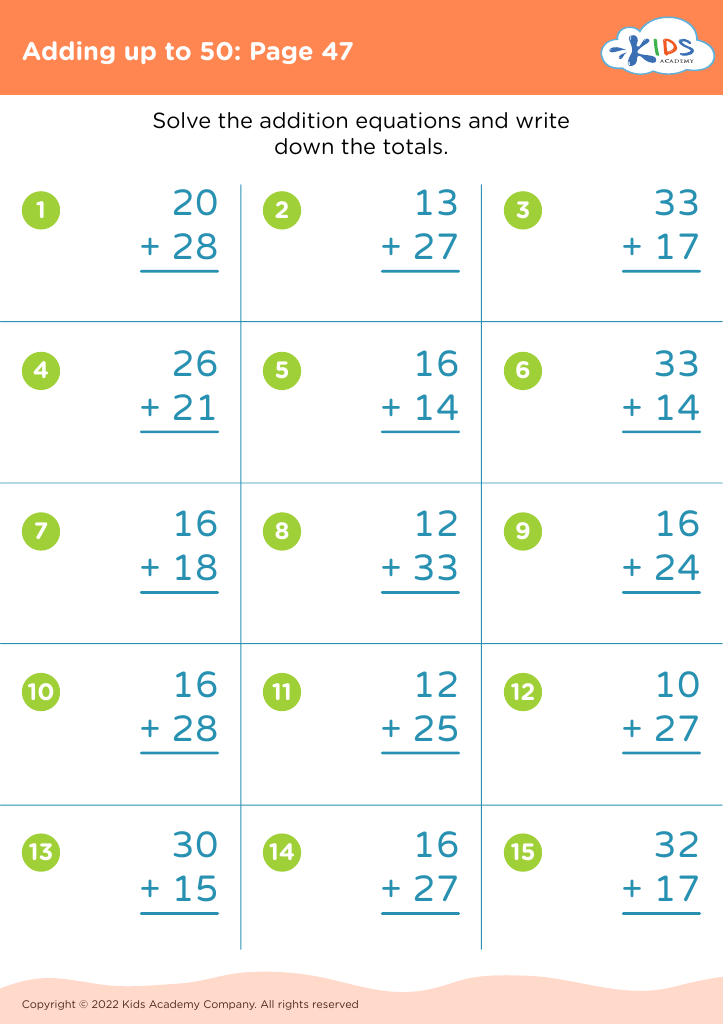
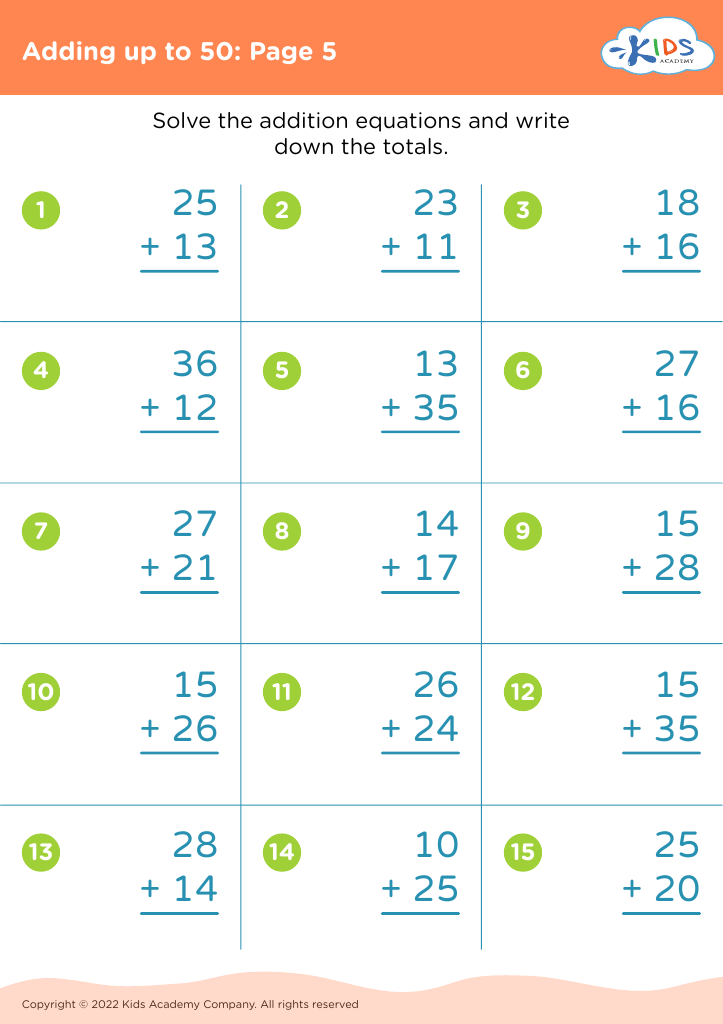
Enhance your child's linguistic abilities with our "Vocabulary Expansion: Adding up to 50 Worksheets for Ages 8-9." These worksheets are designed to foster a love for learning while developing essential vocabulary and math skills. Each worksheet provides engaging activities that teach kids to add up to 50, enriched with sight words, synonyms, and contextual examples. Perfect for young learners, these resources promote proficiency and confidence in vocabulary usage and mathematical operations. Ideal for classroom use or at-home practice, our worksheets offer a comprehensive approach to academic enrichment, making learning a fun and rewarding experience.
Favorites
With answer key
Interactive
Join Kids Academy for Free
Who is primarily going to use this learning content?




Vocabulary expansion is a crucial aspect of a child's cognitive and academic development, particularly for ages 8-9. At this stage, children transition from learning to read to reading to learn. A robust vocabulary equips them with the tools to comprehend more complex texts, boosting reading fluency and comprehension skills. Ensuring that their vocabulary expands by up to 50 words throughout the school year can substantially impact their academic performance and self-expression.
A strong vocabulary aids in all subjects, not just language arts. With an enhanced lexicon, children can better understand instructions in math, grasp concepts in science, and describe their world more precisely in social studies. This deeper understanding prompts more engaged learning and critical thinking. Moreover, having a bigger vocabulary enables children to communicate their ideas, needs, and feelings more effectively, fostering social skills and emotional development.
For parents and teachers, focusing on this vocabulary growth can also identify and address potential learning difficulties early on, such as dyslexia or other language-based disorders. Building a child's vocabulary also provides a gateway to cultural literacy, enabling them to connect with diverse stories and perspectives, refining their empathy and global awareness. In short, a rich vocabulary is a cornerstone of both educational success and holistic personal development, making it a priority for any caregiver or educator.








