Basic Arithmetic Addition and Subtraction Word Problems Worksheets for Ages 8-9
5 filtered results
-
From - To
Explore our "Basic Arithmetic Addition and Subtraction Word Problems Worksheets for Ages 8-9" designed to enhance problem-solving skills in young learners. These engaging worksheets focus on real-world scenarios to make learning math fun and relevant. Perfect for kids aged 8-9, our collection includes diverse problems to cultivate essential arithmetic skills. Our resources align with educational standards, providing the foundation needed for future math success. Ideal for classroom activities or homeschooling, these worksheets foster confidence in tackling addition and subtraction challenges. Visit our page to download and give your child the tools they need to excel in math.
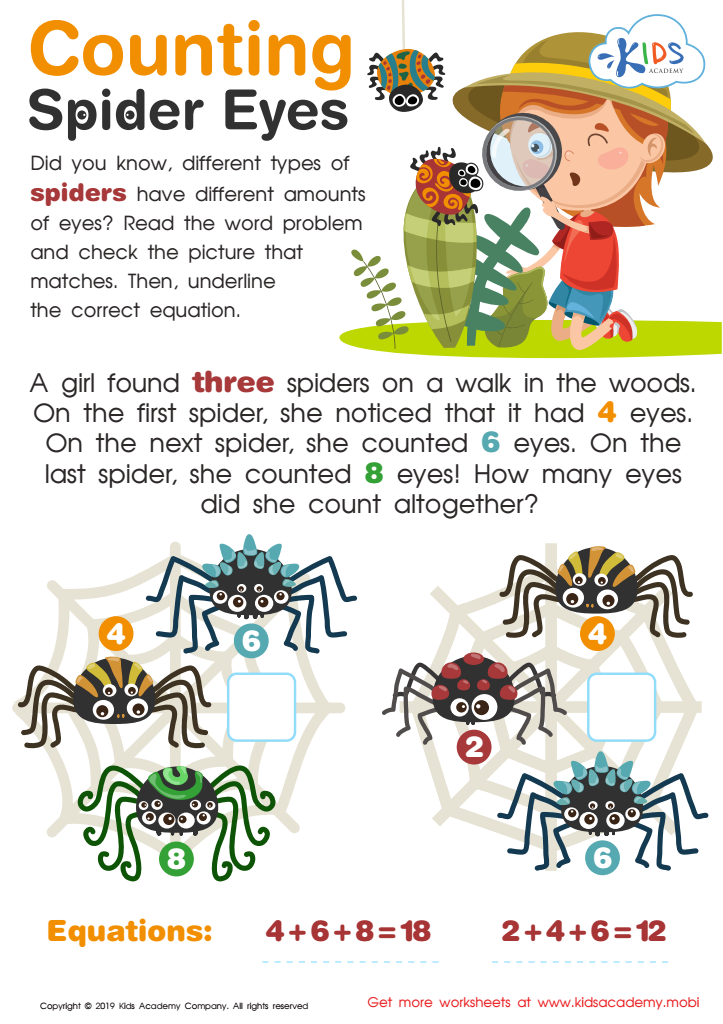
Counting Spider Eyes Worksheet
 Assign to My Students
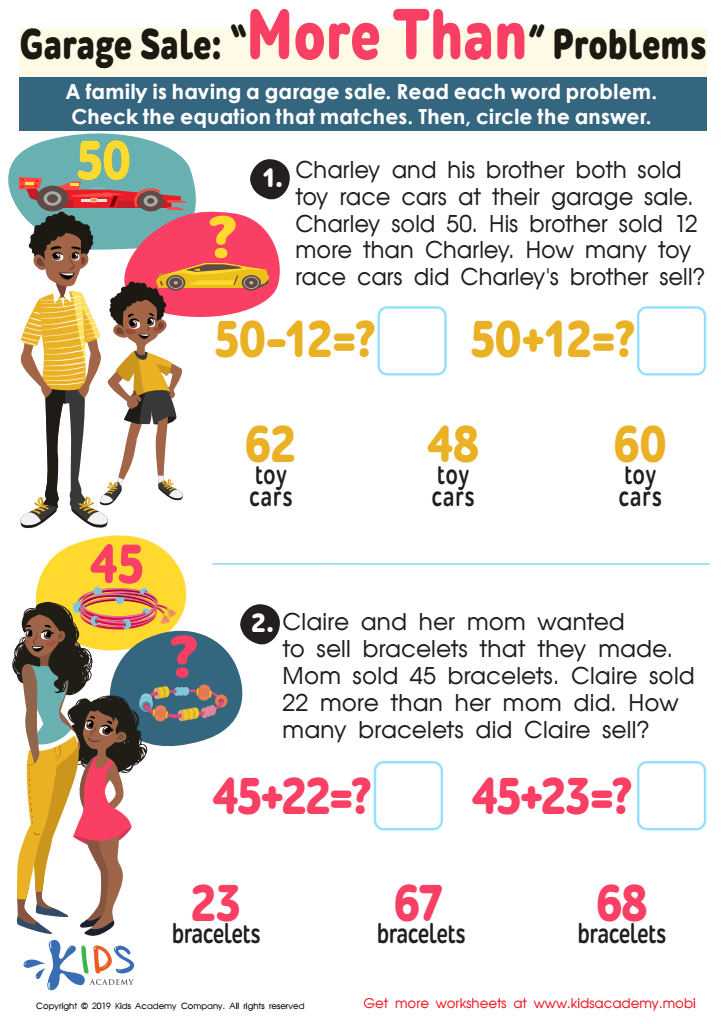
Garage Sale - More yhan Worksheet
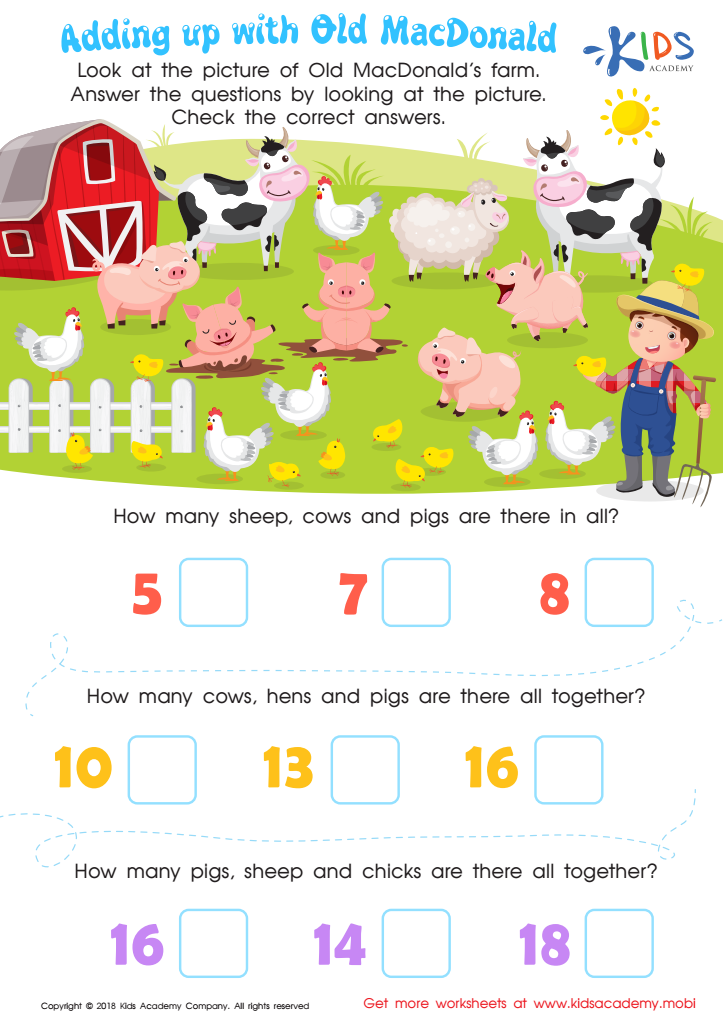
Adding Up with Old MacDonald Worksheet
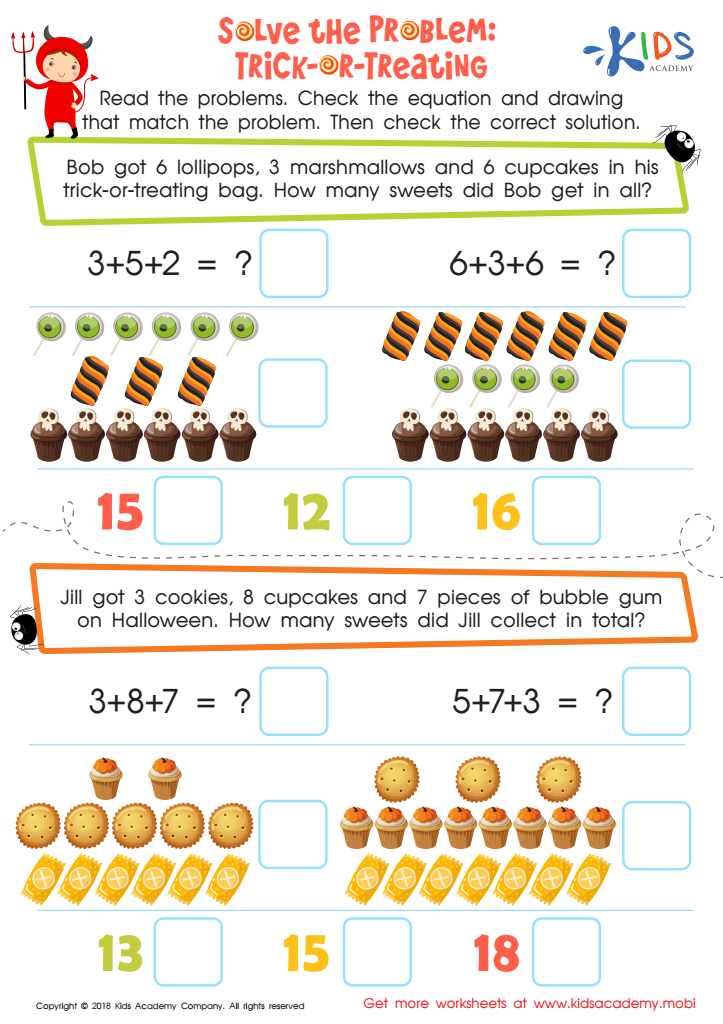
Solve the Problem: Trick–or–treating Worksheet
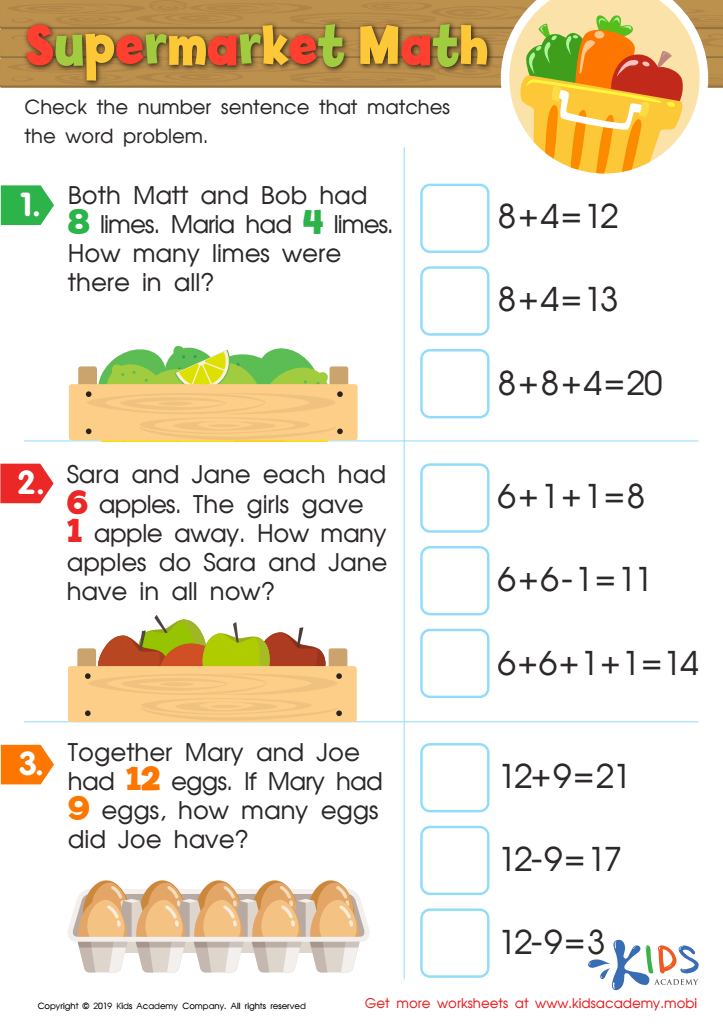
Supermarket Math Worksheet








Basic arithmetic addition and subtraction word problems for ages 8-9 are essential for several reasons. First, they help children understand the practical application of mathematical concepts in real-life scenarios. By translating numbers into situations, children learn that math is not just an abstract concept but a useful tool they will use throughout their lives. Second, these word problems aid in developing critical thinking and problem-solving skills. Children must read the problem, analyze the information presented, determine the correct operation (addition or subtraction), and then solve it, which enhances cognitive processes such as reasoning and comprehension.
Moreover, tackling word problems can improve reading skills. As children read and process the text, they enhance their ability to comprehend and follow detailed instructions. Word problems also offer opportunities to reinforce language skills, as understanding the nuances of the words used is key to solving the problems correctly. Lastly, achieving success in solving these problems builds confidence and promotes a positive attitude toward mathematics, making future learning experiences more approachable and less intimidating. So, both parents and teachers should prioritize these problems to ensure a well-rounded development of mathematical and language capabilities in their children, setting a strong foundation for future academic success.