
Boost critical thinking Addition & Subtraction Worksheets for Ages 8-9
3 filtered results
Difficulty Level
Grade
Age
-
From - To
Subject
Activity
Standards
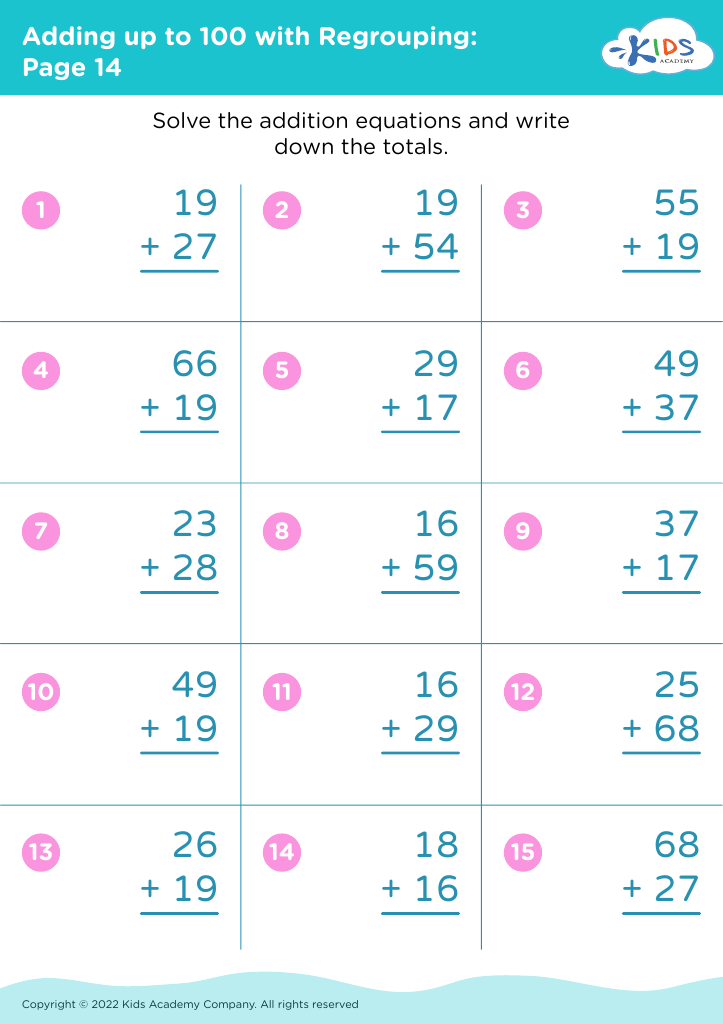
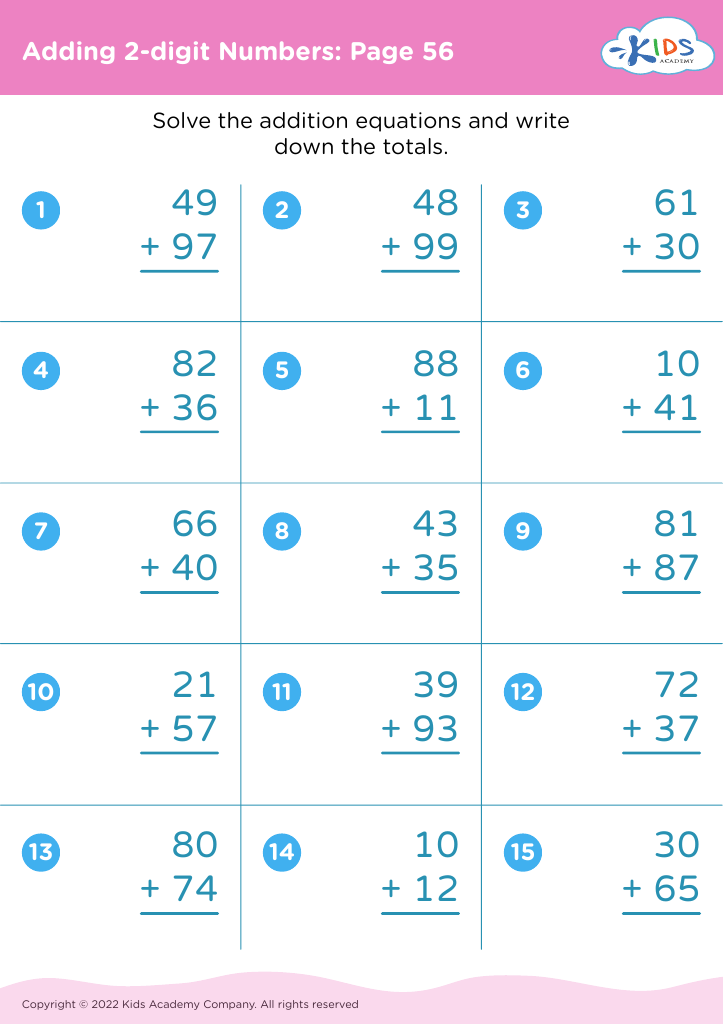
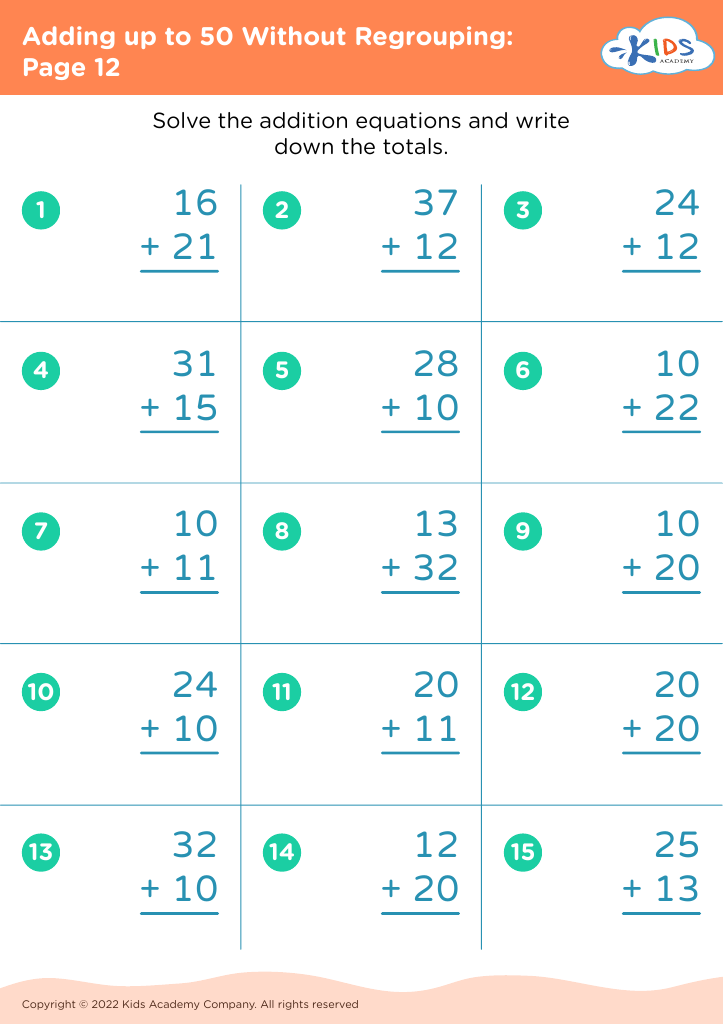
Unlock your child's potential with our "Boost Critical Thinking Addition & Subtraction Worksheets" designed specifically for ages 8-9! These engaging worksheets are perfect for enhancing mathematical skills while encouraging deeper cognitive understanding. By combining fundamental addition and subtraction problems with challenging critical thinking exercises, your child will develop problem-solving strategies and logical reasoning abilities. Our thoughtfully crafted activities will captivate young learners, making math both fun and educational. Help your child build a solid foundation in math while sharpening their critical thinking skills. Browse our collection today and support your child's learning journey with exciting, interactive worksheets!
Favorites
With answer key
Interactive
Join Kids Academy for Free
Who is primarily going to use this learning content?








Parents and teachers should prioritize Boost critical thinking in addition and subtraction for ages 8-9 because this foundational mathematical skill set is essential for children's cognitive development and problem-solving abilities. At this age, children are transitioning from basic arithmetic to more complex numerical reasoning. Promoting critical thinking in math empowers them to not only find answers but also understand the "why" behind mathematical concepts.
Developing critical thinking skills helps children analyze problems from different perspectives, explore multiple solutions, and apply their knowledge in real-world situations. This approach fosters resilience as they learn to tackle challenges creatively rather than memorizing procedures. Additionally, strong critical thinking skills improve their confidence and enjoyment in math, transforming faces of stress into excitement for learning.
In today's fast-paced world, being able to think critically equips learners with the tools needed to navigate complexities beyond mathematics, as they learn to evaluate information and make informed decisions. By focusing on critical thinking in addition and subtraction, parents and teachers nurture well-rounded individuals who excel academically and are prepared for future challenges in life and learning. Ultimately, investing in these skills ensures that children are not just passive learners, but active, engaged thinkers.








