Comparing numbers Addition & Subtraction Worksheets for Ages 8-9
4 filtered results
-
From - To
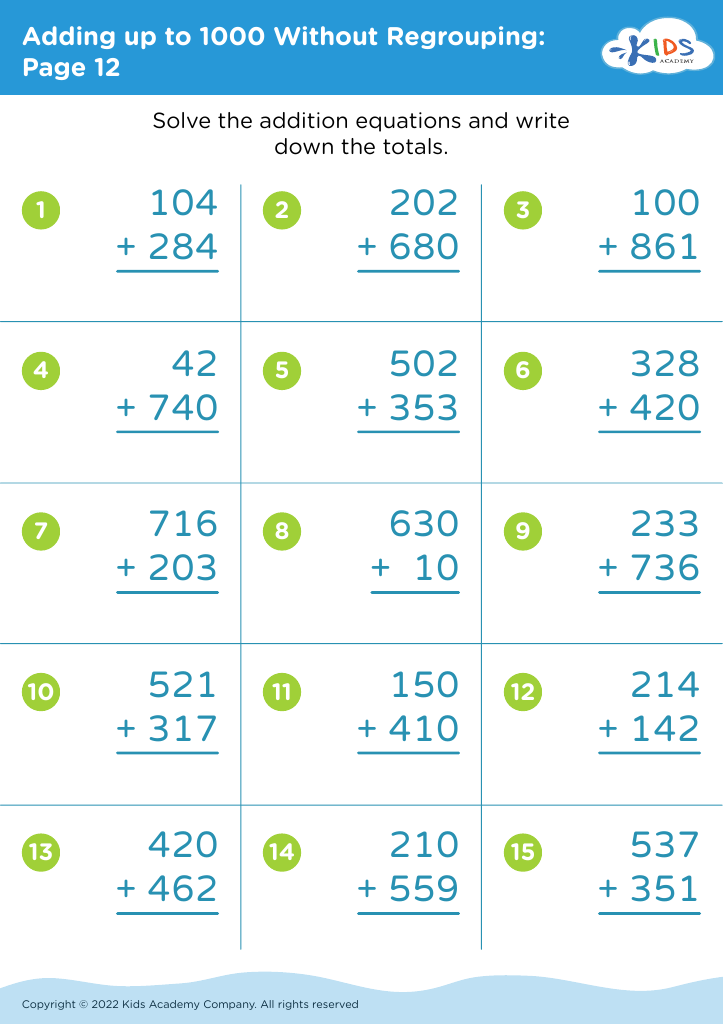
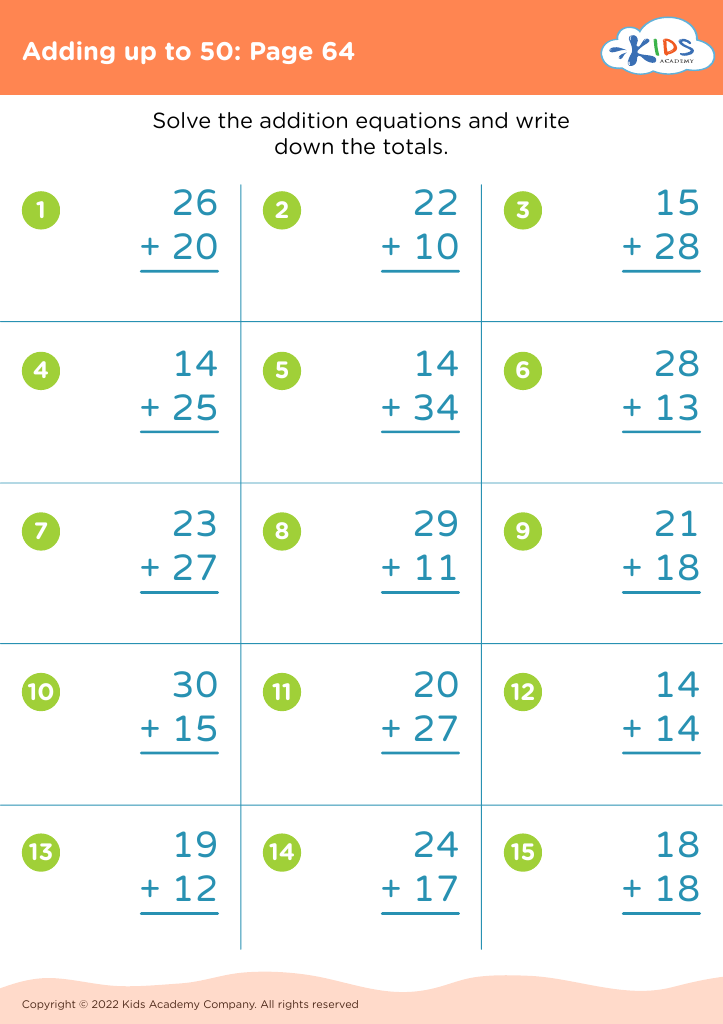
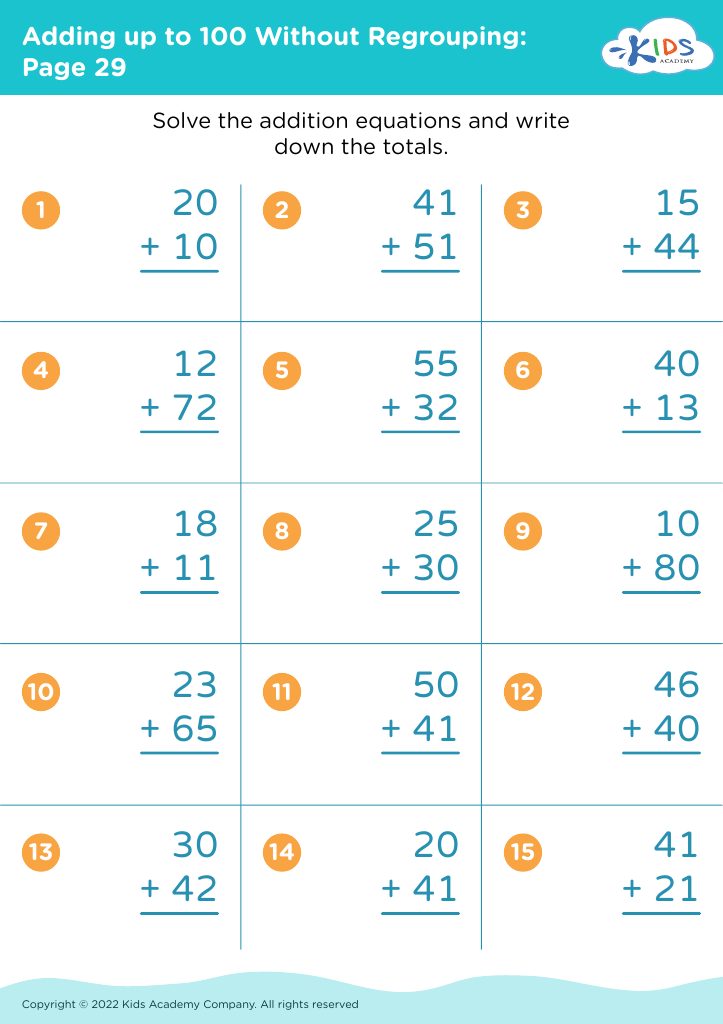
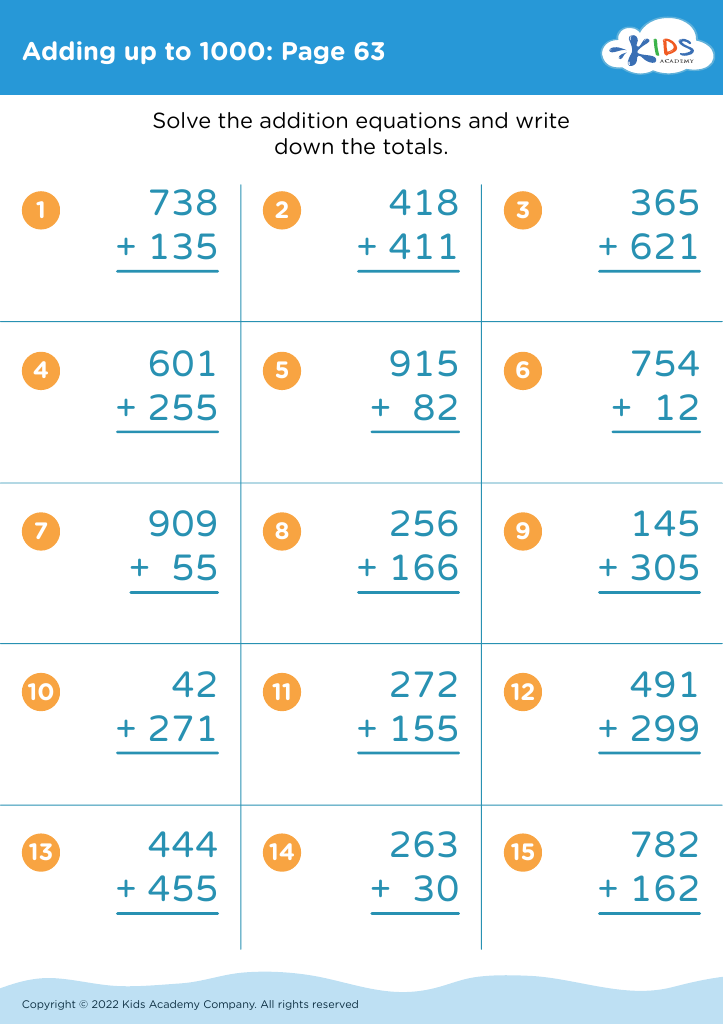
Enhance your child's math skills with our "Comparing Numbers Addition & Subtraction Worksheets" designed specifically for ages 8-9. These engaging worksheets focus on helping young learners effectively compare numbers while applying addition and subtraction concepts. Children will develop fundamental math skills through fun exercises, ensuring they understand which numbers are greater, lesser, or equal. With clear examples and a variety of problem types, these worksheets reinforce comprehension while fostering confidence in mathematical reasoning. Perfect for classroom use or at-home practice, these resources provide the ideal tools for nurturing strong mathematical foundations in your child's early education. Start exploring today!








Parents and teachers should prioritize the understanding of comparing numbers, addition, and subtraction for children aged 8-9 because these foundational skills play a crucial role in a child's mathematical development and overall academic success. At this stage, students are transitioning from basic arithmetic to more complex operations, and mastery of these concepts fosters critical thinking and problem-solving skills.
Comparing numbers helps children understand larger and smaller values, which is essential for making sense of their world, whether in handling money, telling time, or measuring. It lays the groundwork for more advanced topics such as fractions and decimals, which they will encounter later.
Additionally, proficient addition and subtraction skills are vital for tackling real-life situations, from budgeting their allowance to planning group activities. Enhancing these abilities also boosts confidence, reducing math anxiety, and encouraging a positive attitude toward learning subjects that students may find challenging.
By emphasizing these crucial areas, parents and teachers can help cultivate a solid mathematical foundation, empower children with essential life skills, and promote a love for learning that transcends the classroom, ultimately contributing to their holistic development.








