
Develop counting skills Addition & Subtraction Worksheets for Ages 8-9
5 filtered results
Difficulty Level
Grade
Age
-
From - To
Subject
Activity
Standards
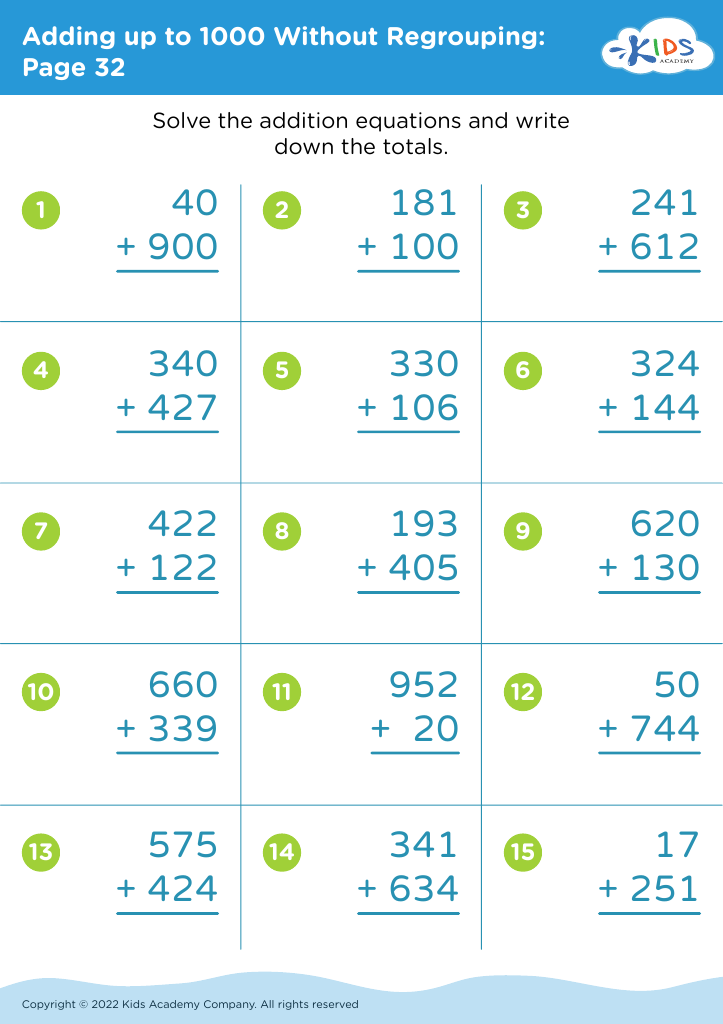
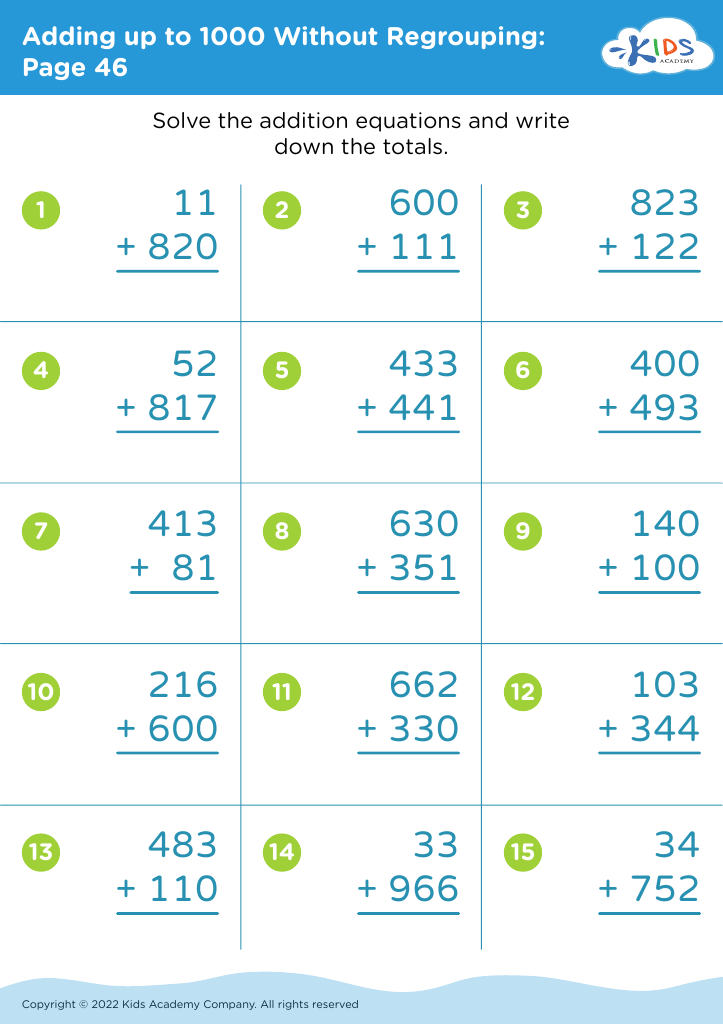
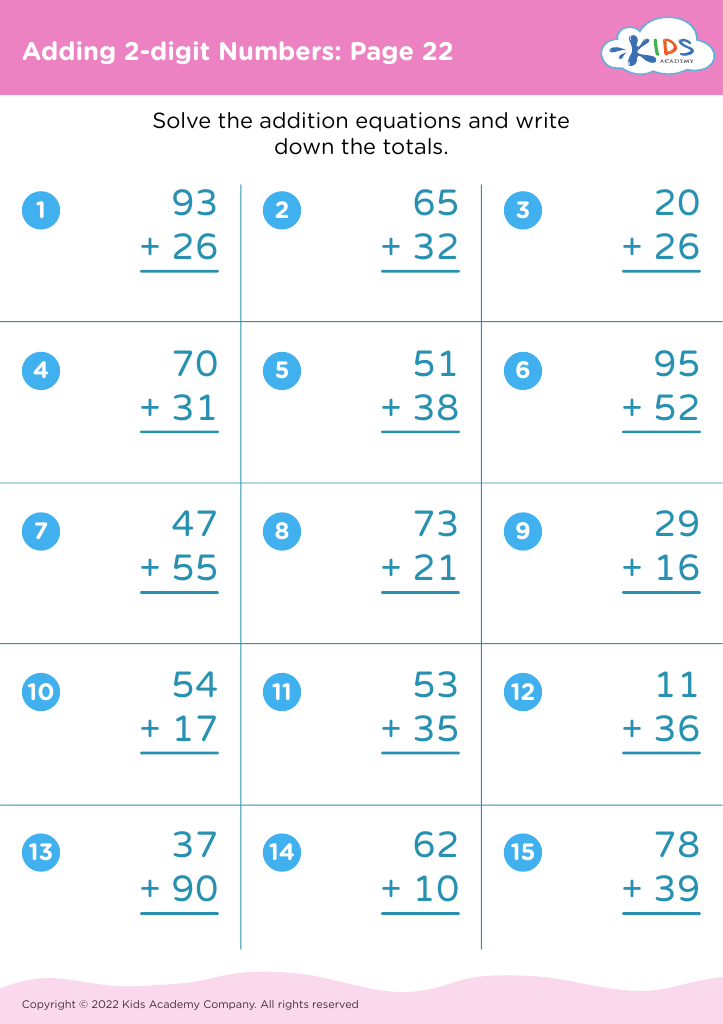
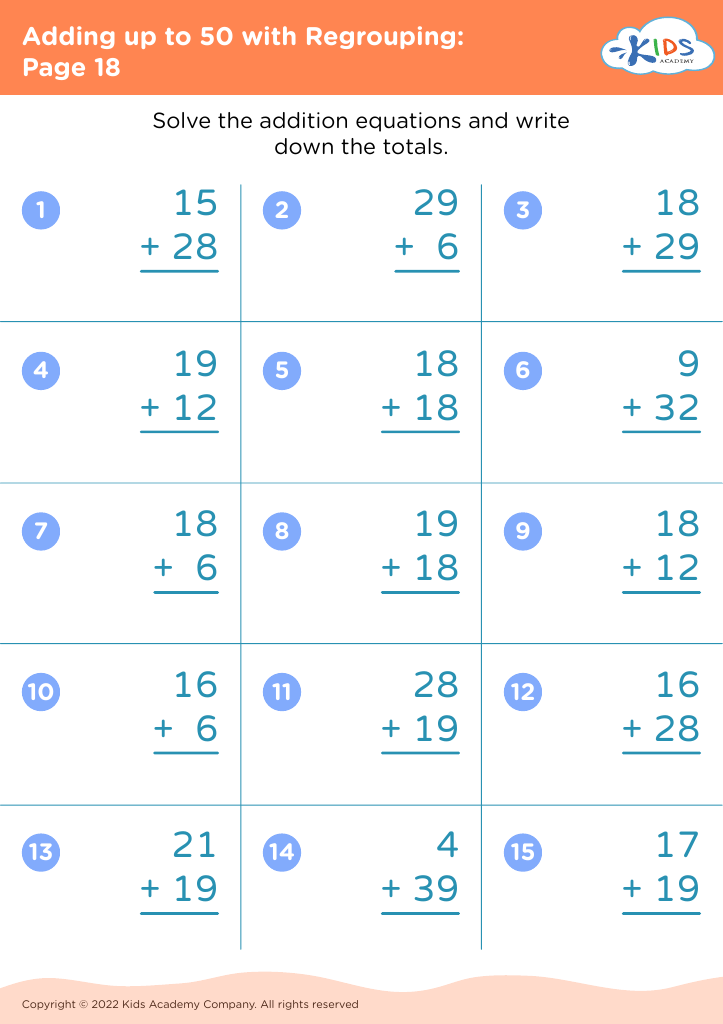
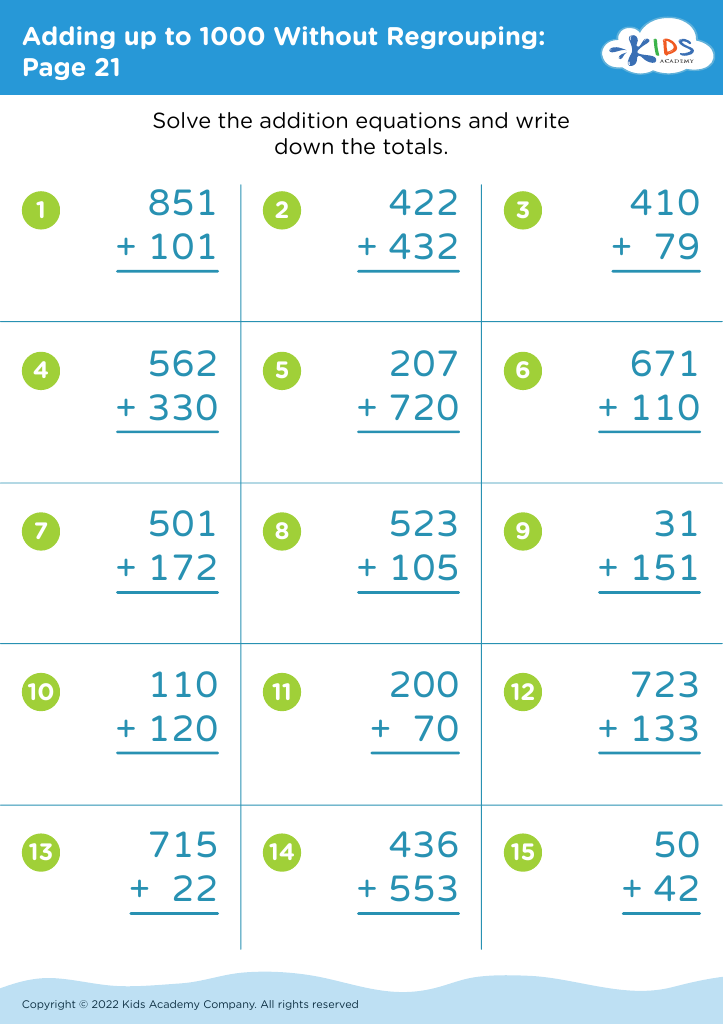
Enhance your child’s mathematical foundation with our engaging counting skills addition and subtraction worksheets designed specifically for ages 8-9. These interactive resources focus on developing essential counting abilities while reinforcing addition and subtraction concepts. Each worksheet offers a variety of exercises that encourage critical thinking and problem-solving, helping students master numerical operations in a fun and structured way. With clear instructions and appealing graphics, our worksheets foster independent learning and boost confidence in mathematics. Perfect for classroom or home use, these activities are ideal for reinforcing skills and preparing your child for more advanced math challenges ahead. Start your counting journey today!
Favorites
With answer key
Interactive
Join Kids Academy for Free
Who is primarily going to use this learning content?








Parents and teachers should prioritize the development of counting skills, as well as addition and subtraction, for children ages 8-9 because these skills lay the foundation for all future mathematical learning. At this age, children are typically progressing towards more advanced concepts, and a solid grasp of basic arithmetic is crucial. Mastering counting helps improve numerical fluency, enabling children to manipulate numbers with greater confidence and accuracy.
Moreover, addition and subtraction are not just basic operations; they are essential for problem-solving and reasoning. These skills are used in everyday life, from budgeting pocket money to cooking recipes. By fostering proficiency in these areas, adults support children's cognitive development, enhancing their critical thinking and analytical skills.
In addition, a strong understanding of counting and basic arithmetic boosts overall academic performance. Children who struggle with foundational math concepts may face challenges in higher-level math, leading to a lack of confidence in their abilities. Encouraging a positive attitude toward math at this stage can shape their future learning experiences, making mathematics a more approachable and enjoyable subject. Therefore, parents and teachers play a vital role in ensuring that children acquire these essential skills during this formative phase.








