Enhance concentration Addition & Subtraction Worksheets for Ages 8-9
4 filtered results
-
From - To
Boost your child's mathematical skills and focus with our "Enhance Concentration Addition & Subtraction Worksheets for Ages 8-9." Designed to engage young minds, these worksheets provide a range of addition and subtraction problems tailored to improve concentration and problem-solving abilities. Each exercise gradually increases in complexity, allowing children to build confidence and stay motivated. Perfect for both classroom and home use, the worksheets are crafted by educational experts to ensure they're challenging yet achievable. Help your child develop essential math skills and sharpen their attention to detail with our fun, interactive worksheets. Explore today, and watch them excel!
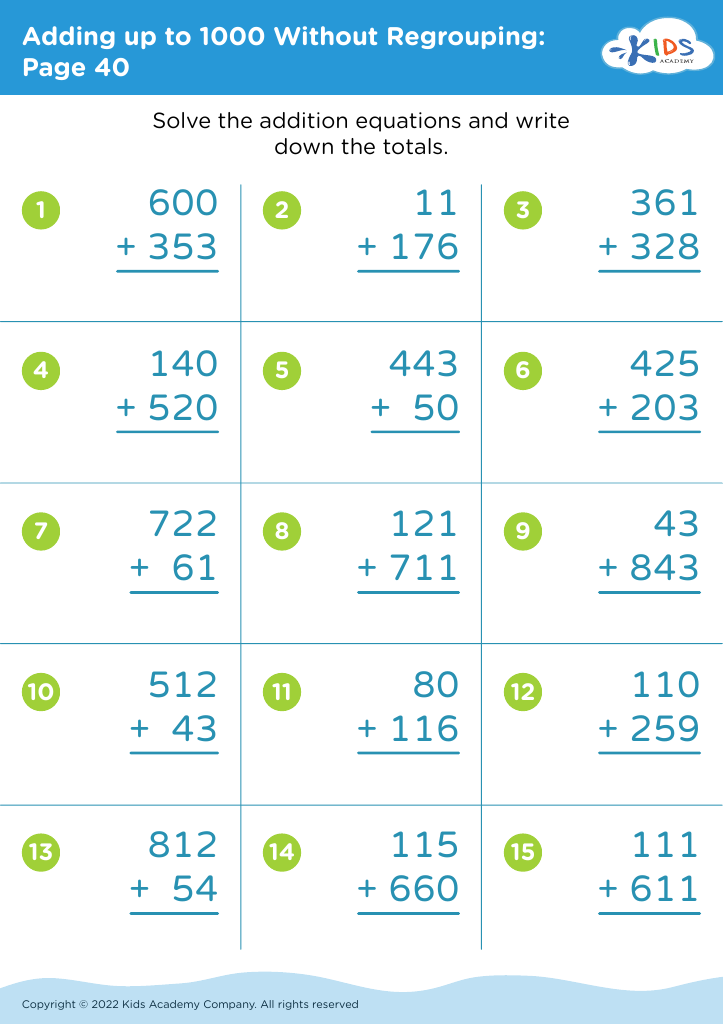
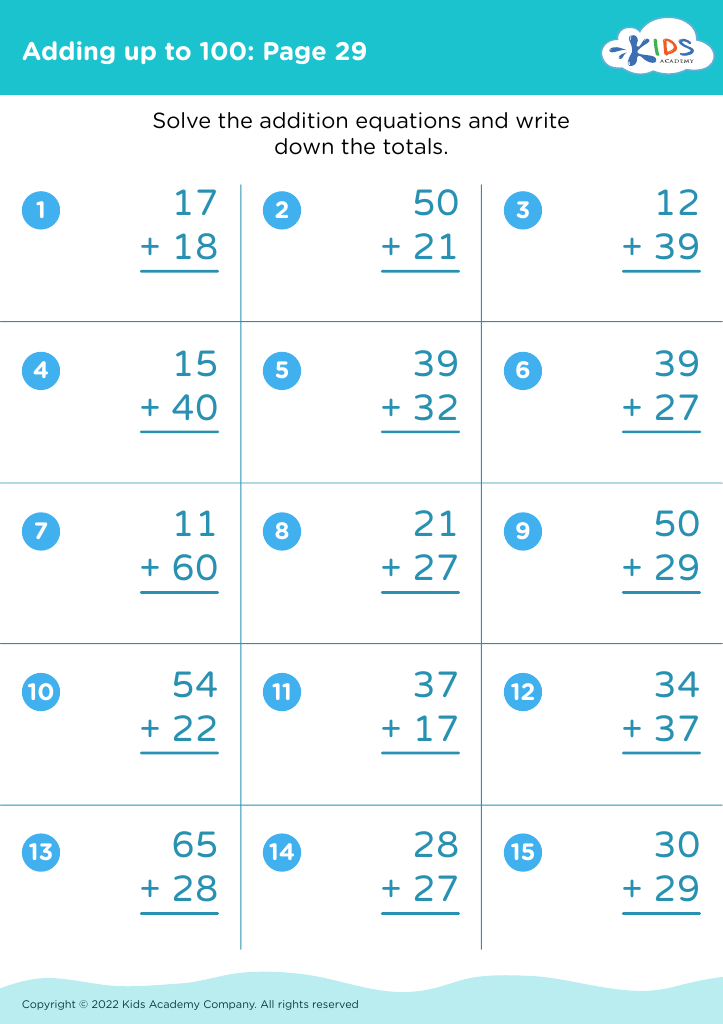
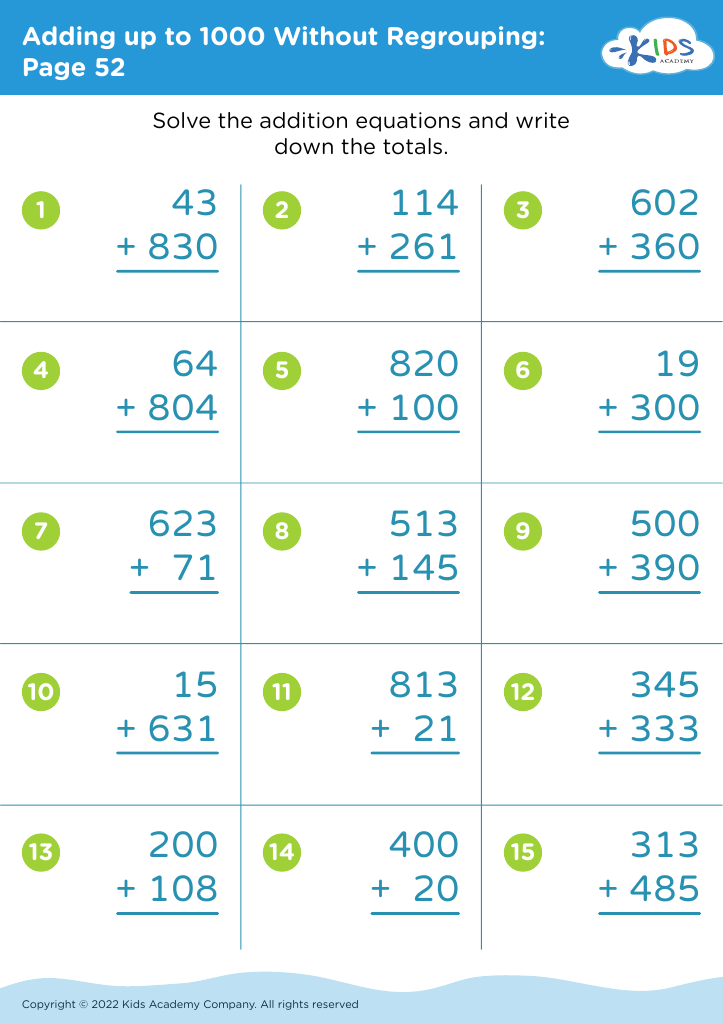
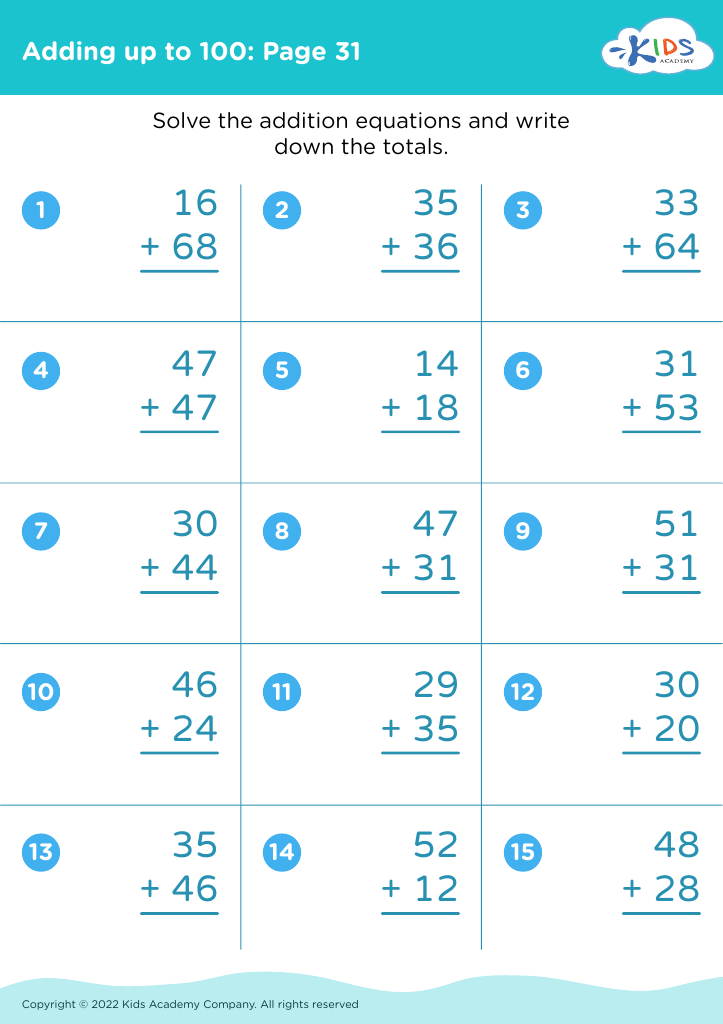








Enhancing concentration in addition and subtraction for children aged 8-9 is vital for several reasons. At this age, foundational math skills are being solidified, which form the building blocks for more complex mathematical concepts they will encounter later in life. Improved concentration directly impacts a child’s ability to grasp, retain, and apply these basics.
Concentration skills help children stay focused during math lessons, reduce errors, and complete tasks more efficiently. Strong addition and subtraction skills enable children to easily manage daily activities and real-world problems, enhancing their overall cognitive abilities.
Moreover, successful mastery of these concepts boosts confidence and interest in math, which can foster a positive attitude towards learning. This is essential, as many students who struggle in early math may develop math anxiety, leading to persistent difficulties in the subject.
For parents and teachers, providing tools and creating an environment that supports enhanced concentration can lead to better academic outcomes, improved problem-solving skills, and a more motivated learner. Engaging exercises, structured routines, and interactive methods like games can make learning fun and effective. Overall, focusing on enhancing concentration in addition and subtraction prepares students for future academic success and everyday life challenges.








