Enhance problem-solving skills Addition & Subtraction Worksheets for Ages 8-9
6 filtered results
-
From - To
Boost your child's math confidence with our "Enhance Problem-Solving Skills: Addition & Subtraction Worksheets" tailored for ages 8-9! These engaging worksheets are designed to develop critical thinking and problem-solving abilities while reinforcing foundational math skills. Featuring a variety of exercises, including word problems and creative challenges, they encourage children to apply their knowledge in real-world scenarios. Our user-friendly format and colorful design make learning enjoyable and effective. Perfect for classroom activities or at-home practice, these worksheets will help your child master addition and subtraction with ease. Explore our collection today and watch them flourish in math!
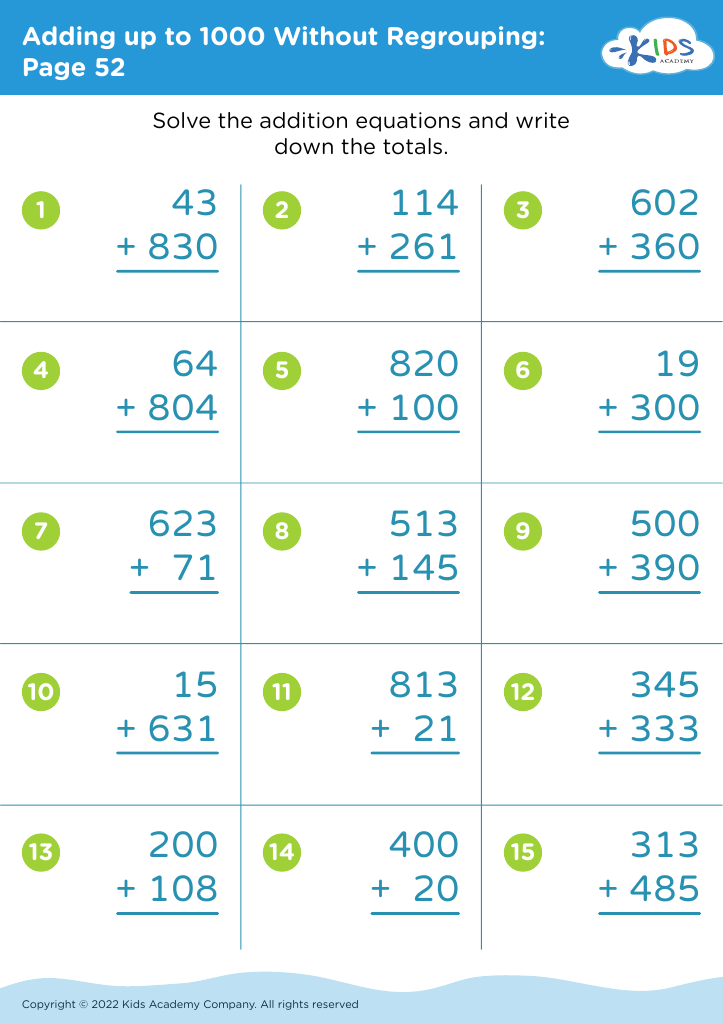
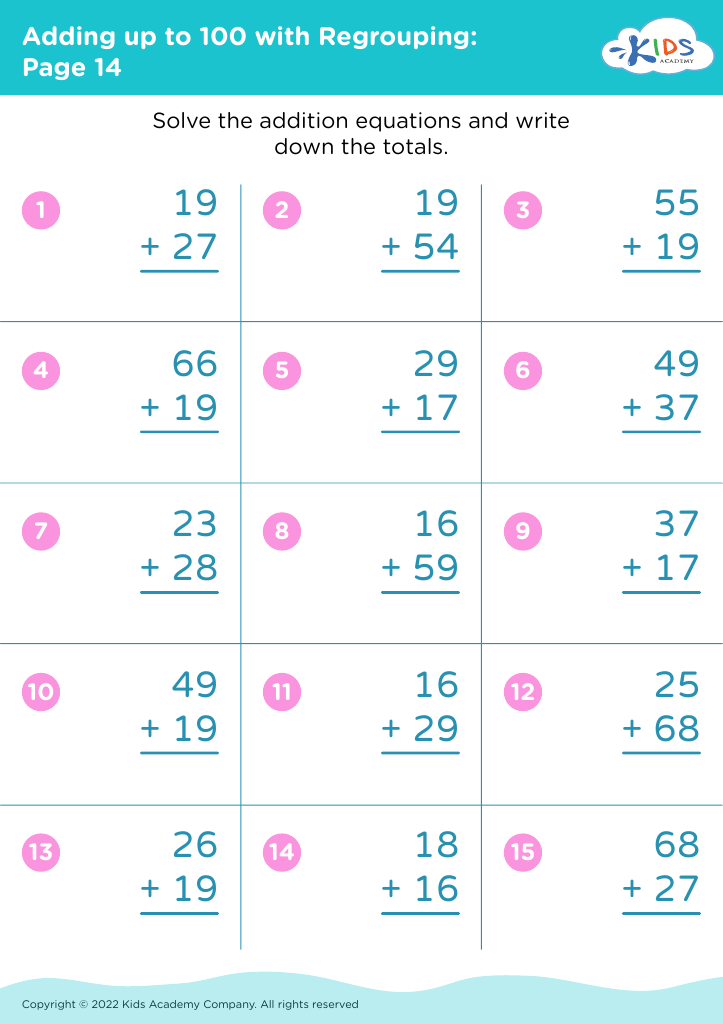
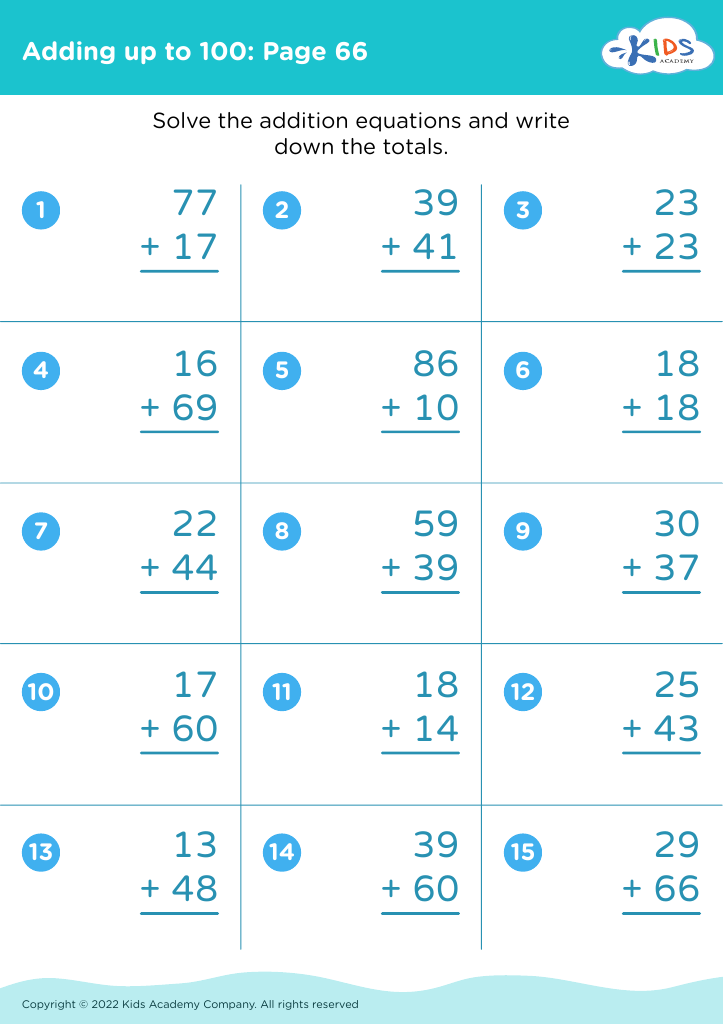
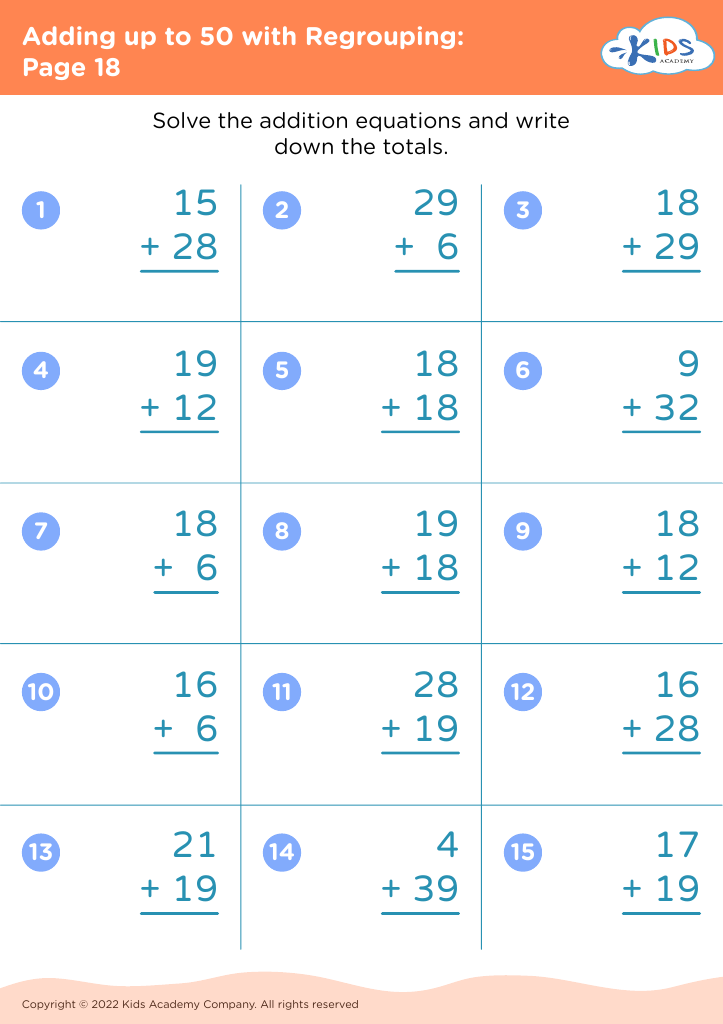
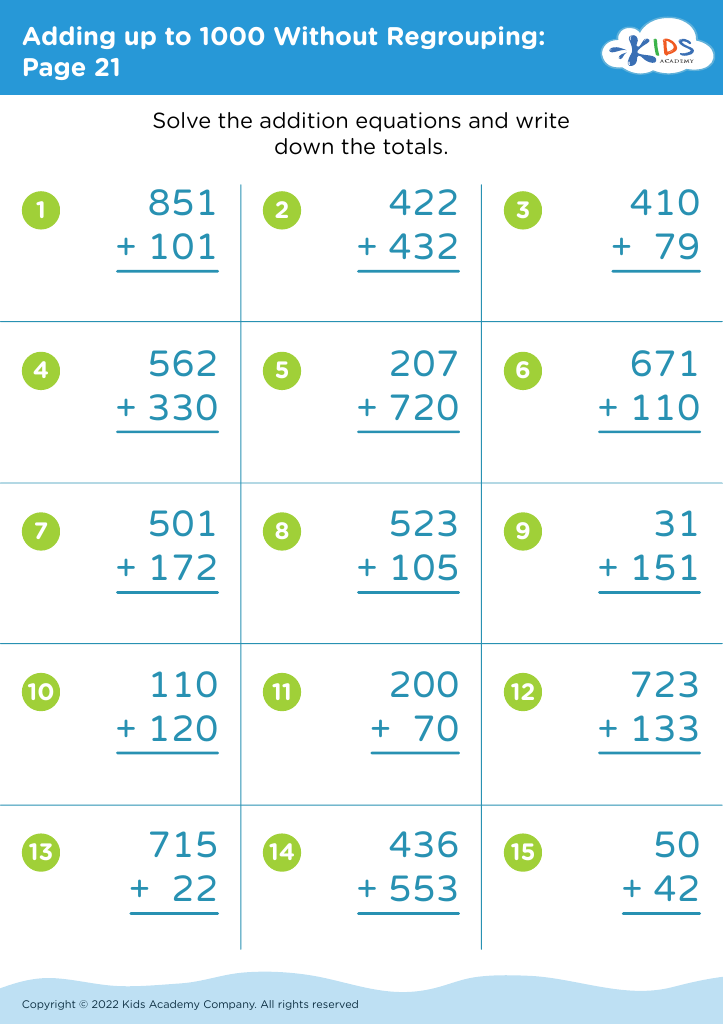
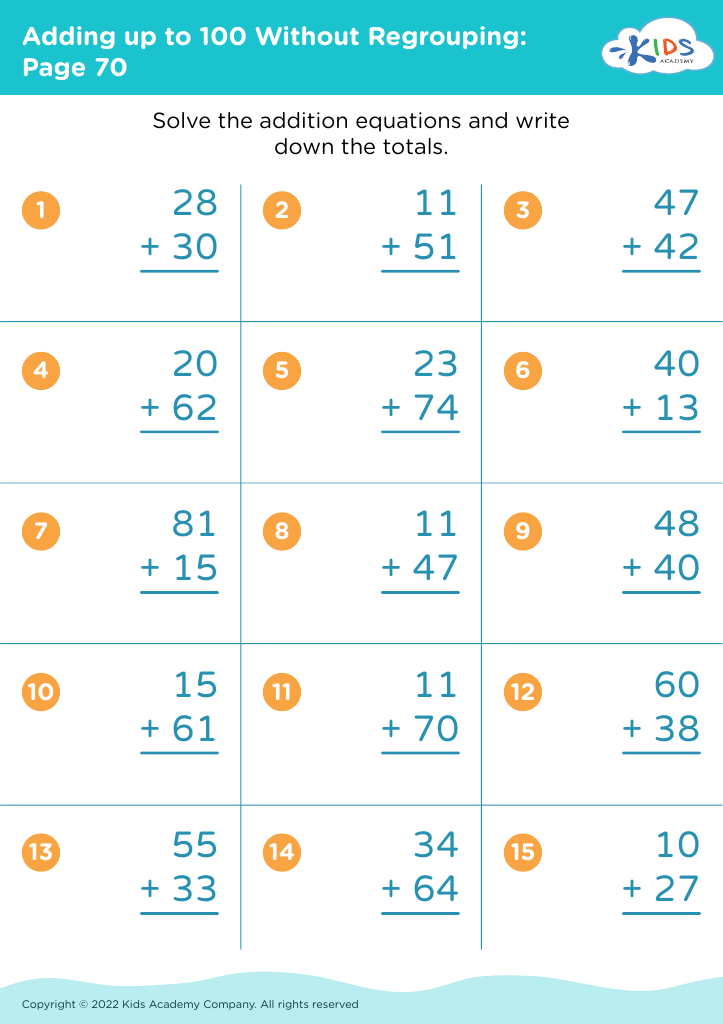








Enhancing problem-solving skills in addition and subtraction for ages 8-9 is crucial for several reasons. Firstly, this stage of development is pivotal, as children transition from basic computation to more complex mathematical thinking. Strengthening these skills not only fosters mathematical proficiency but also builds a strong foundation for future learning in areas like fractions, decimals, and even algebra.
Secondly, effective problem-solving skills encourage critical thinking and creativity. When children learn to tackle arithmetic problems strategically, they develop the ability to analyze situations, hypothesize solutions, and apply reasoning. This not only benefits mathematics but transcends into other subjects, cultivating well-rounded learners.
Moreover, mastering addition and subtraction serves practical functions in children's everyday lives, from managing allowance budgets to understanding time. The ability to solve problems confidently impacts their self-esteem and motivation to learn.
Lastly, fostering these skills helps teachers and parents identify learning gaps early on, enabling timely intervention and support. In a collaborative environment, parents and teachers can ensure that children build resilience and adaptability, equipping them not just for math exams, but for real-world challenges. Emphasizing problem-solving at this stage can significantly shape confident and capable future learners.








