Improve problem-solving Addition & Subtraction Worksheets for Ages 8-9
4 filtered results
-
From - To
Enhance your child's arithmetic skills with our "Improve Problem-Solving: Addition & Subtraction Worksheets" tailored for ages 8-9. These engaging worksheets cultivate vital problem-solving abilities, helping young learners master addition and subtraction through intriguing puzzles and real-world scenarios. Each worksheet is designed to stimulate critical thinking and bolster arithmetic confidence, ensuring math becomes both fun and educational. Whether at home or in the classroom, our worksheets provide invaluable practice, guiding children to develop efficient strategies for tackling math challenges. Unlock the full potential of your young mathematician today. Explore and download our expertly crafted worksheets at Kids Academy.
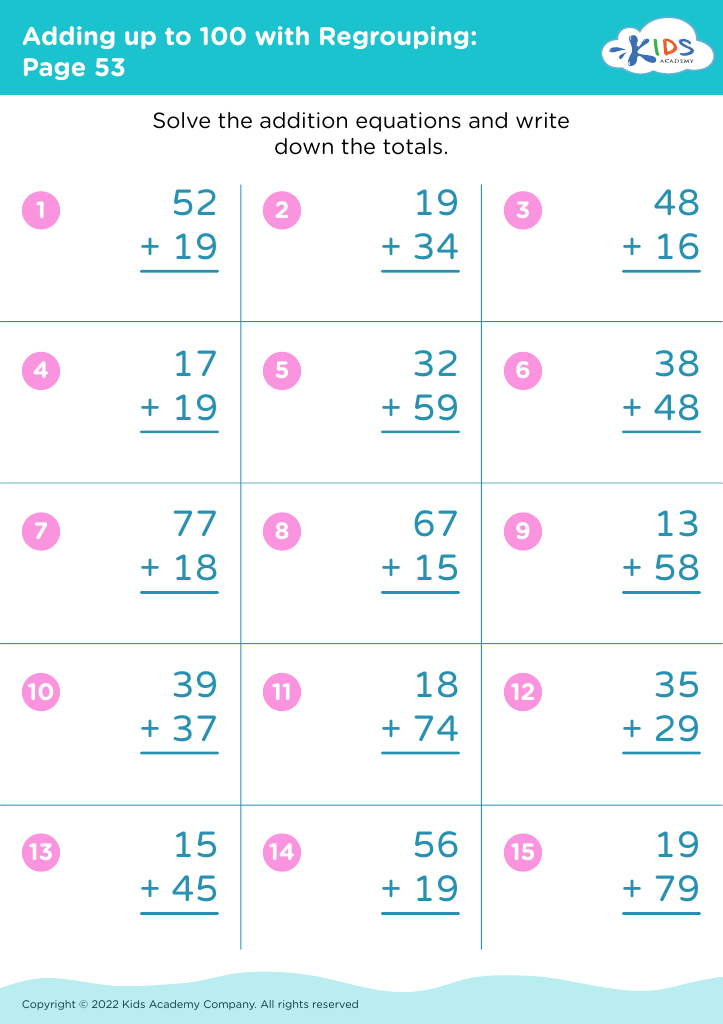
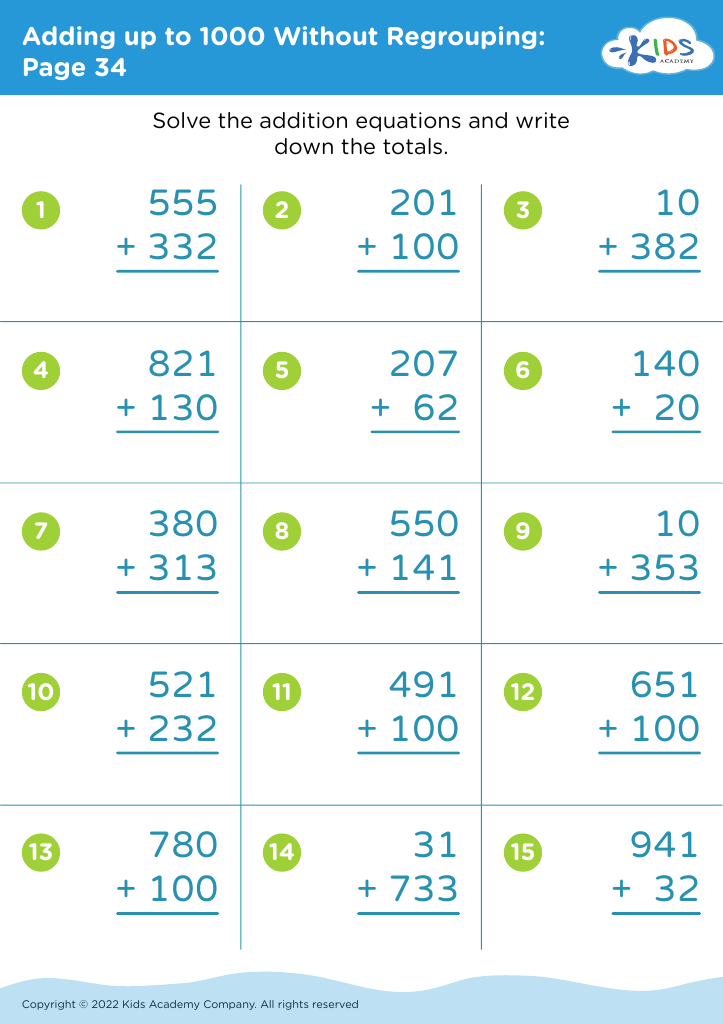
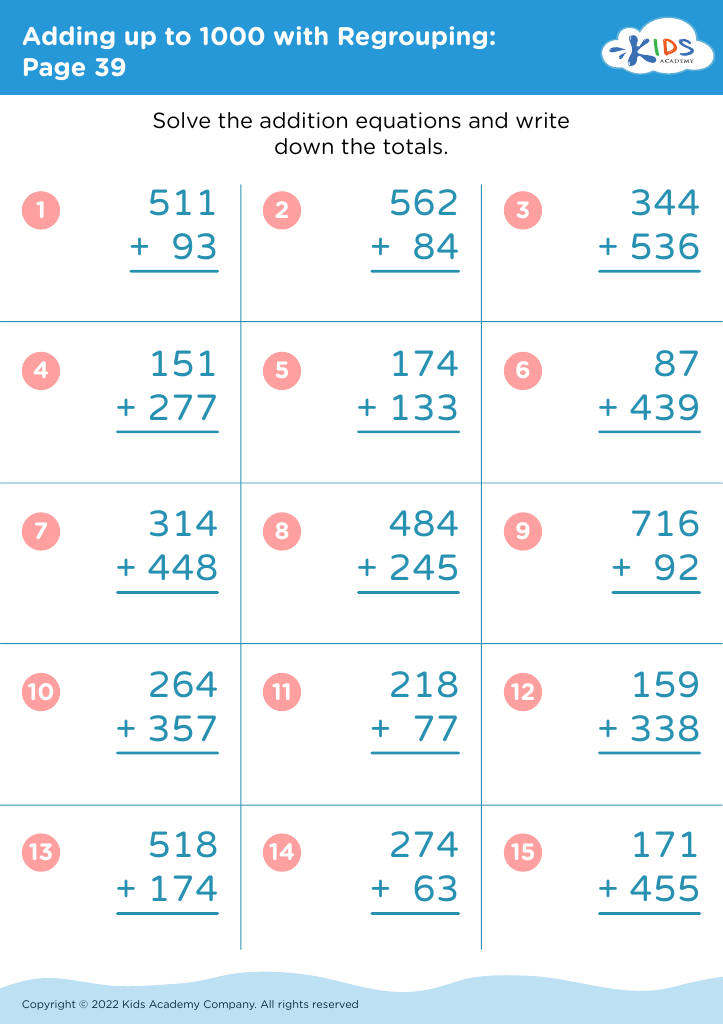
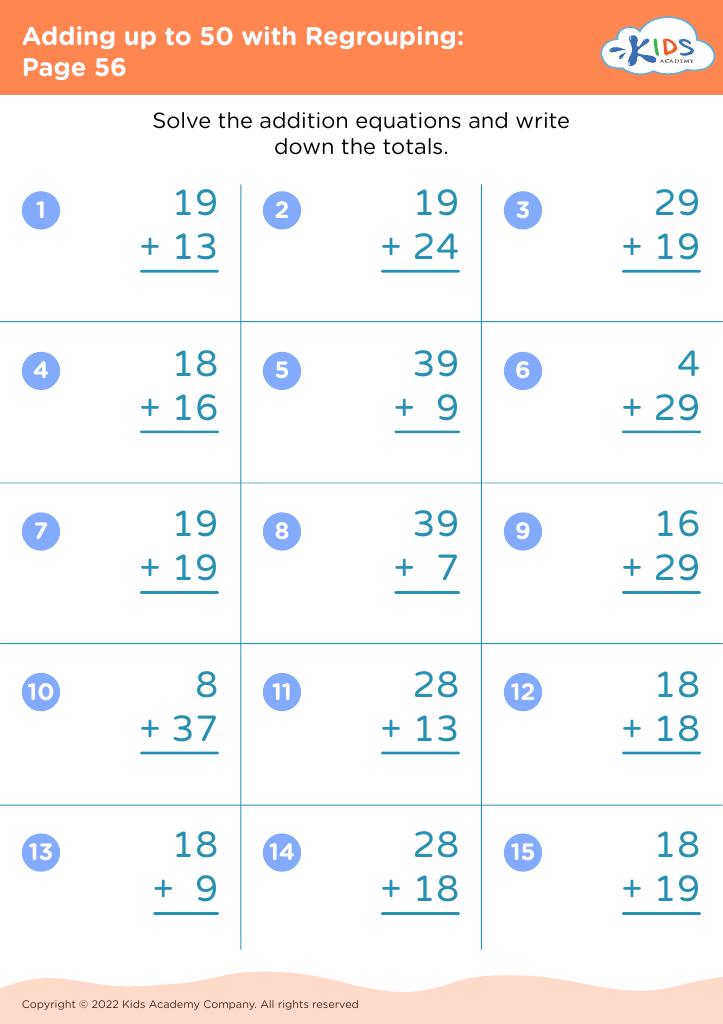








Parents and teachers should prioritize improving problem-solving skills in addition and subtraction for children aged 8-9, as these foundational math skills are critical for their overall academic success and everyday life. At this developmental stage, children have the capacity to grasp fundamental concepts that will serve as building blocks for more complex mathematical operations.
Enhancing problem-solving abilities in addition and subtraction encourages logical thinking and critical analysis. These skills are instrumental in helping children learn to approach problems methodically, breaking them down into manageable parts. This method promotes persistence, resilience, and cognitive flexibility, all of which contribute to better academic performance across subjects.
Furthermore, proficiency in basic arithmetic enables children to tackle real-life situations more confidently, such as handling money, managing time, and following recipes. Applying these skills practically helps children see the direct relevance of what they are learning.
From a literacy perspective, understanding problem statements and determining ways to solve them also strengthens reading comprehension and language skills. These cognitive benefits underscore the importance of strong math skills at an early age.
By investing time and resources into developing these problem-solving abilities, parents and teachers set children up for a future of confident learning, increased self-esteem, and a positive attitude toward mathematics and other academic endeavors.








