Improving observation skills Addition & Subtraction Worksheets for Ages 8-9
3 filtered results
-
From - To
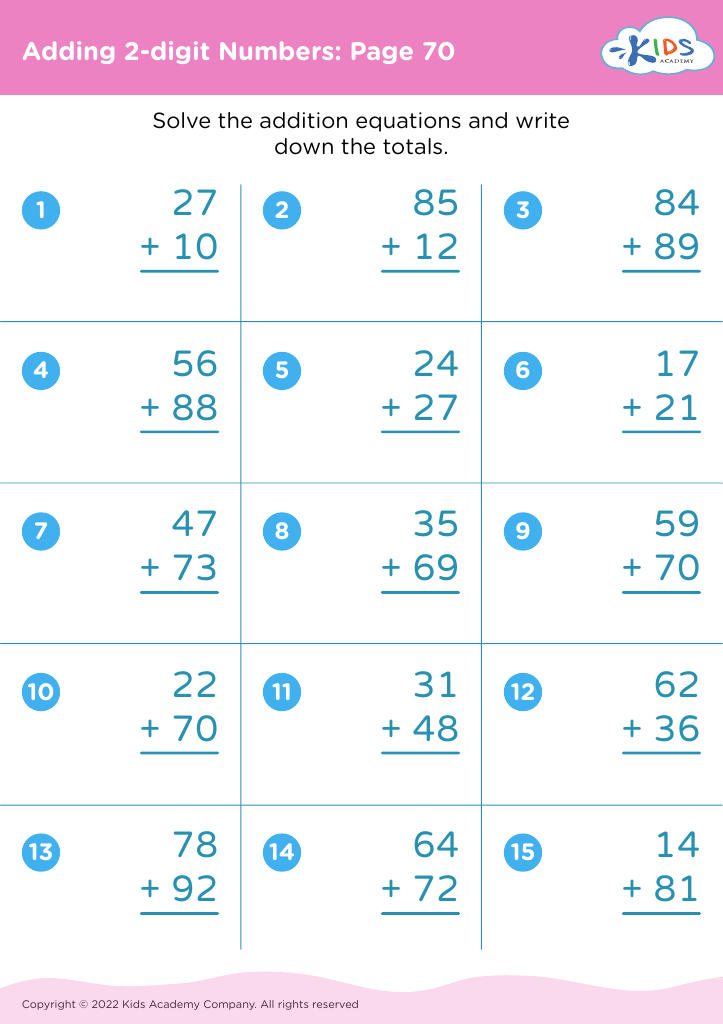
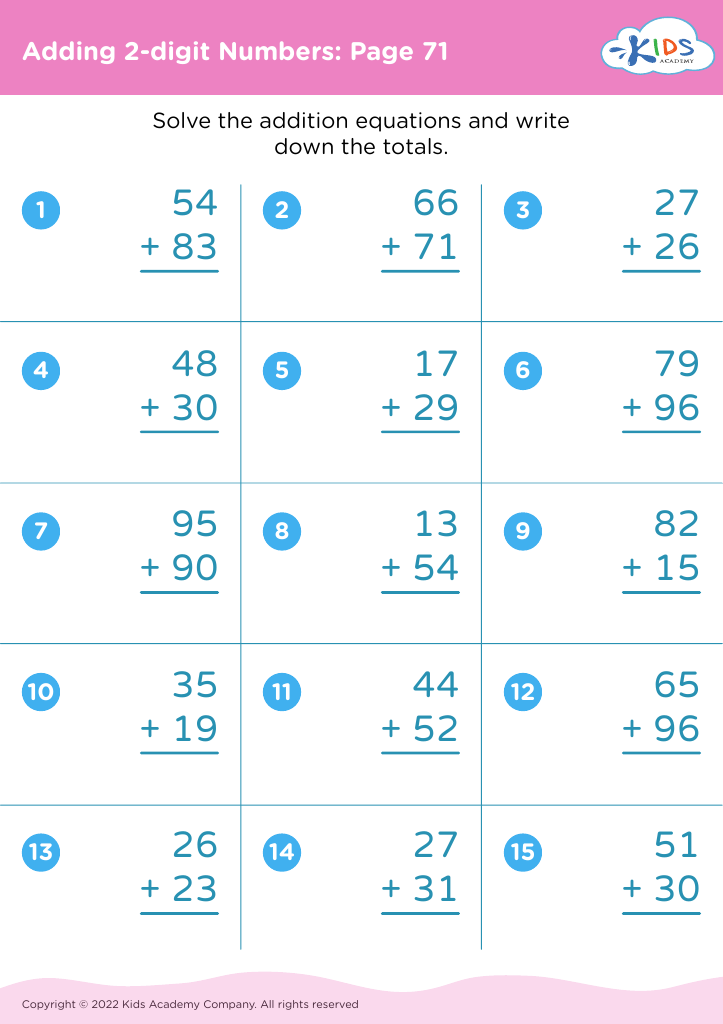
Boost your child's arithmetic accuracy with our "Improving Observation Skills Addition & Subtraction Worksheets for Ages 8-9." Specially crafted to enhance detailed observation, these engaging exercises help young learners identify patterns and detect errors in addition and subtraction problems.
Our worksheets provide a variety of challenges designed to strengthen critical thinking and problem-solving abilities. With consistent practice, children will improve both their mathematical skills and their attention to detail, laying a solid foundation for future learning. Perfect for classroom use or at-home enrichment, these worksheets offer a fun, effective way to make math mastery a breeze.
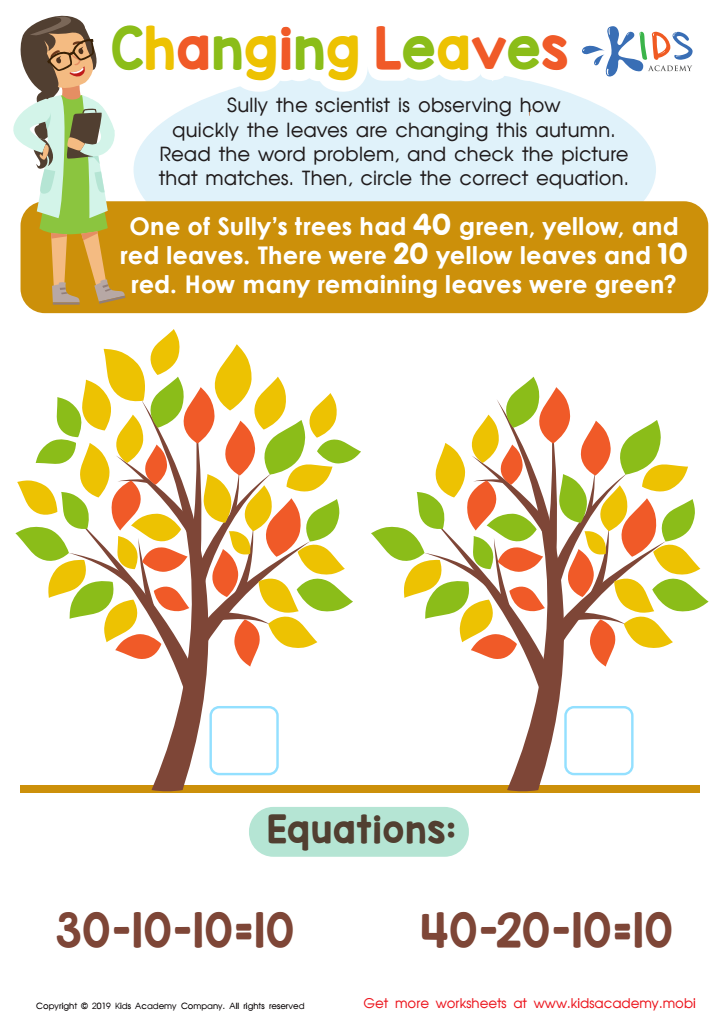
Changing Leaves Worksheet
 Assign to My Students








Parents and teachers should care about improving observation skills in addition, and subtraction for children aged 8-9 because these foundational abilities are crucial for their academic and everyday life success. At this stage, children are transitioning from basic counting to more complex arithmetic, and sharpened observation skills enable them to notice patterns, identify errors, and apply logical thinking while solving problems. For instance, a child with strong observation skills can easily identify when numbers don't add up correctly or spot missing elements in word problems, leading to better accuracy in their work.
Moreover, solid observation abilities foster a deeper understanding of mathematical concepts. When children observe the relationships between numbers, they begin to develop problem-solving strategies and become more confident in tackling new challenges. This not only enhances their math proficiency but also promotes critical thinking skills that are transferable to other subjects.
In addition, strong observation skills benefit children's overall cognitive development. Observing and analyzing their environment helps improve attention to detail, concentration, and memory, which are essential for lifelong learning. By investing time and effort into honing these skills in addition and subtraction, parents and teachers equip children with tools for academic excellence and greater preparedness for future educational experiences.








