Math skills improvement Addition & Subtraction Worksheets for Ages 8-9
3 filtered results
-
From - To
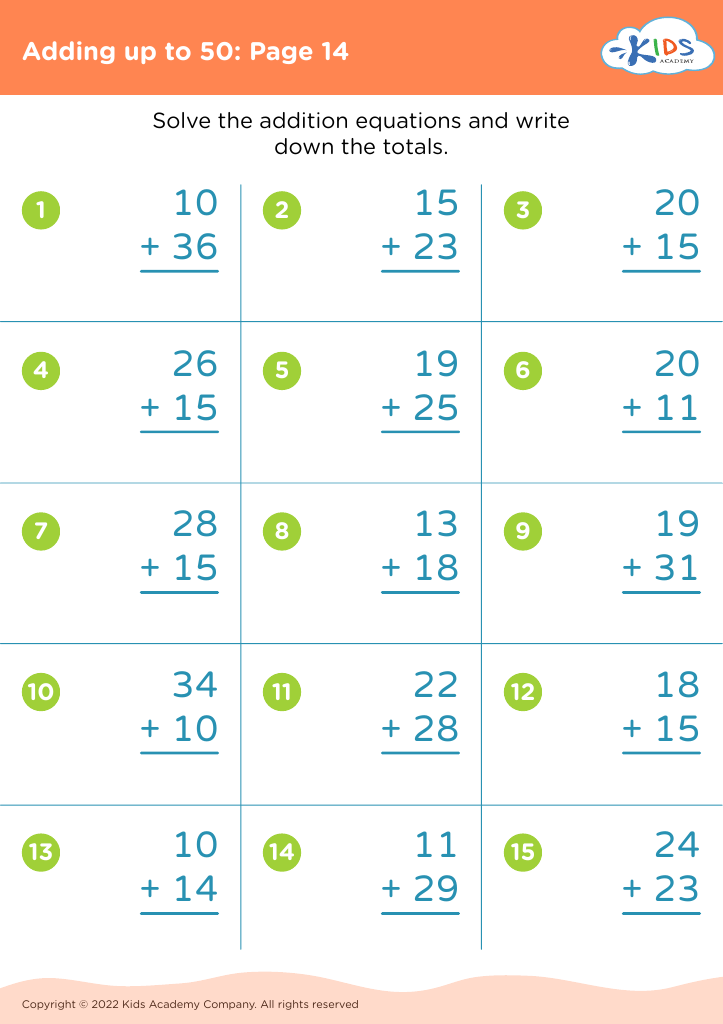
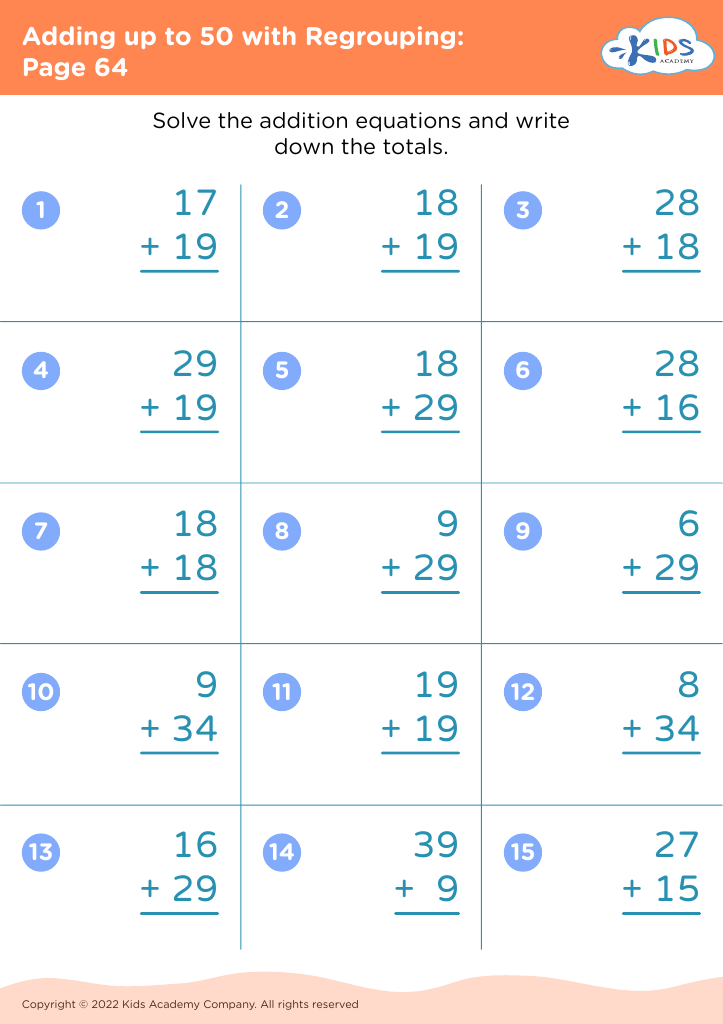
Enhance your child's math abilities with our Math Skills Improvement: Addition & Subtraction Worksheets designed for ages 8-9. These expertly crafted worksheets from Kids Academy focus on building strong foundational skills through engaging exercises. Each worksheet aims to boost confidence and proficiency in addition and subtraction, ensuring that essential math concepts are easy to understand and apply. Perfect for both classroom use and at-home practice, our worksheets offer a fun, interactive way to support your child's learning journey. Start your child's path to math success and watch them flourish with our comprehensive and enjoyable resources.

Adding Numbers: Cardinal Directions Worksheet
 Assign to My Students








Improving addition and subtraction skills for children ages 8-9 is crucial for their academic and personal development. At this age, foundational math skills are not just about numerical competence, but also about enhancing overall cognitive abilities. Mastery in addition and subtraction helps children build a solid groundwork for more advanced math topics like multiplication, division, fractions, and problem-solving, which are essential in their future learning stages.
For parents, reinforcing these skills ensures their child keeps up with academic expectations. It cultivates a child’s confidence and reduces math anxiety, making them feel more competent at school and encouraging a positive attitude towards learning. Practical life functions, such as budgeting their pocket money, understanding times for daily activities, or even recognizing patterns, heavily rely on strong early math skills.
Teachers should aim for math proficiency to ensure a smooth transition into higher-level curriculums that are increasingly abstract. Engaging children with hands-on learning experiences strengthens their logical reasoning and analytical thinking. Additionally, teachers who focus on improving these skills make classroom management easier, as students with solid basic skills are less likely to fall behind and exhibit frustration-related behavioral issues. Overall, investing in addition and subtraction skills enriches both academic performance and critical life skills that children will carry forward throughout their lives.








