
Numeracy skills Addition & Subtraction Worksheets for Ages 8-9
8 filtered results
Difficulty Level
Grade
Age
-
From - To
Subject
Activity
Standards
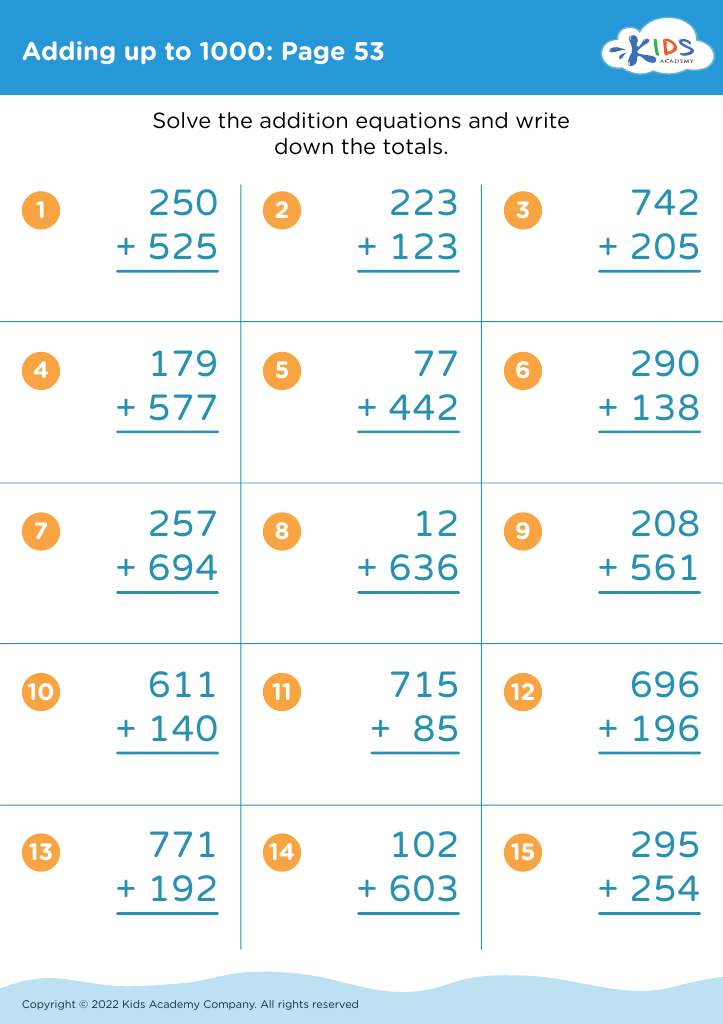
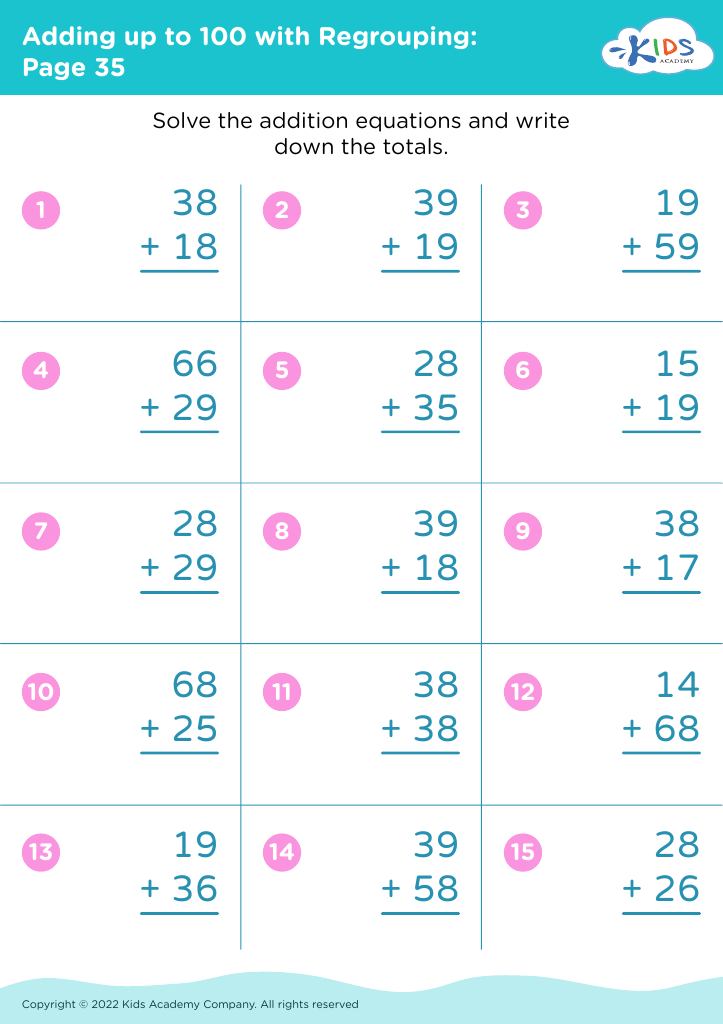
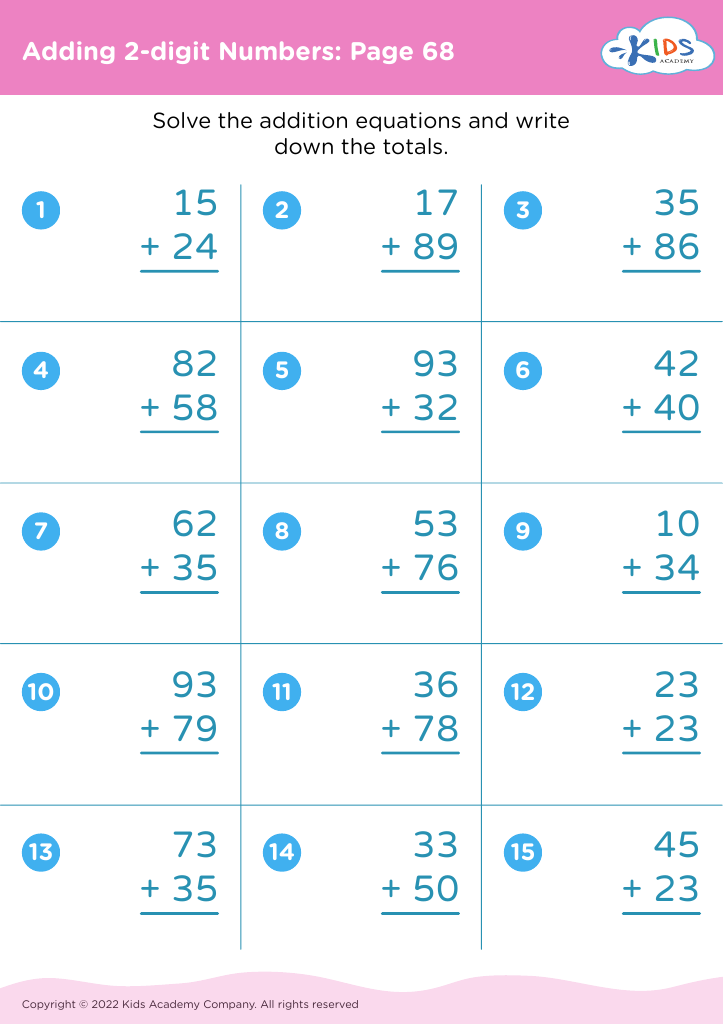
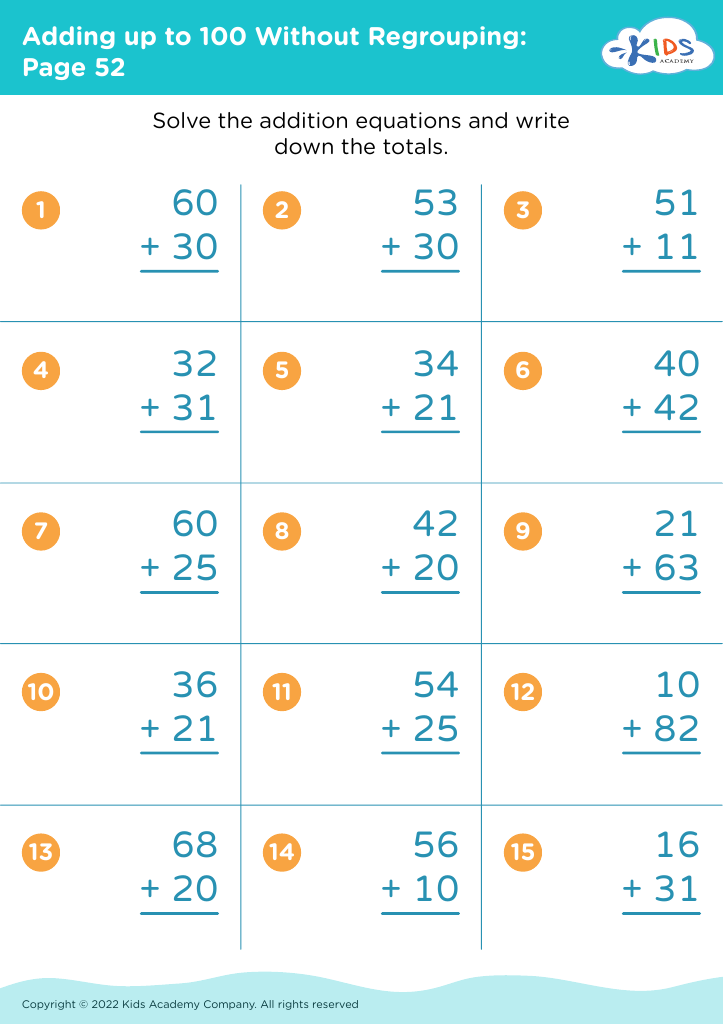
Enhance your child’s numeracy skills with our expertly crafted Addition & Subtraction Worksheets for Ages 8-9. Designed to align with curriculum standards, these engaging and educational worksheets help young learners grasp essential math concepts with ease. Each worksheet offers varied problem sets to boost practice and understanding, aiming to build a strong foundation in addition and subtraction. Whether for extra practice at home or enrichment in the classroom, these resources foster critical thinking and numerical confidence. Empower your child to achieve math success and enjoyably navigate their learning journey with our accessible and effective worksheet collection.
Favorites
With answer key
Interactive
Join Kids Academy for Free
Who is primarily going to use this learning content?








Numeracy skills, specifically addition and subtraction, are fundamental building blocks for children ages 8-9, forming the basis for more complex mathematical concepts. At this age, mastery of these skills is crucial because it shapes their overall mathematical understanding and problem-solving abilities.
Addition and subtraction are not just isolated skills; they permeate various aspects of daily life and other curricular subjects like science and social studies. Mastery of these operations aids in developing critical thinking and the ability to approach problems methodically. For example, understanding how to add and subtract encourages logical thinking and reasoning, helping children to solve real-world problems, such as managing time, understanding game scores, or even basic financial literacy, such as making change.
Moreover, proficiency in these foundational skills builds children’s confidence and interest in math, laying a positive foundation for the future. As math is cumulative, gaps in understanding can lead to struggles in more advanced topics like multiplication, division, and fractions. Early intervention by teachers and parents ensures that children develop a strong numerical foundation, essential for academic success not just in mathematics, but across the broader curriculum, ultimately leading to better educational and career opportunities in a world increasingly driven by STEM disciplines. Therefore, prioritizing these skills at an early age positions children for long-term success.








