Pattern recognition Addition & Subtraction Worksheets for Ages 8-9
5 filtered results
-
From - To
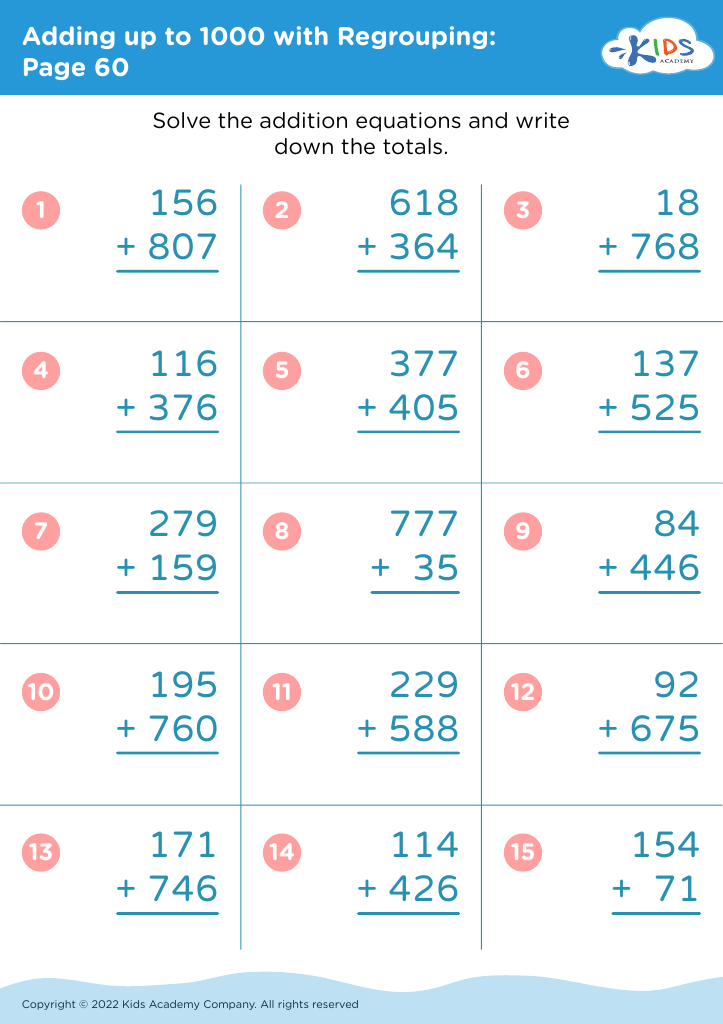
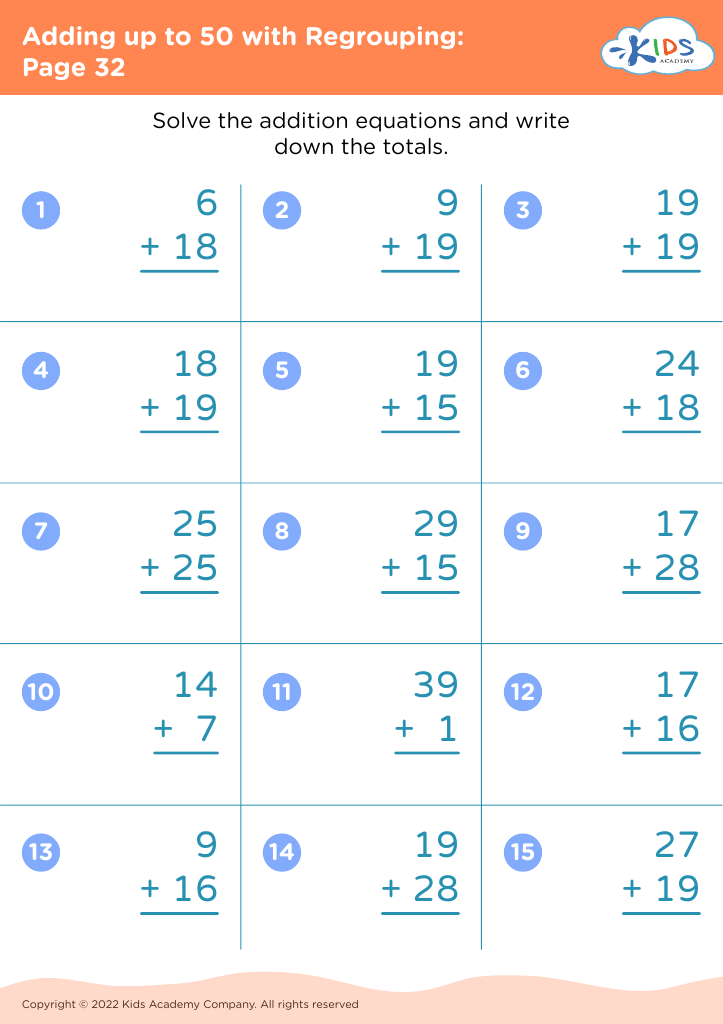
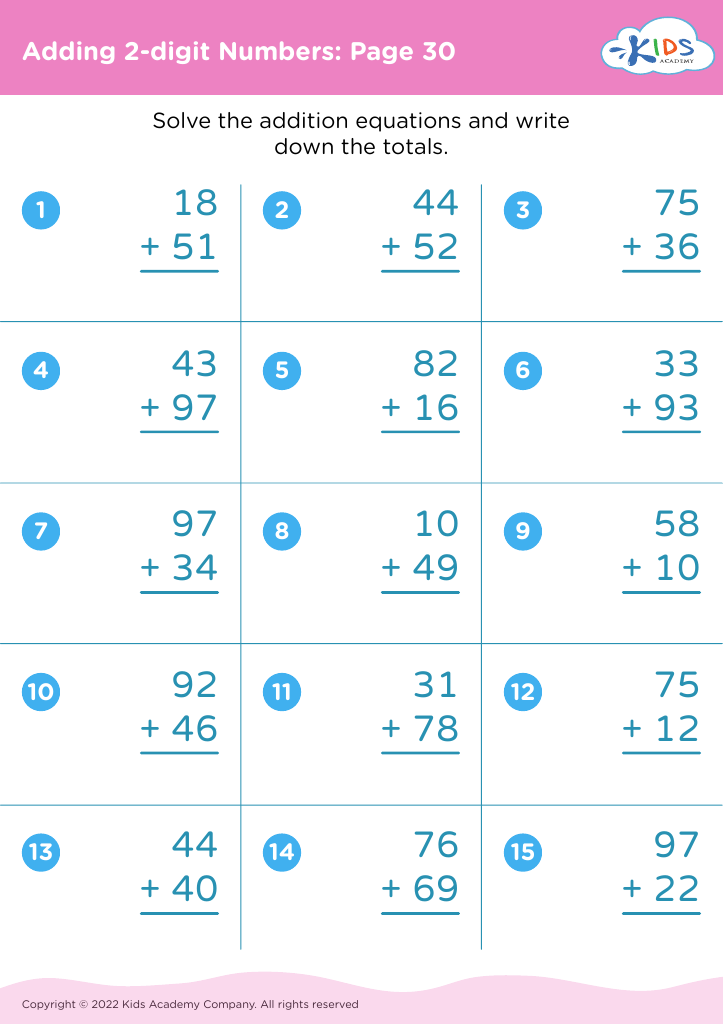
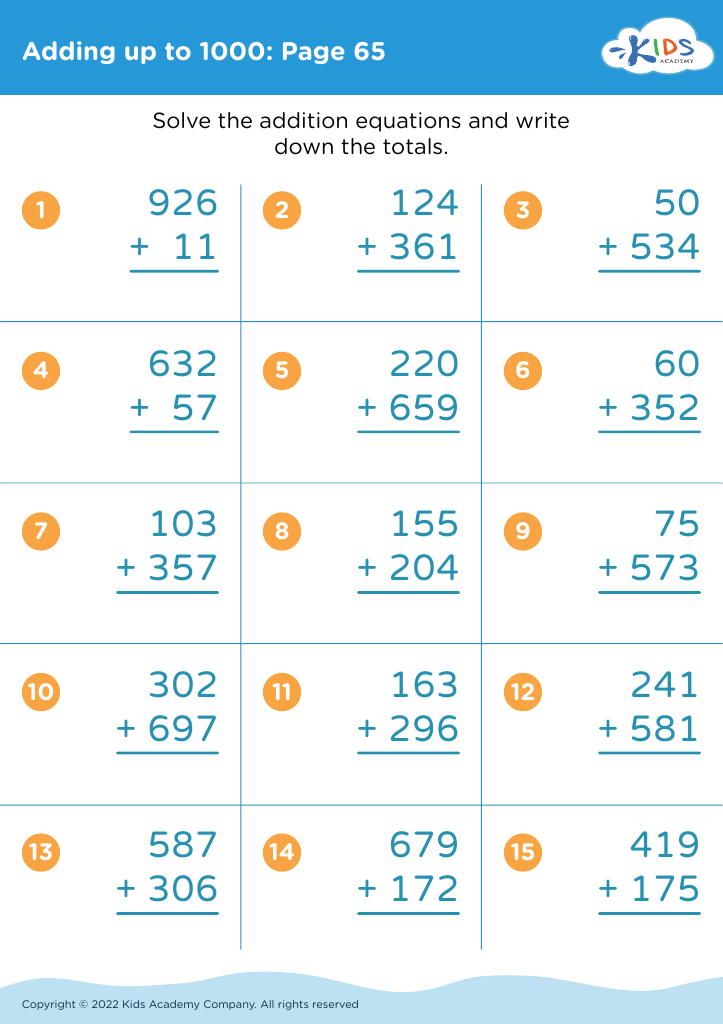
Discover "Pattern Recognition Addition & Subtraction Worksheets for Ages 8-9" from Kids Academy! Our expertly crafted, engaging worksheets are designed to strengthen your child’s number sense, boost problem-solving skills, and develop pattern recognition abilities. These educational resources offer various fun and challenging exercises that make learning addition and subtraction enjoyable. Perfect for both classroom use and home study, they aim to solidify foundational math concepts while sparking curiosity and confidence in young learners. Help your child excel with these tailor-made worksheets, and watch as they master essential math skills through interactive and rewarding activities.
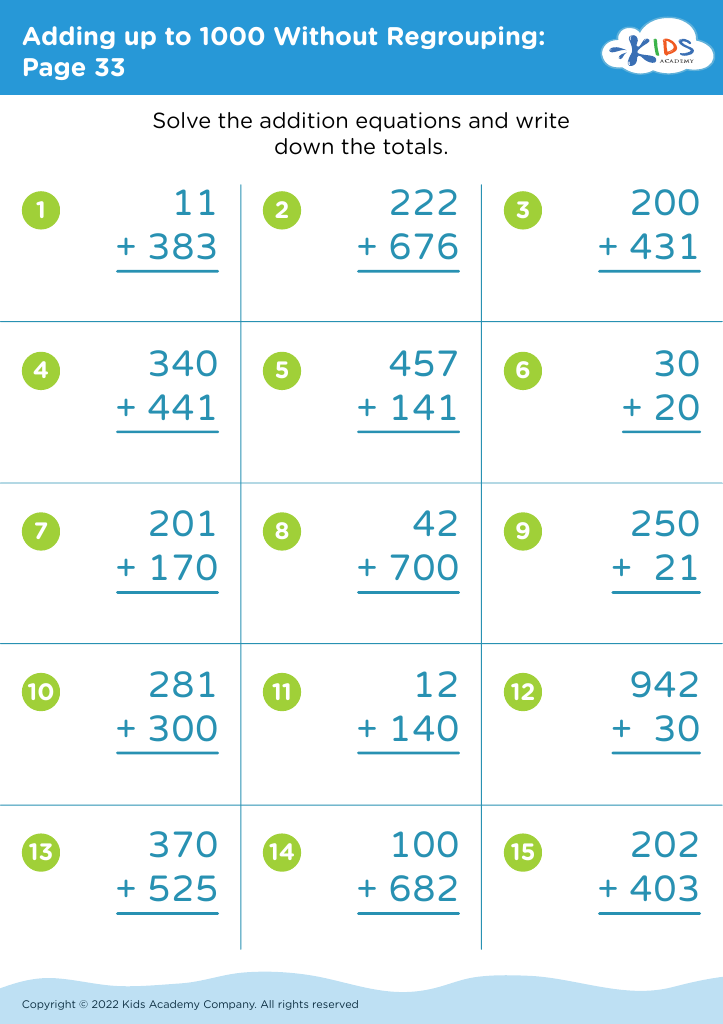








Pattern recognition in addition and subtraction is crucial for children aged 8-9 because it lays the foundation for more advanced mathematical understanding. This age marks a pivotal stage where kids transition from concrete to more abstract thinking. Recognizing patterns helps them understand the 'why' behind mathematical rules, making them adept problem solvers and critical thinkers.
Engaging children with pattern recognition enhances their ability to predict outcomes and understand numerical relationships. For example, noticing that the sum of two even numbers is always even helps them grasp fundamental arithmetic principles intuitively. This skill is also foundational for mastery in subjects like algebra and more complex arithmetic operations.
Moreover, teachers and parents should care about this because developing strong pattern recognition ability boosts a child's confidence in math. When children can easily identify patterns, they're likely to find math more enjoyable and less intimidating. This positive attitude towards math can lead to better academic performance and sustained interest in STEM subjects.
Encouraging pattern recognition in everyday activities nurtures a child's analytical skills and fosters lifelong learning habits. It equips them with the tools needed for logical reasoning, problem-solving, and decision-making, which are essential skills both inside and outside the classroom. Thus, it's imperative to integrate these concepts into early education to build a robust mathematical foundation.








