Enhance your 8-9-year-old's math skills with our Problem-Solving Practice Addition & Subtraction Worksheets! Designed to challenge young minds, these worksheets help children master the fundamental concepts of addition and subtraction through engaging, real-life problem scenarios. Each worksheet is crafted to develop critical thinking and improve mathematical fluency, ensuring that your child becomes confident in tackling various numerical challenges. Perfect for classroom use or at-home practice, our materials are aligned with educational standards, making it easier for your child to excel in their math journey. Help your child achieve math success today!
Check out this FREE Trial Lesson on Addition & Subtraction for age 8-9!

Standard Addition

Favorites
With answer key
Interactive
  • 8-9
  • Problem-solving practice
  • Addition & Subtraction
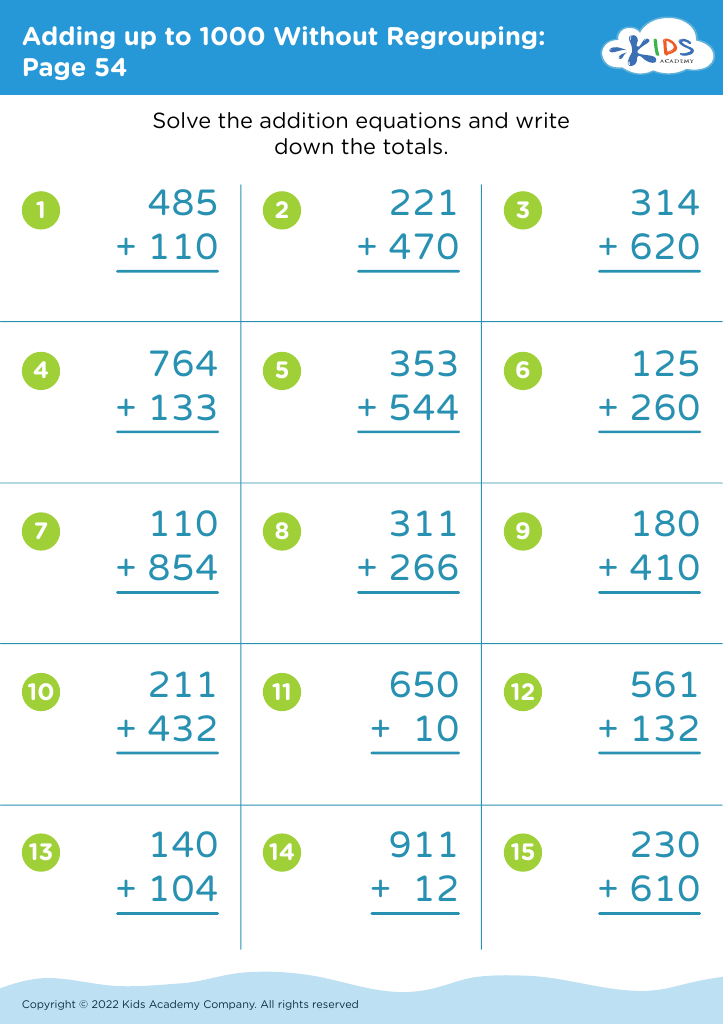
Adding up to 1000 Without Regrouping: Page 54
Worksheet
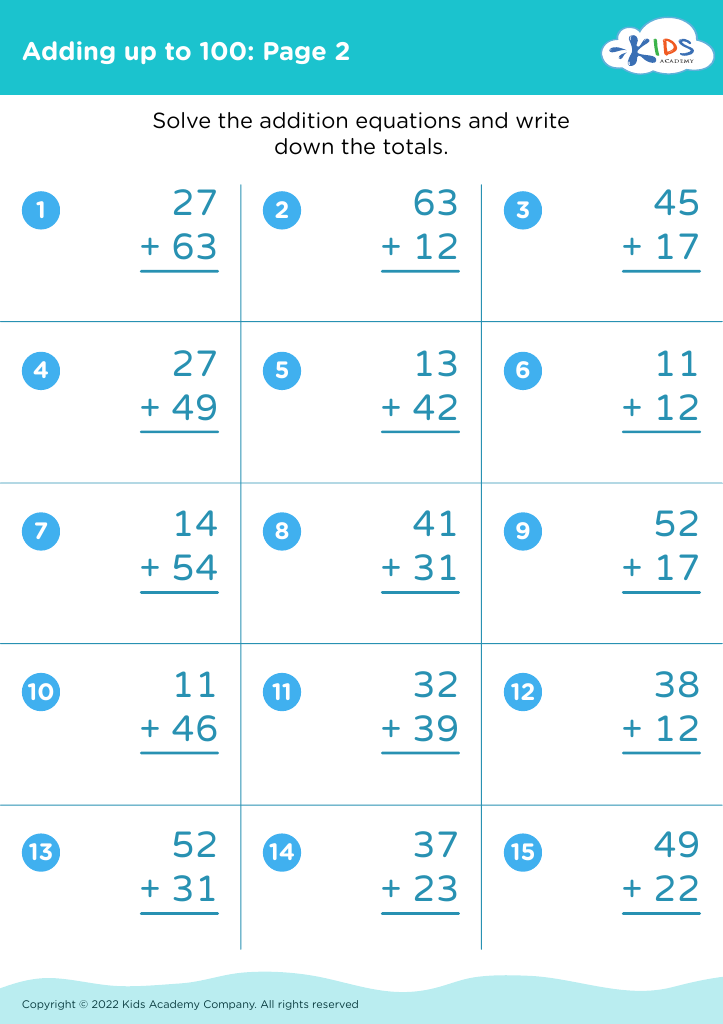
Adding up to 100: Page 2

Adding up to 100: Page 2

Adding up to 100: Page 2
Worksheet
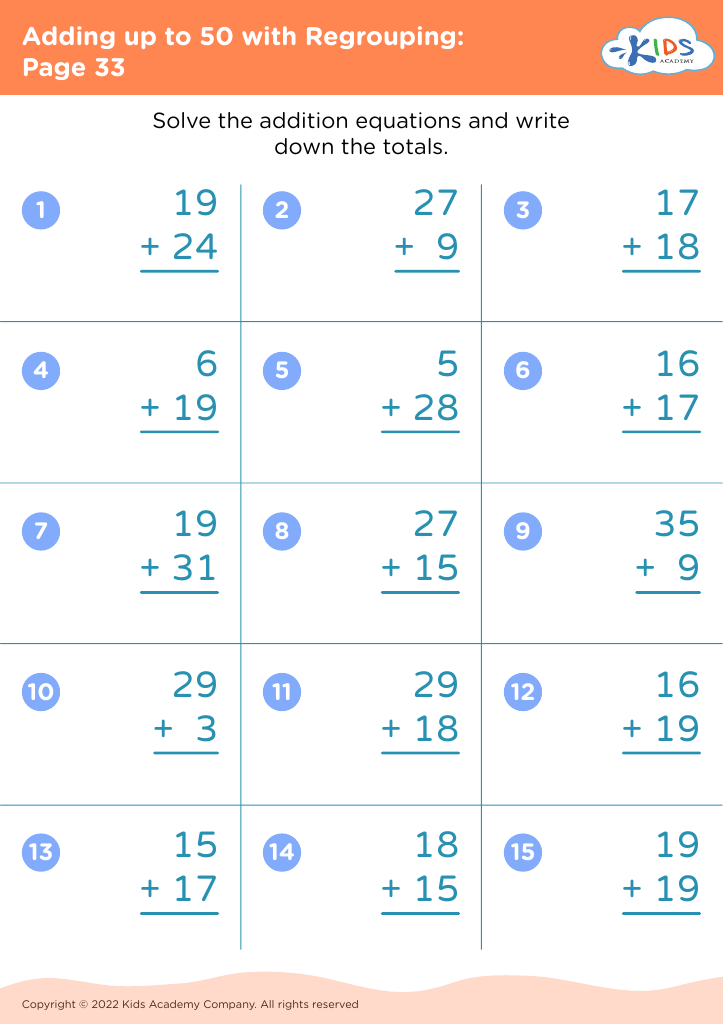
Adding up to 50 with Regrouping: Page 33
Worksheet
Addition with regrouping worksheet

Addition with Regrouping Worksheet

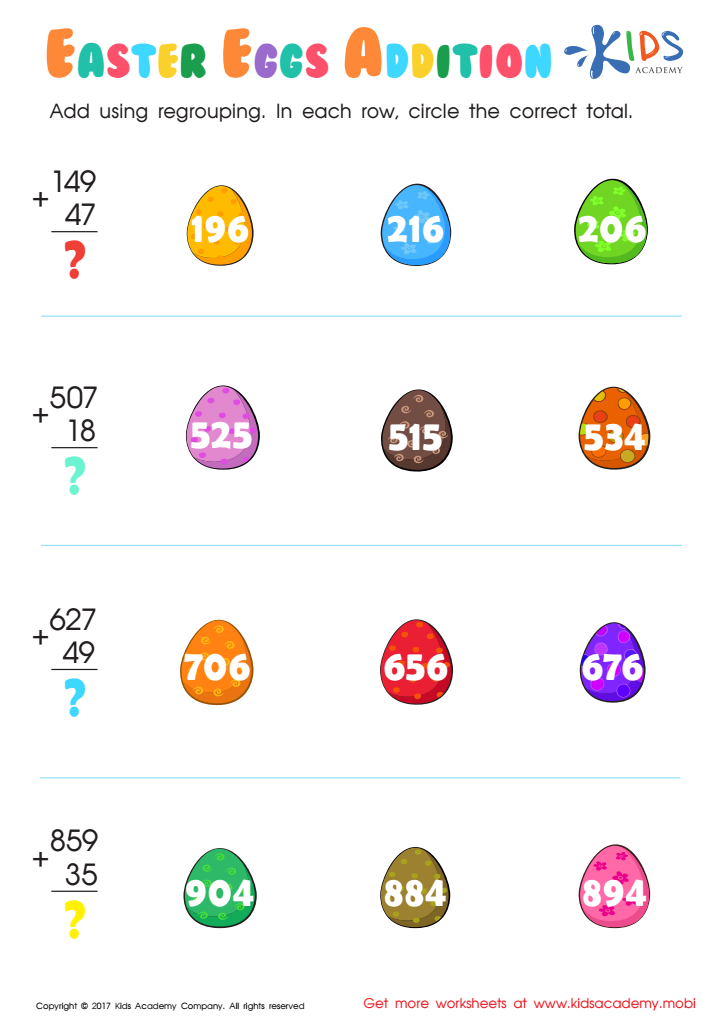
Try this fun holiday-themed addition with regrouping worksheet! Kids can practice adding while regrouping using bright, colorful holiday images. It's a great way to make math exciting, and keep their interest piqued!
Addition with Regrouping Worksheet
Worksheet
Adding Numbers: Conservation Worksheet
Adding Numbers: Conservation Worksheet
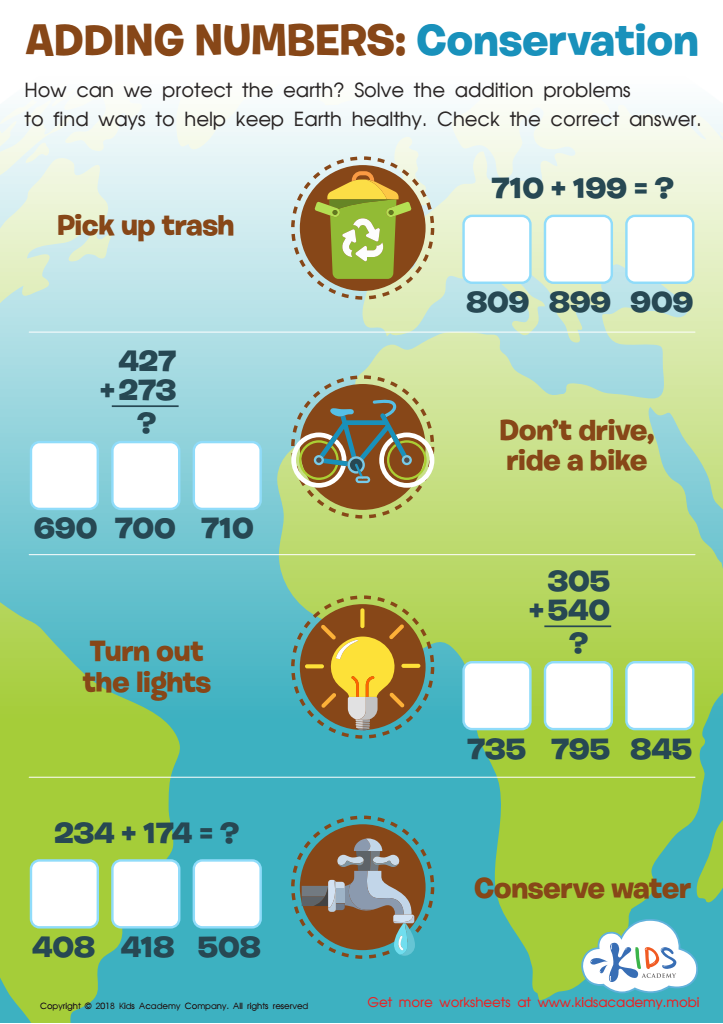
We all live on the Earth, which provides us with the vital necessities for survival. Unfortunately, we too often take advantage of this, causing pollution, water wastage and global warming. Help teach your kids how we can protect our planet - ask them to come up with good ideas and work together to find solutions. Challenge them to solve the subtraction problems to see what they can do to help keep the Earth healthy.
Adding Numbers: Conservation Worksheet
Worksheet
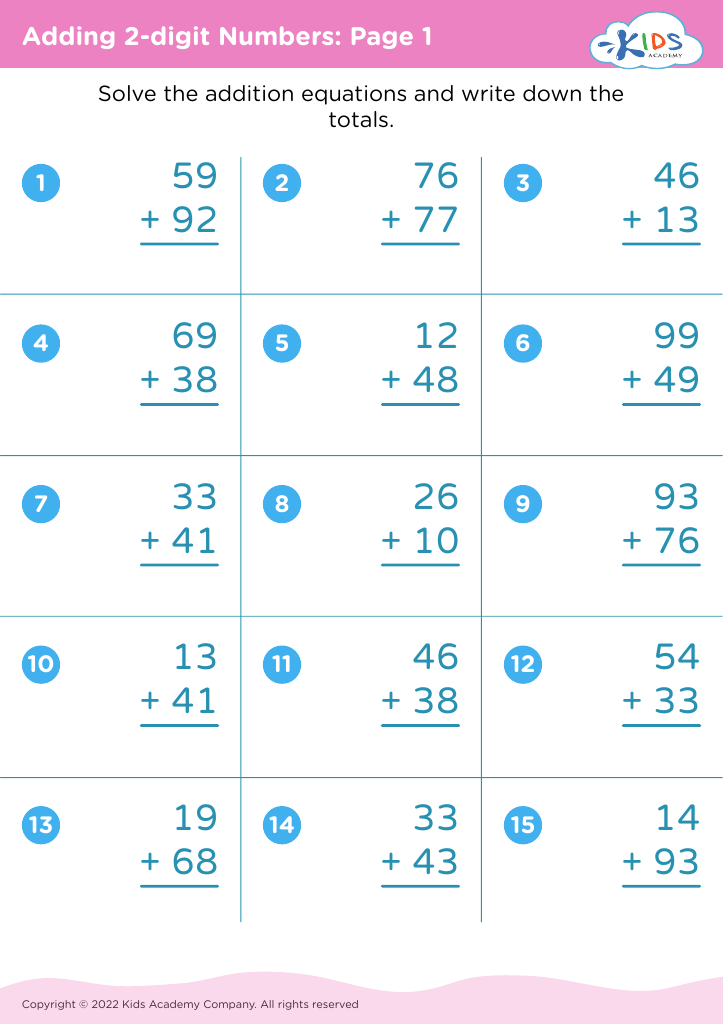
Adding 2-digit Numbers: Page 1

Adding 2-digit Numbers: Page 1

Adding 2-digit Numbers: Page 1
Worksheet
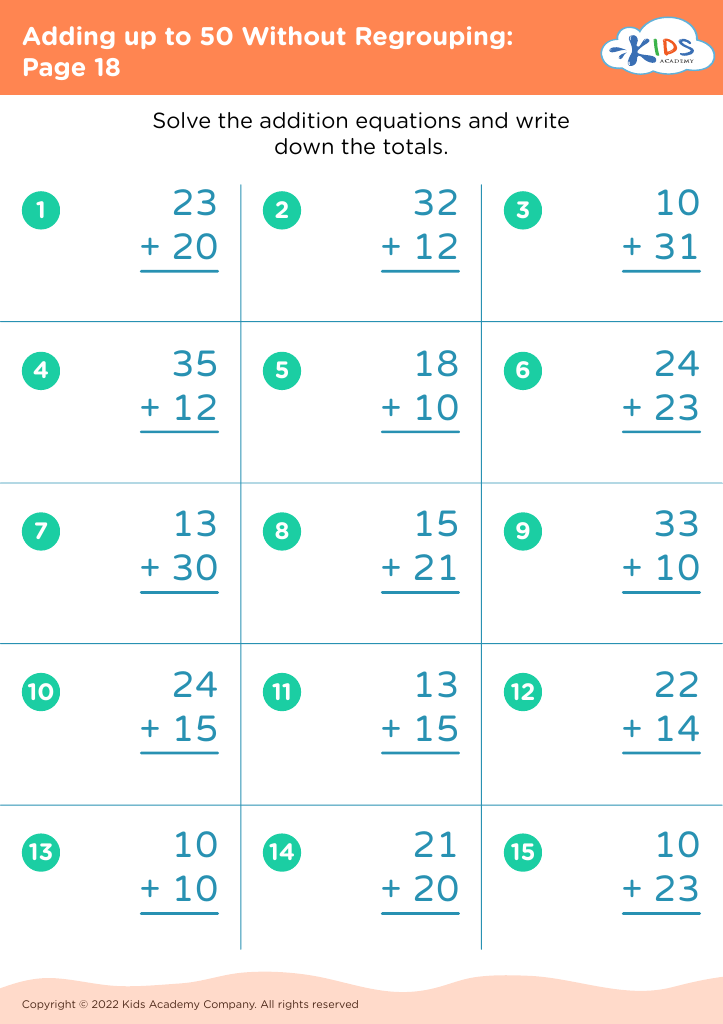
Adding up to 50 Without Regrouping: Page 18
Worksheet
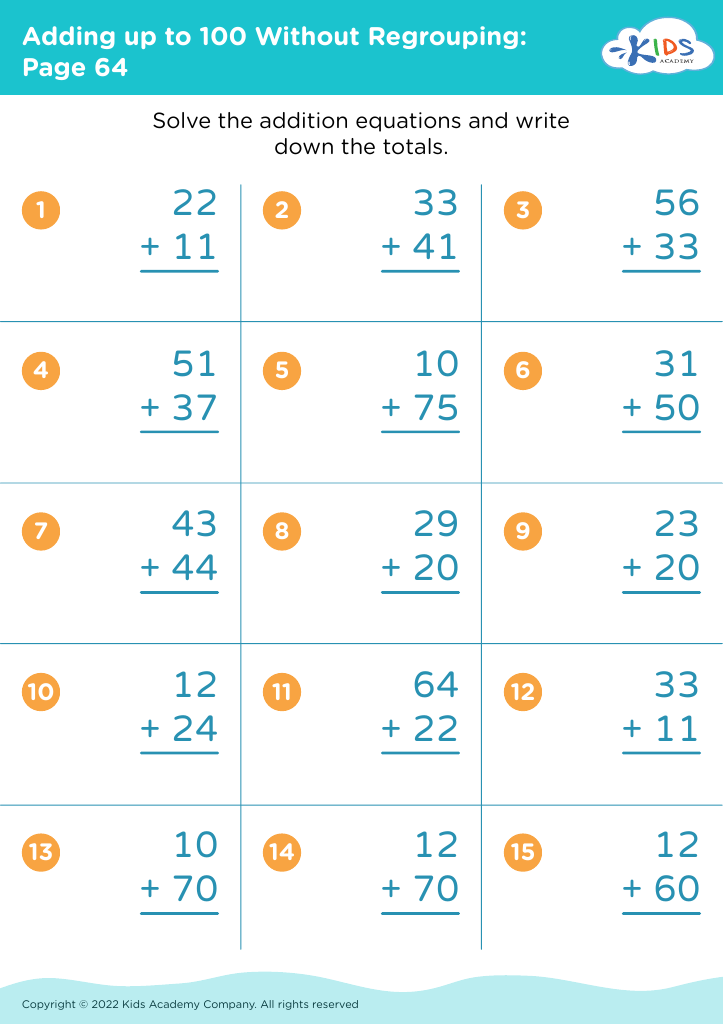
Adding up to 100 Without Regrouping: Page 64
Worksheet
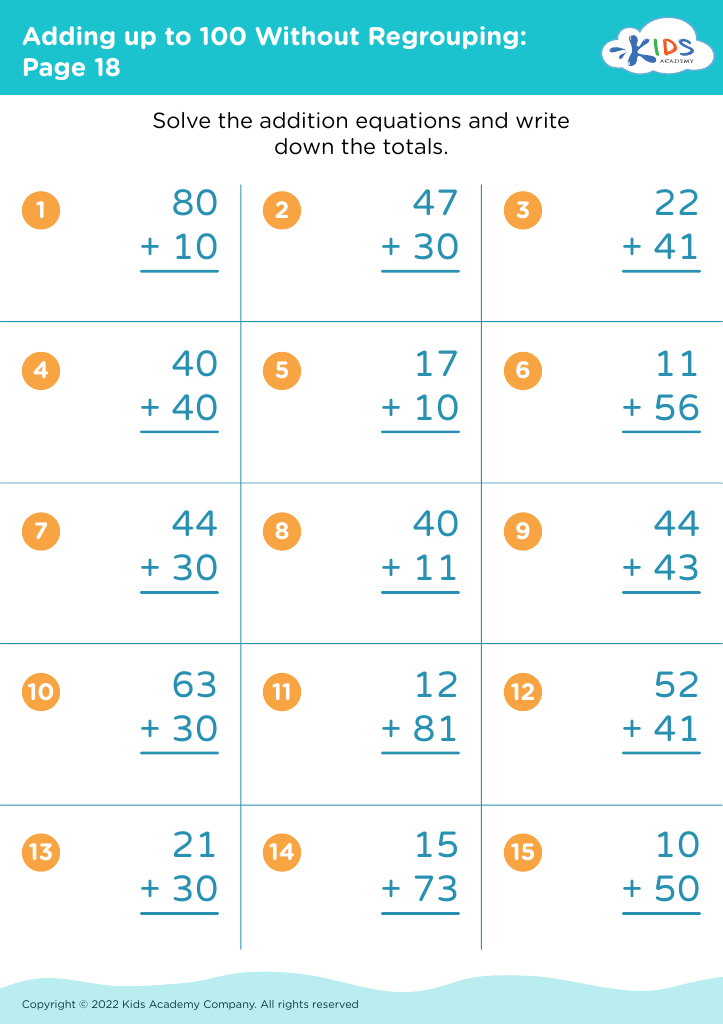
Adding up to 100 Without Regrouping: Page 18
Worksheet
Adding up to 100 with Regrouping: Page 3
Worksheet
Adding up to 1000: Page 70

Adding up to 1000: Page 70

Adding up to 1000: Page 70
Worksheet
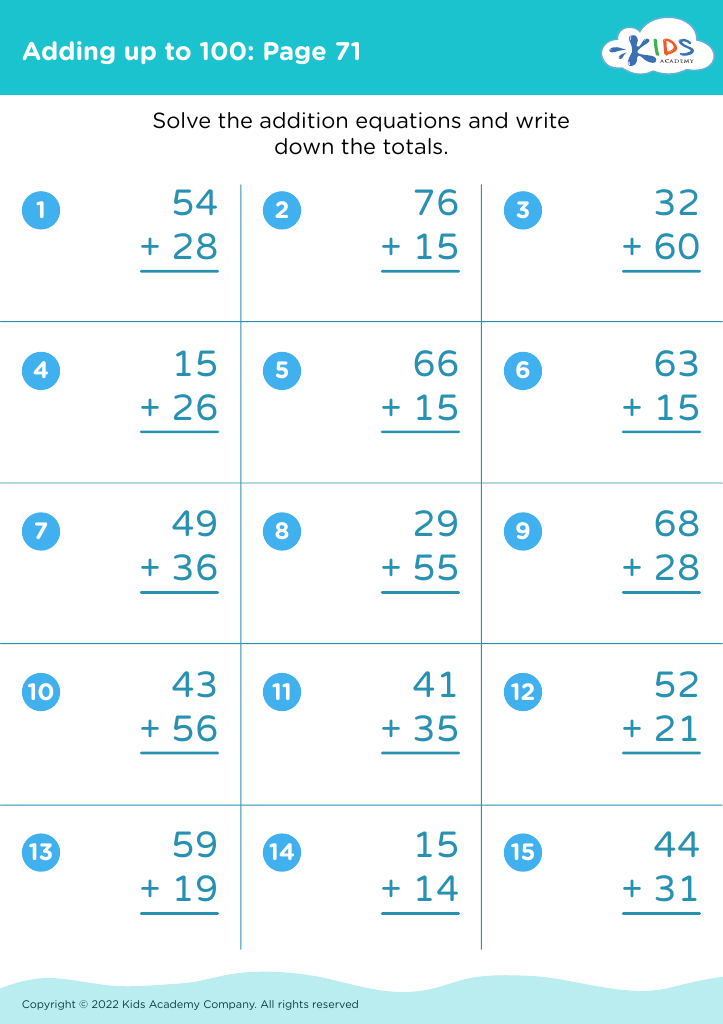
Adding up to 100: Page 71

Adding up to 100: Page 71

Adding up to 100: Page 71
Worksheet
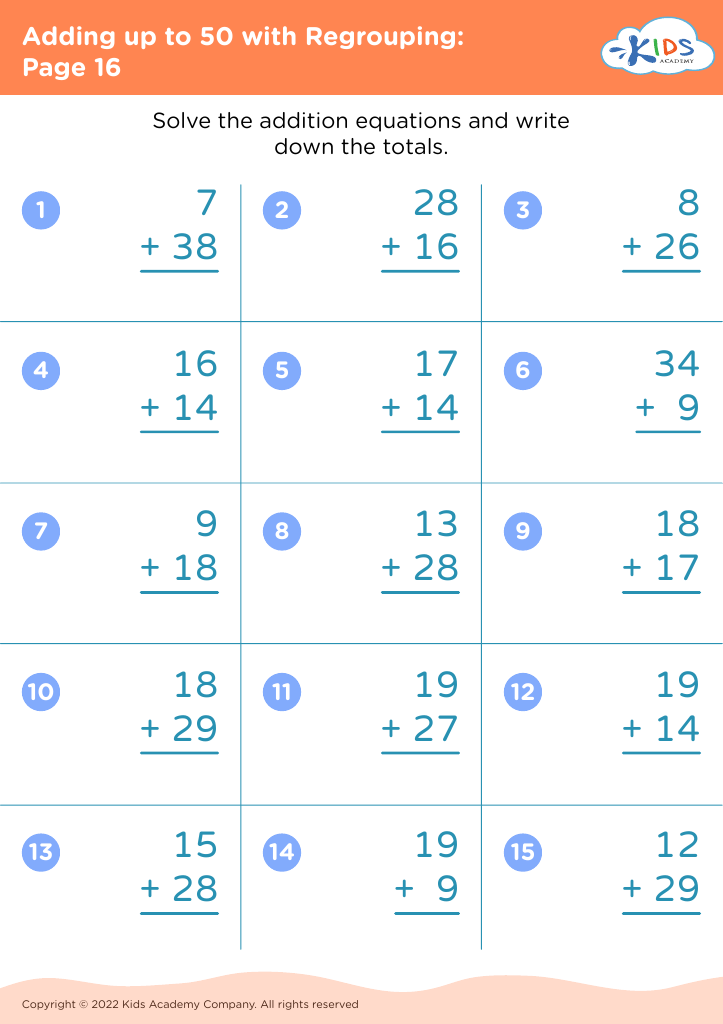
Adding up to 50 with Regrouping: Page 16
Worksheet
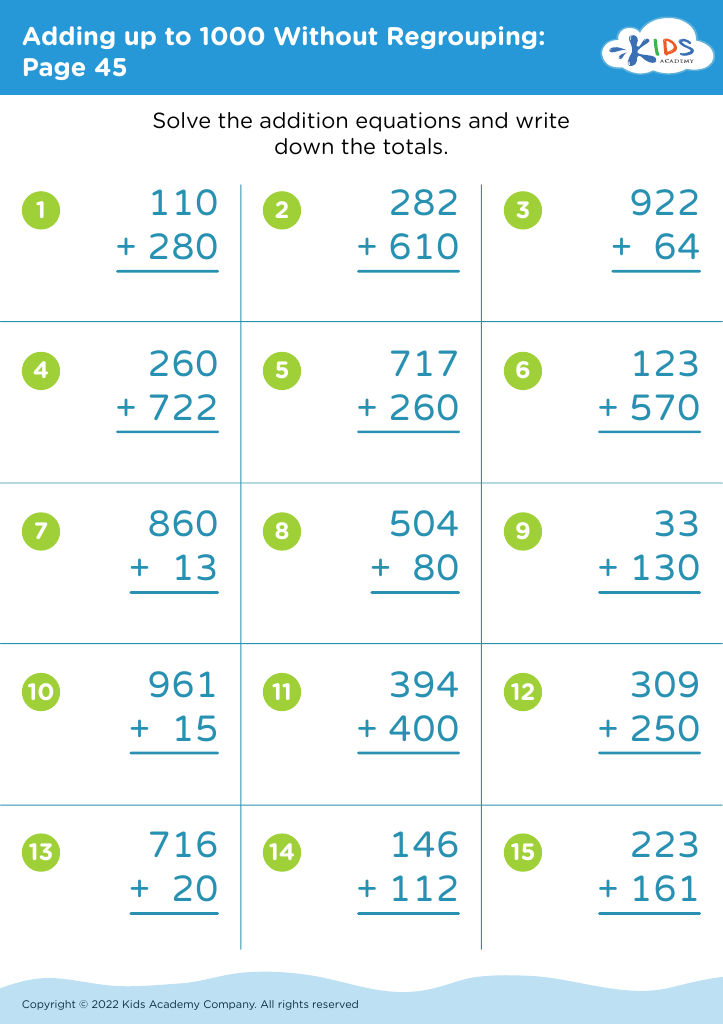
Adding up to 1000 Without Regrouping: Page 45
Worksheet


Problem-solving practice in addition and subtraction is pivotal for children aged 8-9 for several developmental and educational reasons. Firstly, these fundamental arithmetic skills serve as the building blocks for more complex mathematical concepts. Mastery in addition and subtraction is crucial for understanding multiplication, division, and eventually fractions, algebra, and beyond.

Secondly, practicing problem-solving enhances cognitive skills such as critical thinking, reasoning, and logical analysis. When children repeatedly engage in addition and subtraction exercises, they learn to recognize patterns, develop strategies, and improve their ability to focus and persevere through challenging tasks.

Additionally, confidence in math can significantly boost a child’s self-esteem and academic performance. Success in these basic problems can make children feel competent and capable, fostering a positive attitude toward learning and schoolwork.

Importantly, real-life application of these skills is undeniable. Daily activities like shopping, cooking, and time management require a fundamental understanding of addition and subtraction.

Lastly, problem-solving practice encourages collaborative learning. Whether in a classroom or at home, working together on math problems builds communication skills and encourages kids to share methods and solutions.

In essence, honing these abilities at an early age lays a strong foundation for lifelong learning and practical daily functions.