Recognize patterns Addition & Subtraction Worksheets for Ages 8-9
11 filtered results
-
From - To
Welcome to our "Recognize Patterns: Addition & Subtraction Worksheets" for children ages 8-9! These engaging worksheets are designed to help young learners identify and understand mathematical patterns that enhance their addition and subtraction skills. Discover a variety of activities aimed at honing critical thinking while making math fun! From problem-solving exercises to visually rich illustrations, each worksheet motivates students to connect concepts and reinforce their learning. Perfect for classroom use or at-home practice, empower your child with foundational math skills and boost their confidence in tackling equations. Explore our worksheets today and watch your child excel in math!
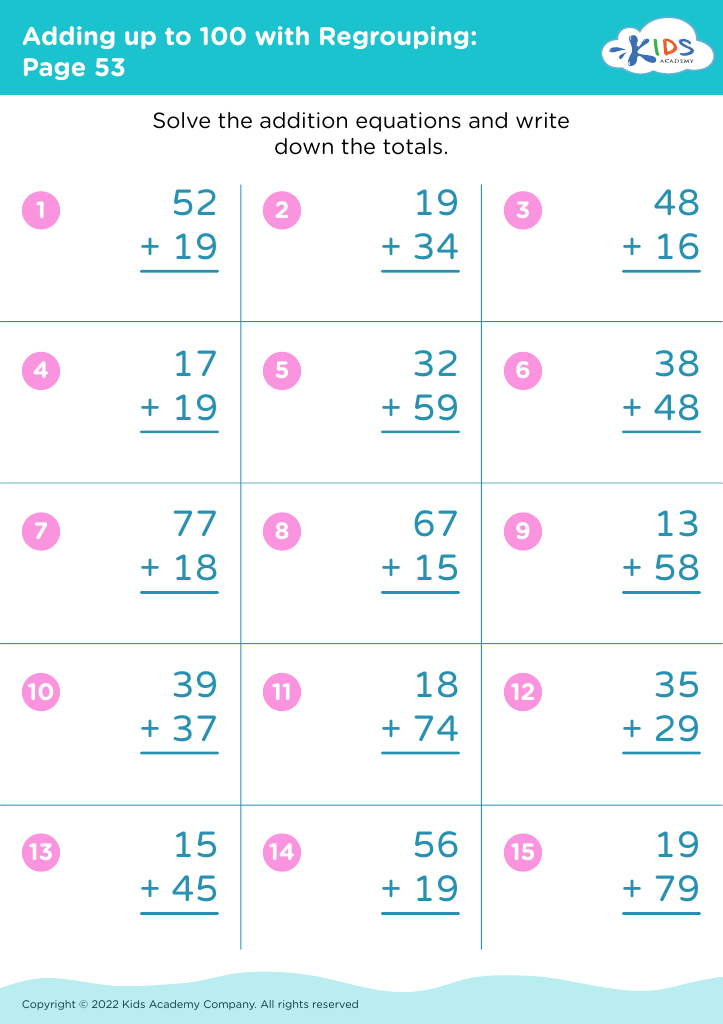
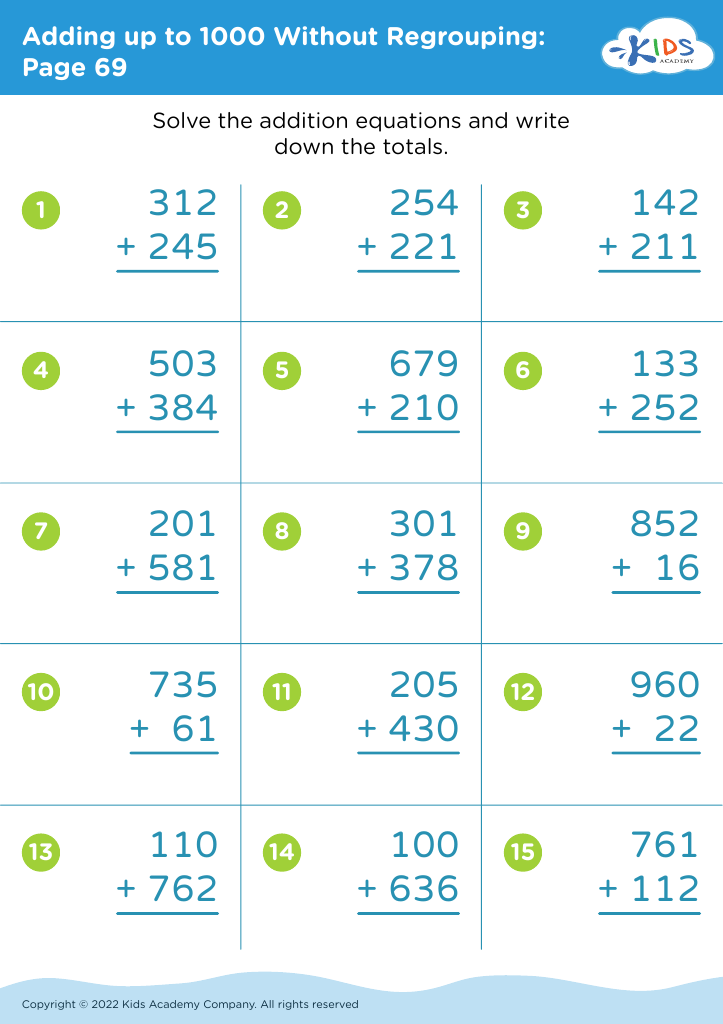
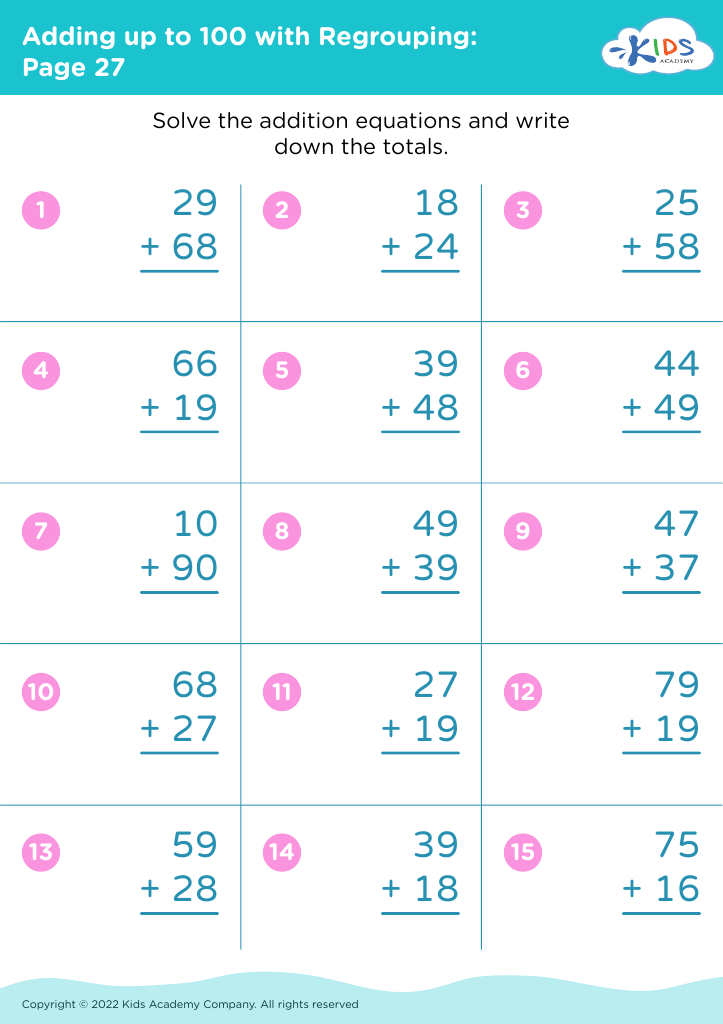
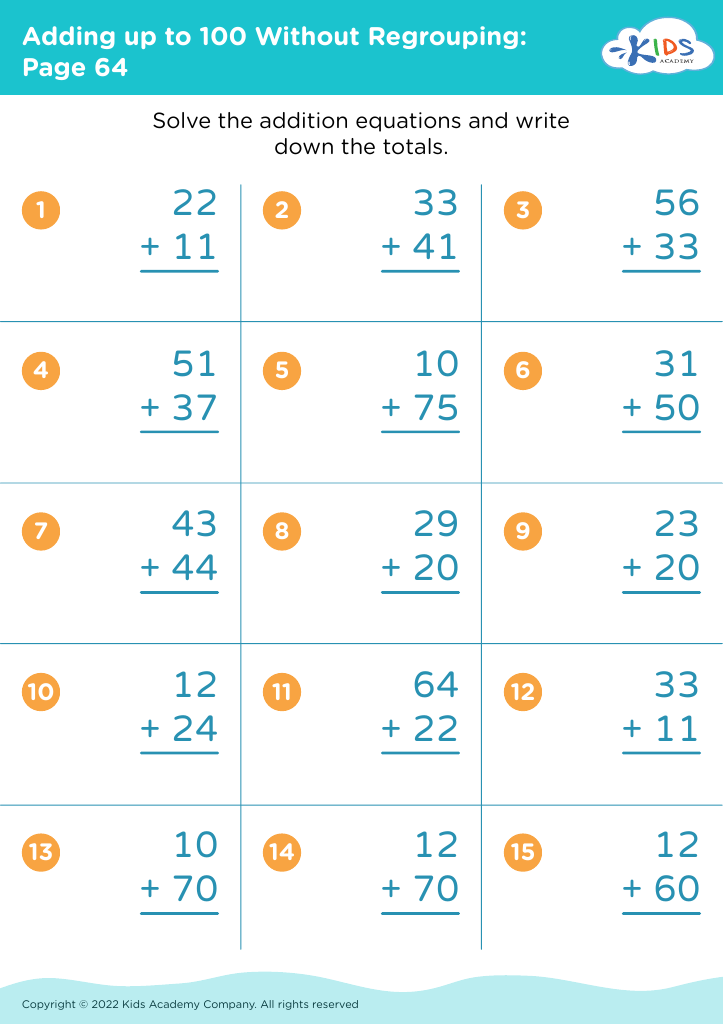
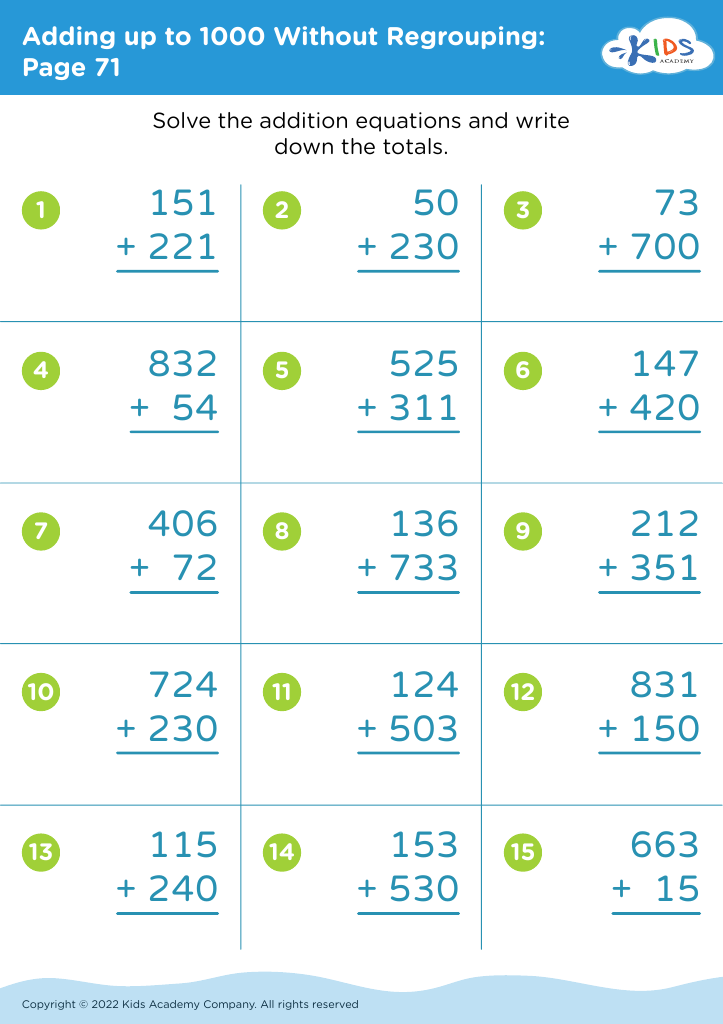
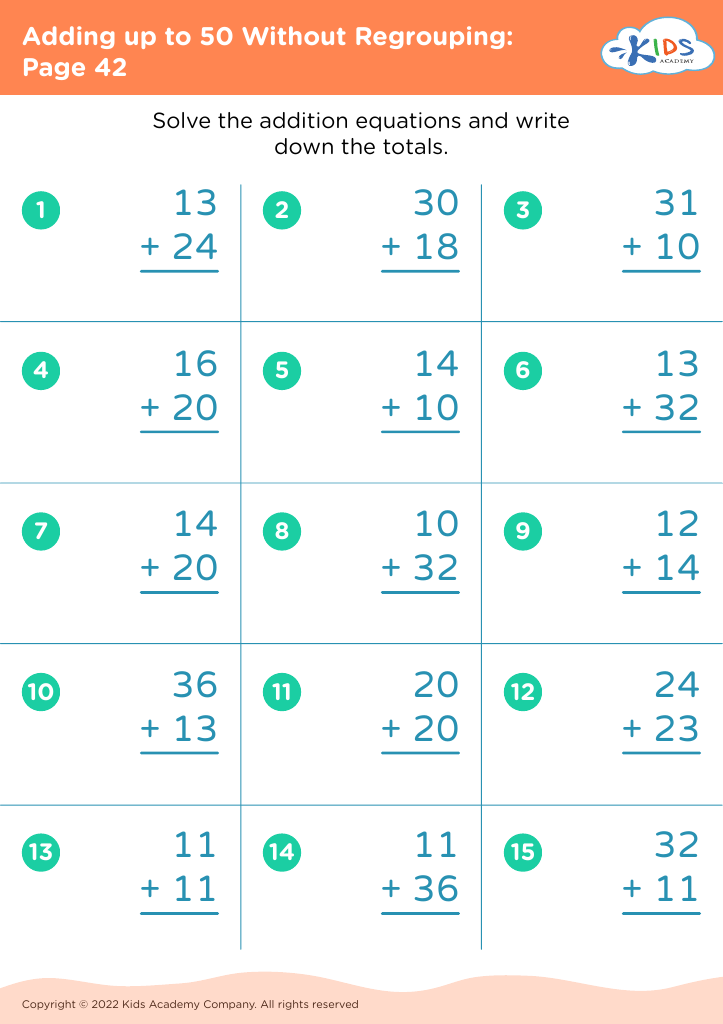
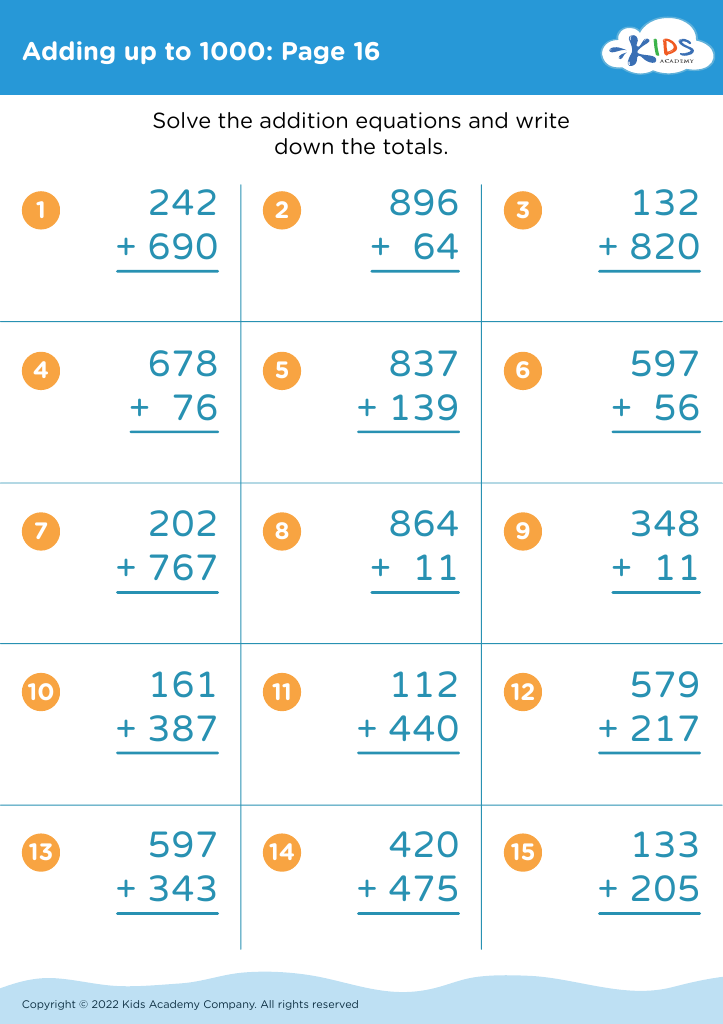
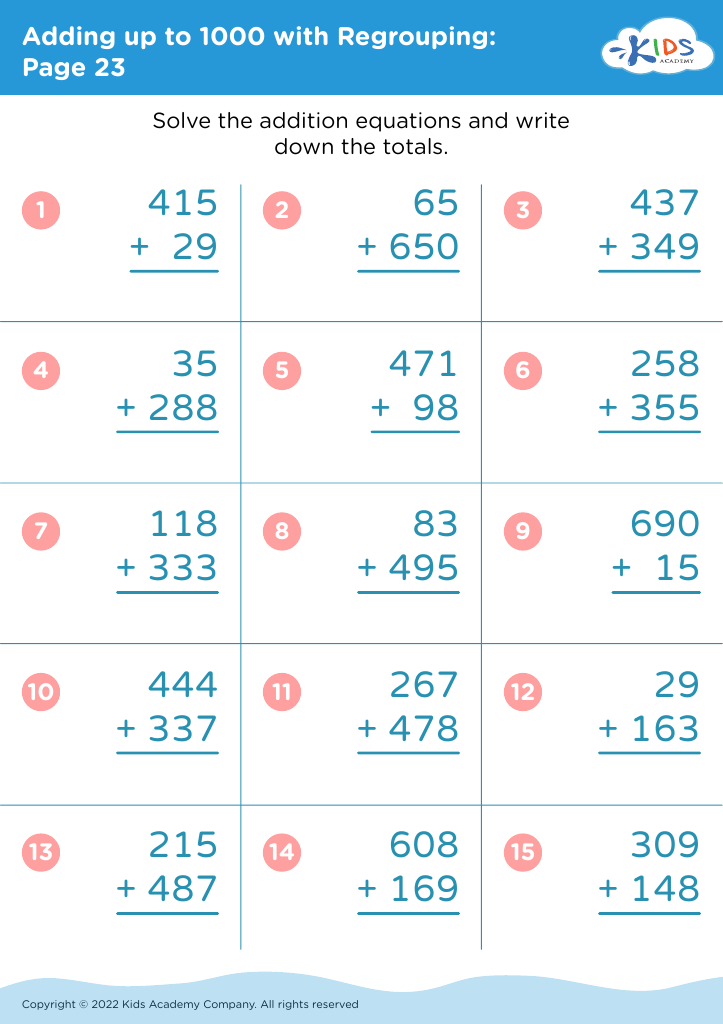








Recognizing patterns in addition and subtraction is crucial for children aged 8-9 as it lays a strong mathematical foundation. At this age, children are transitioning from basic arithmetic to more complex problem-solving skills, and identifying patterns helps enhance their numerical fluency. Understanding patterns allows students to see relationships between numbers, makes calculations more efficient, and aids in grasping more advanced concepts like multiplication and division.
Moreover, recognizing patterns promotes critical thinking and reasoning skills. For instance, observing that adding the same number repeatedly leads to a predictable result can foster a deeper understanding of skip-counting and the concept of multiplication. Teachers and parents can engage children in activities that highlight these patterns, such as using manipulatives or real-world examples.
Additionally, mastery of patterns helps build confidence in math, reducing anxiety as learners encounter increasingly complicated mathematical concepts. These foundational skills not only improve academic performance but also encourage a positive attitude towards math. Therefore, parents and teachers should prioritize understanding and recognizing patterns in addition and subtraction in their curriculum and home learning activities, ensuring that children are equipped with the necessary tools for future success.








