Understanding number sequences Addition & Subtraction Worksheets for Ages 8-9
4 filtered results
-
From - To
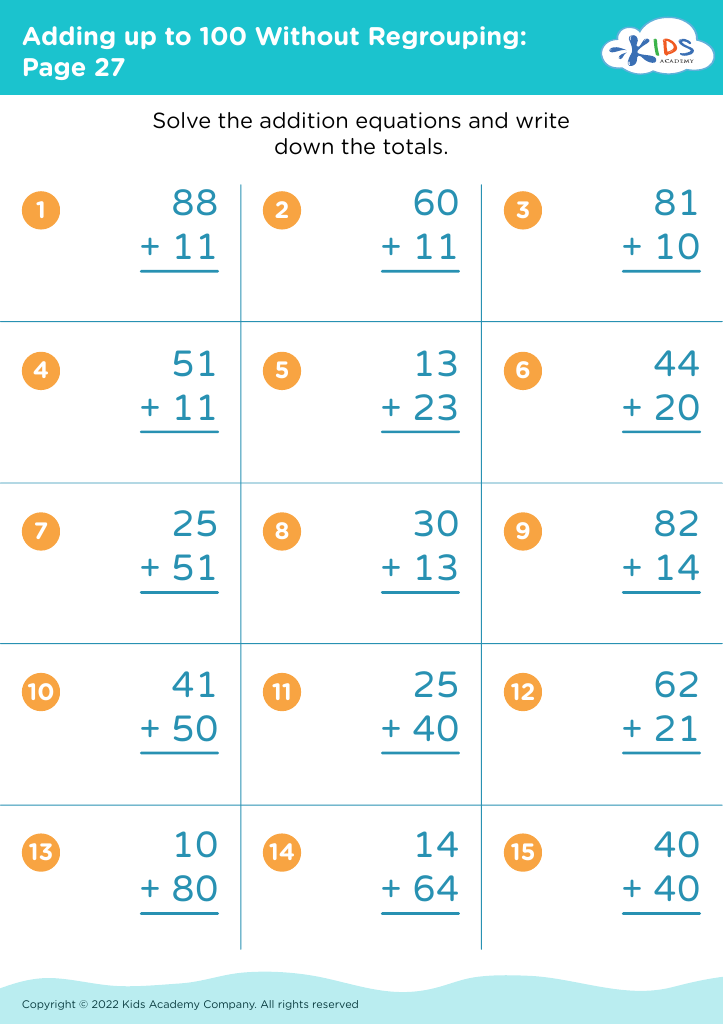
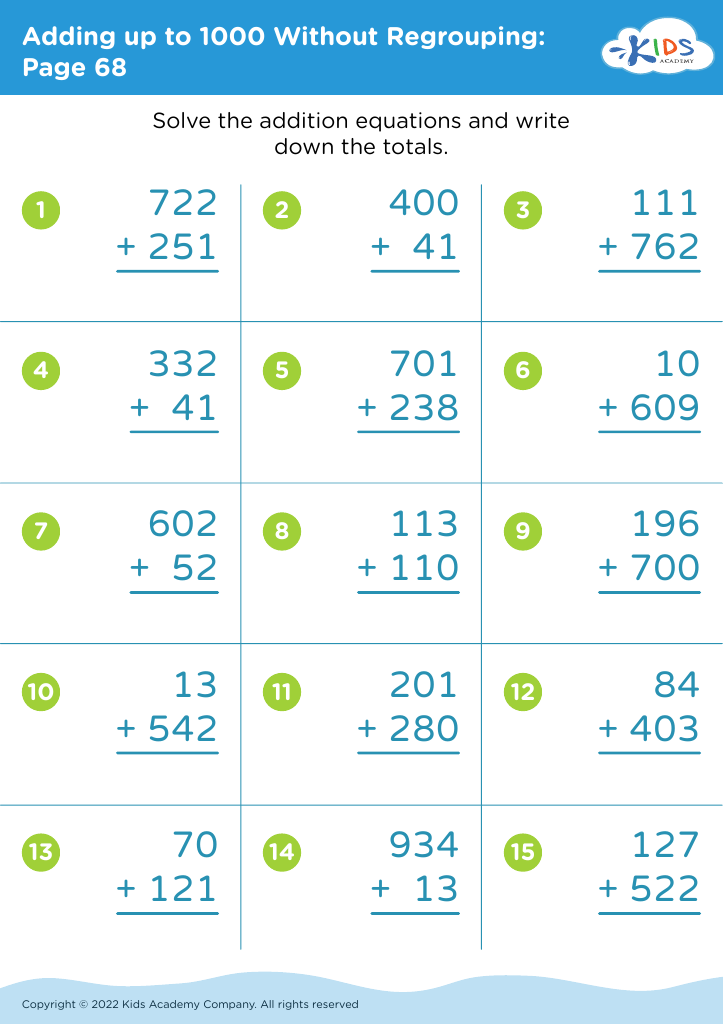
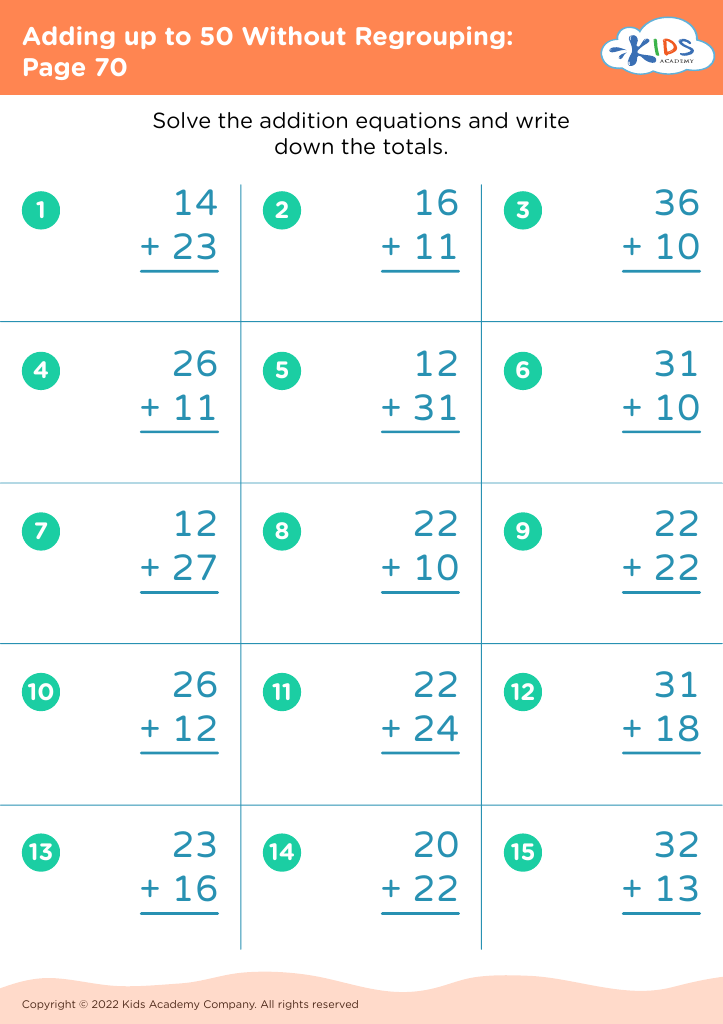
Unlock the world of mathematical fun with our "Understanding Number Sequences: Addition & Subtraction Worksheets for Ages 8-9". Designed to captivate young learners, these worksheets are perfect for enhancing critical thinking and improving arithmetic skills. With activities tailored to grasp number patterns through engaging exercises, your child will effortlessly navigate the basics of addition and subtraction. These impeccably crafted worksheets reinforce classroom learning and build confidence in solving sequence problems. Ideal for both parents and teachers aiming to supplement education, our resources make math an enjoyable journey for every 8 to 9-year-old explorer. Download now for mathematical success!
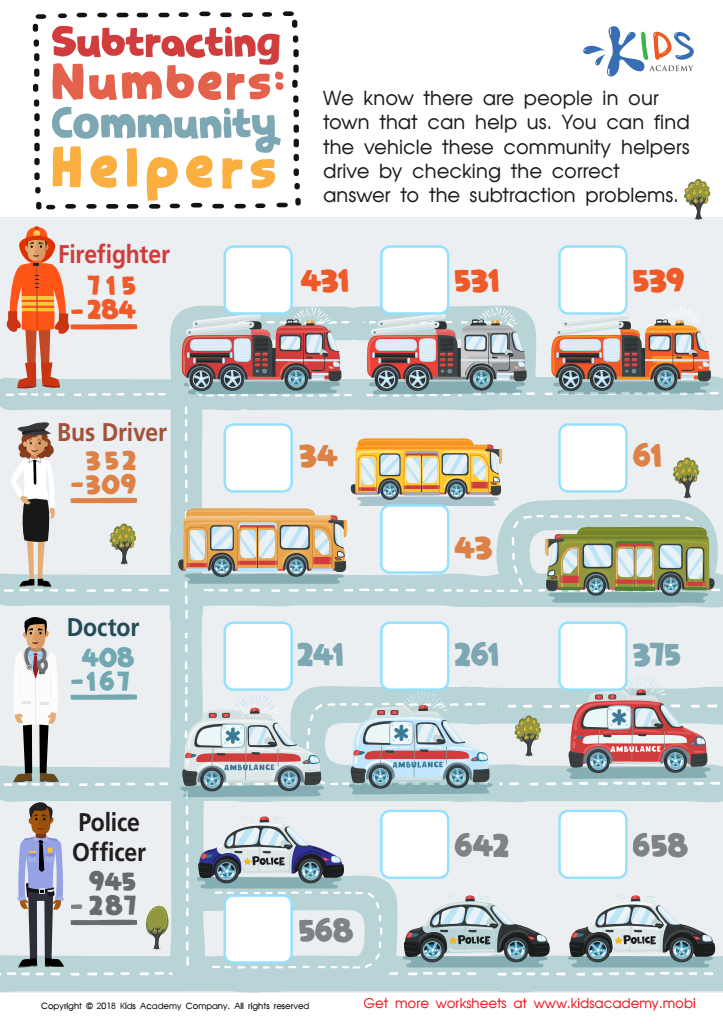
Subtracting Numbers: Community Helpers Worksheet
 Assign to My Students








Understanding number sequences, addition, and subtraction is crucial for children aged 8-9 as it forms the foundational bedrock for more advanced mathematical concepts. Parents and teachers should care about these areas for several reasons.
Firstly, a strong grasp of number sequences helps children recognize patterns, which is essential for problem-solving and logical thinking. Identifying that sequences like 2, 4, 6, 8 follow specific rules sets the stage for algebraic reasoning later on.
Additionally, proficiency in addition and subtraction not only helps in routine calculations but also in develop important cognitive skills such as memory and concentration. For example, understanding that 53 plus 28 involves regrouping reinforces their mental arithmetic capabilities.
These skills are imperative beyond the classroom — they support day-to-day activities such as budgeting, time management, and planning. By focusing on these competencies, parents and teachers are equipping children with essential tools that promote academic success and practical life applications.
Moreover, confidence with basic math creates a positive attitude toward learning more complex topics, fostering a love for math and sciences. Ultimately, nurturing these skills in ages 8-9 ensures that children are not left behind in future academically rigorous environments, setting them up for lifelong success.








