Understanding sequencing Addition & Subtraction Worksheets for Ages 8-9
7 filtered results
-
From - To
Discover our engaging "Understanding Sequencing Addition & Subtraction Worksheets" designed specifically for children aged 8-9. These interactive worksheets help young learners grasp the essential concept of sequencing in math, improving their problem-solving skills while mastering addition and subtraction. By following a clear series of steps, students develop critical thinking and mathematical reasoning. Our carefully crafted exercises encourage practice and boost confidence, making learning fun! Ideal for teachers and parents alike, these resources complement classroom instruction and provide valuable support at home. Explore our collection today and empower your child’s math journey by enhancing their sequencing skills in addition and subtraction!
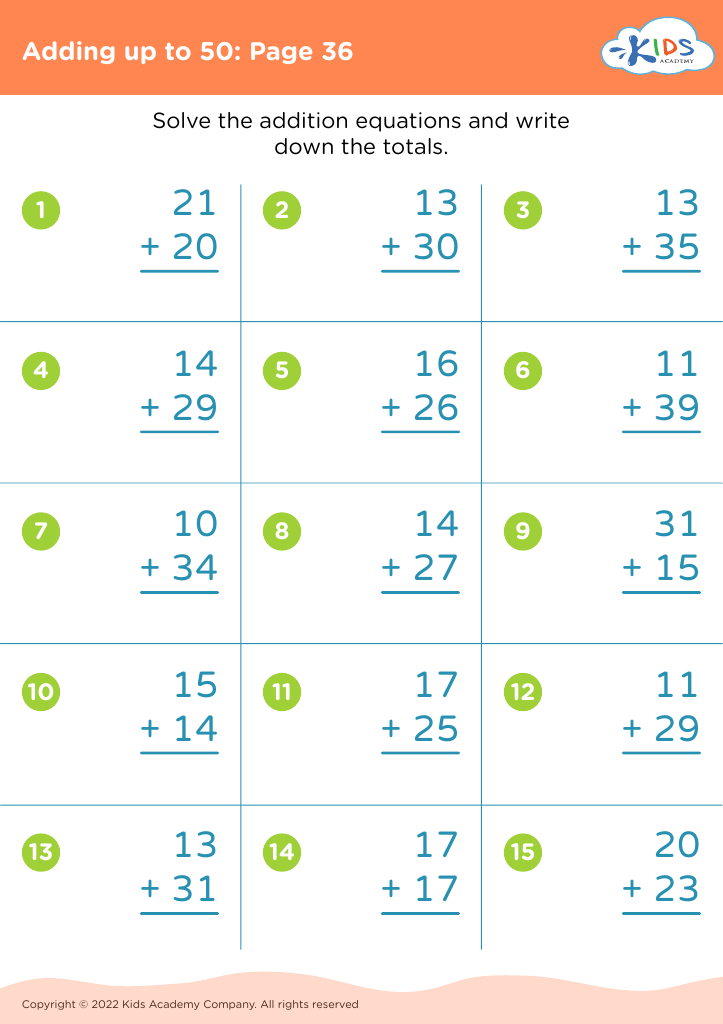
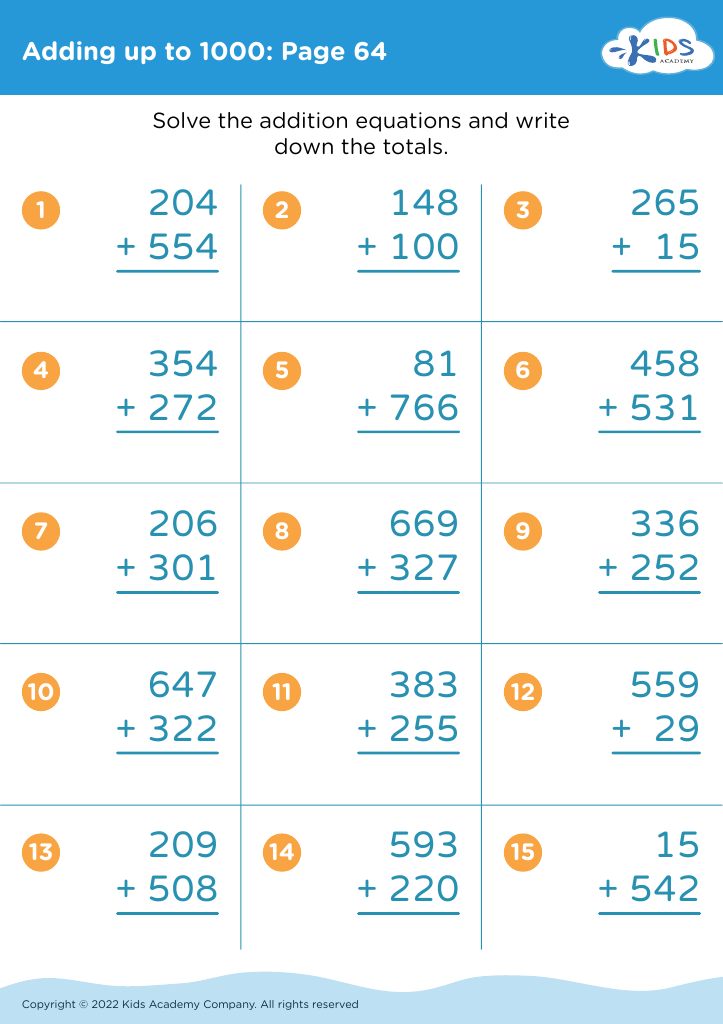
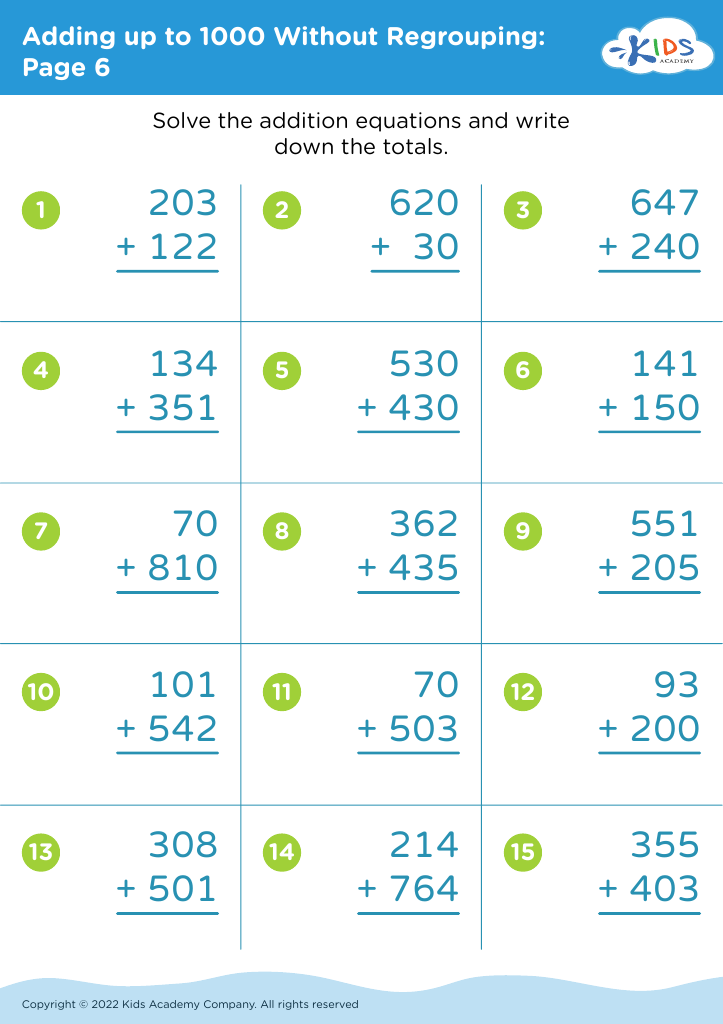
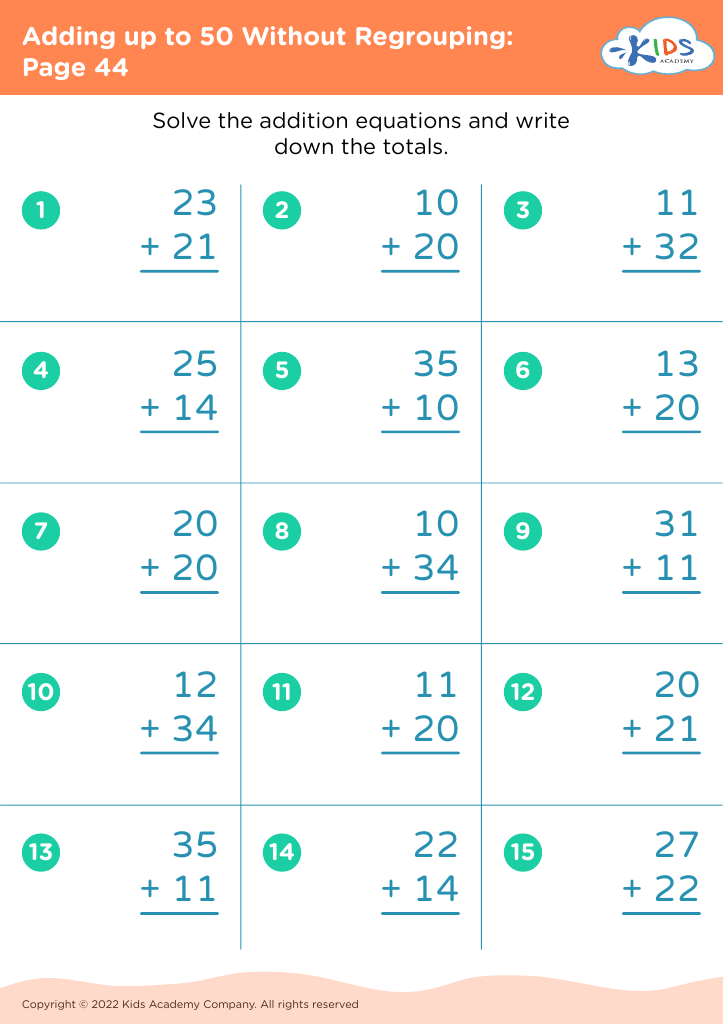








Understanding sequencing in addition and subtraction is crucial for children aged 8-9 as it lays the foundation for their mathematical thinking and problem-solving skills. At this age, children begin to encounter more complex concepts, including multi-digit operations and the order of operations. By mastering sequencing, students learn to recognize patterns and relationships between numbers, enabling them to approach problems systematically and efficiently.
Moreover, sequencing helps children develop critical thinking and logical reasoning skills. It encourages them to break down problems into manageable steps, reducing anxiety and improving accuracy. This skill is not only vital for math but is also transferable to other subjects and everyday decision-making.
Parents and teachers should be concerned about fostering sequencing skills, as gaps in understanding can lead to confusion and frustration, potentially impacting a child’s confidence and interest in math. By implementing engaging activities that promote sequencing in addition and subtraction, they can create a conducive learning environment, guiding children toward greater proficiency. This foundational understanding not only enhances their current math abilities but also prepares them for more advanced mathematical concepts in the future, promoting long-term academic success.








