Comparing Fractions Addition Worksheets for Ages 8-9 - Page 4
82 filtered results
-
From - To
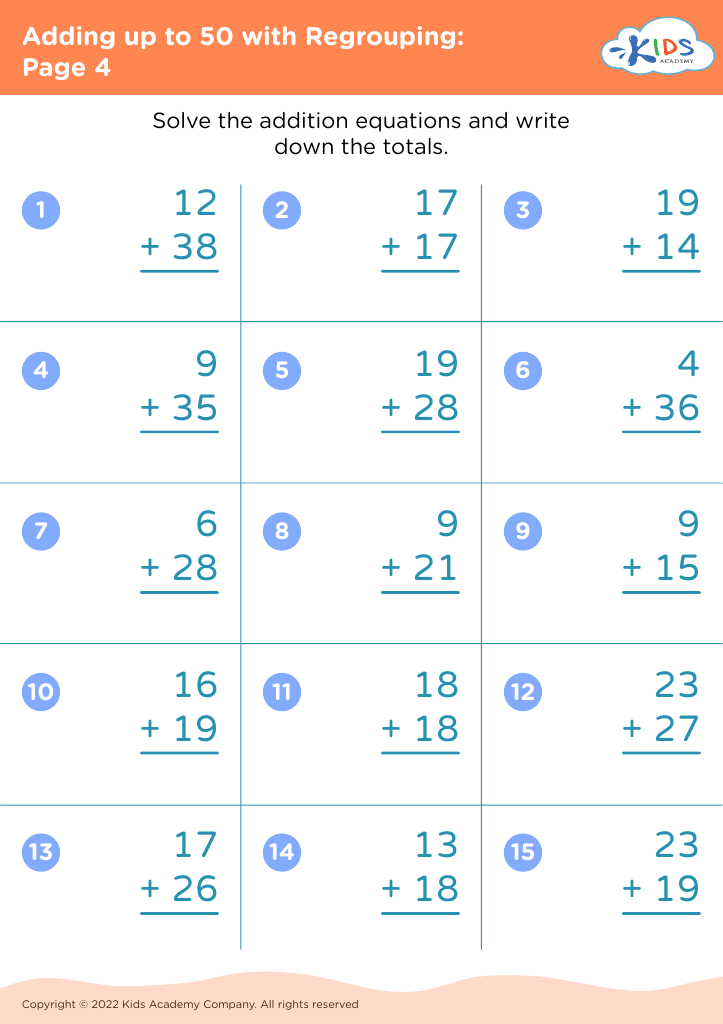
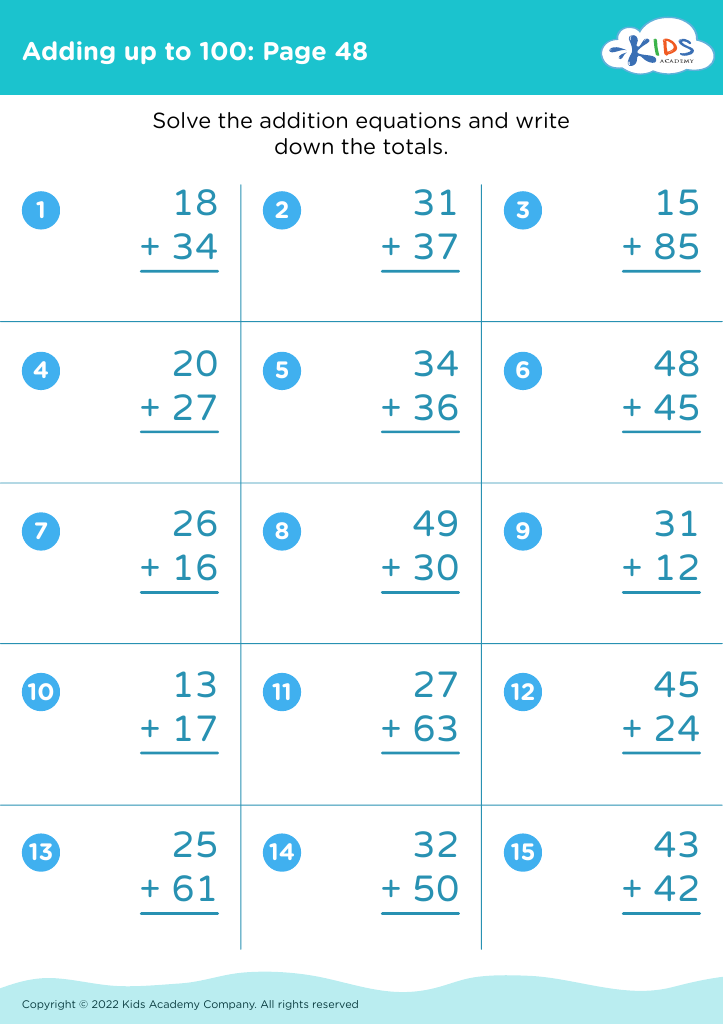
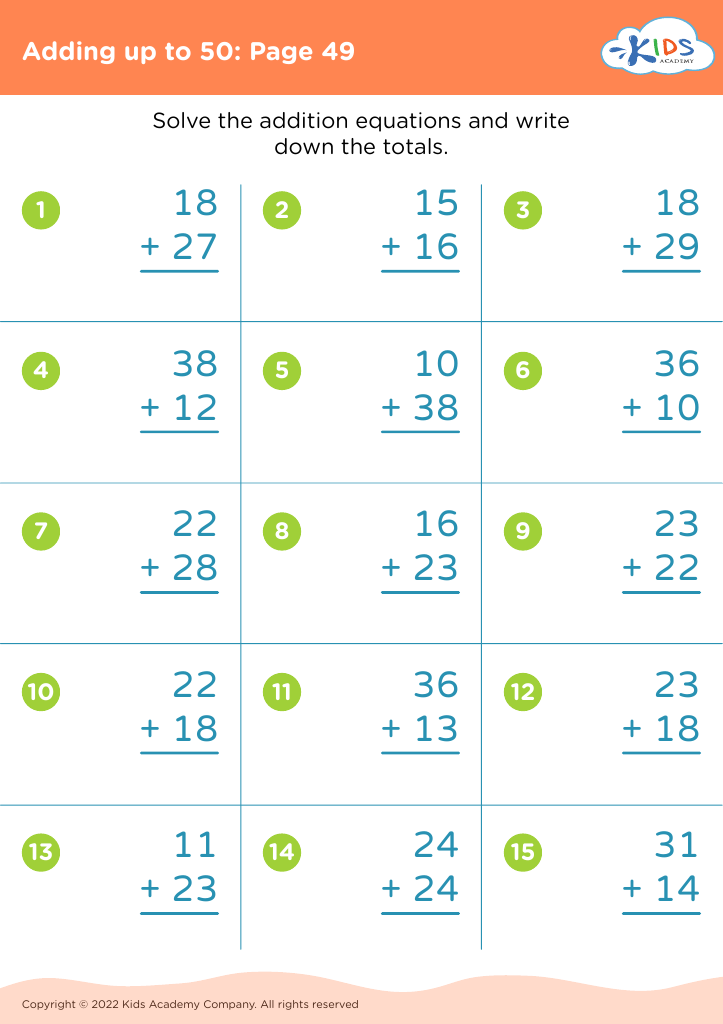
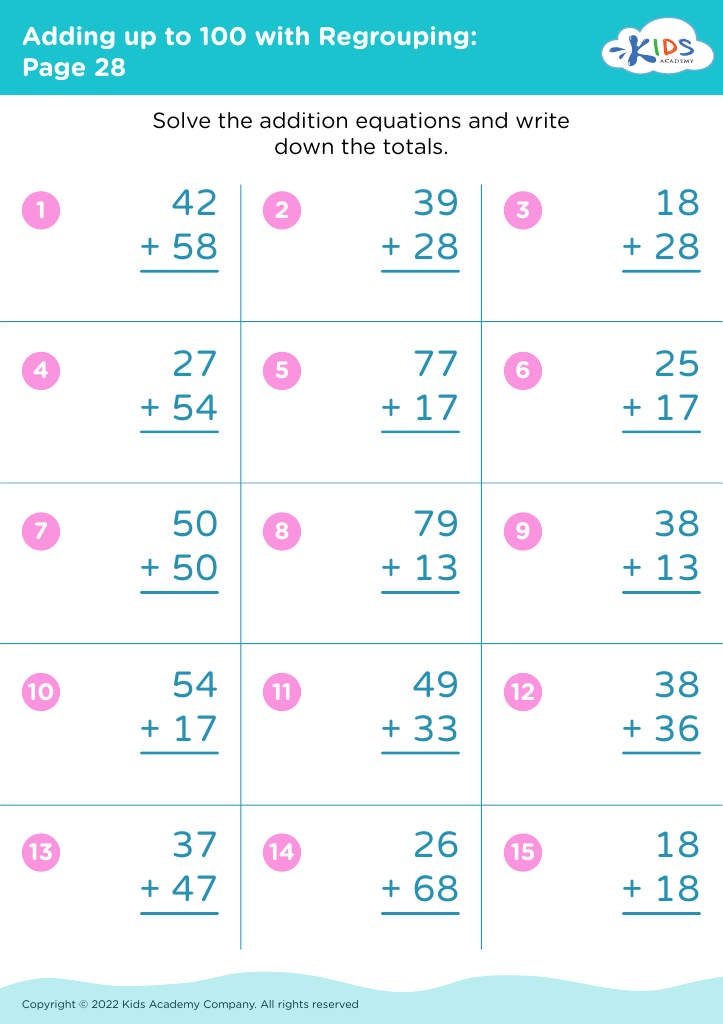
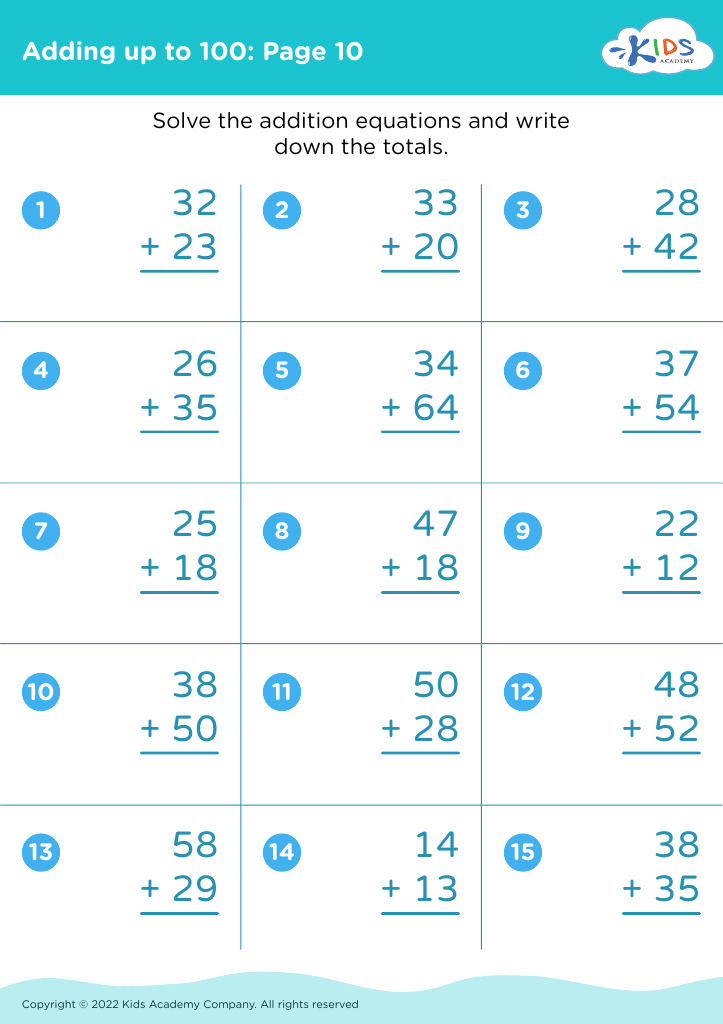
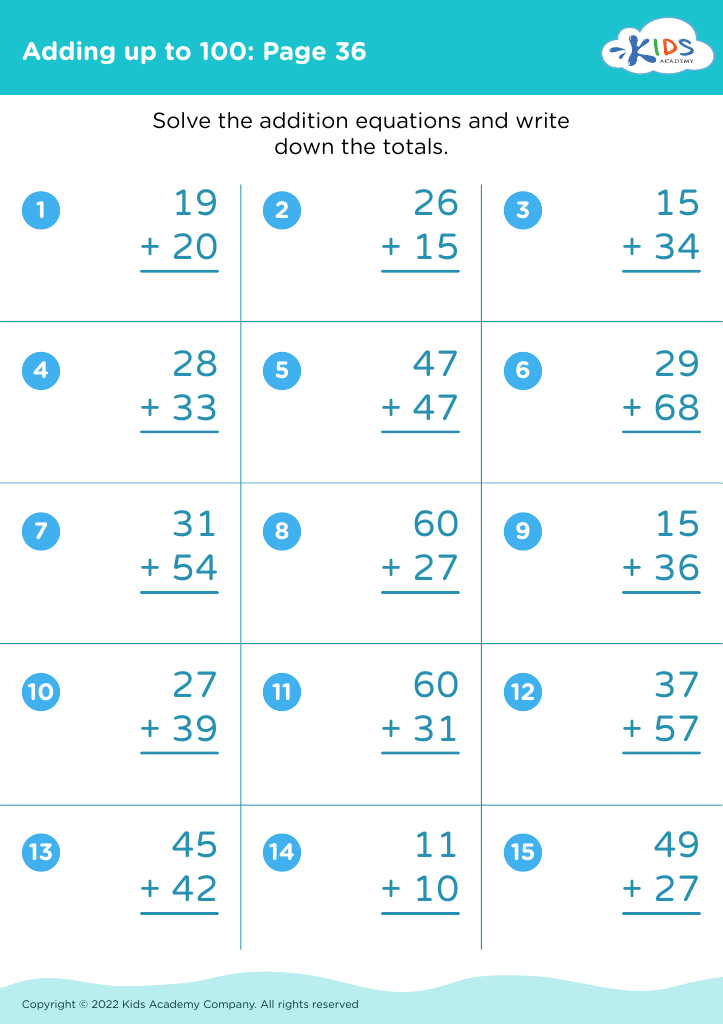
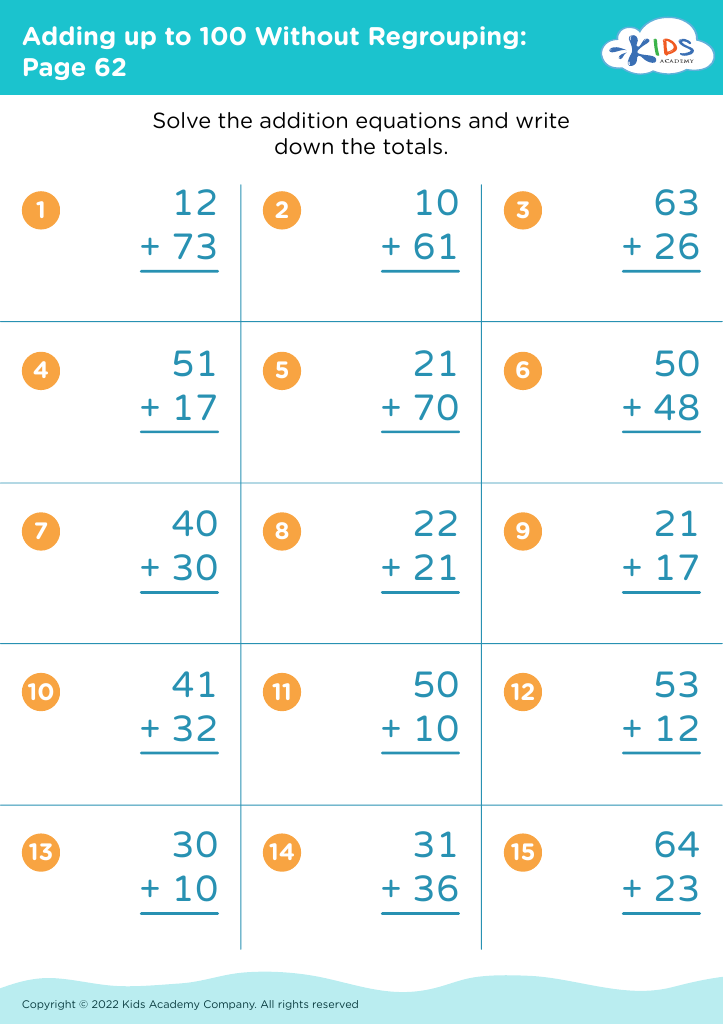
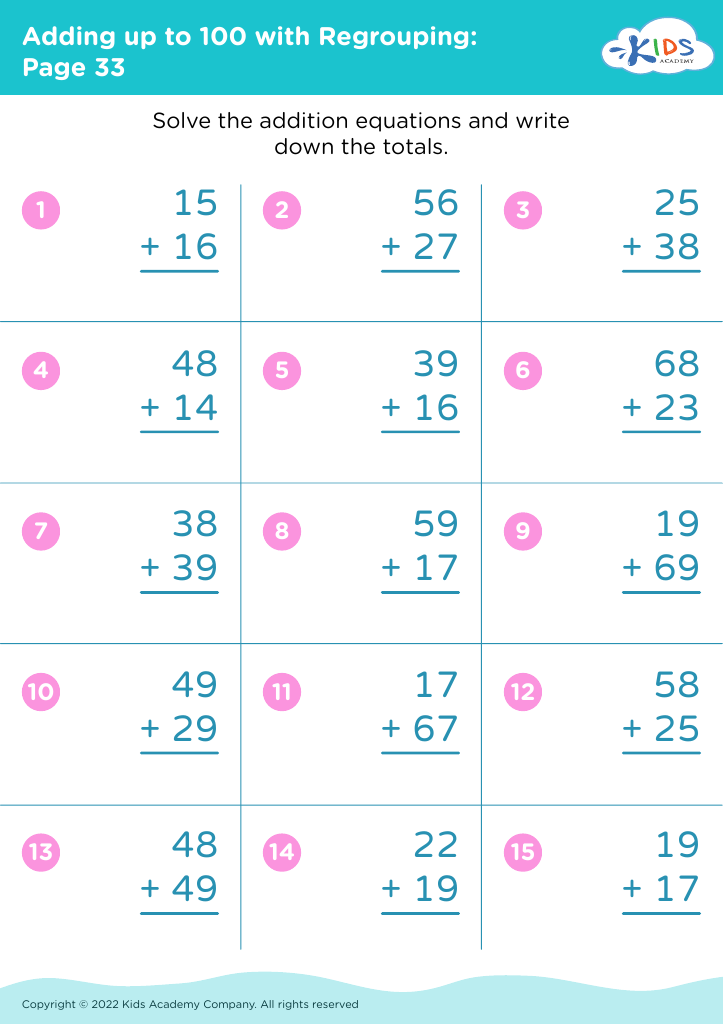








Comparing fractions and mastering addition with them is a critical skill for children aged 8-9. Understanding fractions is foundational for more advanced mathematics and real-world problem-solving scenarios. Parents and teachers should care about this concept because it fosters critical thinking, analytical skills, and confidence in mathematical abilities.
At this age, children begin to encounter complex mathematical ideas, and comparing fractions is often a first step towards grasping proportions, ratios, and decimals. Knowing how to compare fractions prepares them for future studies in algebra and beyond, making concepts more accessible.
Additionally, learning to add fractions aids in developing number sense, a core requirement for abstract reasoning in mathematics. It helps students comprehend the relationships between numbers and improve their overall mathematical fluency.
By encouraging proficiency in comparing and adding fractions, parents and teachers equip children with essential tools for understanding larger mathematical concepts, aligning with educational standards. Moreover, engaging fractions with real-life examples, like cooking or sharing, builds a tangible connection and relevance to their learning.
In sum, fostering skills in comparing fractions prepares children for future academic success and encourages a deeper appreciation for mathematics in everyday life.








