Comparing numbers Addition Worksheets for Ages 8-9
4 filtered results
-
From - To
Enhance your child's math skills with our engaging Comparing Numbers Addition Worksheets for ages 8-9! Designed to strengthen their understanding of numerical relationships, these worksheets provide a variety of fun activities that help kids practice addition while comparing different numbers. With clear instructions and vibrant visuals, learners will easily grasp concepts of greater than, less than, and equal to, making math both educational and enjoyable. Perfect for classroom or home use, these resources encourage independent learning and critical thinking, laying a solid foundation for future math success. Explore our collection and watch your child become a confident thinker in mathematics!
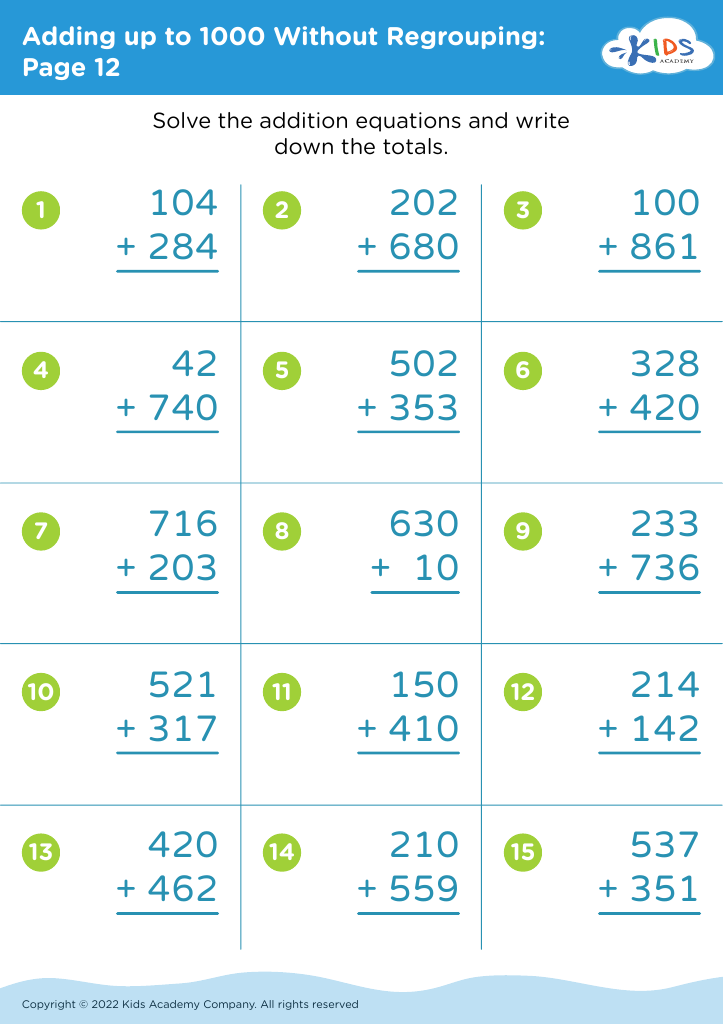
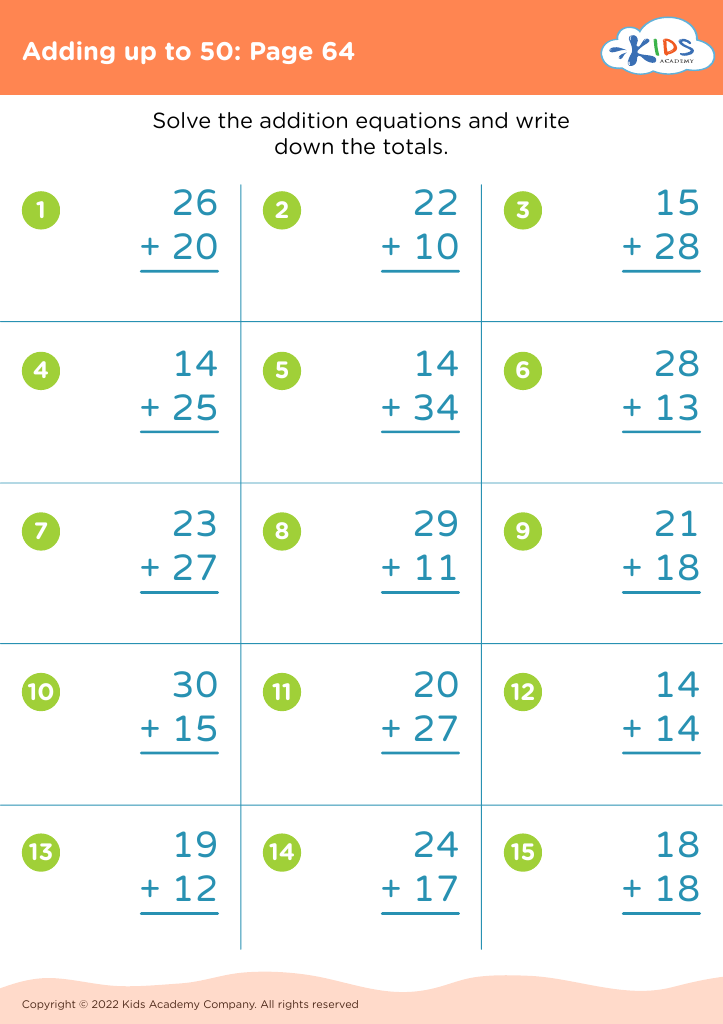
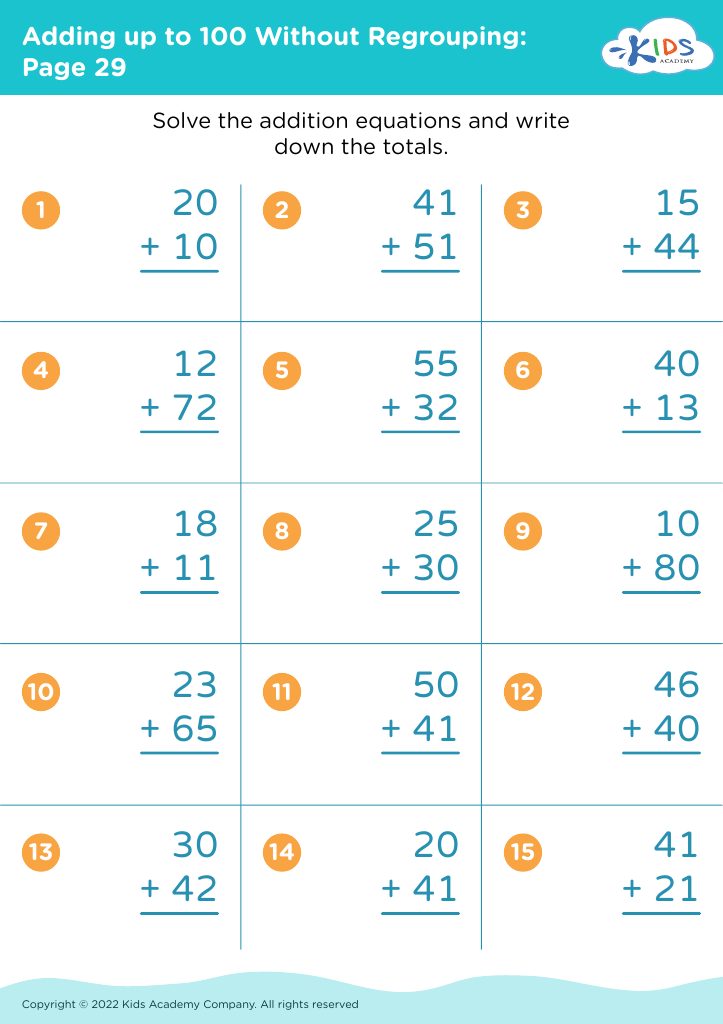
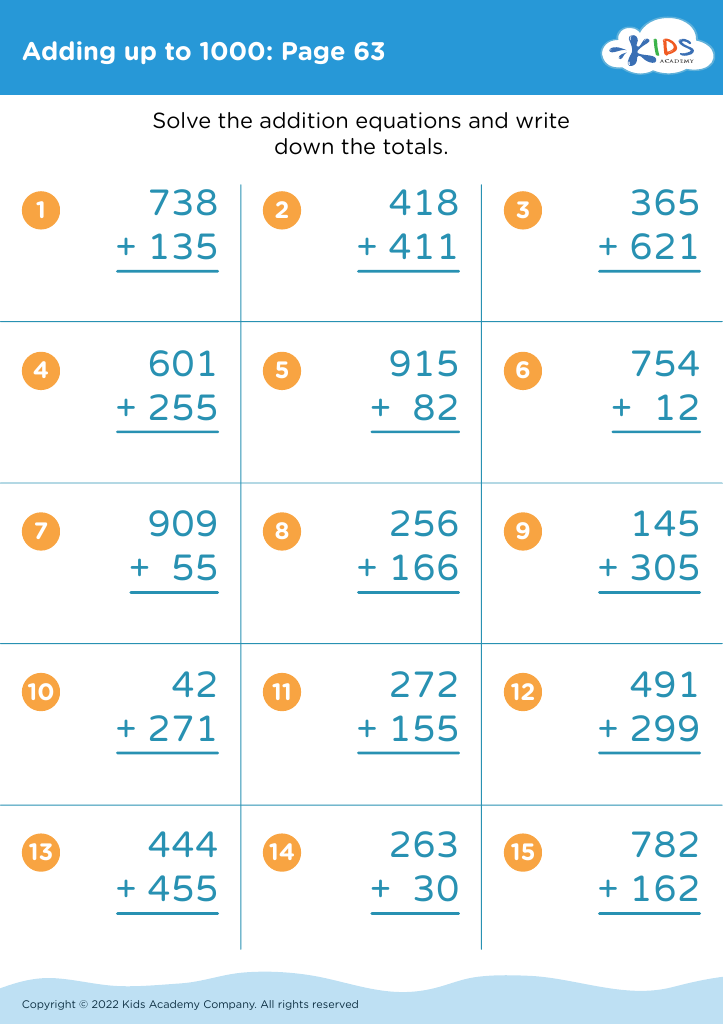








Understanding how to compare numbers and perform addition is foundational for children aged 8-9, a crucial developmental stage in their mathematics education. At this age, children are transitioning from basic arithmetic to more complex mathematical concepts. By mastering comparing numbers, they learn to recognize the value of digits, enhance their number sense, and make informed decisions in problem-solving situations.
Parents and teachers should prioritize this skill as it encourages critical thinking and reasoning. For instance, when children learn to compare numbers, they can articulate concepts such as “less than,” “greater than,” or “equal to,” fostering a deeper understanding of numerical relationships. This skill is especially relevant in real-world scenarios, as children encounter situations requiring estimation and comparison, helping them develop strong analytical skills.
Moreover, strong foundational skills in addition bolster children's confidence and competence in higher-level math. Engaging children in interactive activities—such as games, number line exercises, or real-life applications—makes learning enjoyable. When parents and teachers are involved, they provide valuable encouragement and context, reinforcing the critical importance of math in everyday life. This partnership lays the groundwork for lifelong learning, ensuring children excel academically and develop strong problem-solving abilities.








