Counting objects Addition Worksheets for Ages 8-9
8 filtered results
-
From - To
Welcome to our Counting Objects Addition Worksheets for Ages 8-9! These engaging and interactive worksheets are designed to enhance your child's addition skills through hands-on counting activities. Perfect for young learners, they will explore various objects to reinforce basic mathematical concepts while having fun. Each worksheet provides colorful illustrations and various difficulty levels to cater to different learning paces. By practicing counting and addition, your child will gain confidence in their math abilities. These resources are ideal for home or classroom use, ensuring a fun, effective learning experience. Download now and watch your child's math skills flourish!
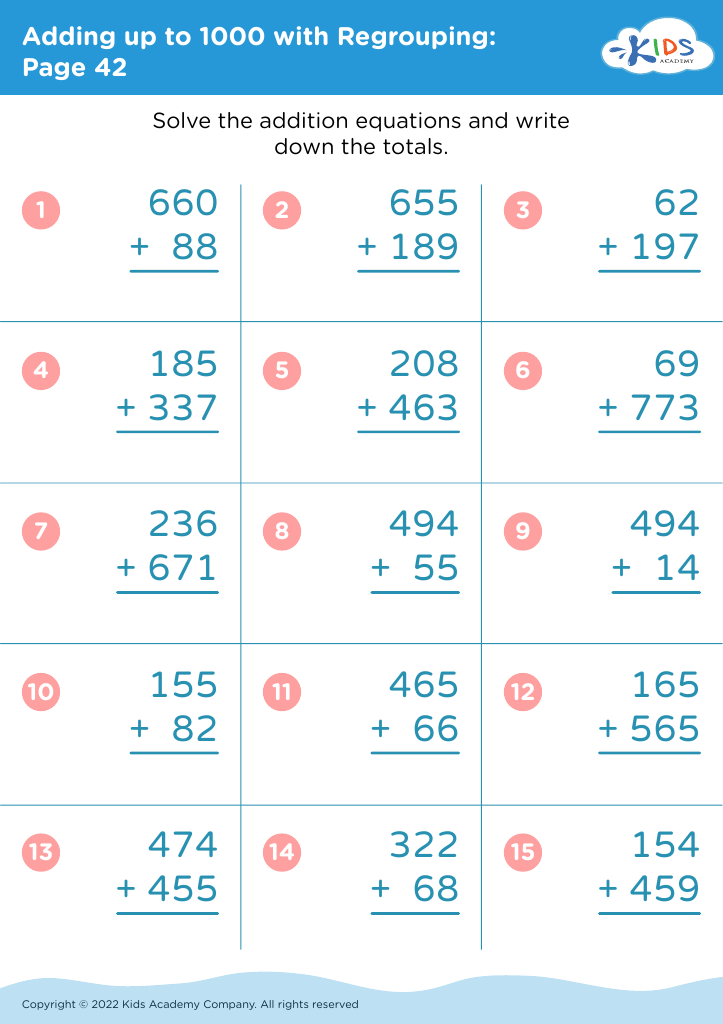
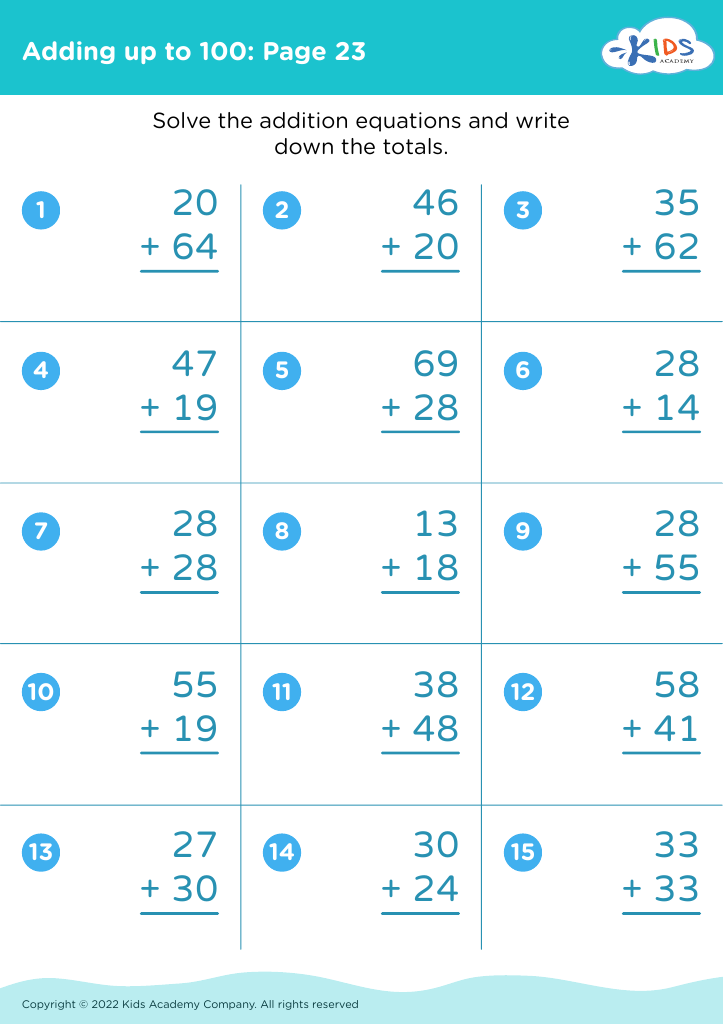
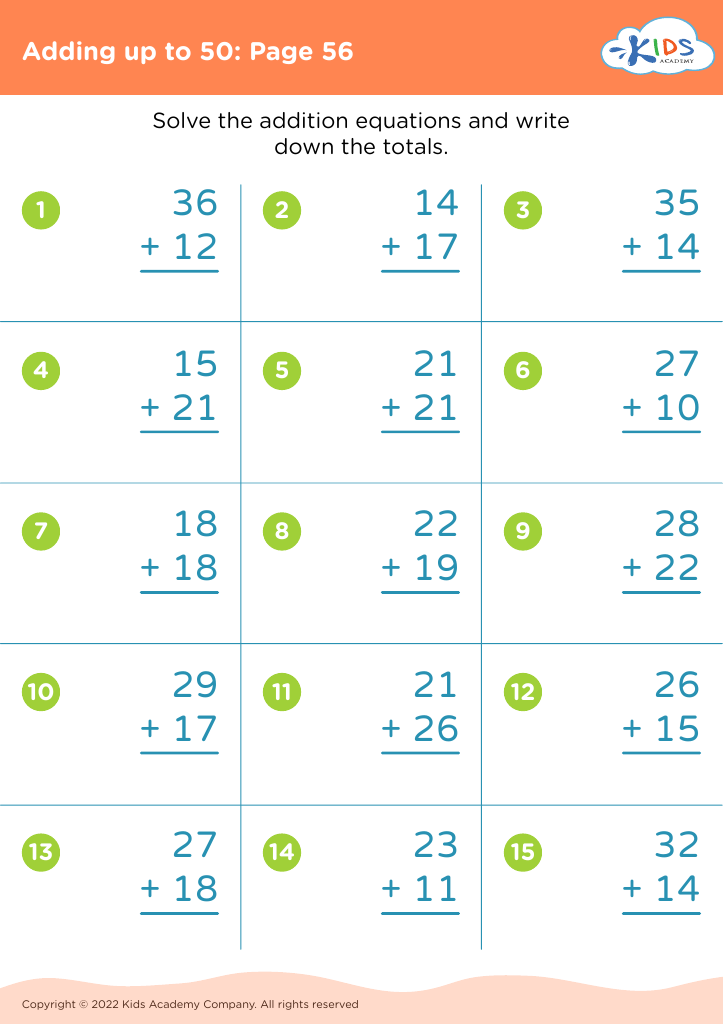
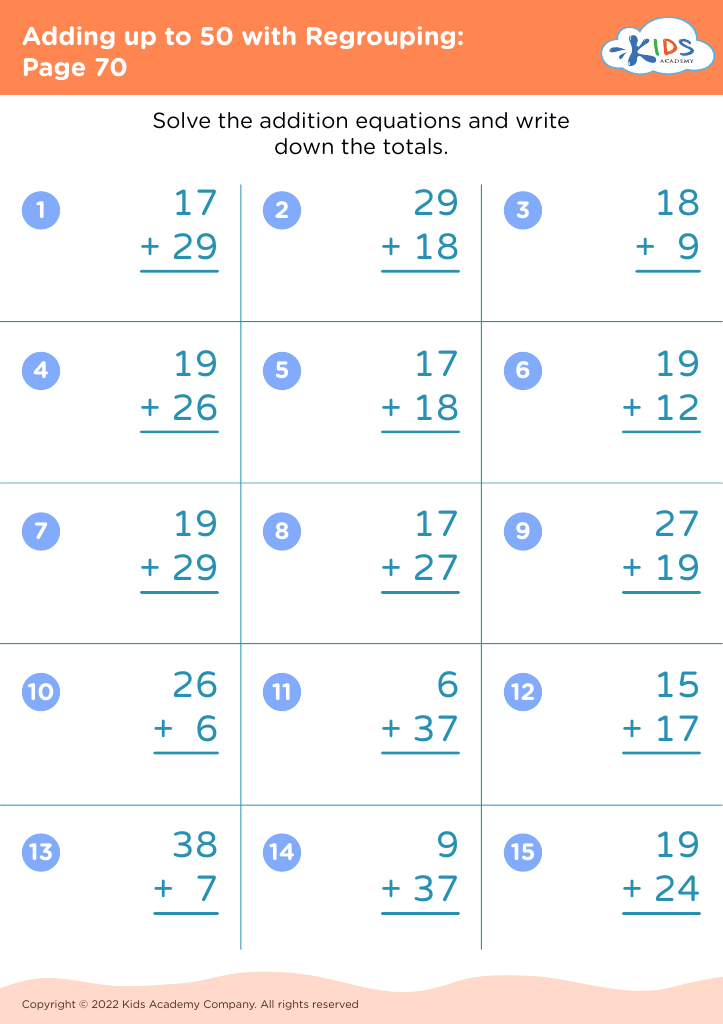
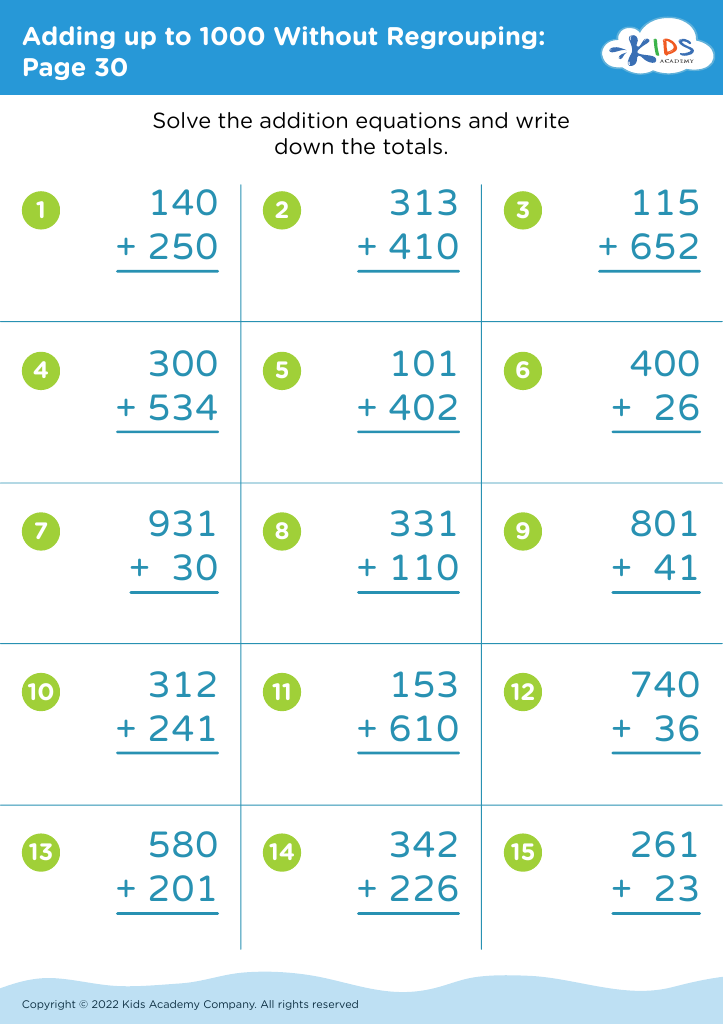
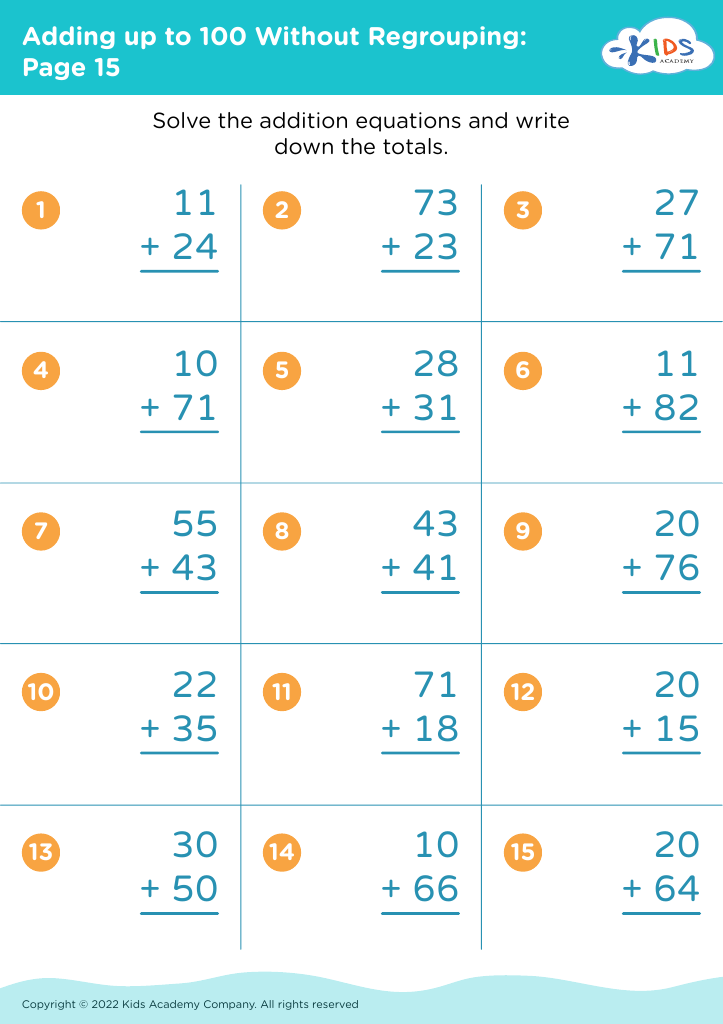
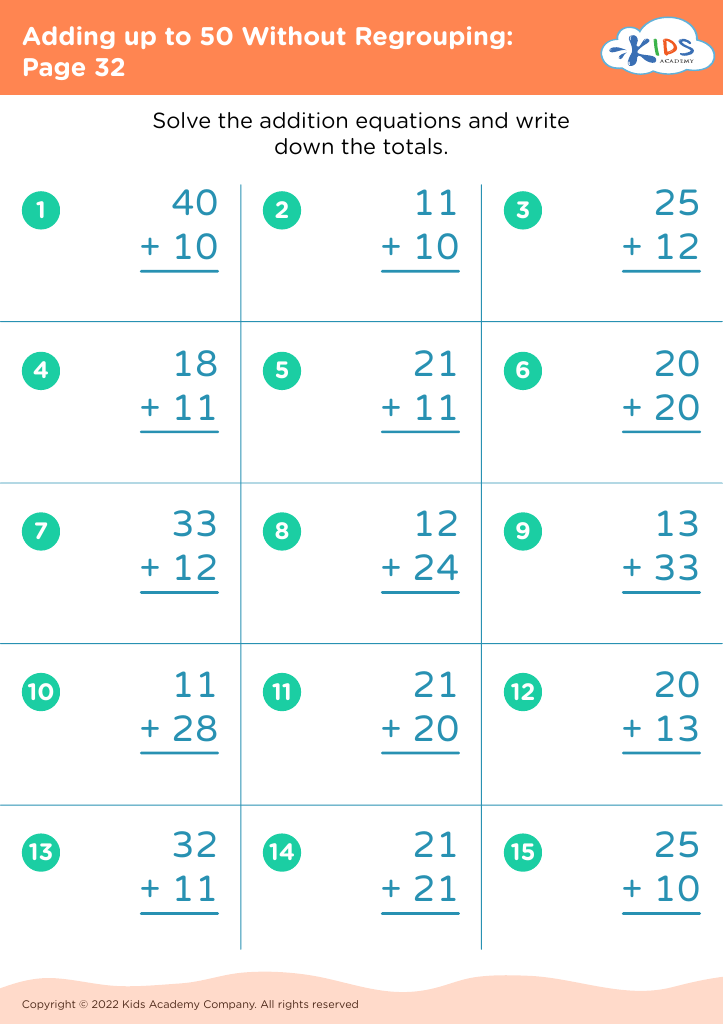
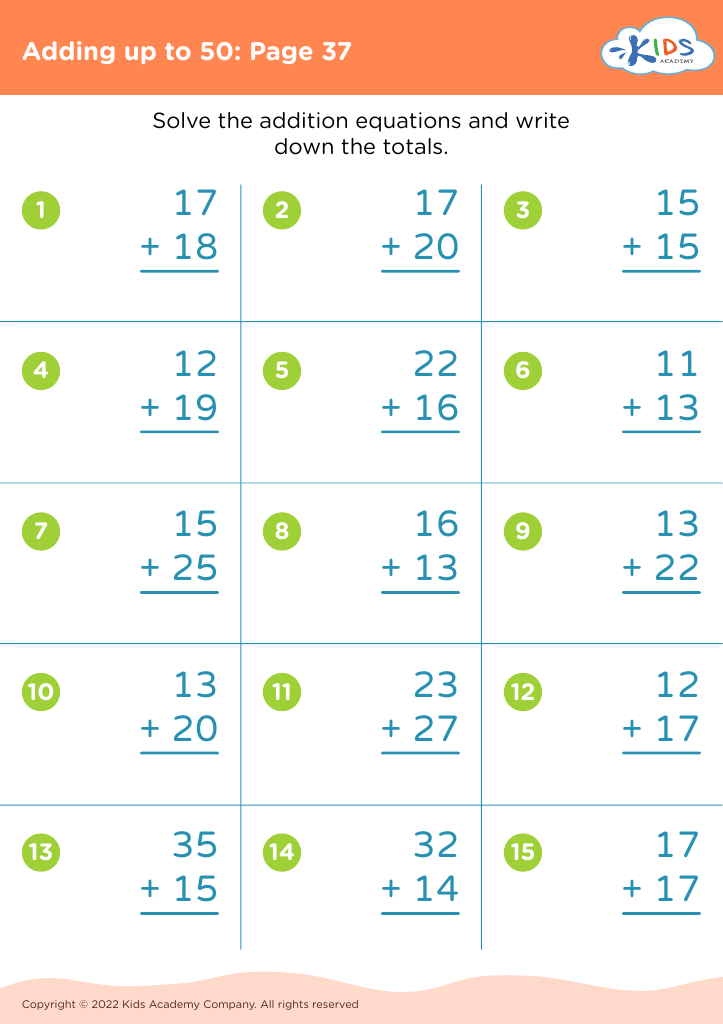







Counting objects and practicing addition for children aged 8-9 is essential for several reasons. Firstly, this developmental stage marks a crucial period in mathematical understanding. Mastering counting and basic addition lays a strong foundation for more complex mathematical concepts encountered later, such as subtraction, multiplication, and division.
In addition, these skills are pivotal for everyday life. When children learn to count objects, they are not only engaging in math but also making connections to the world around them—from counting toys, snacks, or money—emphasizing practical application. A solid grasp of addition enhances problem-solving skills necessary for real-life situations like budgeting or measuring.
Moreover, the process of counting and adding promotes cognitive development. It encourages logical thinking, fosters a sense of accomplishment, and boosts confidence in academic settings. Engaging in counting games or activities can make learning enjoyable, allowing children to absorb mathematical concepts more effectively.
Lastly, involvement from parents and teachers promotes a supportive learning environment. When caregivers actively engage in their child’s education, it not only reinforces those skills but also strengthens the parent-child or teacher-student bond, further nurturing an interest in mathematics and learning overall. Prioritizing counting and addition is fundamental in shaping capable and confident learners.








