
Develop counting skills Addition Worksheets for Ages 8-9
5 filtered results
Difficulty Level
Grade
Age
-
From - To
Subject
Activity
Standards
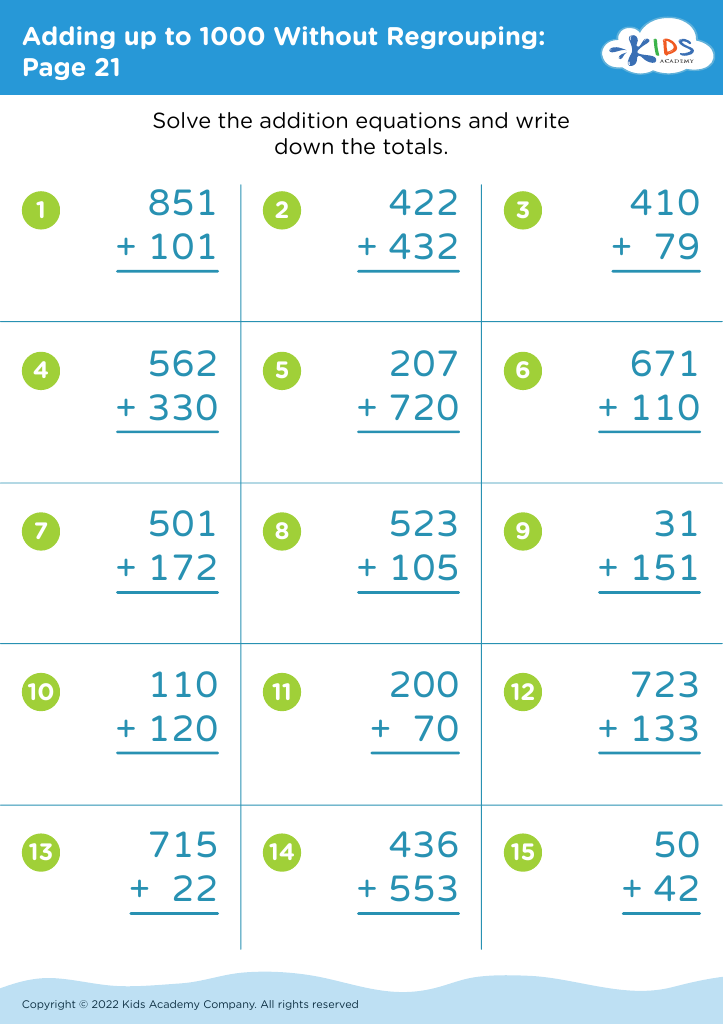
Boost your child’s math confidence with our "Develop Counting Skills Addition Worksheets" designed for ages 8-9. These expertly crafted worksheets from Kids Academy offer engaging and challenging problems that hone foundational addition skills. Perfect for young learners, our resources ensure a comprehensive understanding of counting principles while making learning enjoyable. Each activity promotes critical thinking and problem-solving abilities, helping students master addition and build a strong math foundation. Download today and give your child the tools to excel in math with fun and interactive exercises that turn learning into an exciting adventure!
Favorites
With answer key
Interactive
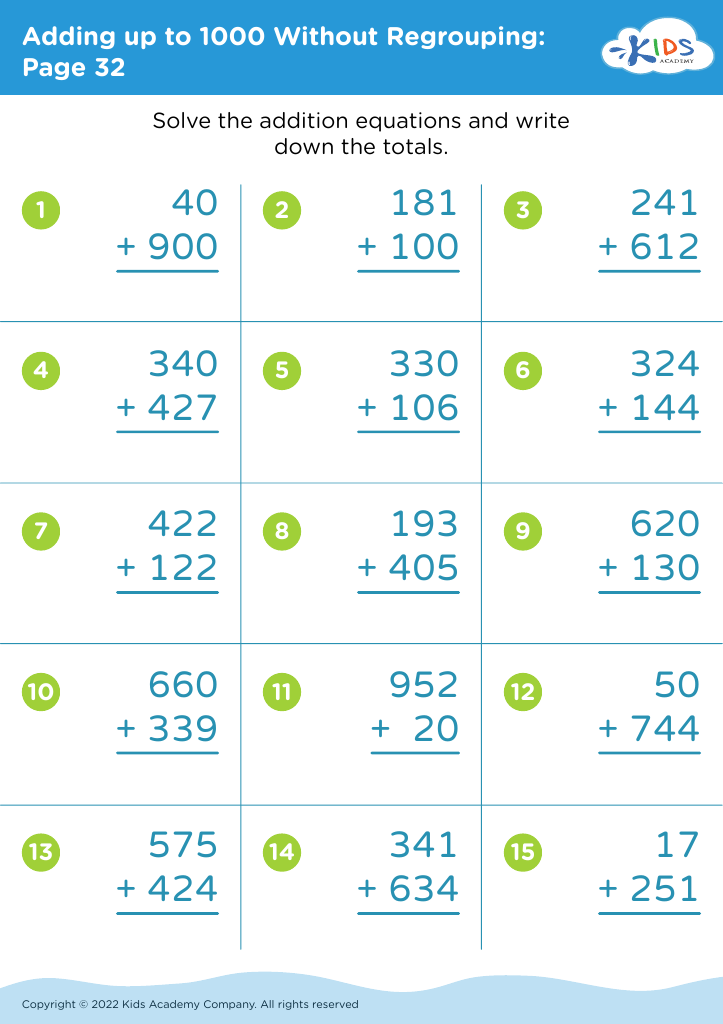
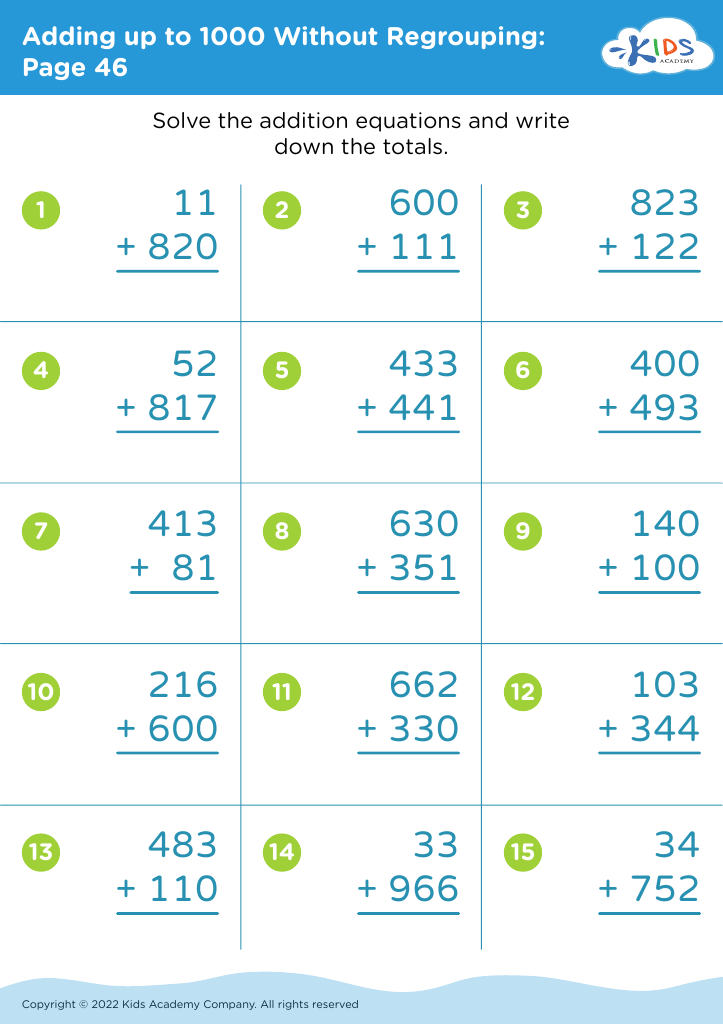
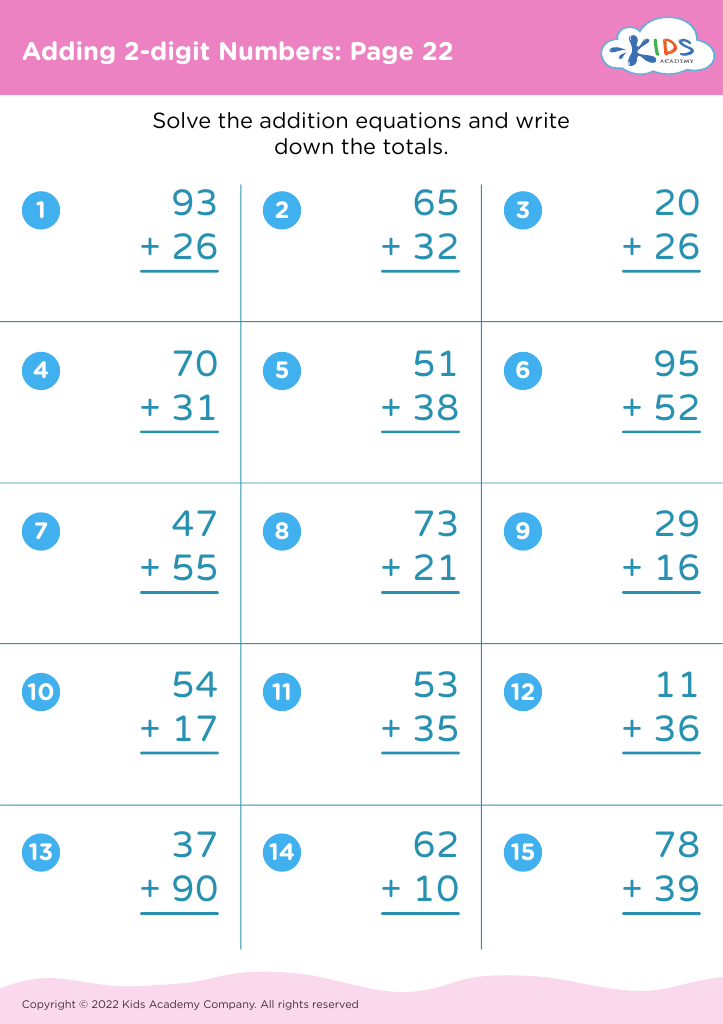
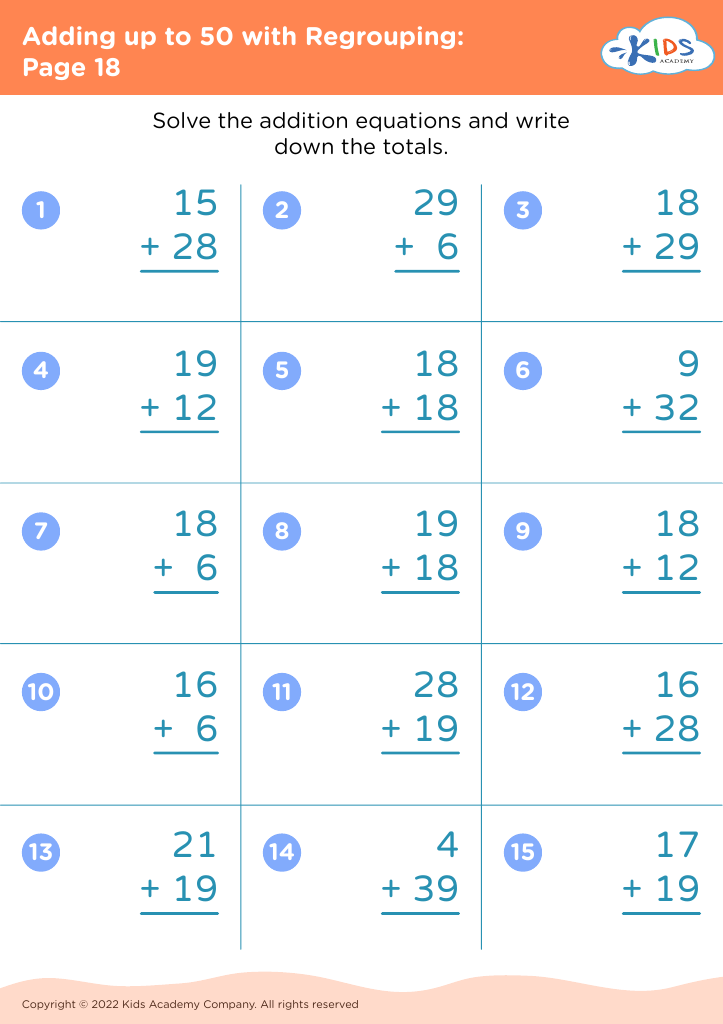
Join Kids Academy for Free
Who is primarily going to use this learning content?







Developing counting and addition skills in children aged 8-9 is crucial for their mathematical foundation and overall cognitive development. These skills serve as building blocks for more complex mathematical concepts and problem-solving abilities. By mastering counting and basic addition, children gain confidence, which is essential for their academic growth and fosters a positive attitude toward learning.
Counting helps children understand number sequences, recognize patterns, and develop a sense of numerical order. Addition further enhances their arithmetic thinking, enabling them to tackle everyday problems involving money, time, and measurements. These early math skills are directly linked to success in more advanced mathematical topics, such as multiplication, division, fractions, and algebra.
Furthermore, developing counting and addition skills enhances a child's brain function, including memory, attention, and logical thinking. Engaging in mathematical activities stimulates neural pathways and encourages cognitive growth, setting a strong foundation for lifelong learning.
Teachers and parents play a critical role in this developmental stage. By creating a nurturing and supportive learning environment, they can make math engaging and fun through games, practice exercises, and real-life applications. Early intervention and encouragement can spark a love for math, leading to higher academic achievement, better problem-solving skills, and increased opportunities for the child's future endeavors.








