Develop number recognition Addition Worksheets for Ages 8-9
5 filtered results
-
From - To
Welcome to our collection of "Develop Number Recognition Addition Worksheets" tailored specifically for children ages 8-9! These engaging worksheets are designed to enhance number recognition skills while reinforcing basic addition concepts. Each worksheet features a variety of fun exercises that challenge young learners to identify numbers and apply their addition skills in exciting ways. Ideal for both classroom use and home practice, these resources support your child's mathematical development, promote critical thinking, and boost confidence in their abilities. Explore our array of colorful and stimulating worksheets, and watch your child flourish in their number recognition and addition skills today!
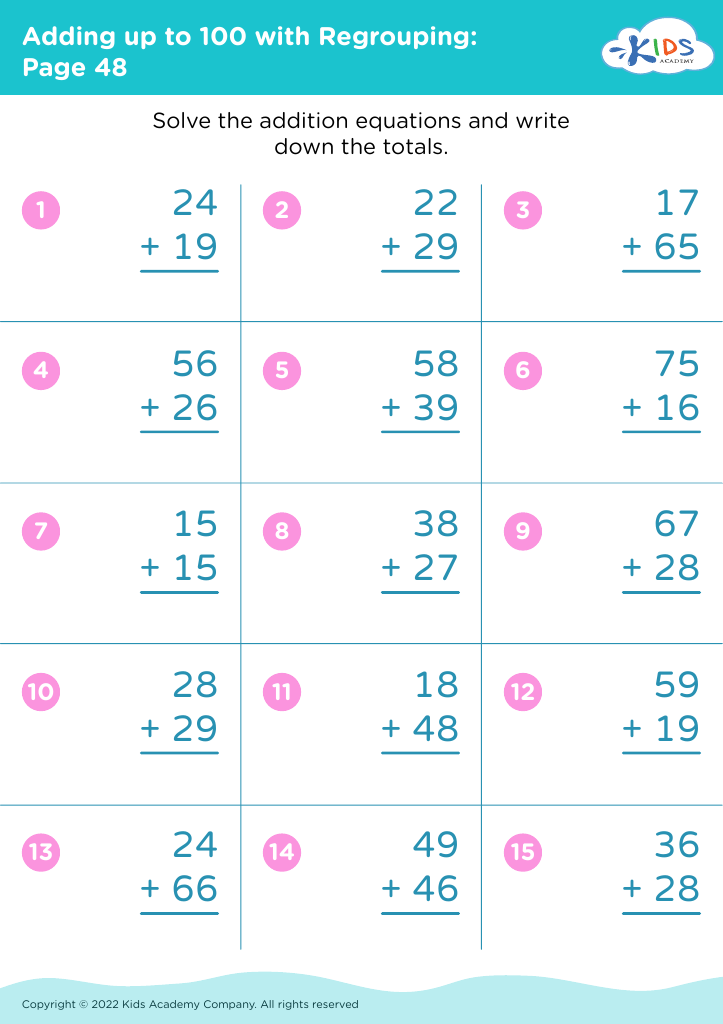
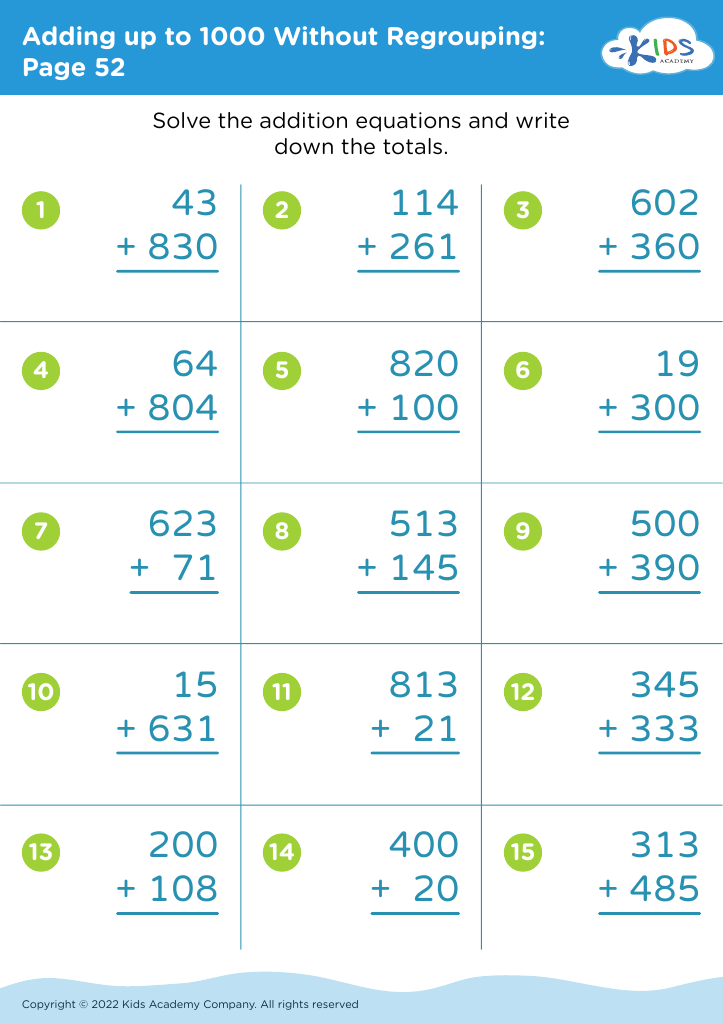
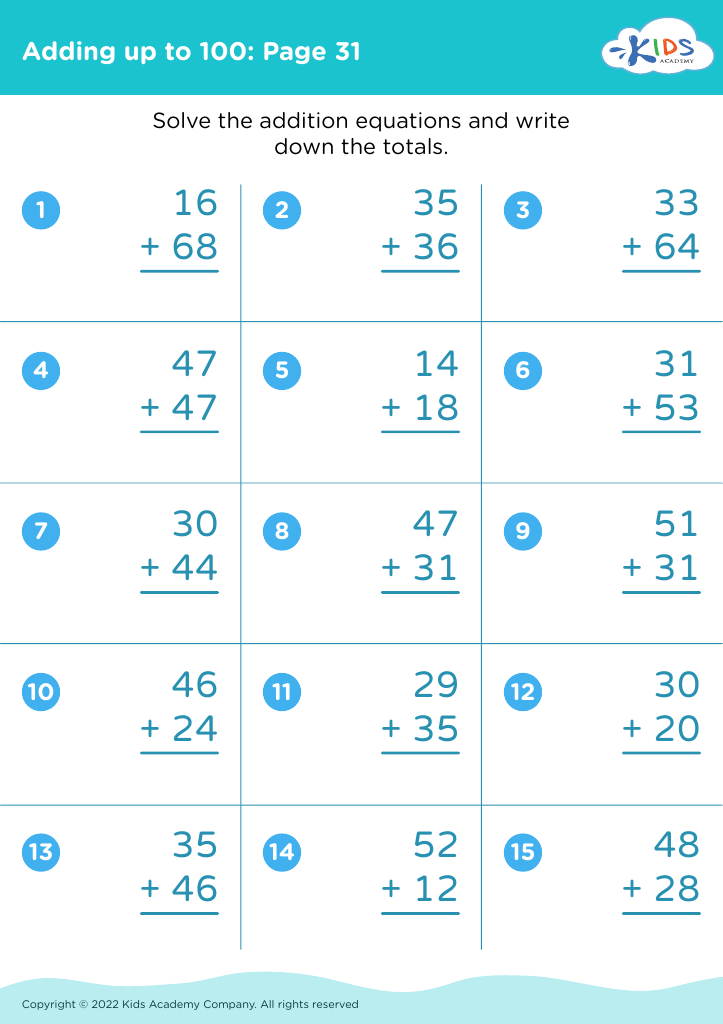
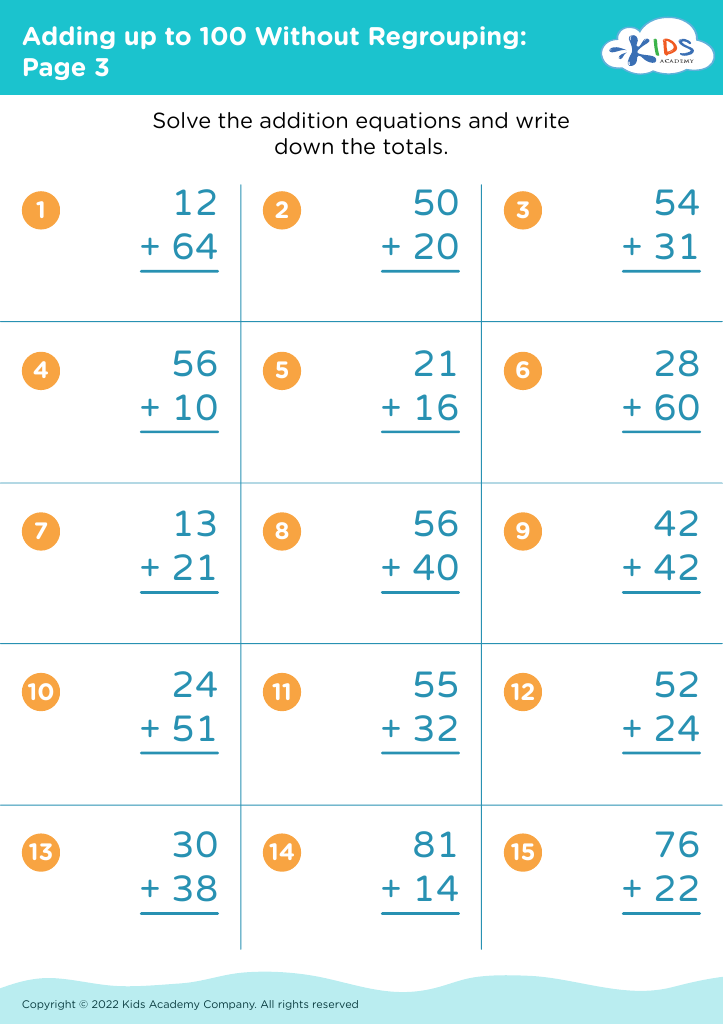
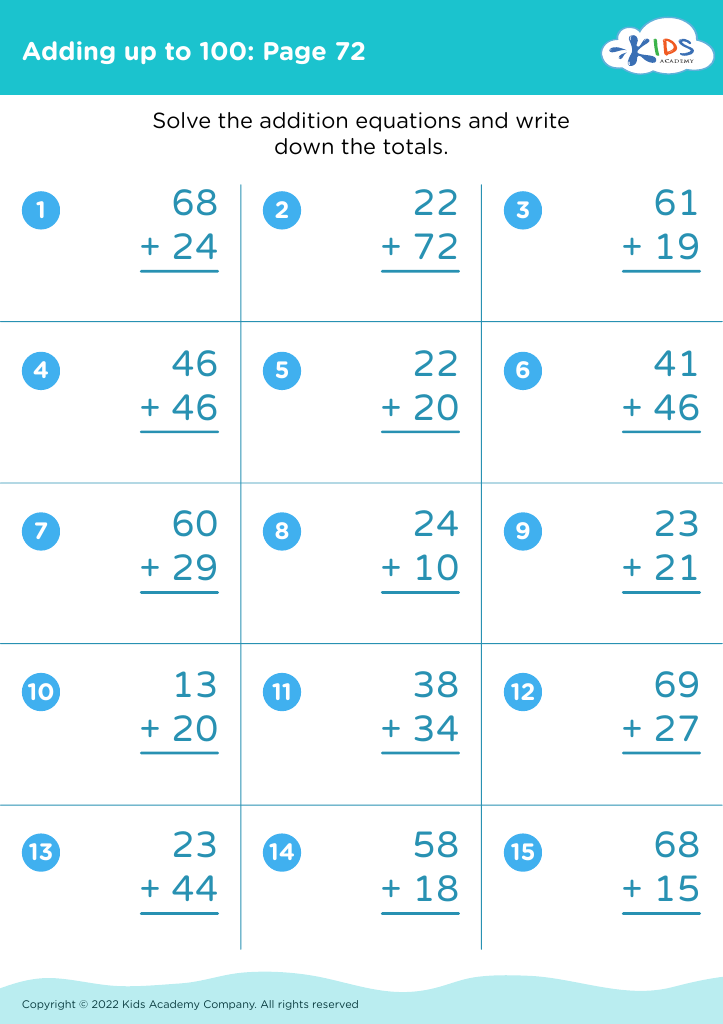








Developing number recognition and addition skills in children aged 8-9 is crucial for their mathematical foundation and overall academic success. At this age, children are transitioning from basic arithmetic to more complex concepts, and strong number recognition ensures they can identify and differentiate numbers accurately. This skill is the first step toward mastering addition, which is essential for solving more complicated math problems they will encounter later.
Furthermore, recognizing numbers allows children to understand their relationships, promoting a deeper grasp of place value and the concept of numbers being part of a larger system. Addition skills at this age prepare students for future topics like subtraction, multiplication, and division, creating a solid base for more advanced mathematics.
In addition, successful number recognition and addition foster confidence in mathematical abilities, enabling students to approach math tasks with a positive mindset. This confidence has the potential to influence their overall attitude toward learning, improving performance in other subjects as well. Ultimately, by prioritizing these foundational skills, parents and teachers can help students develop critical thinking, problem-solving abilities, and lifelong learning skills. Investing in their mathematical development now will pay off in their future educational endeavors.








