Developing logical thinking Addition Worksheets for Ages 8-9
4 filtered results
-
From - To
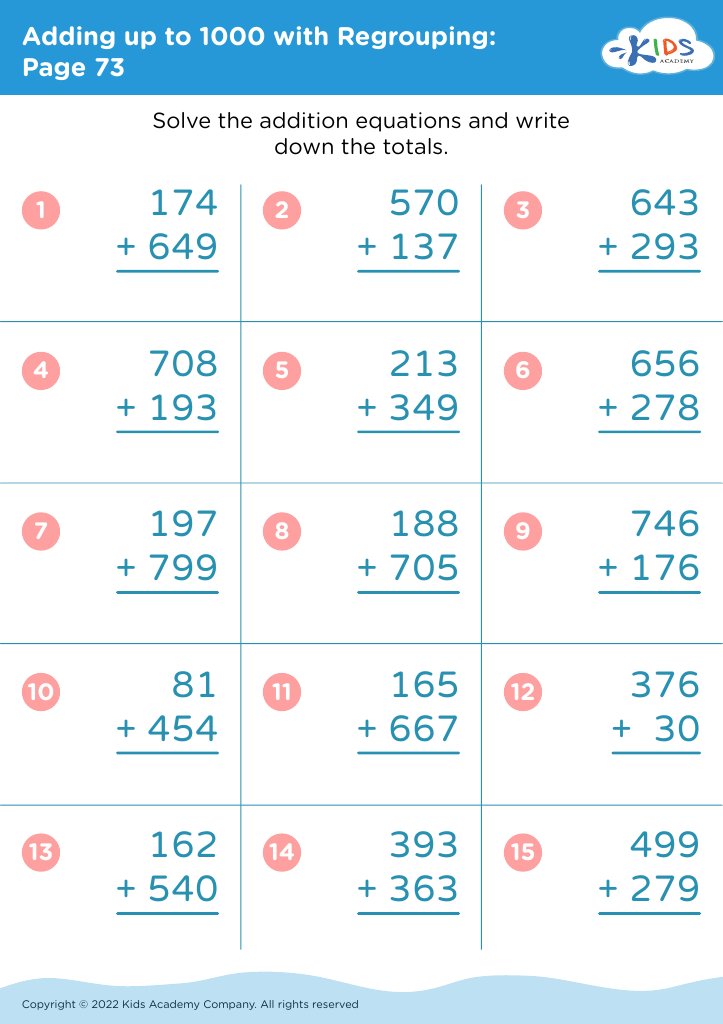
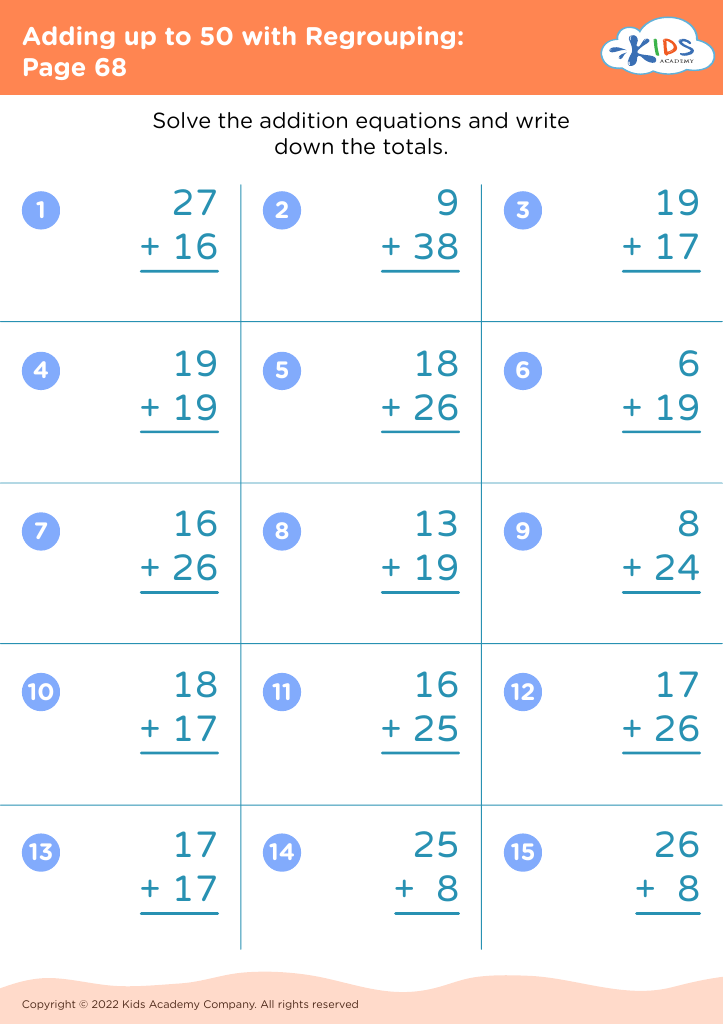
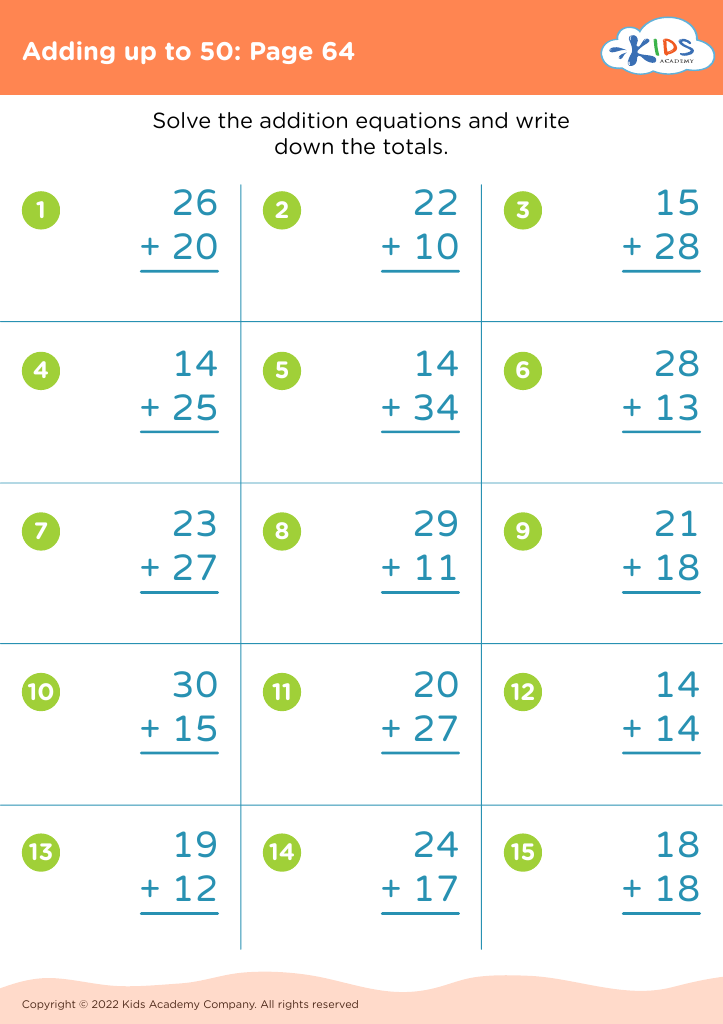
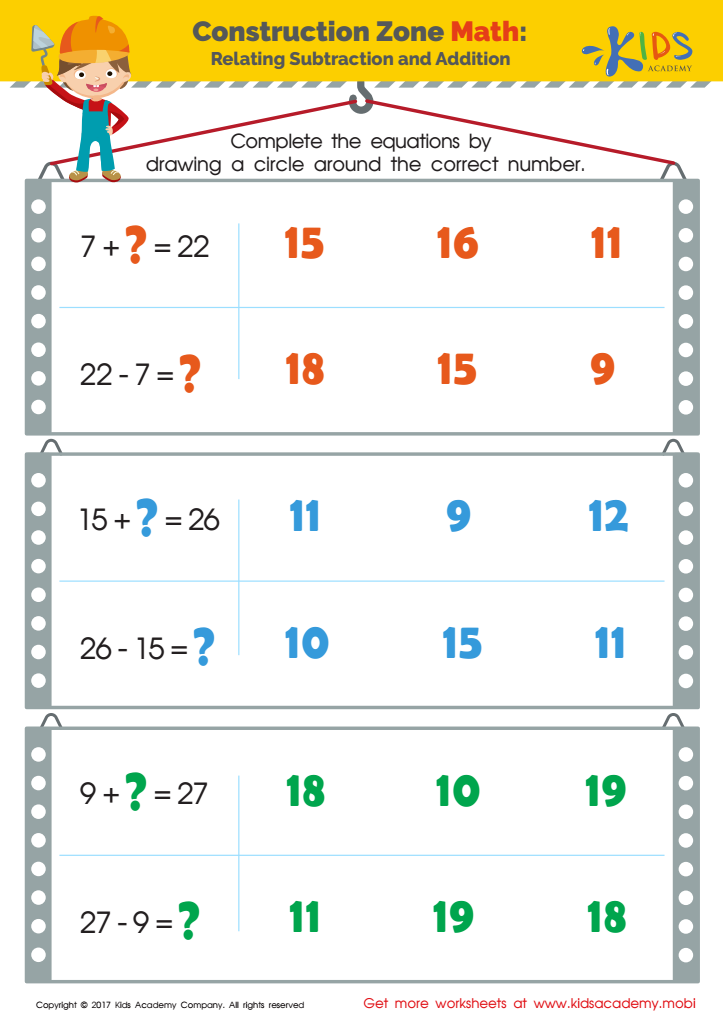
Unlock your child's potential with our "Developing Logical Thinking Addition Worksheets" designed specifically for ages 8-9. These engaging activities challenge young minds to enhance their logical reasoning and problem-solving skills through the lens of addition. Each worksheet is crafted to encourage critical thinking, allowing kids to explore various strategies and approaches to solve addition problems. By integrating fun visuals and relatable scenarios, we make learning enjoyable and effective. Perfect for classroom use or at-home practice, these worksheets pave the way for academic success while building fundamental math skills. Encourage curiosity and confidence in your child's mathematical abilities today!
Related Addition and Subtraction Facts Worksheet
 Assign to My Students








Developing logical thinking in addition for children ages 8-9 is crucial for several key reasons. At this developmental stage, children are beginning to grasp more complex mathematical concepts, and enhancing their logical thinking skills helps strengthen their overall cognitive abilities. Logical thinking enables children to approach problems systematically, fostering the ability to break down larger tasks into manageable steps—an essential skill not only in math but in their everyday lives as well.
Moreover, mastering addition through logical reasoning lays the groundwork for understanding more advanced mathematical concepts, such as subtraction, multiplication, and division, that they will encounter in subsequent grades. Children who are confident in their logical reasoning are more likely to develop a positive attitude toward math, reducing anxiety and increasing engagement.
Also, skills acquired in logical thinking contribute to raising problem-solving abilities, allowing children to reason out their answers rather than relying solely on memorization. This understanding promotes critical thinking and creates a strong foundation for lifelong learning. By supporting logical thinking in addition, parents and teachers play a pivotal role in nurturing a generation of thoughtful, capable learners ready to tackle real-world challenges with confidence and skill.








