Enhances counting skills Addition Worksheets for Ages 8-9
5 filtered results
-
From - To
Enhance your child's counting and addition skills with our engaging addition worksheets tailored for ages 8-9. Designed by educational experts, these printable activities stimulate critical thinking and boost arithmetic precision. Each exercise effortlessly blends fun with learning, helping children to solidify foundational math concepts while fostering a love for numbers. Perfect for classroom use or additional practice at home, these worksheets cover everything from simple sums to more complex problems. Ensure your child masters essential math skills with resources that are both educational and enjoyable. Explore now for effective, hands-on learning that makes math exciting!
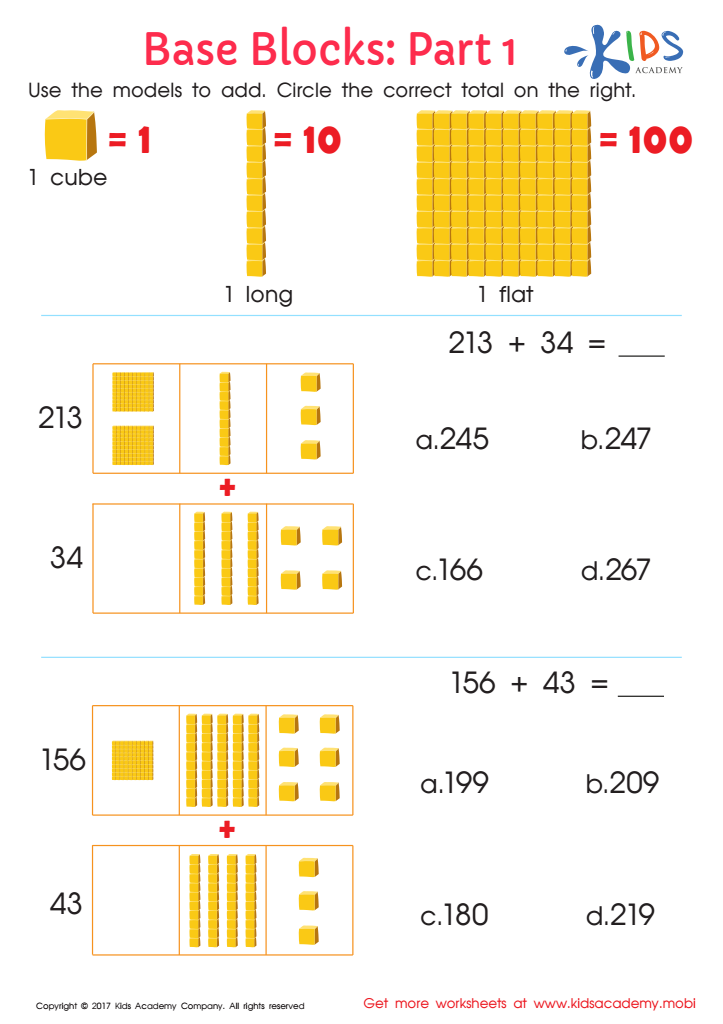
Base Ten Blocks Worksheet: Part 1
 Assign to My Students
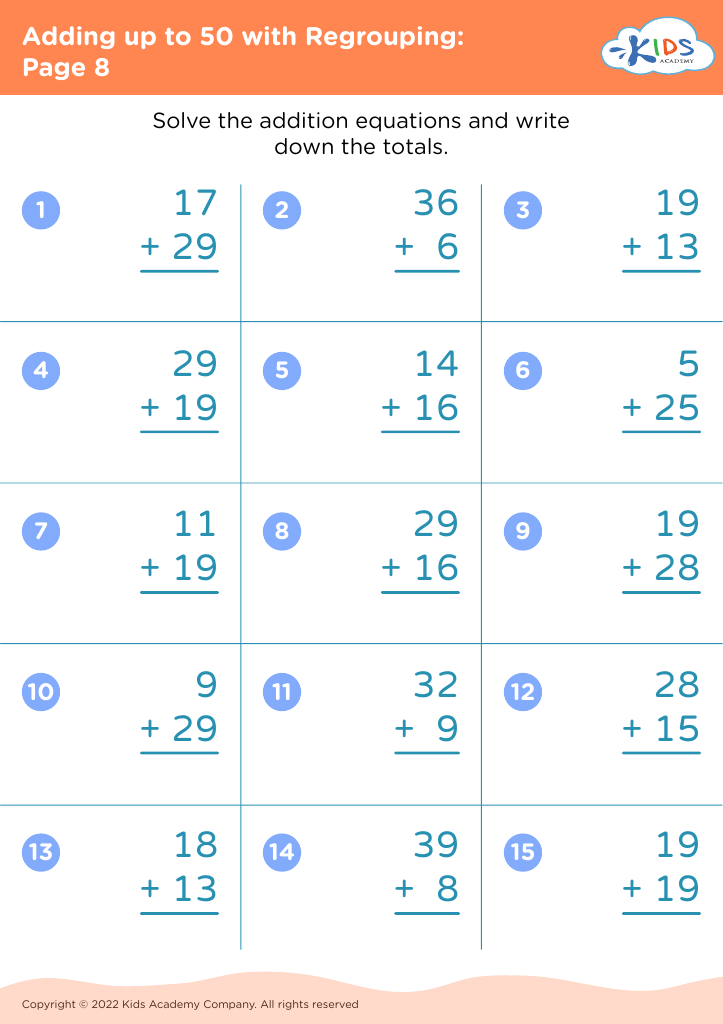
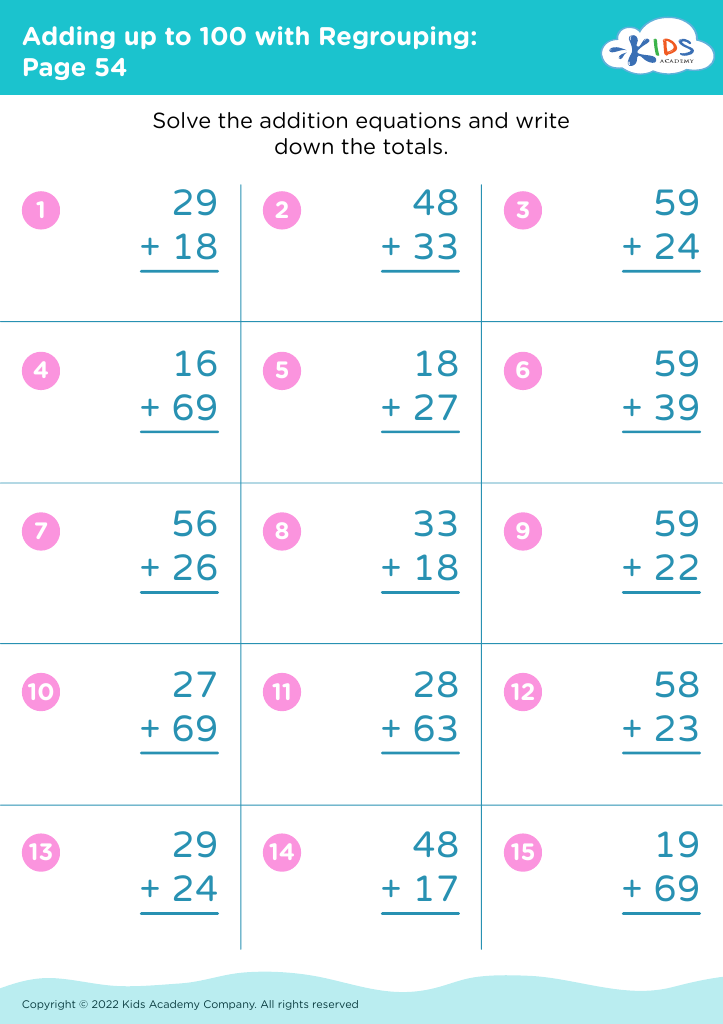
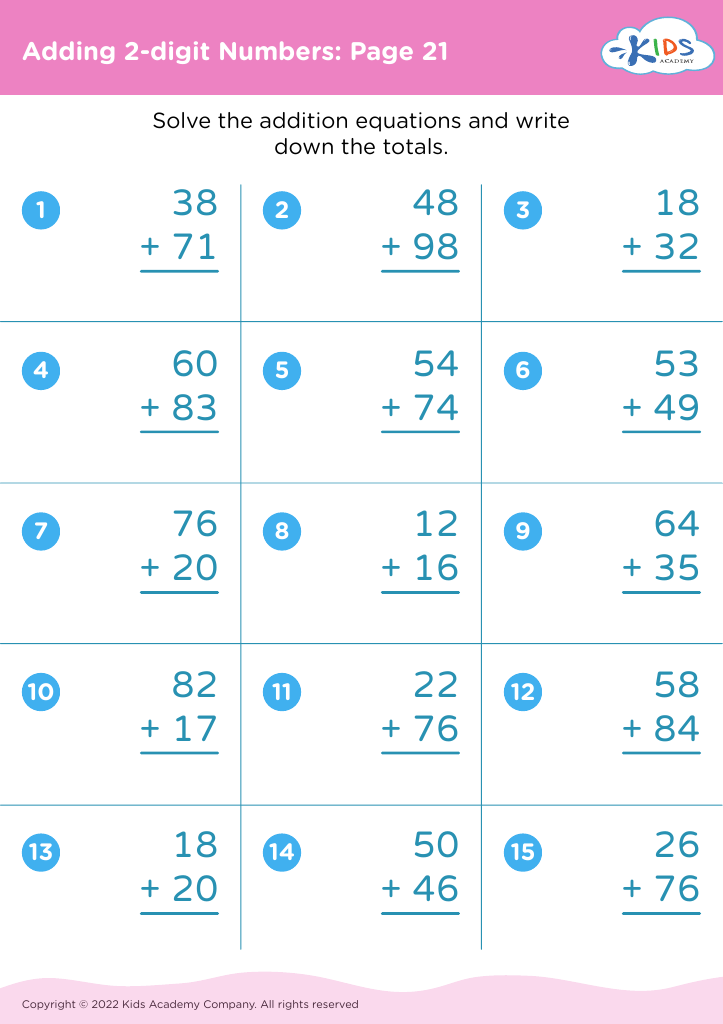
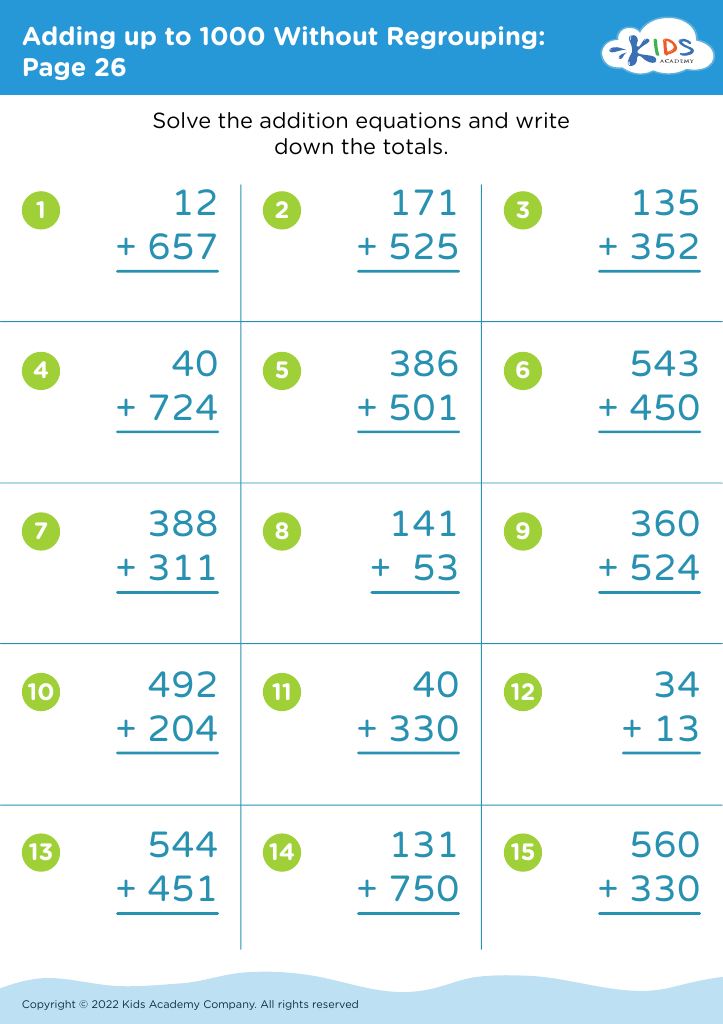








Parents and teachers should care about enhancing counting skills and basic addition for children aged 8-9 because these foundational skills are crucial for future academic success and daily life competence. At this developmental stage, children's brains are especially receptive to learning and solidifying mathematical concepts. Strengthening basic arithmetic ensures that they can handle more complex mathematics later, such as multiplication, division, fractions, and eventually algebra.
Counting and addition are not just about numbers; they also help develop logical thinking, problem-solving abilities, and pattern recognition. Children who are proficient in these areas tend to perform better across various subjects, including science and technology, because they have strong analytical skills. Moreover, children develop a sense of confidence and independence when they can accurately and quickly solve everyday problems that involve math, such as counting money, telling time, and measuring ingredients for a recipe.
Engaging in math activities can also foster a positive attitude toward learning. When children see their progress and understand that they can learn difficult concepts, it boosts their self-esteem and intrinsic motivation. Parents and teachers play an essential role in making math enjoyable and relevant, which lays the foundation for a lifelong appreciation and understanding of the subject.








