
Following instructions Addition Worksheets for Ages 8-9
13 filtered results
Difficulty Level
Grade
Age
-
From - To
Subject
Activity
Standards
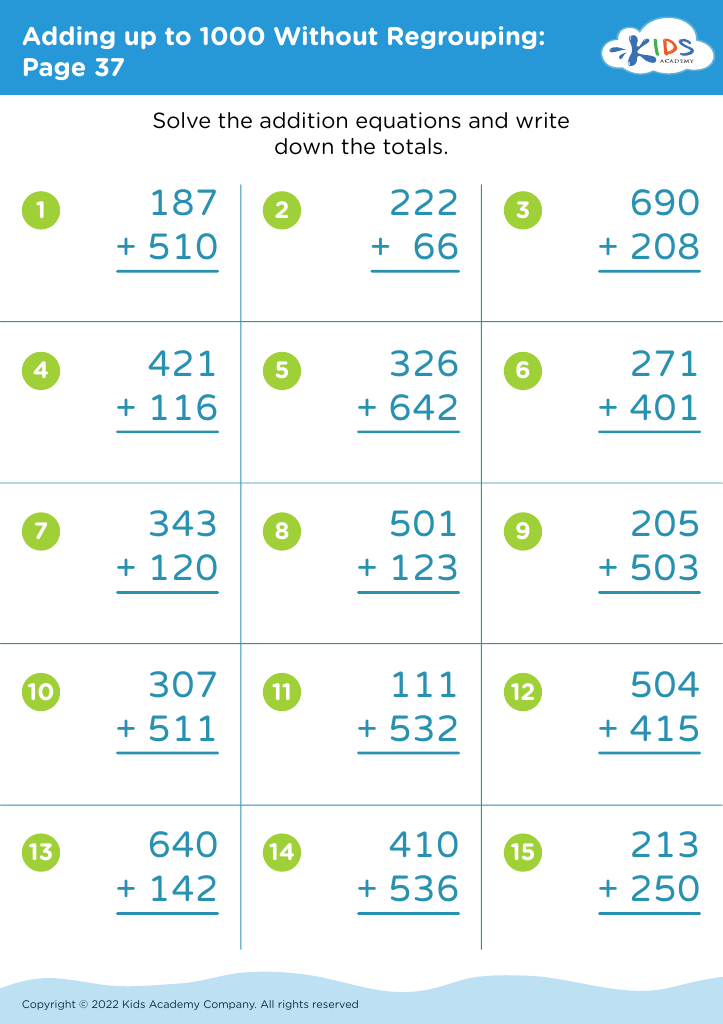
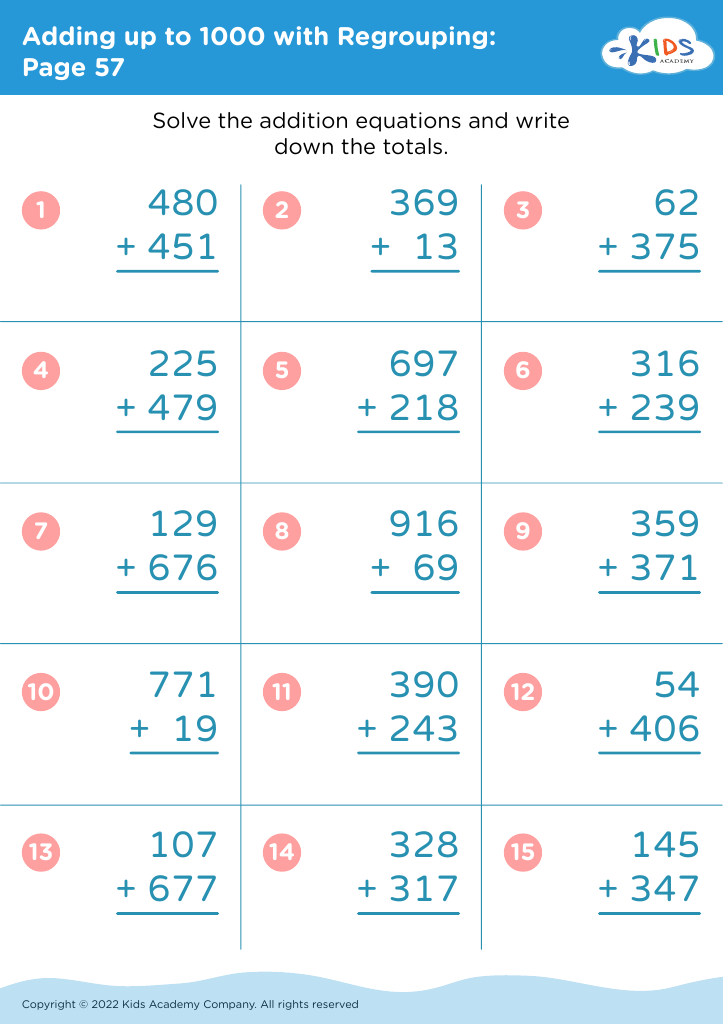
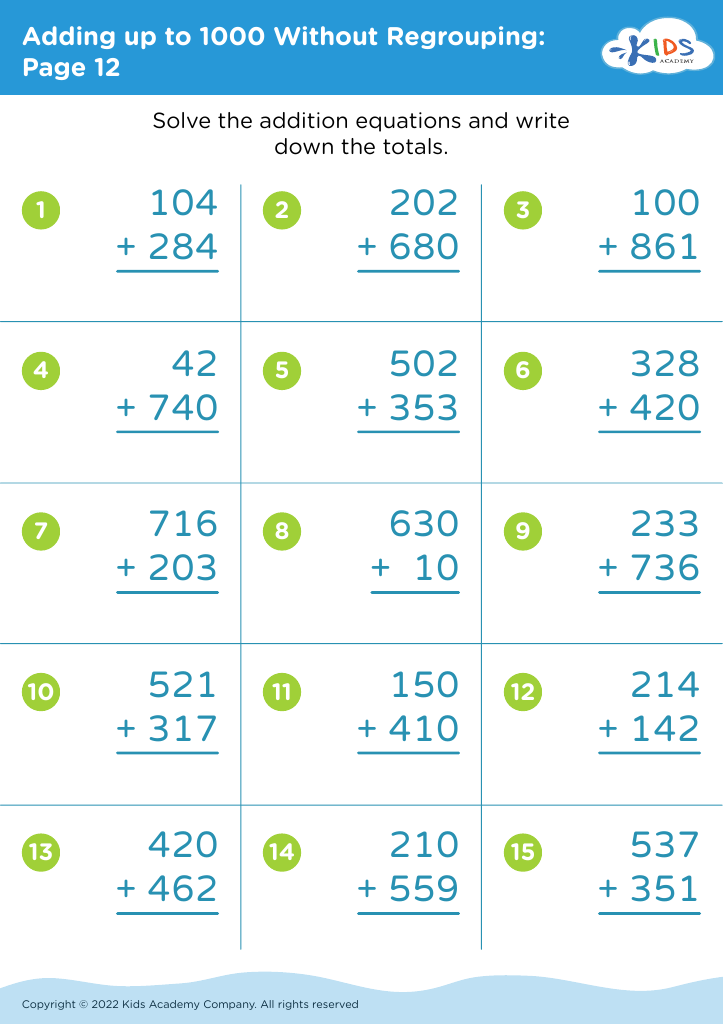
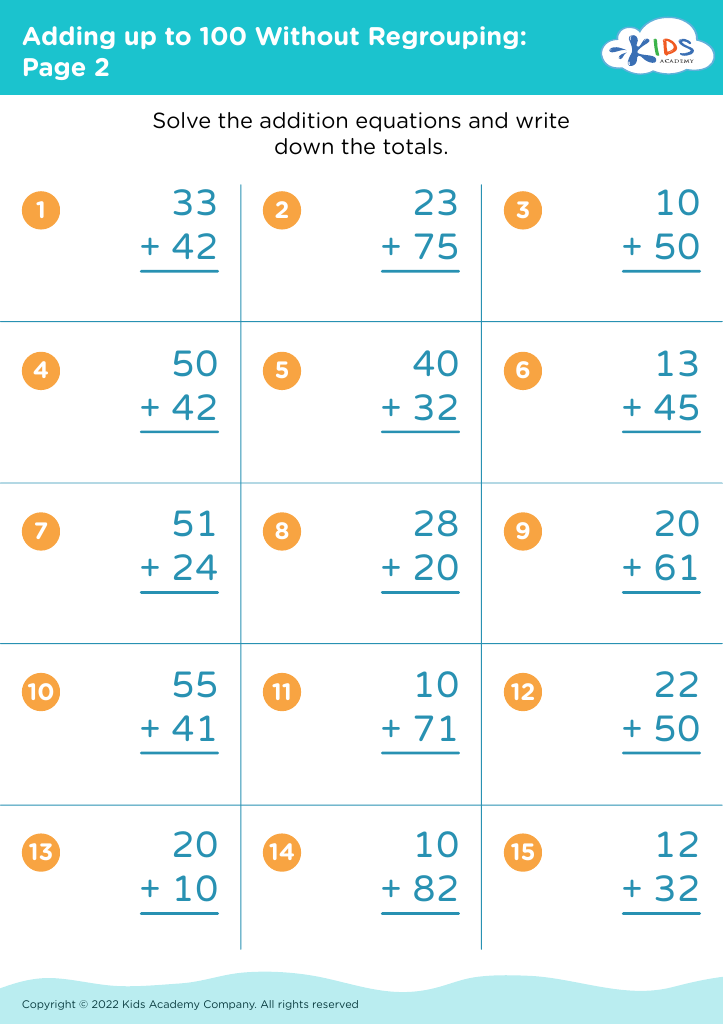
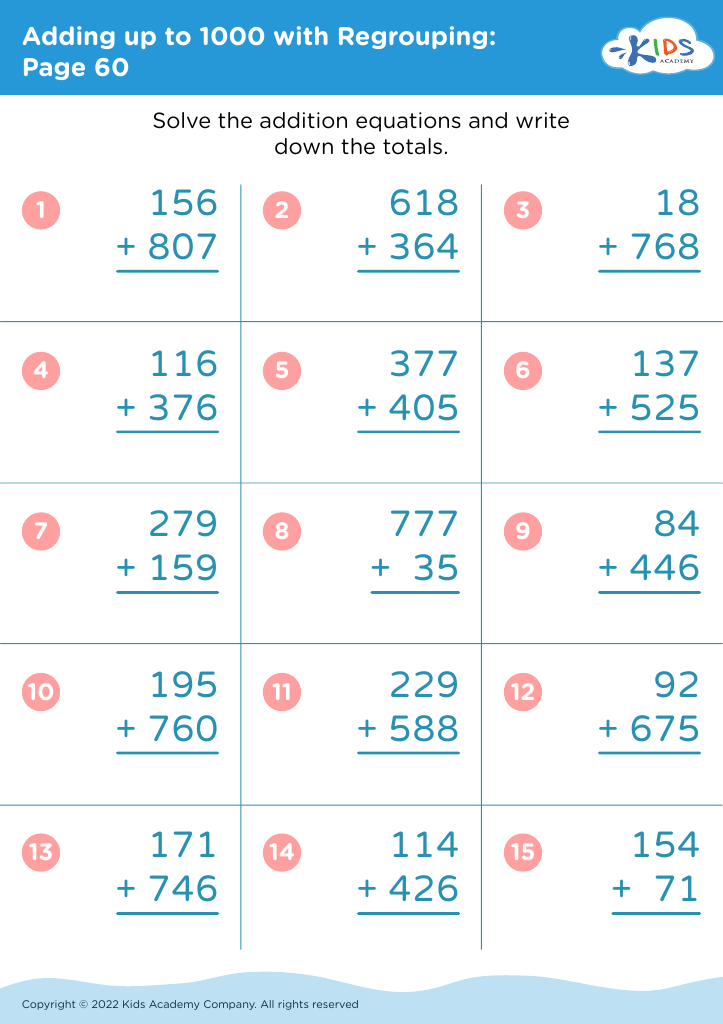
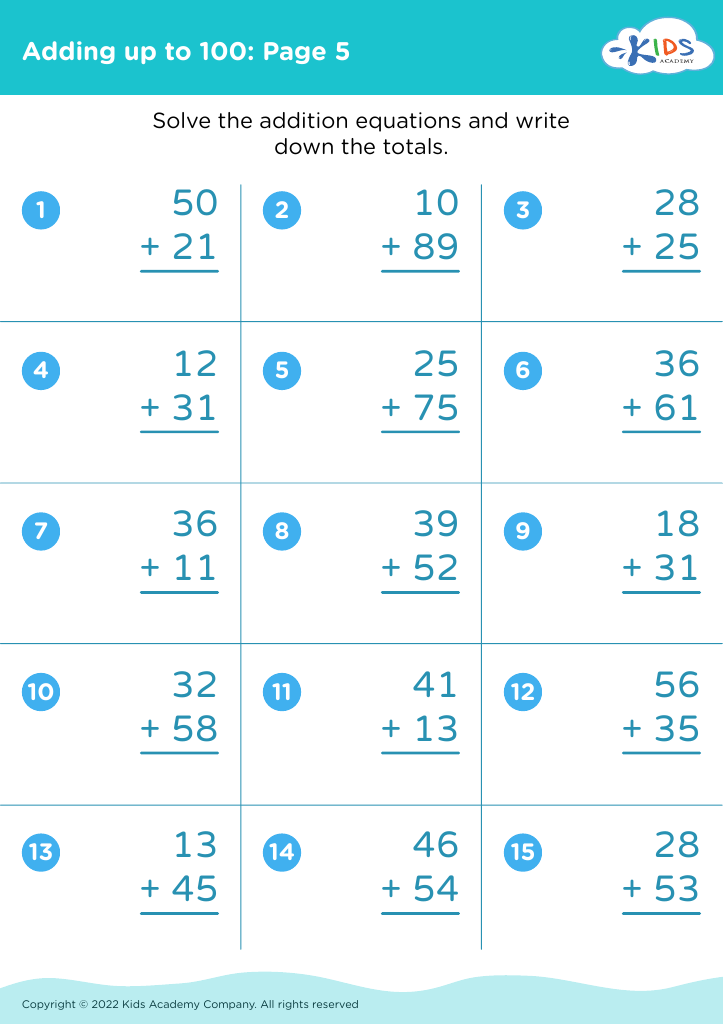
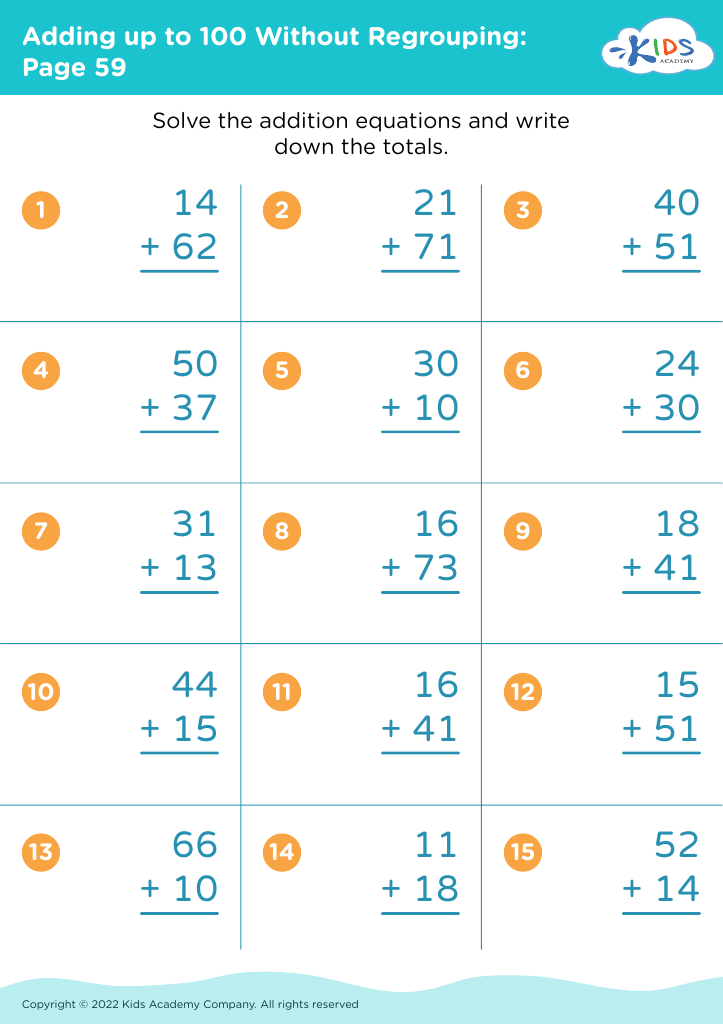
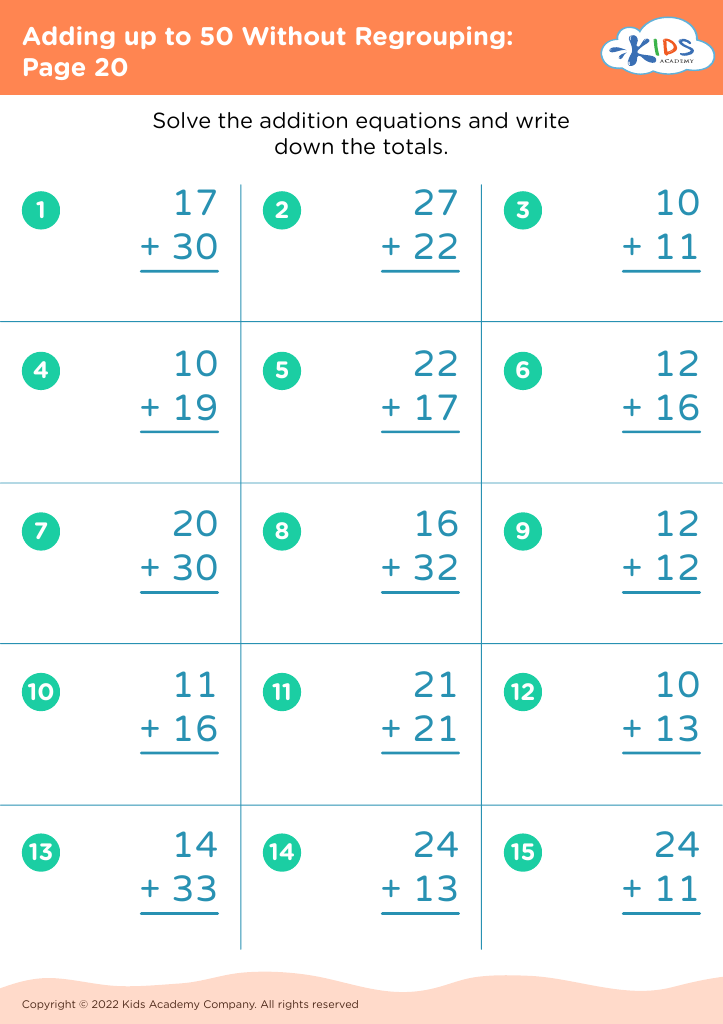
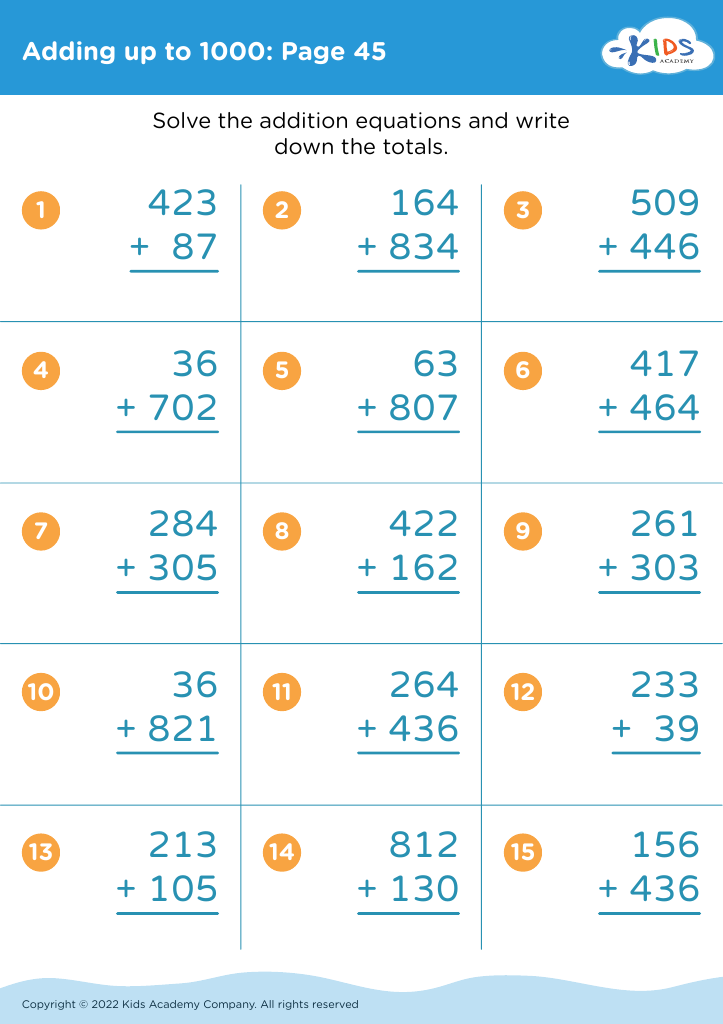
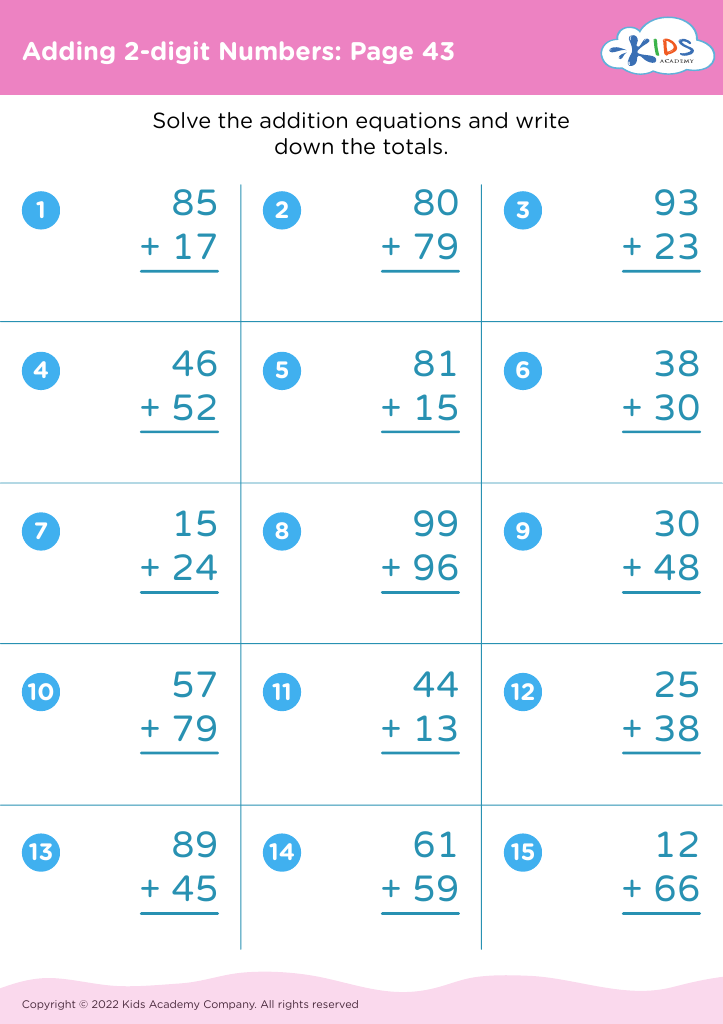
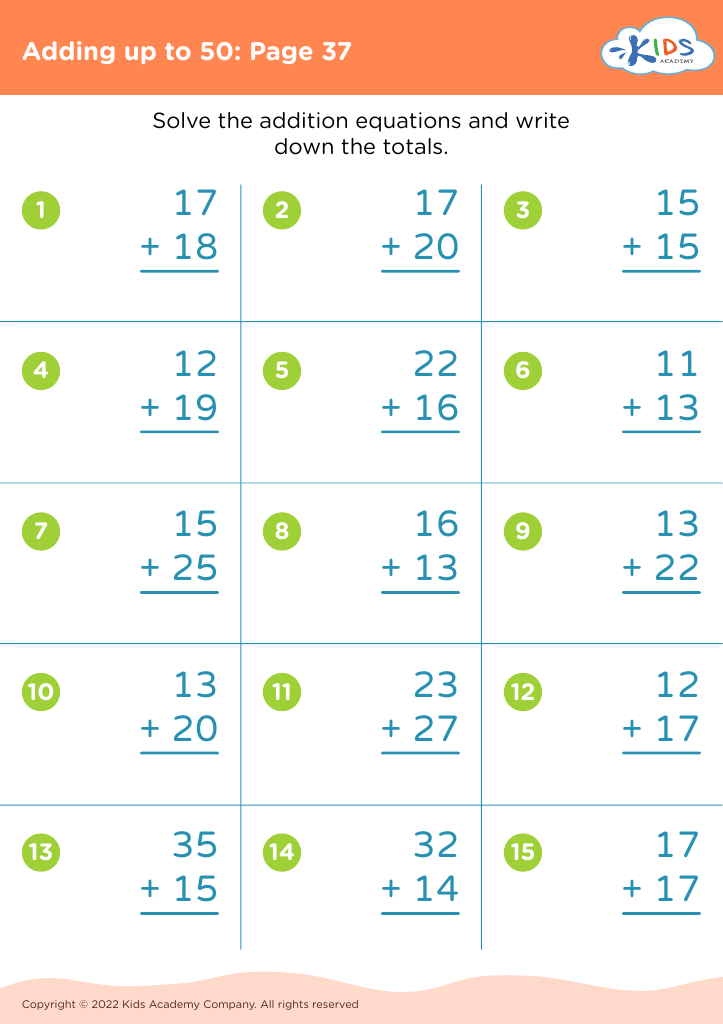
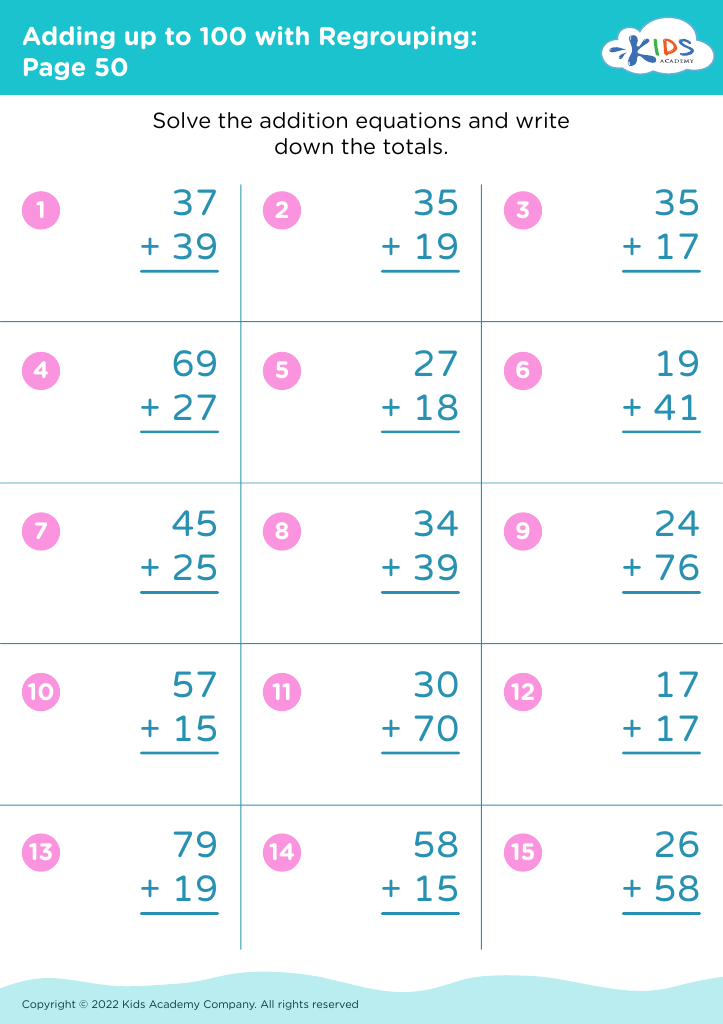
Unlock your child's potential with our Following Instructions Addition Worksheets, designed specifically for ages 8-9. These engaging worksheets not only teach fundamental addition skills but also emphasize the importance of clear, sequential instructions. Children will practice solving problems while honing their ability to carefully follow multi-step directions — a vital skill for academic success. Our user-friendly layout encourages independent work, and the variety of fun exercises keeps learning exciting. Perfect for home or classroom use, these resources will help your child build confidence and proficiency in math while mastering the art of following instructions. Start your journey to mastering addition today!
Favorites
With answer key
Interactive
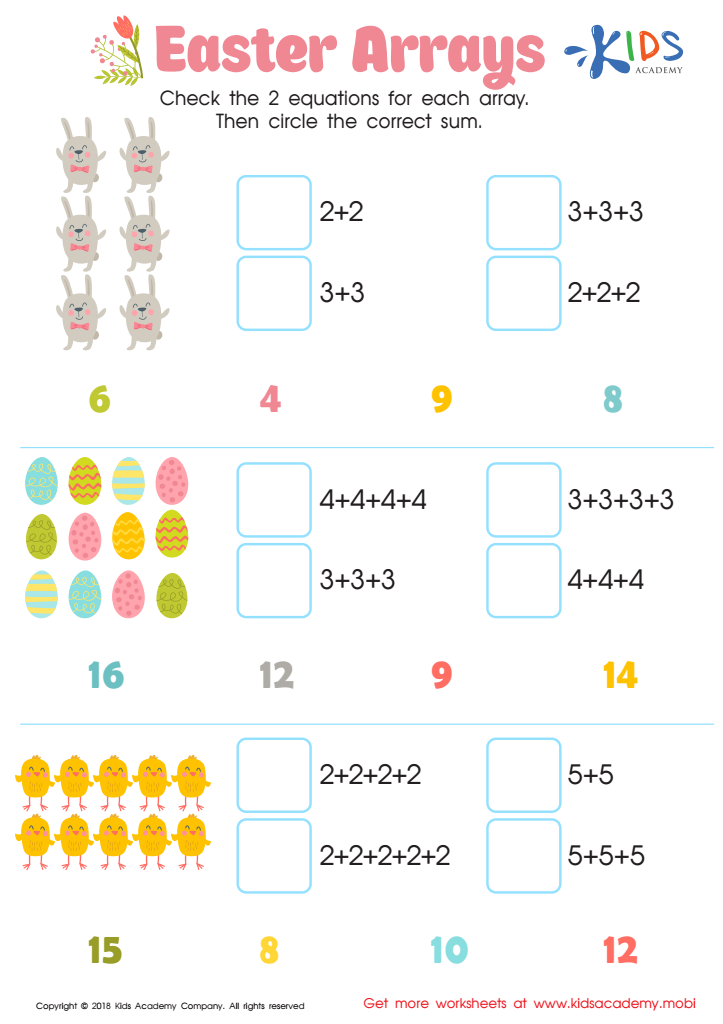
Easter Arrays Worksheet
Does your child love Easter? Do they adore the Easter bunny and egg hunts? Help them have fun with this worksheet! Go through it with them and check the equations for each array. Then, have them circle the correct sum. It's a great way to make the holiday extra exciting!
 Assign to My Students
Easter Arrays Worksheet
Worksheet
Join Kids Academy for Free
Who is primarily going to use this learning content?








Parents and teachers should prioritize the understanding of following instructions, especially in addition for children aged 8-9, for several compelling reasons. At this age, children develop foundational mathematical skills critical for their academic success. Following instructions in addition not only aids them in solving basic arithmetic problems but also enhances their comprehension and retention of mathematical concepts.
Moreover, learning to follow instructions fosters essential life skills such as attention to detail, patience, and resilience. Mastering the ability to interpret and execute guidelines can contribute to a child's overall cognitive development, influencing their capacity to tackle more complex tasks in the future.
In addition, engaging with math instruction cultivates a child’s confidence and independence. When students understand how to proceed with an addition problem step by step, they are more likely to tackle challenges in various subjects without fear or frustration.
Furthermore, these skills support collaborative learning, as children often work together in groups. Overall, emphasizing the importance of following instructions in addition prepares children not just for math but for lifelong learning. Thus, investment in this skill set prepares them academically and socially for what lies ahead. Teachers and parents play a critical role in this developmental journey.








