Identifying equivalent fractions Addition Worksheets for Ages 8-9
7 filtered results
-
From - To
Discover our engaging Identifying Equivalent Fractions Addition Worksheets designed specifically for children aged 8-9. Perfect for reinforcing crucial math skills, these worksheets help students understand the concept of equivalent fractions while practicing addition. Each worksheet features colorful illustrations and relatable examples, making learning both fun and effective. As kids work through various exercises, they will build confidence in their math abilities and improve their understanding of fractions. Ideal for use in the classroom or at home, these resources provide a great way for young learners to enhance their fraction skills while enjoying the process. Download now and inspire a love for math!
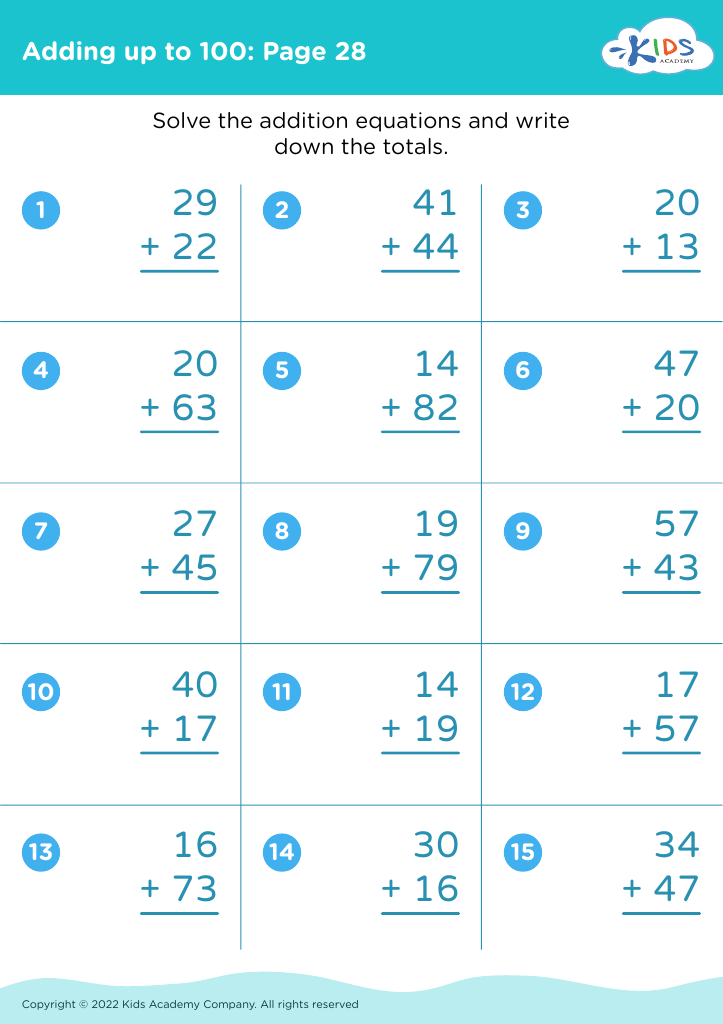
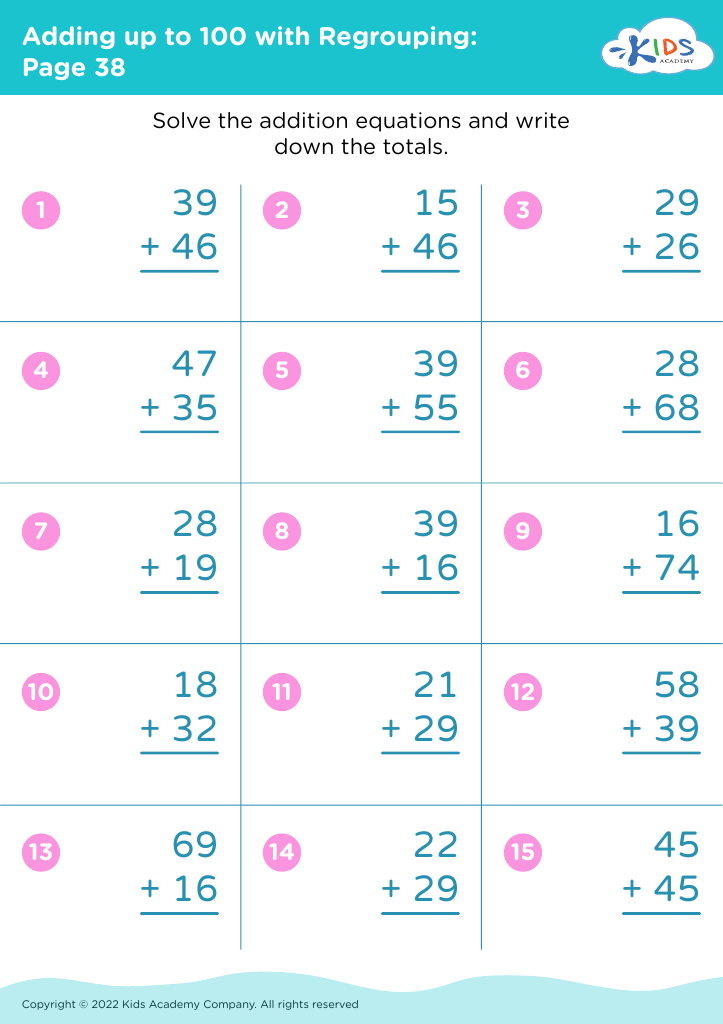
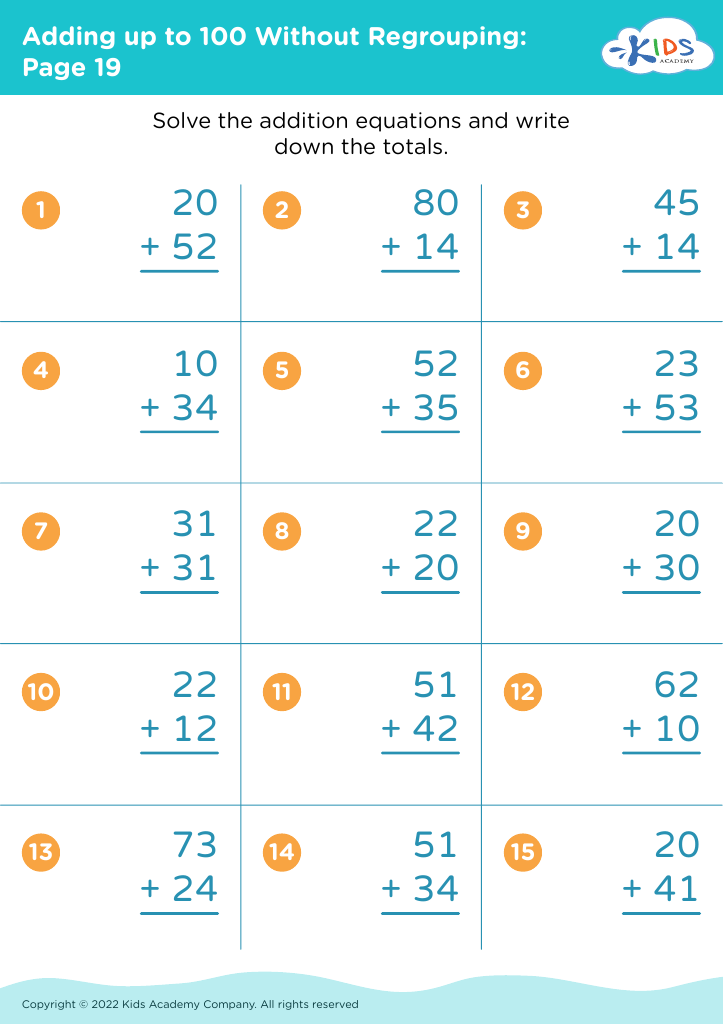
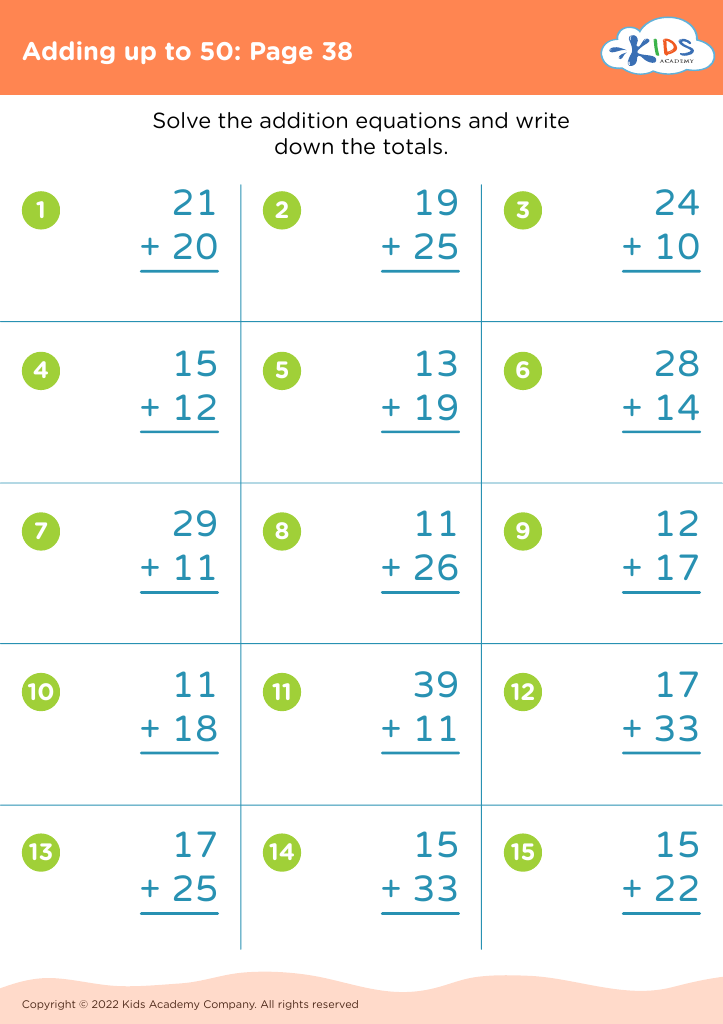








Identifying equivalent fractions is a foundational skill in mathematics that plays a crucial role in a child's overall numerical understanding, particularly for ages 8-9. First and foremost, this skill enhances a child’s ability to compare, add, and subtract fractions, which is essential as they progress in their math education. Understanding equivalent fractions promotes critical thinking and problem-solving skills, enabling children to see patterns and relationships in numbers.
Moreover, mastering equivalent fractions paves the way for more complex mathematical concepts, including ratios, proportions, and eventually algebra. For parents and teachers, fostering this skill encourages confidence in young learners during a pivotal time when they form attitudes towards math. Children who master these concepts develop persistence, enabling them to tackle more challenging math problems in the future.
Additionally, engaging in activities that focus on equivalent fractions can facilitate family bonding or classroom collaboration, promoting a love of learning in a nurturing environment. This foundation also aids in real-life situations, such as cooking or budgeting, where fractions often come into play. Comprehensive support from both parents and teachers ensures that children successfully build the skills necessary for mathematical fluency, setting the stage for lifelong learning and achievement.








