Logical thinking development Addition Worksheets for Ages 8-9
8 filtered results
-
From - To
Enhance your child's logical thinking skills with our engaging addition worksheets designed for ages 8-9. Our carefully crafted activities encourage critical thinking, problem-solving, and mental agility, making math both fun and educational. Each worksheet combines addition practice with logical reasoning tasks, prompting kids to explore patterns, sequences, and strategic thinking. Perfect for supplementary learning at home or as classroom resources, these worksheets foster a deep understanding of mathematical concepts while promoting cognitive development. Help your child build confidence and competence in math through our vibrant and interactive worksheets, setting a strong foundation for their future academic success. Start their logical journey today!
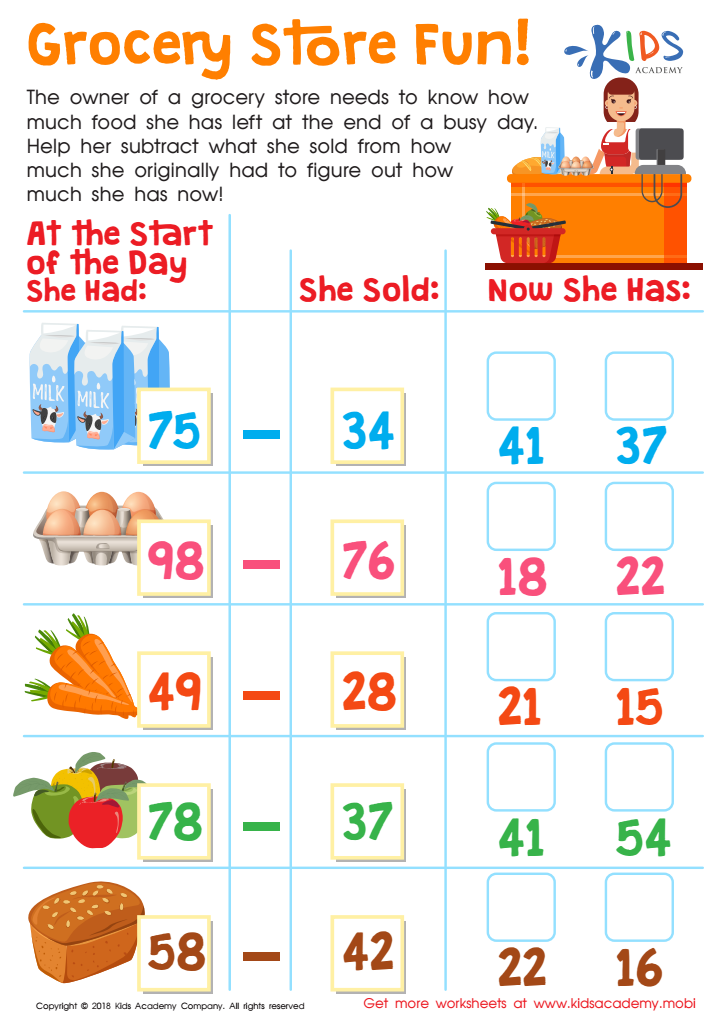
Grocery Store Fun! Worksheet
 Assign to My Students
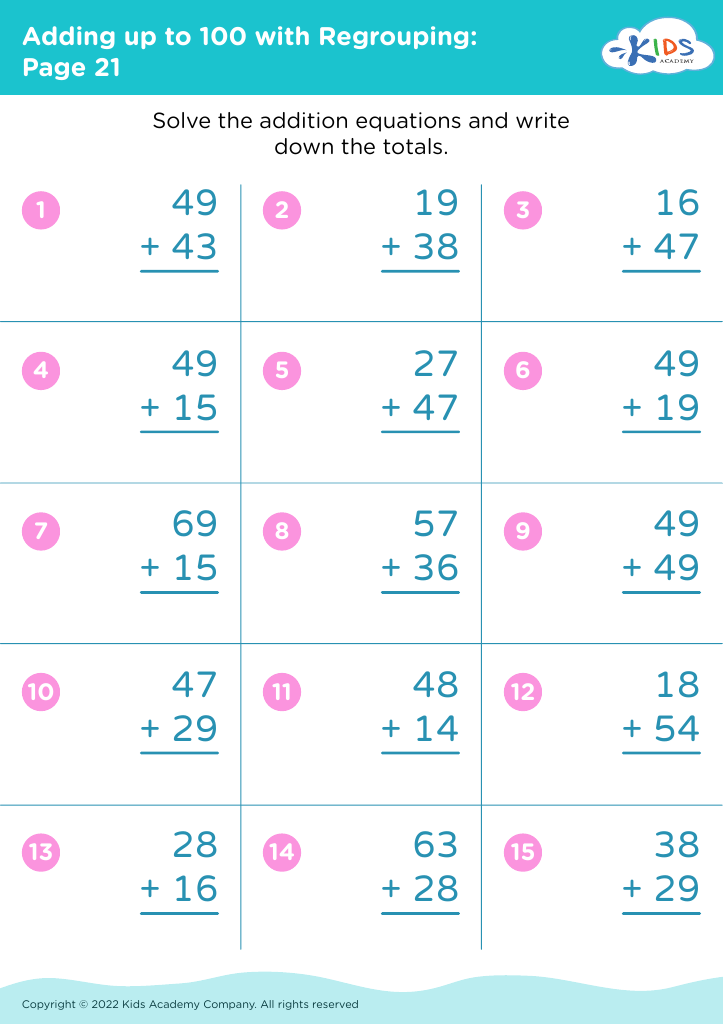
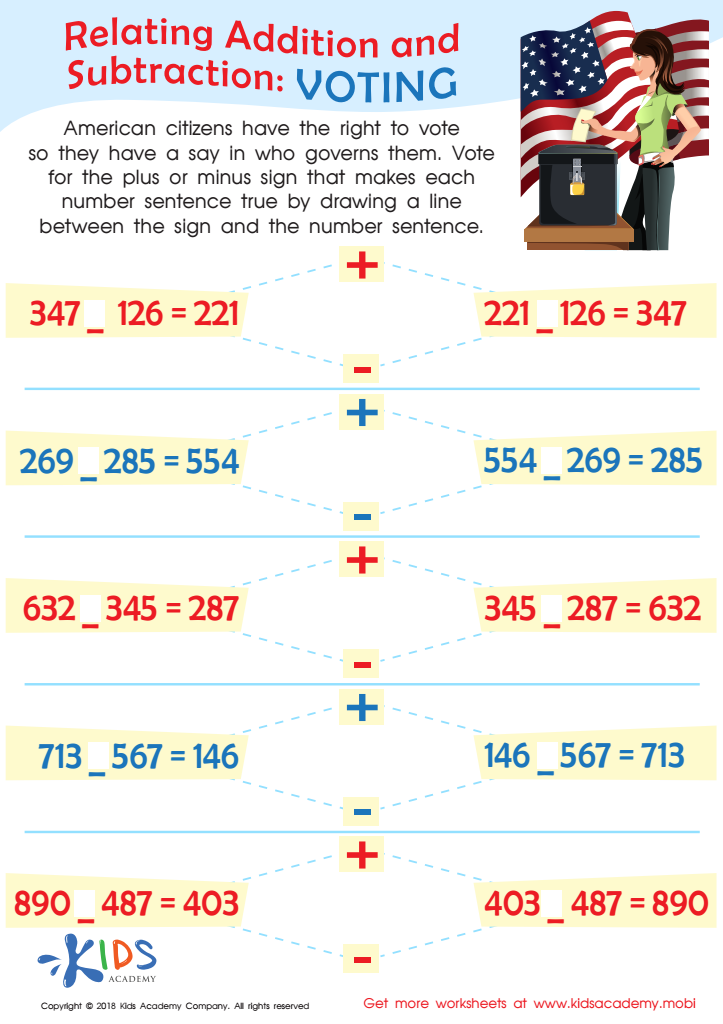
Voting Worksheet
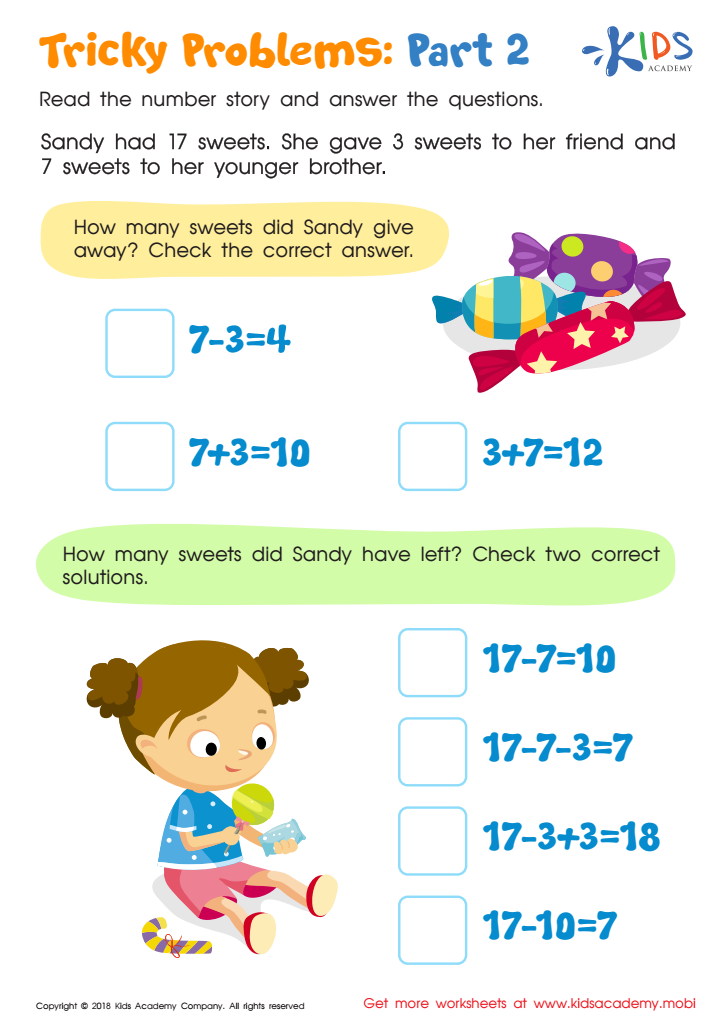
Tricky Problems Worksheet: Part 2
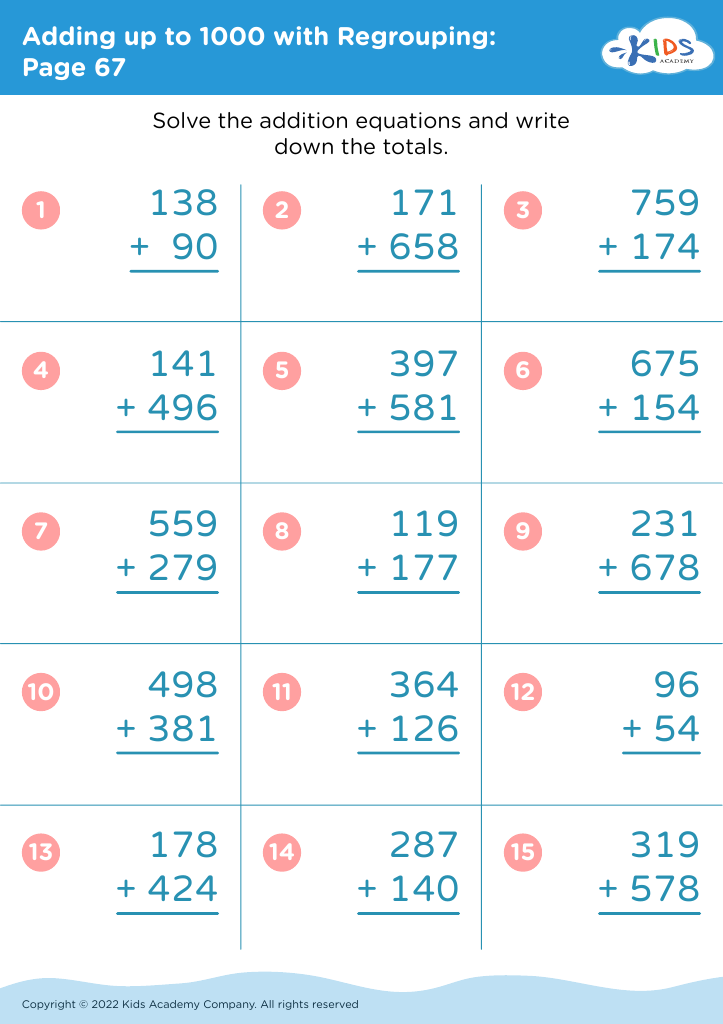
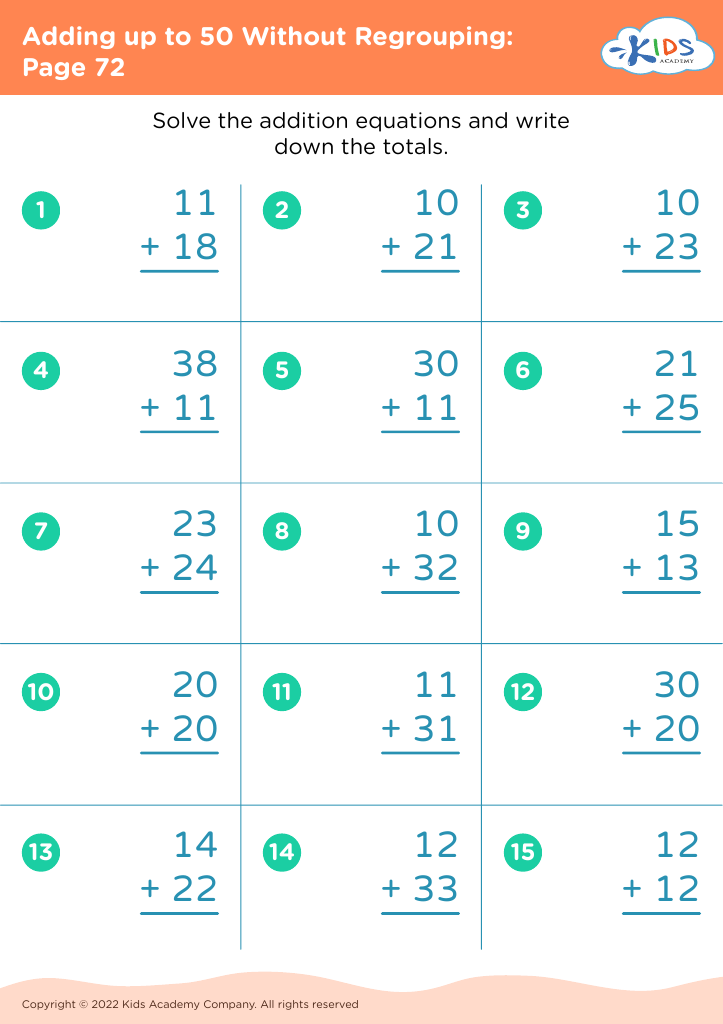
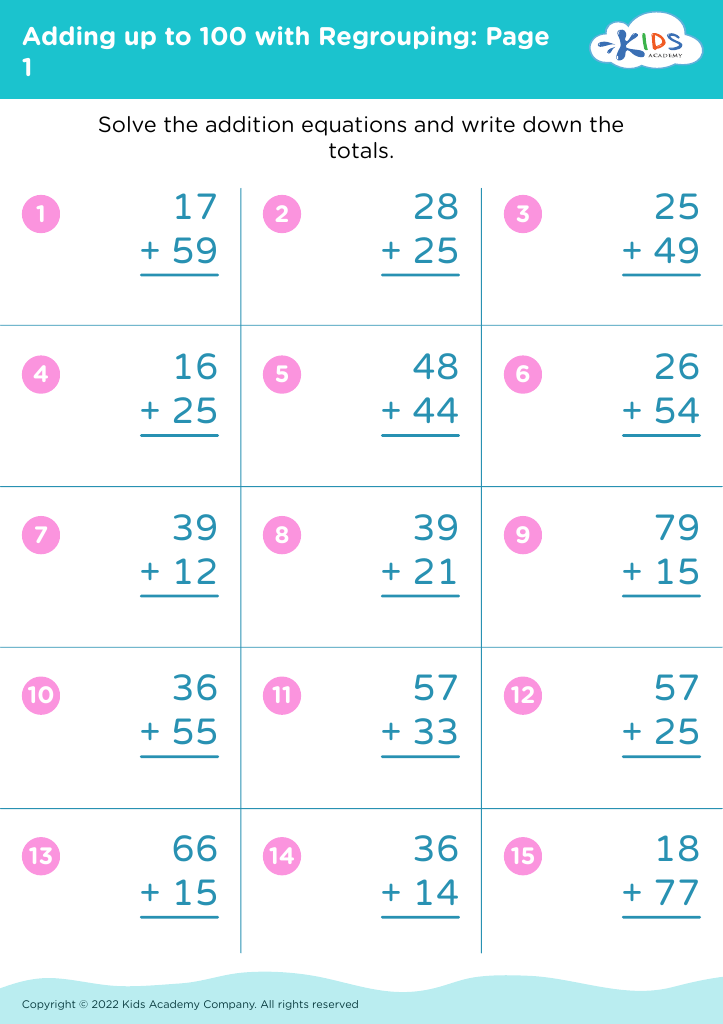
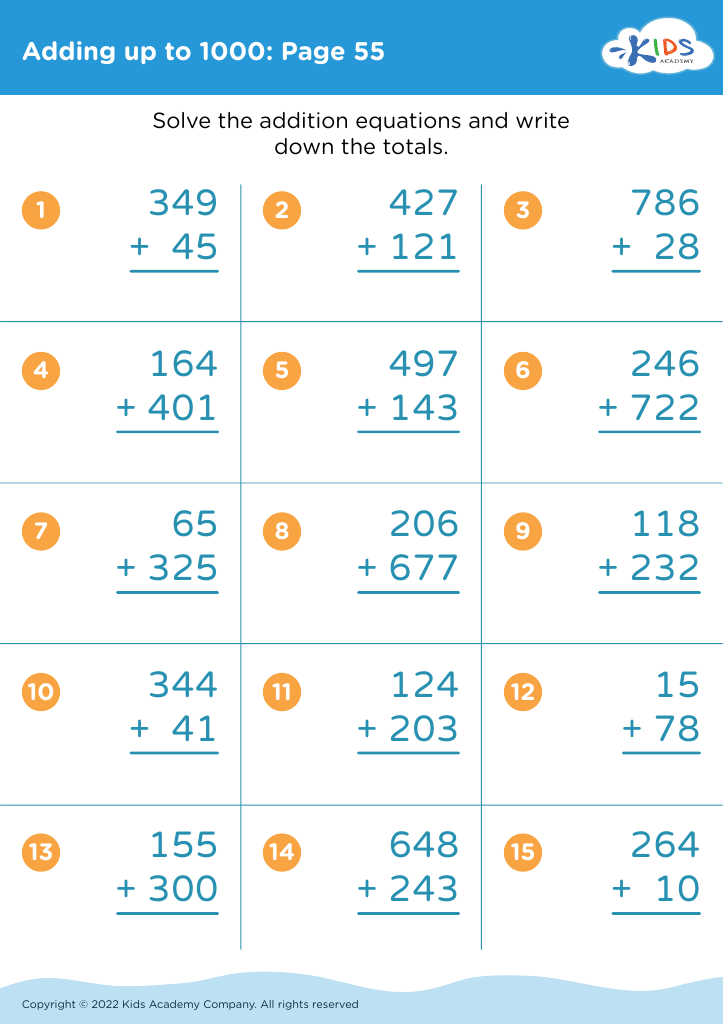








Logical thinking and addition skills are crucial for children aged 8-9, as these foundational abilities shape their understanding of mathematics and problem-solving. During this developmental stage, children transition from concrete operations to more abstract thinking, making it essential to foster logical reasoning alongside arithmetic skills. Encouraging logical thinking allows children to identify patterns, make connections, and solve problems efficiently, which are skills that extend beyond mathematics into everyday life and other subjects, including science and literacy.
Moreover, strong logical reasoning complements addition skills. For instance, when children learn to break down larger problems into manageable parts using techniques like regrouping or creating mental math strategies, they enhance their computational fluency. This not only boosts their confidence in handling numbers but also prepares them for more complex mathematical concepts in the future, such as multiplication and division.
Teacher and parent involvement in promoting logical thinking through engaging activities, such as puzzles, games, and real-life problem situations, fosters a richer learning environment. As these children build their logical reasoning and addition skills, they develop a growth mindset, resilience, and a lifelong appreciation for learning—all critical traits for academic success and personal development.








