
Matching skills Addition Worksheets for Ages 8-9
3 filtered results
Difficulty Level
Grade
Age
-
From - To
Subject
Activity
Standards
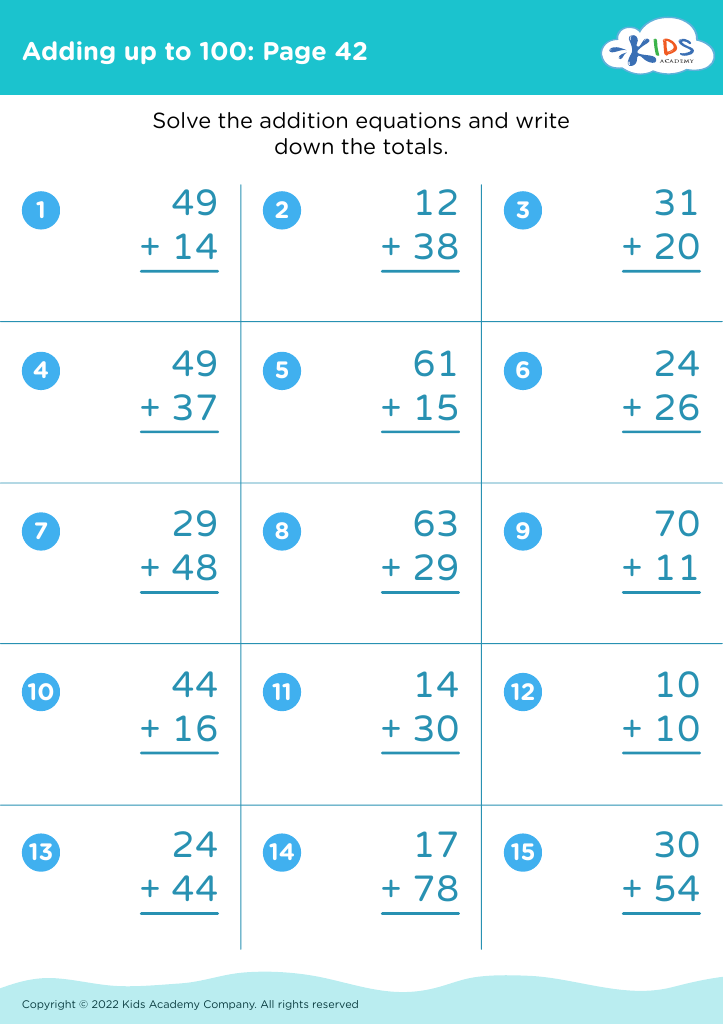
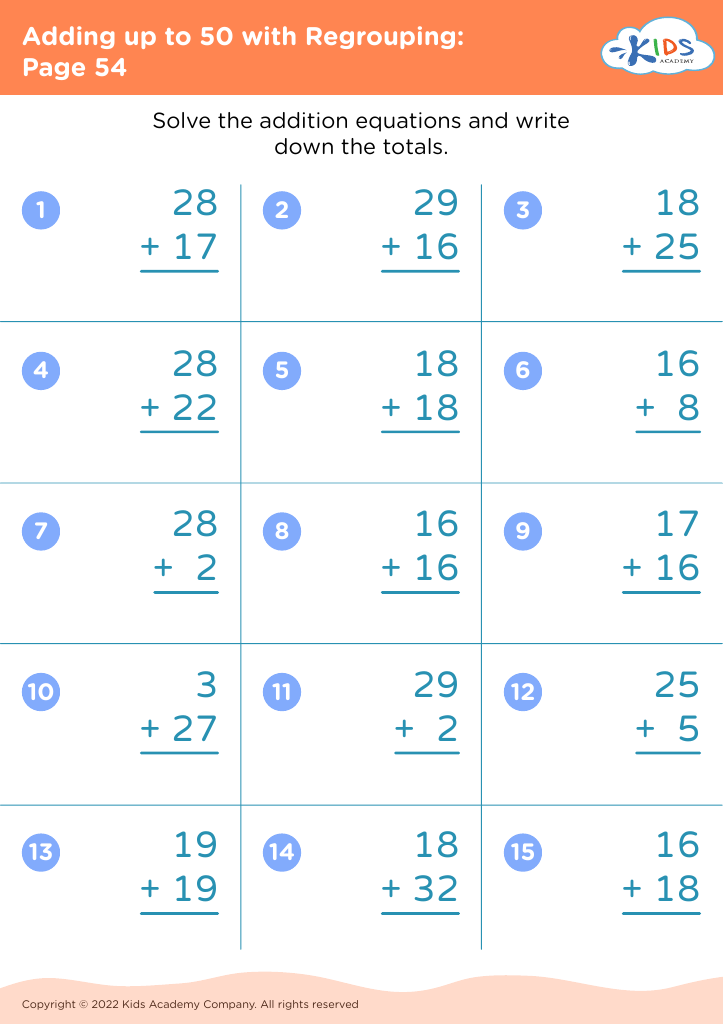
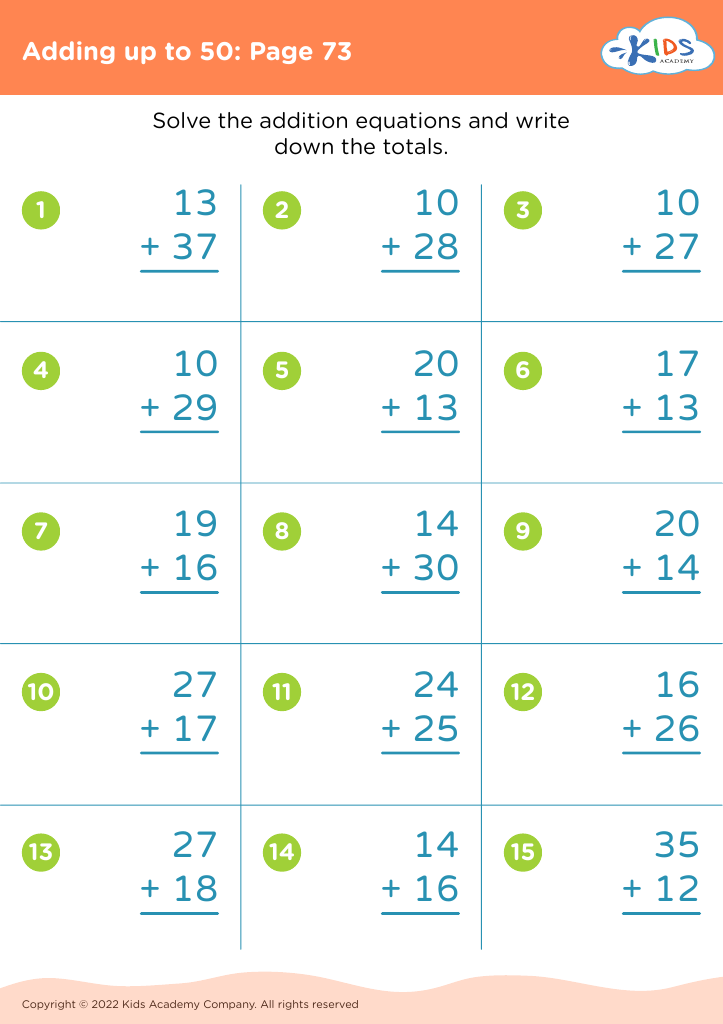
Explore our engaging Matching Skills Addition Worksheets for children aged 8-9, designed to enhance their math abilities while making learning fun! These worksheets focus on developing essential addition skills through interactive matching activities that reinforce problem-solving and critical thinking. By connecting related numbers and equations, students will strengthen their understanding of addition concepts, improving their confidence in math. With a variety of colorful designs and age-appropriate challenges, these worksheets are perfect for classroom use or at-home practice. Help your child build a solid foundation in mathematics with our thoughtfully crafted resources that turn learning into an enjoyable experience!
Favorites
With answer key
Interactive
Join Kids Academy for Free
Who is primarily going to use this learning content?








Matching skills in addition for children aged 8-9 are crucial for several reasons. At this developmental stage, students begin to solidify foundational math concepts that will influence their overall academic success. Mastery of addition not only enhances their numeracy skills but also supports critical thinking and problem-solving abilities. When kids learn to effectively match numbers and sums, they develop quicker mental math skills, allowing them to tackle more complex mathematical tasks confidently.
Moreover, engaging with matching skills makes learning interactive and fun, which keeps students motivated. This age group is highly receptive to gamified learning experiences, which can instill a love for math and build a positive attitude toward learning.
From a parental perspective, supporting the development of addition skills can foster independence in children’s homework and daily tasks, enabling them to navigate real-world scenarios—like budgeting or shopping—more effectively. Teachers, on the other hand, benefit by having a classroom filled with confident, capable learners who can participate in advanced collaborative problem-solving activities.
Ultimately, caring about matching skills in addition lays the groundwork for future math success, encourages student engagement, and cultivates a lifelong appreciation for learning.








