Motor skills development Addition Worksheets for Ages 8-9
4 filtered results
-
From - To
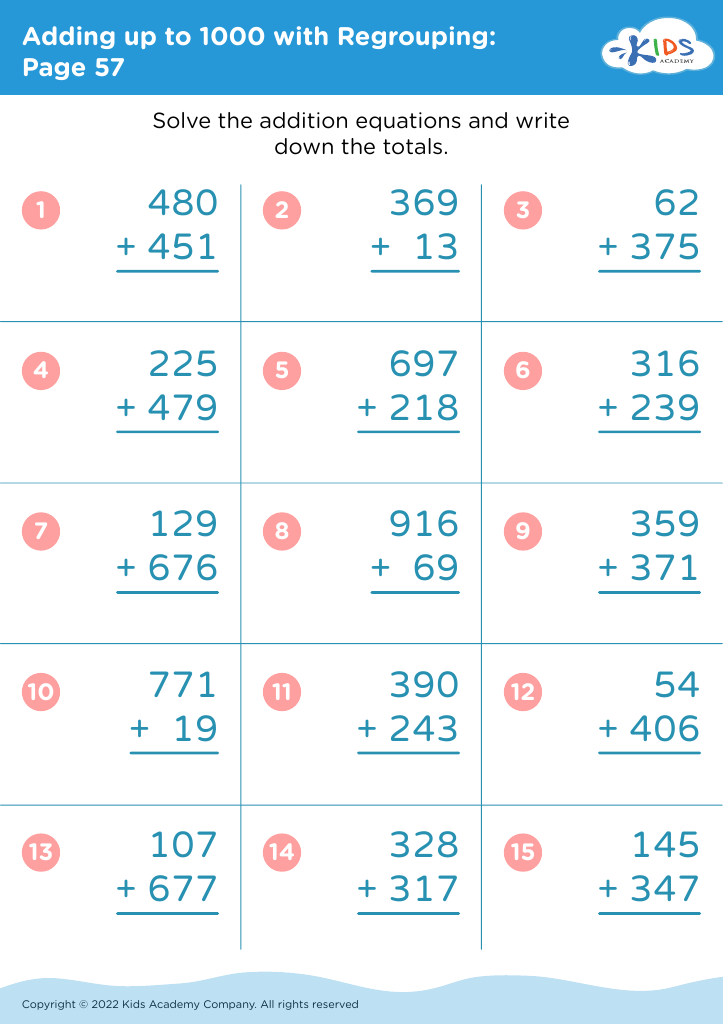
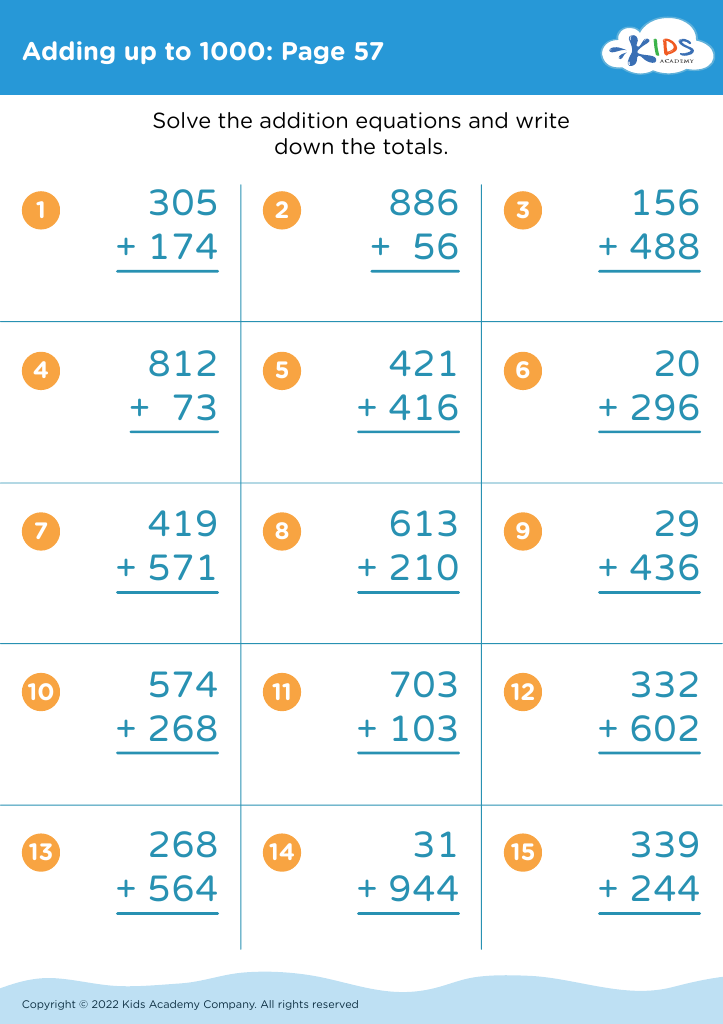
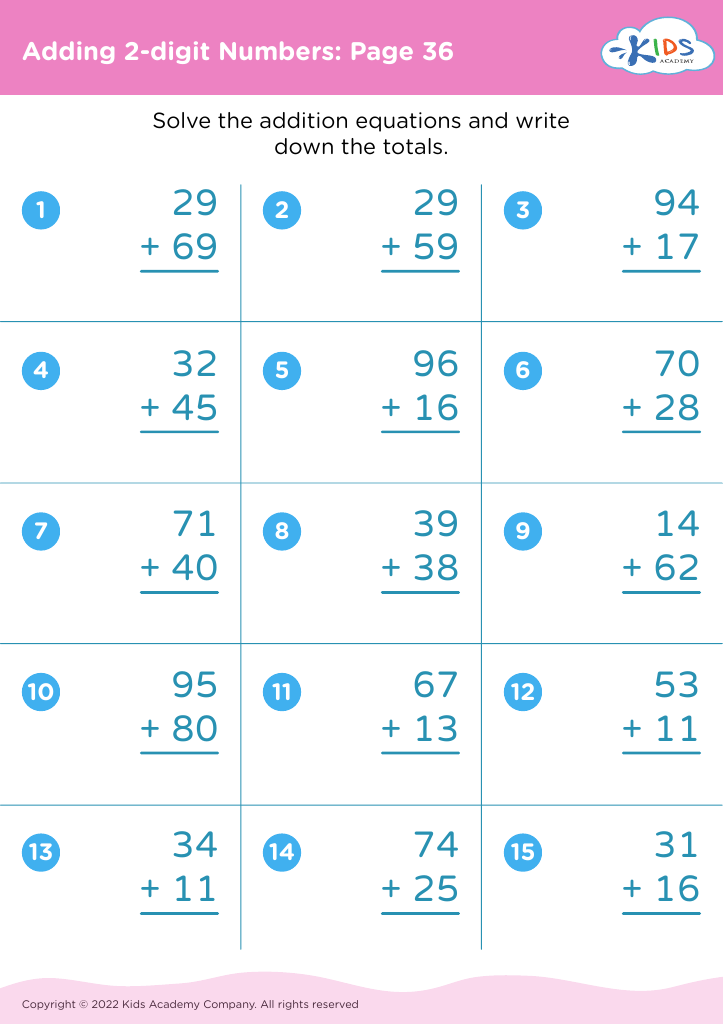
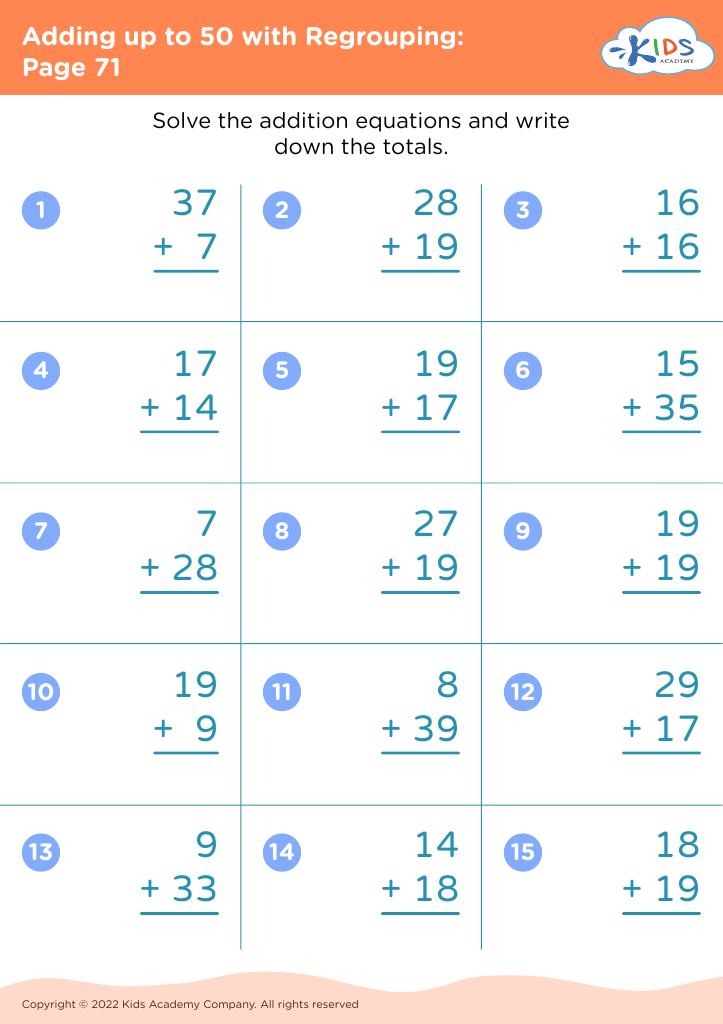
Enhance your child's motor skills with our engaging Addition Worksheets designed specifically for ages 8-9. These interactive resources focus on developing fine motor skills while reinforcing essential addition concepts. Your child will enjoy practicing their math skills through a variety of fun activities that encourage hand-eye coordination and dexterity. Our worksheets are visually appealing and tailored to keep young learners motivated and focused. Ideal for classroom use or at-home learning, these addition worksheets not only boost math fluency but also promote concentration and precision in writing. Empower your child’s learning journey today with our thoughtfully crafted resources!








Motor skills development is critical for children aged 8-9 as it lays the foundation for their physical, cognitive, and social growth. At this age, children refine both fine and gross motor skills, which are essential for various everyday activities, such as writing, sports, and playing. These skills impact a child’s confidence and academic performance—effective handwriting and participation in physical education, for instance, can enhance their self-esteem and involvement in school.
Parents and teachers should be attentive to this development because it directly influences a child’s ability to engage in group activities and socialize with peers. Children with well-developed motor skills often experience more success in organized sports and group games, fostering teamwork and friendship. Additionally, strong motor skills support a child’s ability to concentrate and process information, elements crucial for learning.
Moreover, motor skills activities can provide opportunities for emotional expression, stress relief, and healthy habits. By promoting activities that enhance motor skills—like arts and crafts, outdoor play, and interactive games—adults contribute to well-rounded development. Supporting children in this stage ensures they cultivate resilience, build healthy relationships, and set the stage for continued physical and social engagement as they grow.








