Filters

13 filtered results

Clear all filters
Favorites
With answer key
Interactive

13 filtered results

Difficulty Level

Grade


Boost your child's problem-solving abilities with our engaging Addition Worksheets designed for ages 8-9! These worksheets offer a variety of math problems that challenge students to think critically and apply their addition skills in real-world scenarios. Each worksheet encourages independent thinking while making math fun and interactive. Perfect for classroom use or at-home practice, these resources help children understand the concepts behind addition, enhancing their overall mathematical comprehension. Our expertly crafted problems are sure to inspire young learners as they gain confidence in their abilities. Empower your child today with our Problem-solving Addition Worksheets!
Check out this FREE Trial Lesson on Addition for age 8-9!

Unknown Parts Addition Word Problems

Favorites
With answer key
Interactive
  • 8-9
  • Problem-solving abilities
  • Addition
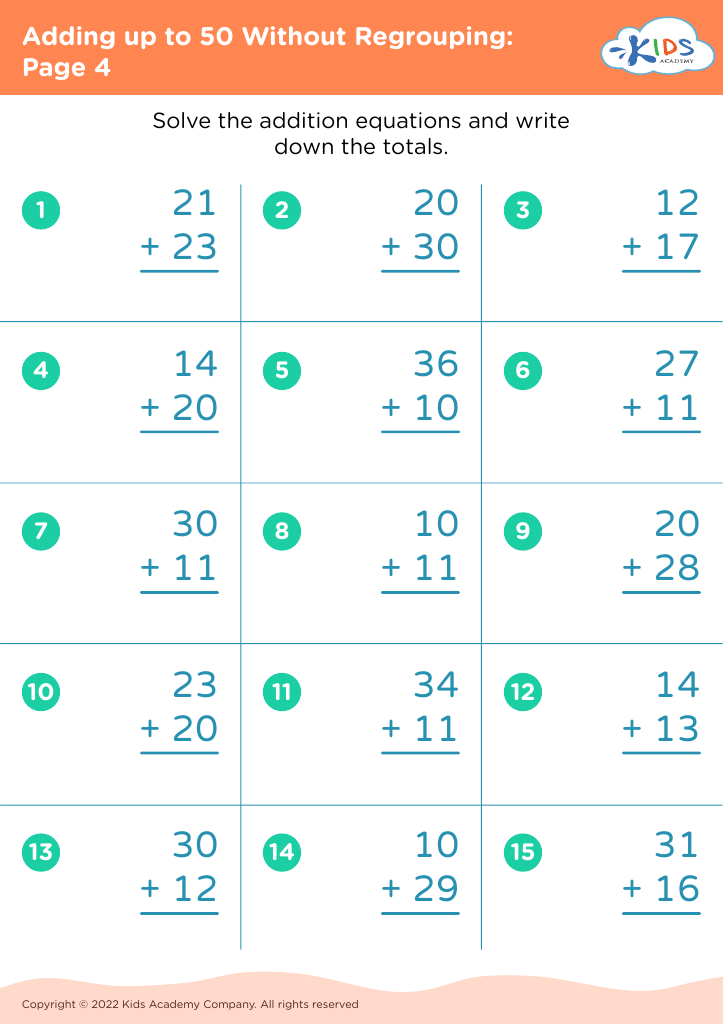
Adding up to 50 Without Regrouping: Page 4
Worksheet
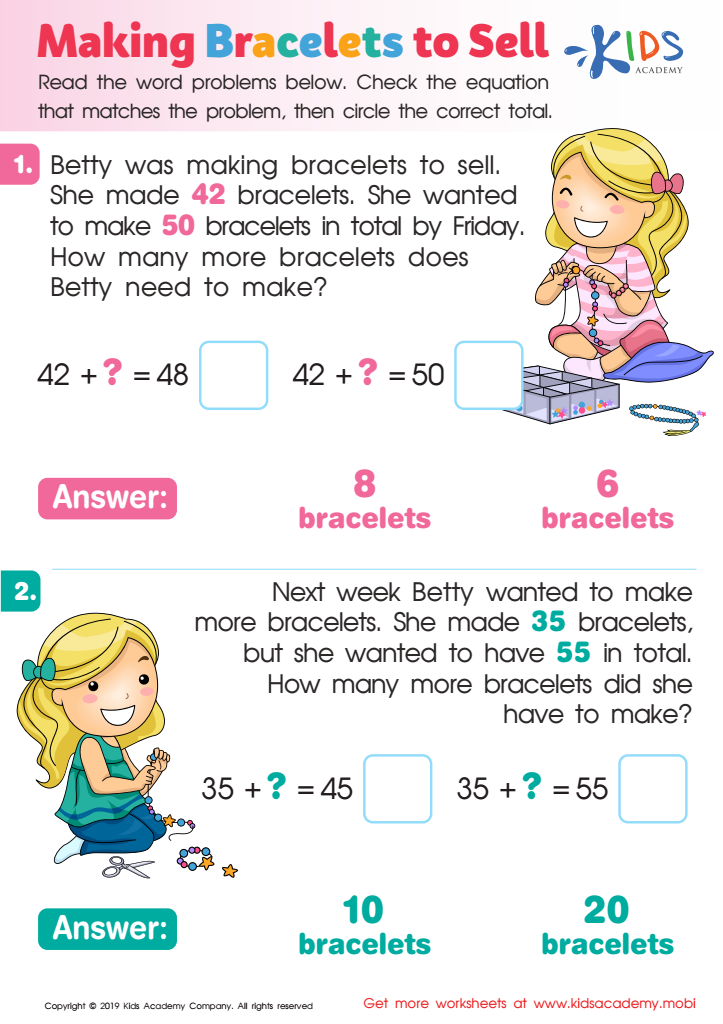
Making Bracelets to Sell Worksheet

Making Bracelets to Sell Worksheet

Got kids who love crafting? This worksheet will be right up their alley! Let them use their creative and problem-solving skills to check equations and decide the correct total. It's just like making beads into a bracelet but on paper! Print out this downloadable PDF and get ready for a fun craft session.
Making Bracelets to Sell Worksheet
Worksheet
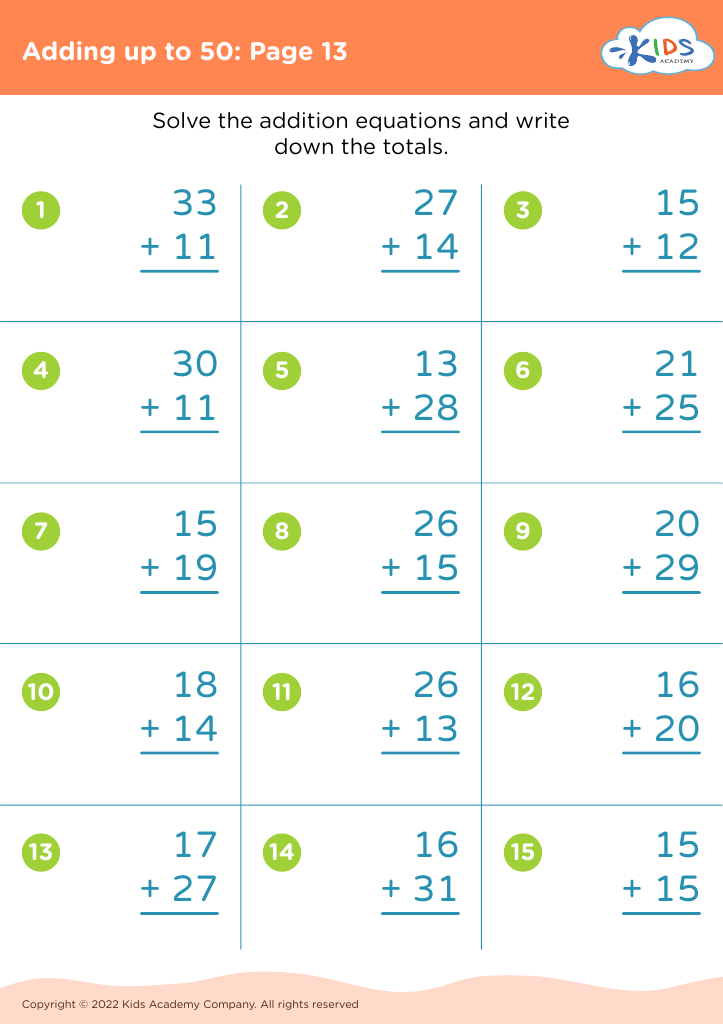
Adding up to 50: Page 13

Adding up to 50: Page 13

Adding up to 50: Page 13
Worksheet
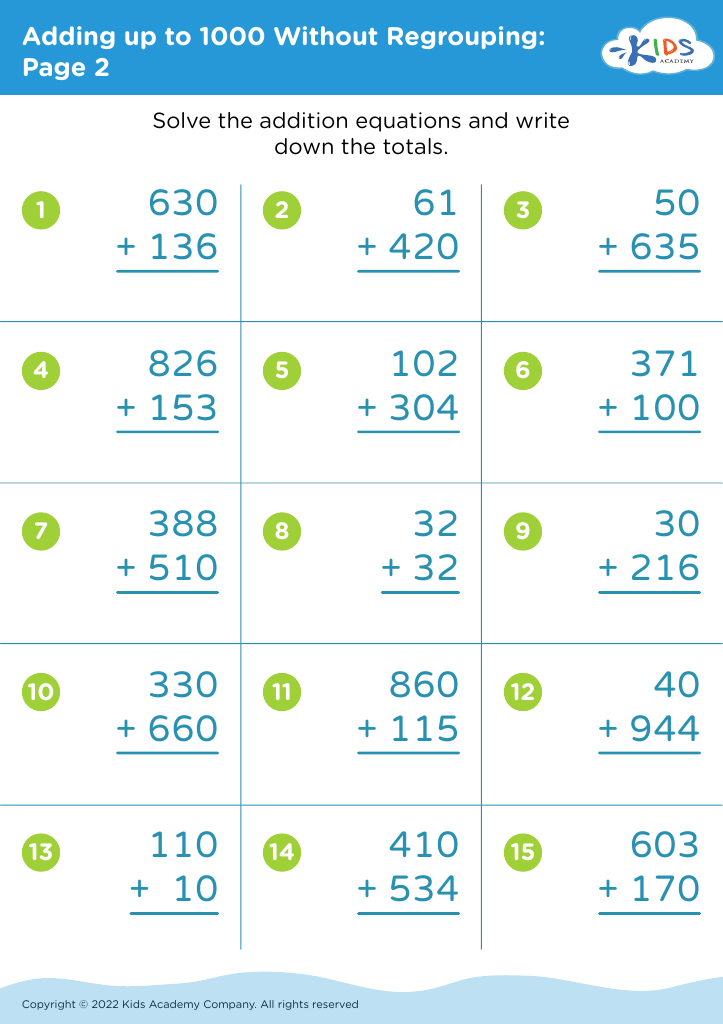
Adding up to 1000 Without Regrouping: Page 2
Worksheet
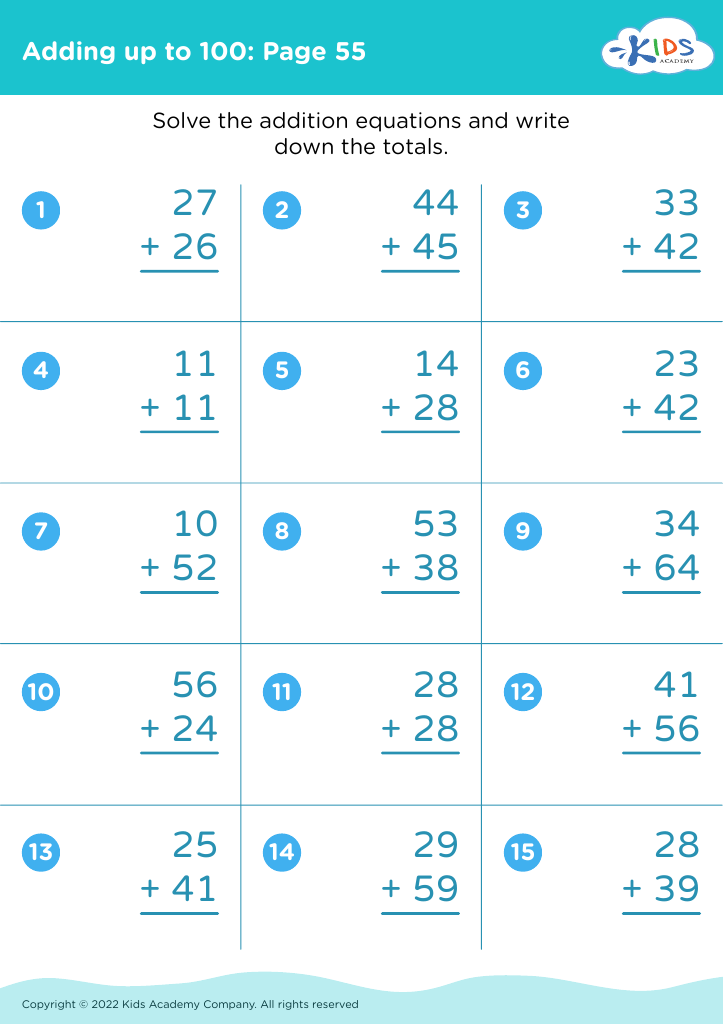
Adding up to 100: Page 55

Adding up to 100: Page 55

Adding up to 100: Page 55
Worksheet
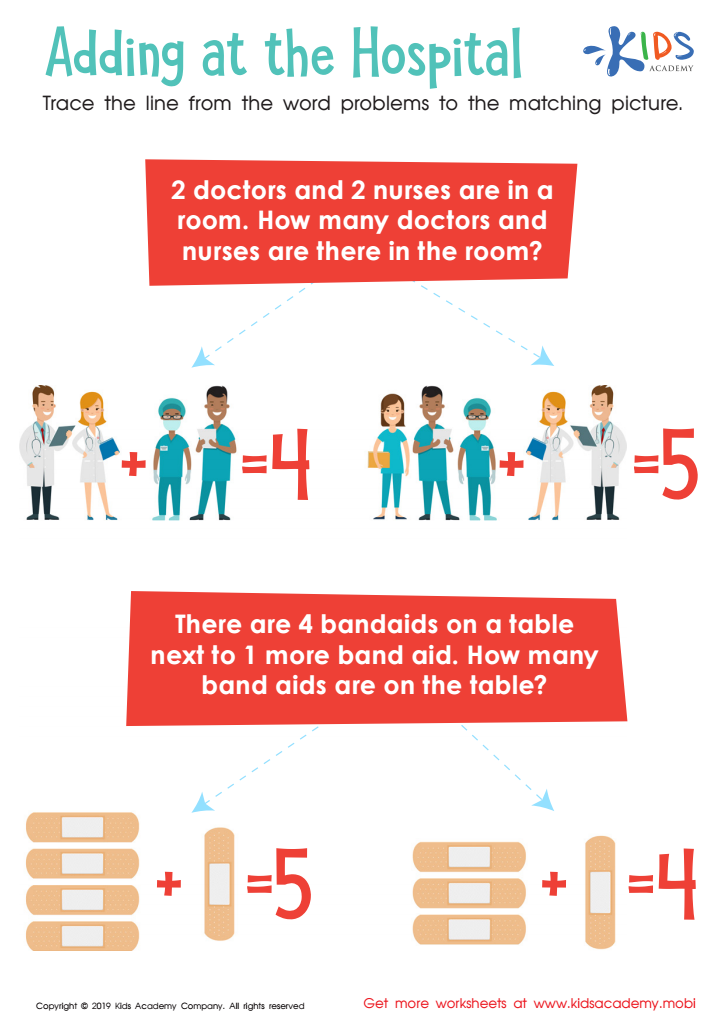
Adding at the Hospital Worksheet
Adding at the Hospital Worksheet
A hospital visit doesn't have to be scary for kids. With this worksheet, they can count along with doctors and nurses, by reading the word problems and tracing lines to the corresponding picture. Guide them through it and you'll help them have a fun experience.
Adding at the Hospital Worksheet
Worksheet
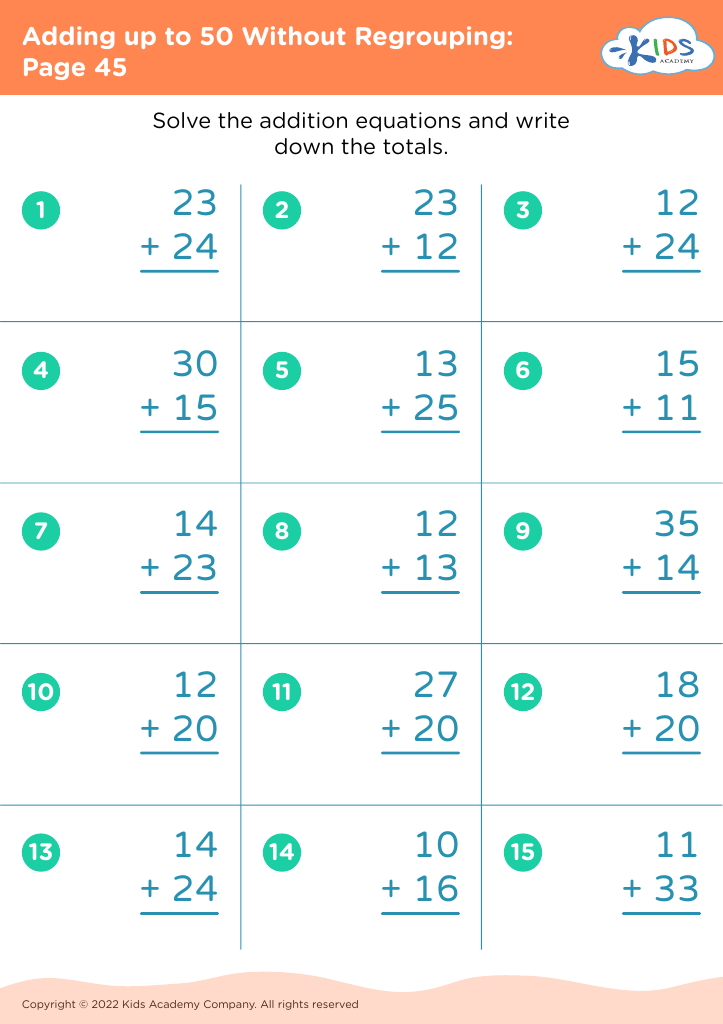
Adding up to 50 Without Regrouping: Page 45
Worksheet
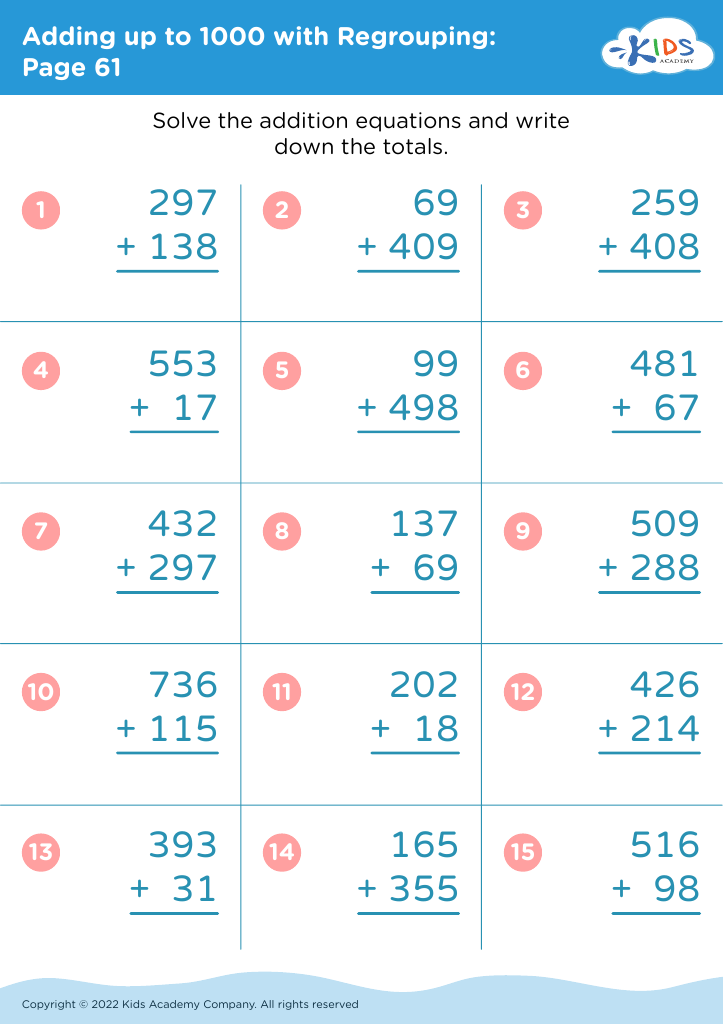
Adding up to 1000 with Regrouping: Page 61
Worksheet
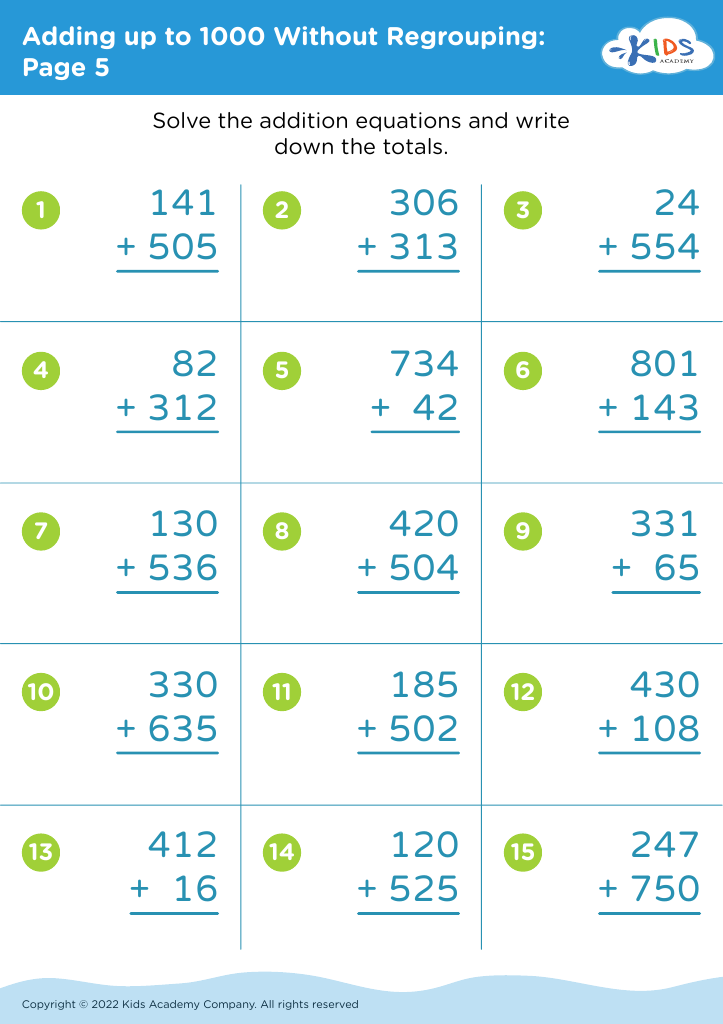
Adding up to 1000 Without Regrouping: Page 5
Worksheet
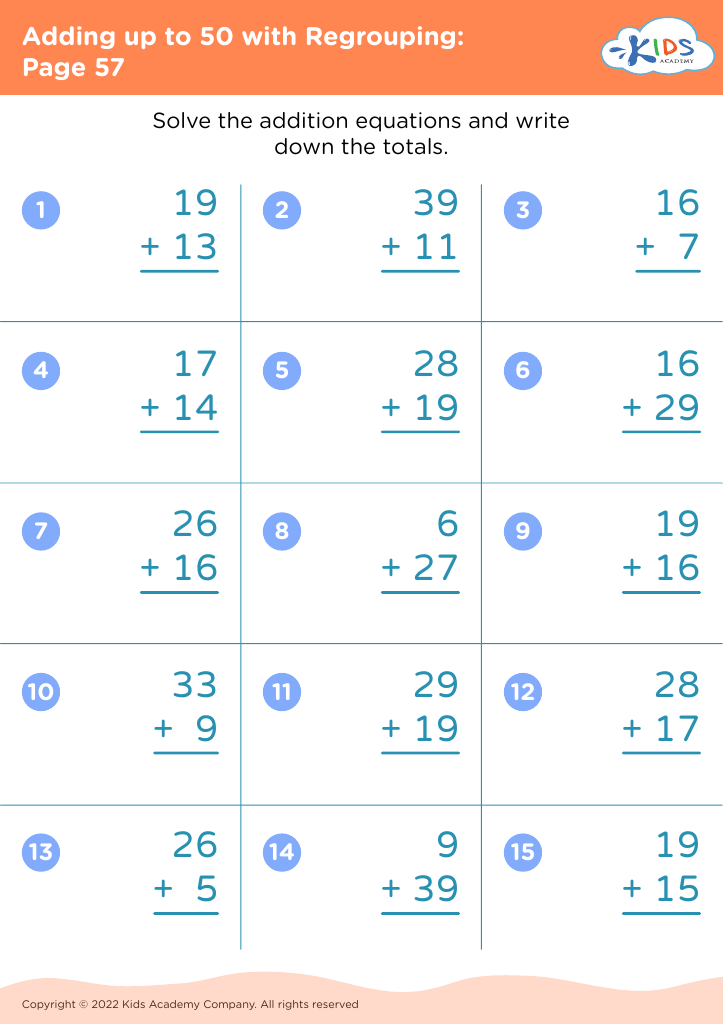
Adding up to 50 with Regrouping: Page 57
Worksheet
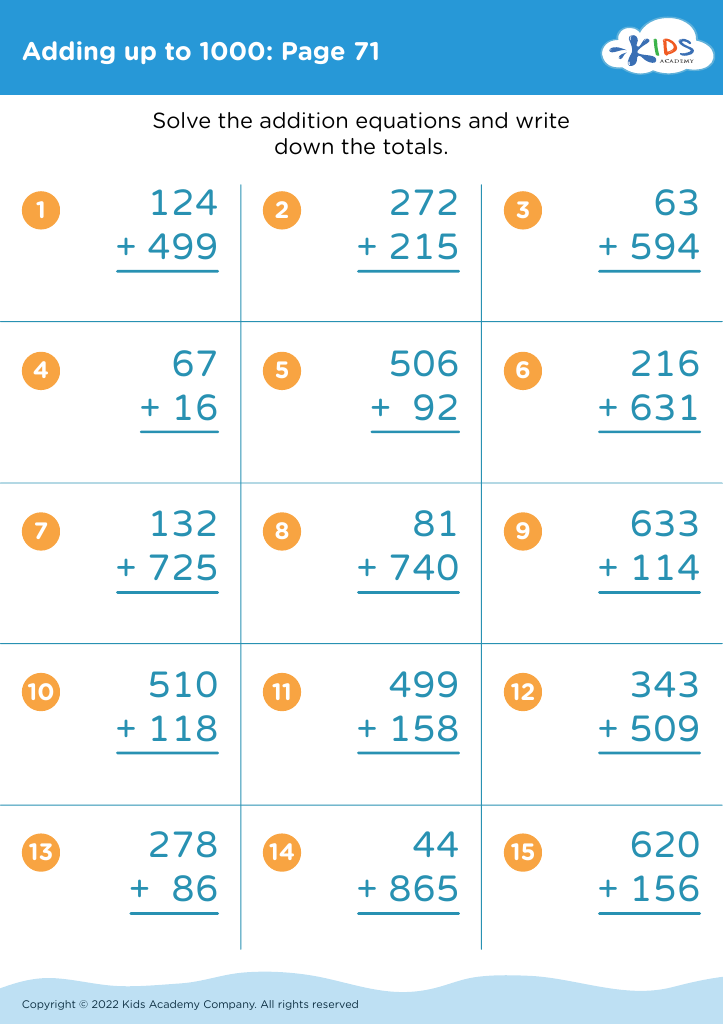
Adding up to 1000: Page 71

Adding up to 1000: Page 71

Adding up to 1000: Page 71
Worksheet
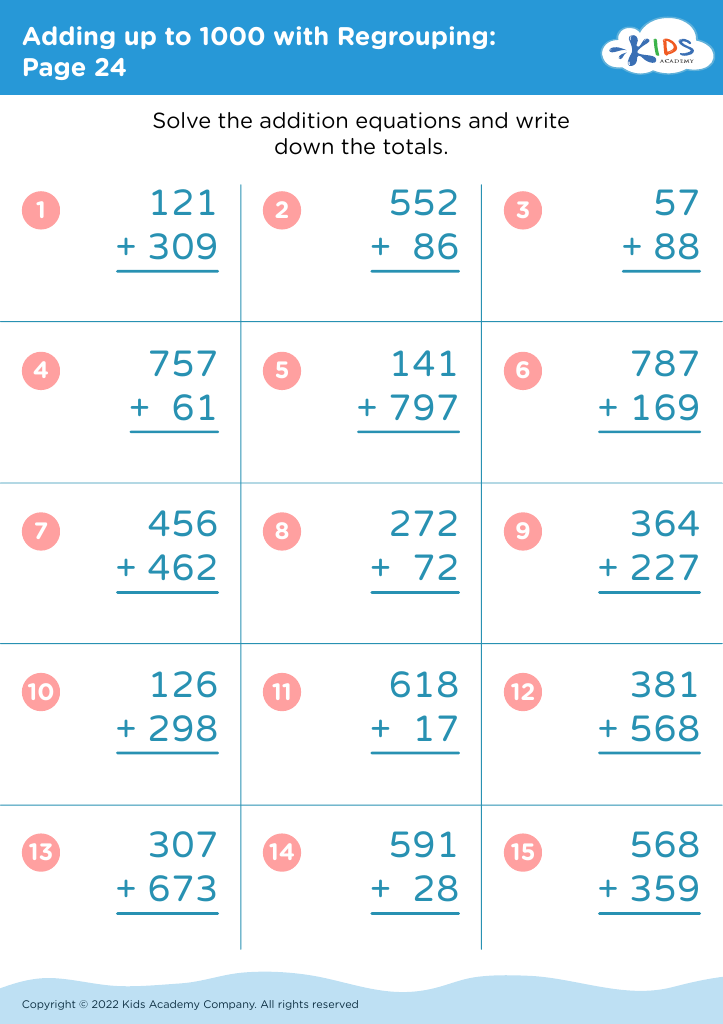
Adding up to 1000 with Regrouping: Page 24
Worksheet
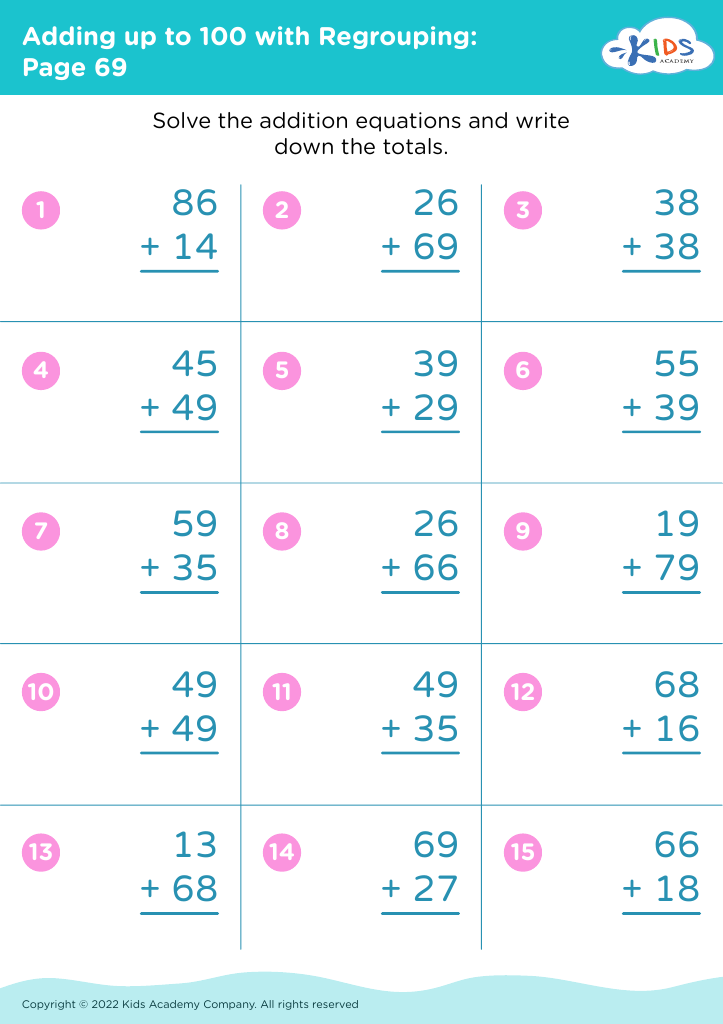
Adding up to 100 with Regrouping: Page 69
Worksheet


Problem-solving abilities in addition for children ages 8-9 are essential for several reasons. At this age, children are transitioning from basic arithmetic skills to more complex mathematical concepts. Encouraging problem-solving helps develop critical thinking, allowing students to approach addition tasks using various strategies, thus fostering a deeper understanding of numbers and their relationships.

Good problem-solving skills enhance a child's ability to interpret and analyze information, which transfers directly to daily activities and future learning experiences. These skills build resilience, teaching children to approach challenges with confidence and adaptability—an invaluable trait in life.

Moreover, as this age group starts to encounter word problems, a solid foundation in problem-solving equips them to decipher these problems, enabling a smoother transition into higher-level math concepts.

For teachers and parents, investing time in developing problem-solving abilities through supportive teaching methods and engaging activities not only enriches a child's learning experience but also promotes a love for math. This fosters a lifelong interest and appreciation for subject matter that, as children grow, will be instrumental to their educational success and future careers. Ultimately, nurturing problem-solving skills lays the groundwork for academic achievement and a positive mindset towards challenges.