
Spatial awareness Addition Worksheets for Ages 8-9
5 filtered results
Difficulty Level
Grade
Age
-
From - To
Subject
Activity
Standards
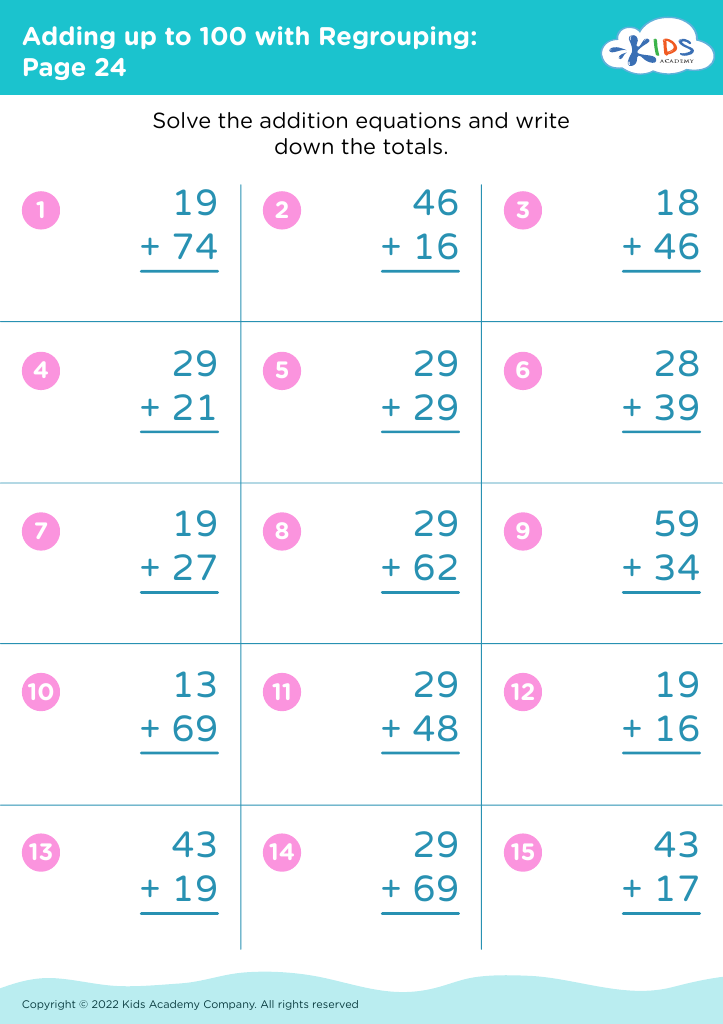
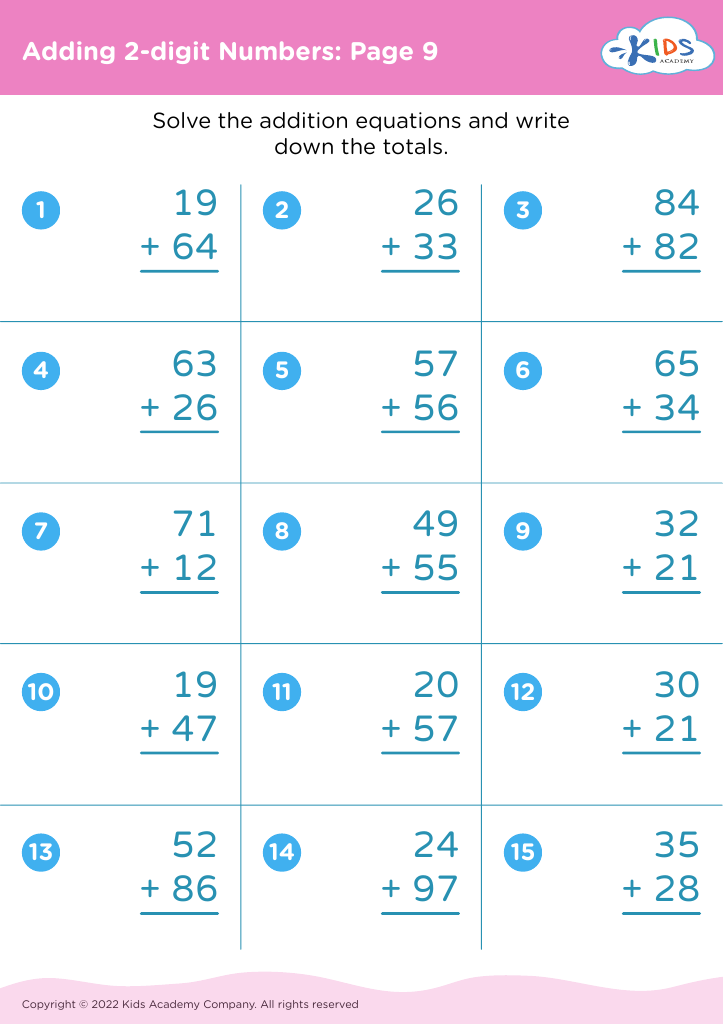
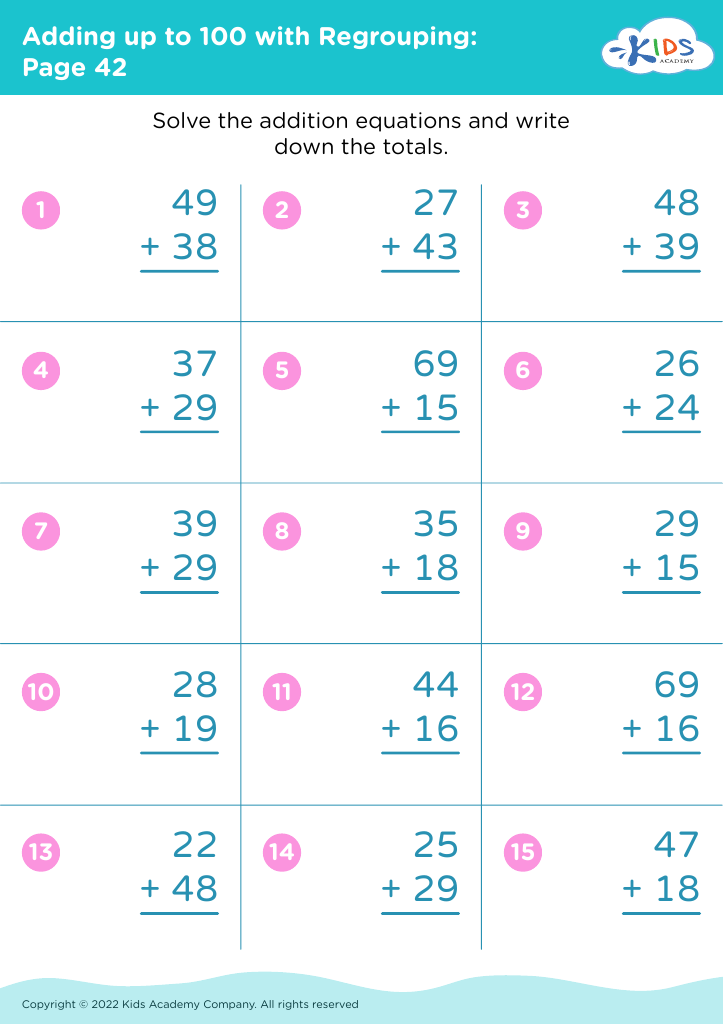
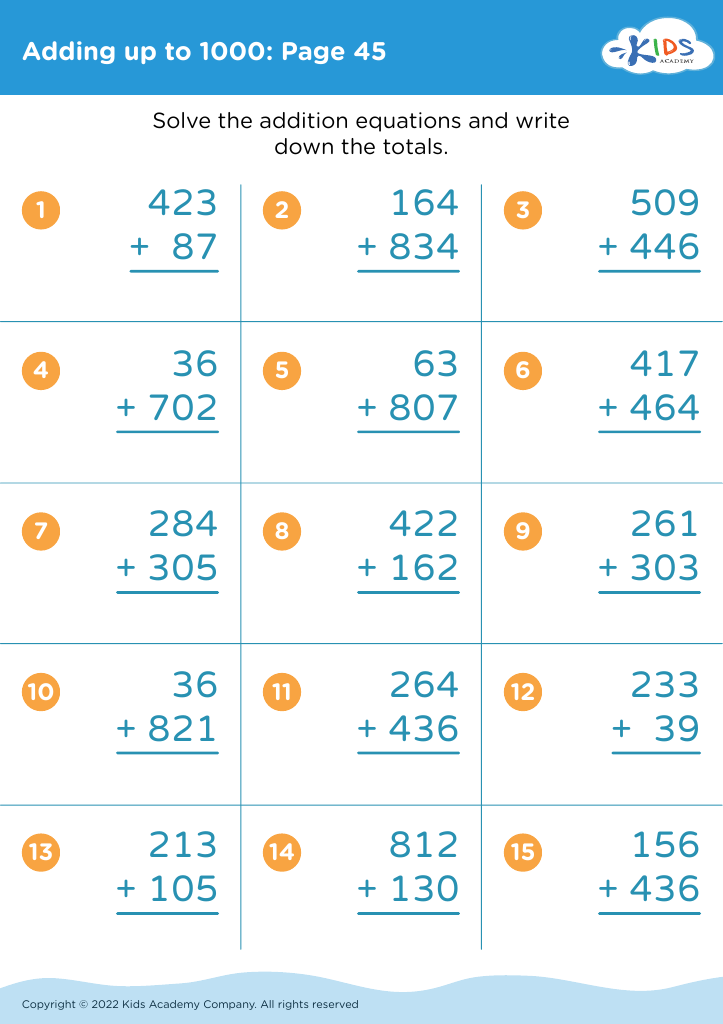
Unlock your child's potential with our Spatial Awareness Addition Worksheets, designed for ages 8-9! These engaging, age-appropriate worksheets seamlessly blend mathematics with spatial skills to foster crucial cognitive development. Watch as students master addition while enhancing their understanding of shapes and spatial relationships. Ideal for classroom or home use, our expertly crafted activities make learning fun and effective. Cultivate problem-solving abilities, number fluency, and spatial intelligence with these thoughtfully created math resources. Encourage your student to explore, learn, and succeed with Kids Academy’s innovative worksheets! Start an educational journey that lays the foundation for future academic achievements.
Favorites
With answer key
Interactive
Join Kids Academy for Free
Who is primarily going to use this learning content?







Spatial awareness is a fundamental cognitive skill that begins to develop in early childhood and continues to improve through the formative years. For children aged 8-9, honing spatial awareness is particularly crucial as it plays an integral role in various aspects of their development. Parents and teachers should prioritize spatial awareness addition for several important reasons.
First, spatial awareness aids in academic learning, especially in subjects like mathematics and science. For example, understanding geometry, comprehending graphs, and solving word problems often require the ability to visualize and manipulate objects mentally. These foundational skills facilitate better grasping of complex concepts later in their education. Furthermore, enhanced spatial skills can contribute to effective navigation and arrangement tasks, essential in daily life activities and future job demands.
Second, strong spatial abilities are linked to better problem-solving skills. Children who can visualize problems and predict outcomes develop more creative and flexible thinking patterns. This ability to mentally reconstruct scenarios extends beyond academics to everyday problem solving, making children more adept at planning and executing tasks independently.
Finally, improving spatial awareness can impact social and physical development. It encourages coordination and better physical interactions with their environment and peers, supporting activities like playing sports, drawing, or building projects. Thus, fostering strong spatial skills offers children a more comprehensive, well-rounded development, affecting academic opportunities, problem-solving abilities, and physical and social interactions.








