Filters

13 filtered results

Clear all filters
Favorites
With answer key
Interactive

13 filtered results

Difficulty Level

Grade


Looking for effective subtraction practice for children ages 8-9? Our Subtraction Practice Addition Worksheets offer engaging activities designed to enhance math skills while making learning fun! Each worksheet encourages critical thinking and problem-solving as young learners tackle various subtraction problems. With a focus on both independent and guided practice, these worksheets help reinforce essential concepts and build confidence. Ideal for classroom use or at-home learning, they perfectly align with educational standards. Support your child’s mathematical development and make subtraction mastery an enjoyable experience. Explore our printable subtraction practice worksheets today and watch your child excel in math!

Check out this FREE Trial Lesson on Addition for age 8-9!

Standard Subtraction

Favorites
With answer key
Interactive
  • 8-9
  • Subtraction practice
  • Addition
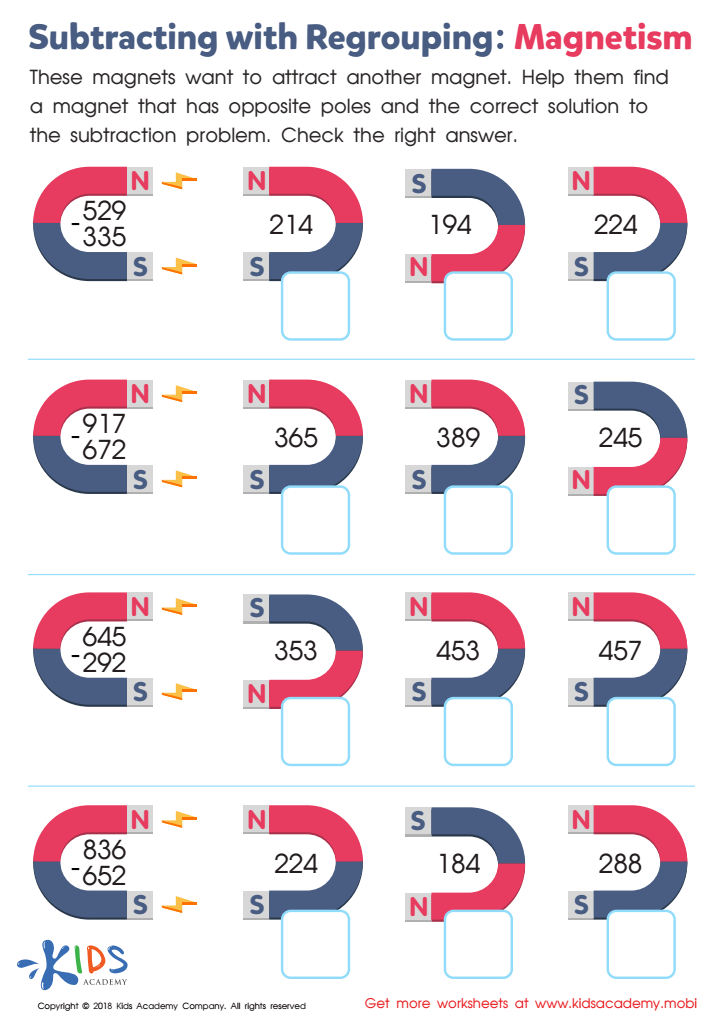
Subtracting with Regrouping: Magnetism Worksheet

Subtracting with Regrouping: Magnetism Worksheet

Download Kids Academy's worksheet for a fun way to review science and math! Look at the magnet and remember opposites attract. Find another with opposite poles, then solve the problem on the left and check the solution against the magnet. Check the box next to the correct answer to complete this page.
Subtracting with Regrouping: Magnetism Worksheet
Worksheet
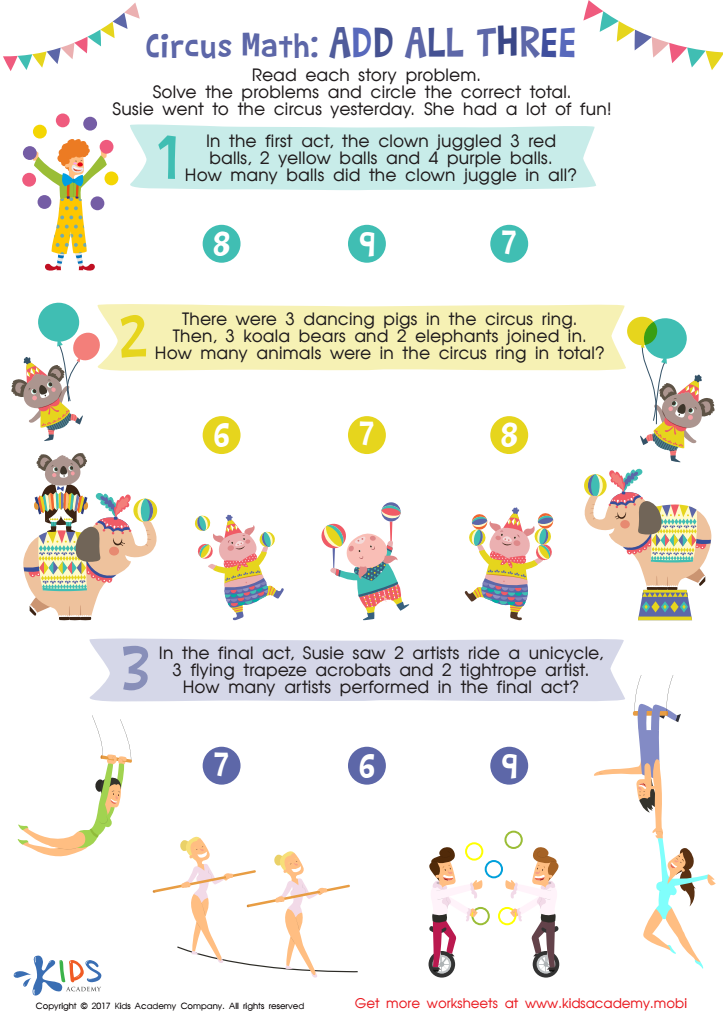
Circus Math Printable Worksheet

Circus Math Printable

Let's take the kids to the circus and combine literacy and numeracy skills! Our circus math printable worksheet will encourage creativity and higher-order thinking by connecting addition to real-life examples. Kids will learn to love math while they explore the fun, real-life applications of math. Ignite their passion today!
Circus Math Printable
Worksheet
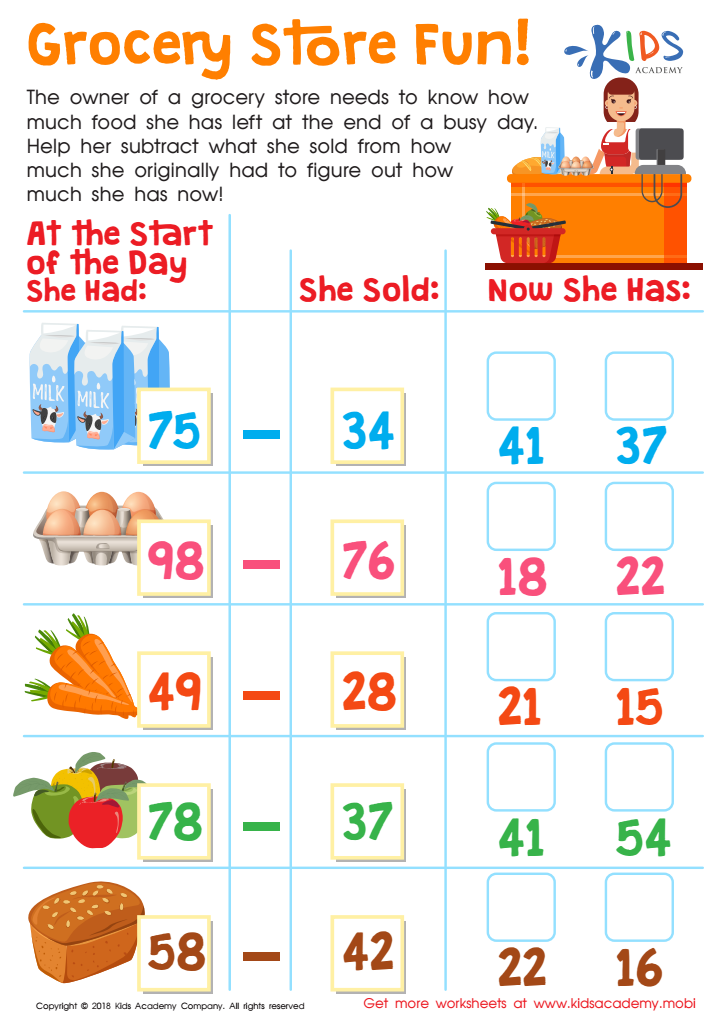
Grocery Store Fun! Worksheet

Grocery Store Fun! Worksheet

Let your kids have fun with this store worksheet. It requires them to help the owner by subtracting what she has sold from the original amount to figure out how much is left. Have them read and solve the equations in the printout to give the store owner the answer.
Grocery Store Fun! Worksheet
Worksheet
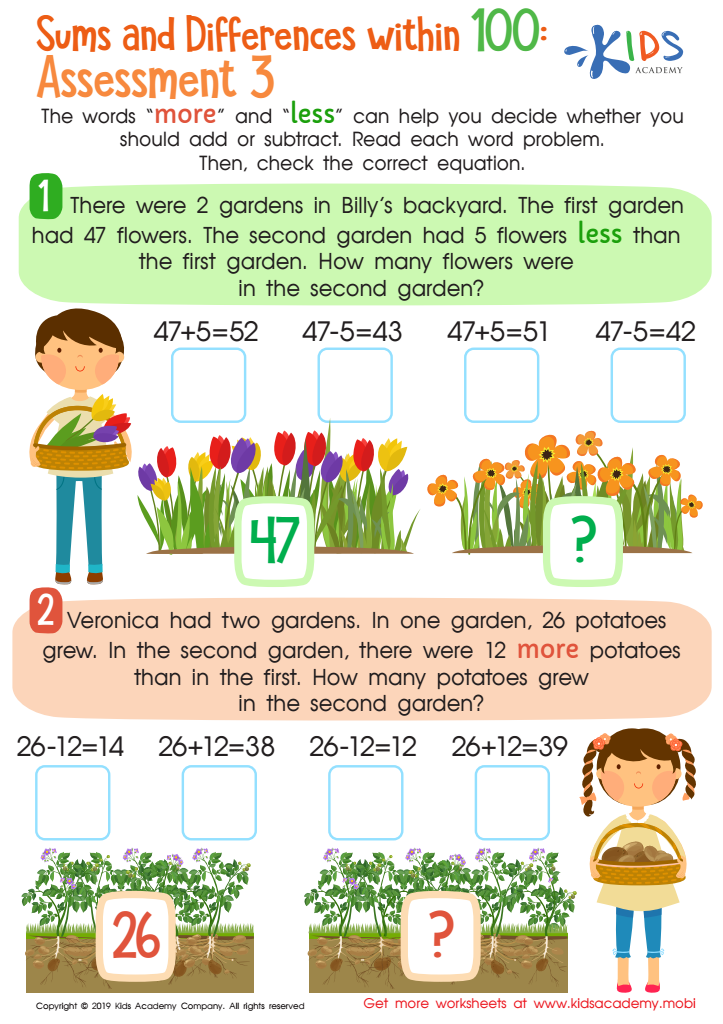
Sums and Differences Within 1 - Assessment 1 Worksheet
Sums and Differences Within 1 - Assessment 1 Worksheet
Help your child understand school topics better with your assistance. For math, go over their worksheet together and discuss the instructions and text. Solve the questions and check the right equation. This will take their learning to the next level.
Sums and Differences Within 1 - Assessment 1 Worksheet
Worksheet
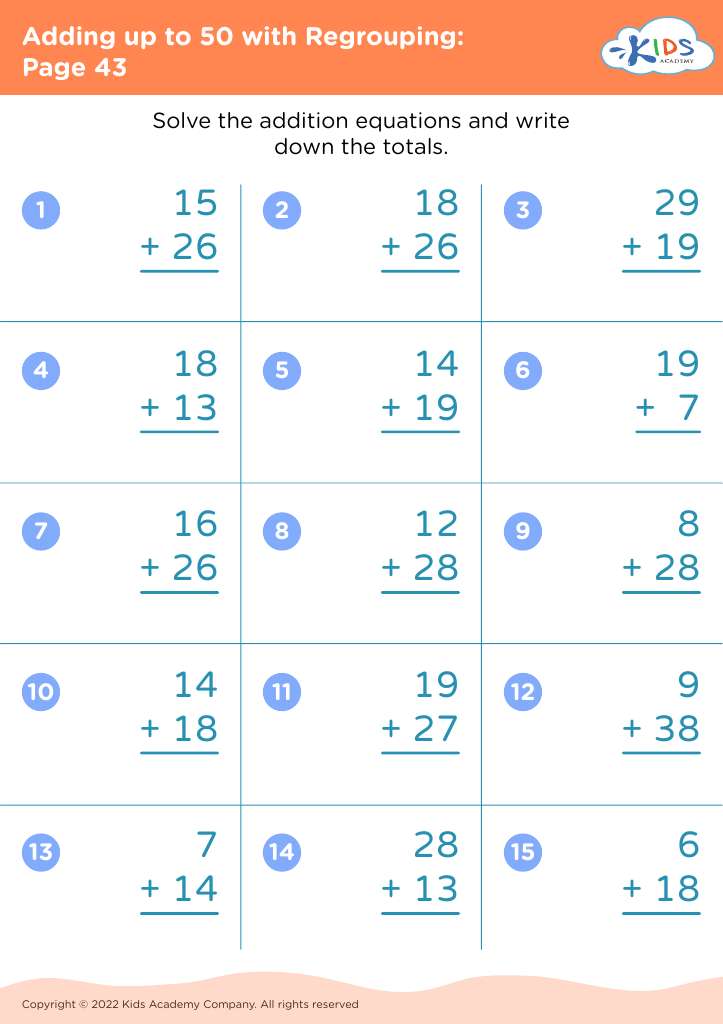
Adding up to 50 with Regrouping: Page 43
Worksheet
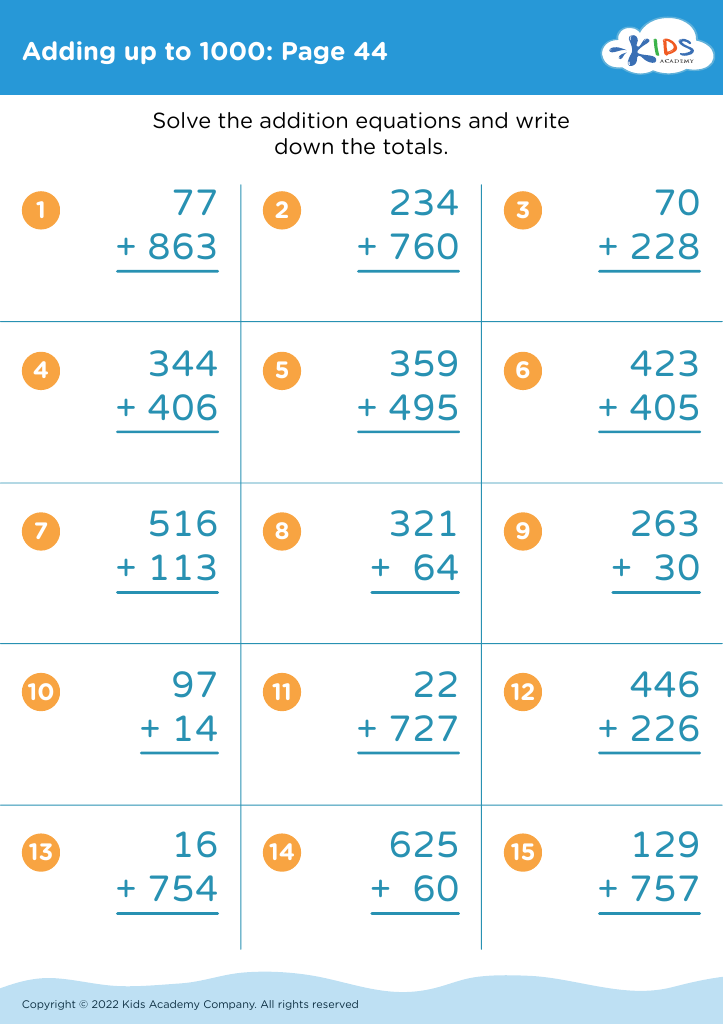
Adding up to 1000: Page 44

Adding up to 1000: Page 44

Adding up to 1000: Page 44
Worksheet
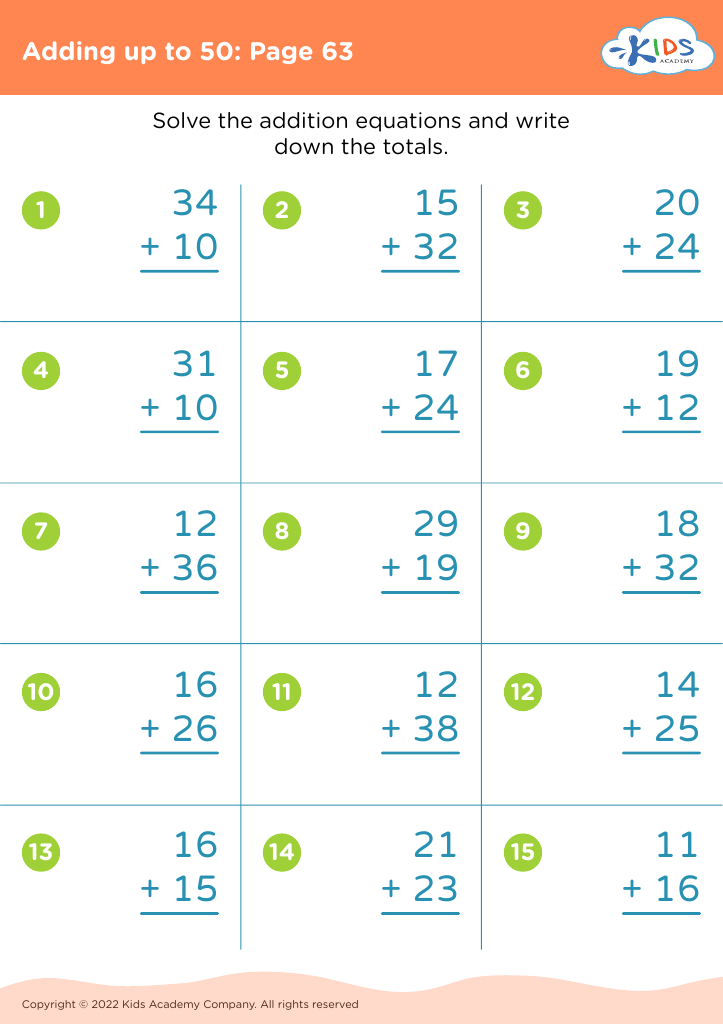
Adding up to 50: Page 63

Adding up to 50: Page 63

Adding up to 50: Page 63
Worksheet
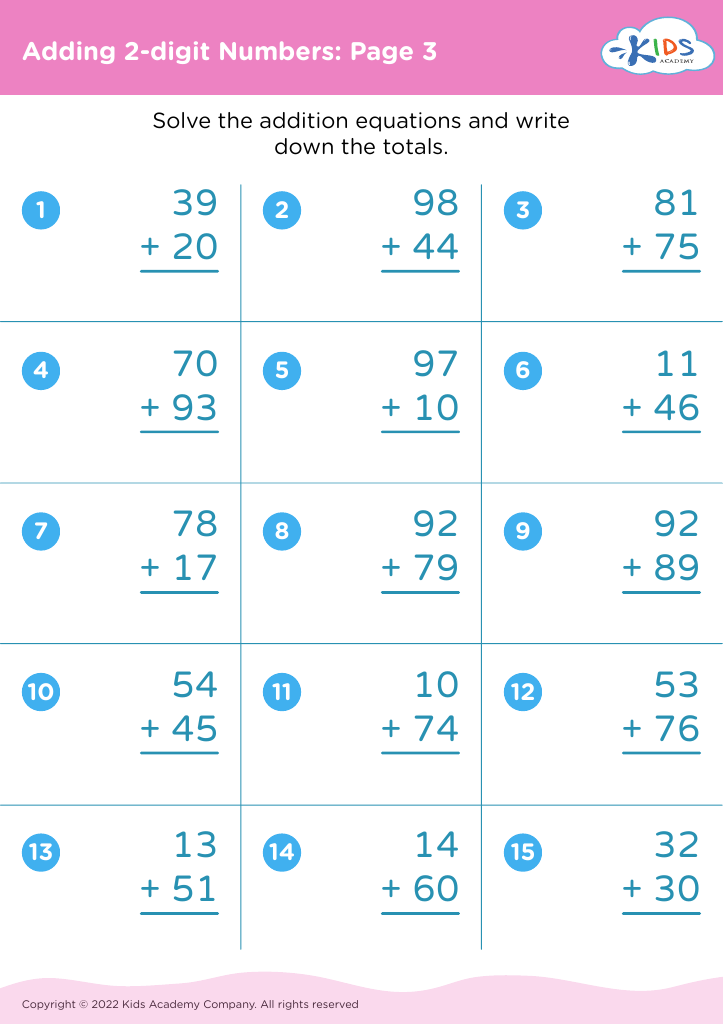
Adding 2-digit Numbers: Page 3

Adding 2-digit Numbers: Page 3

Adding 2-digit Numbers: Page 3
Worksheet
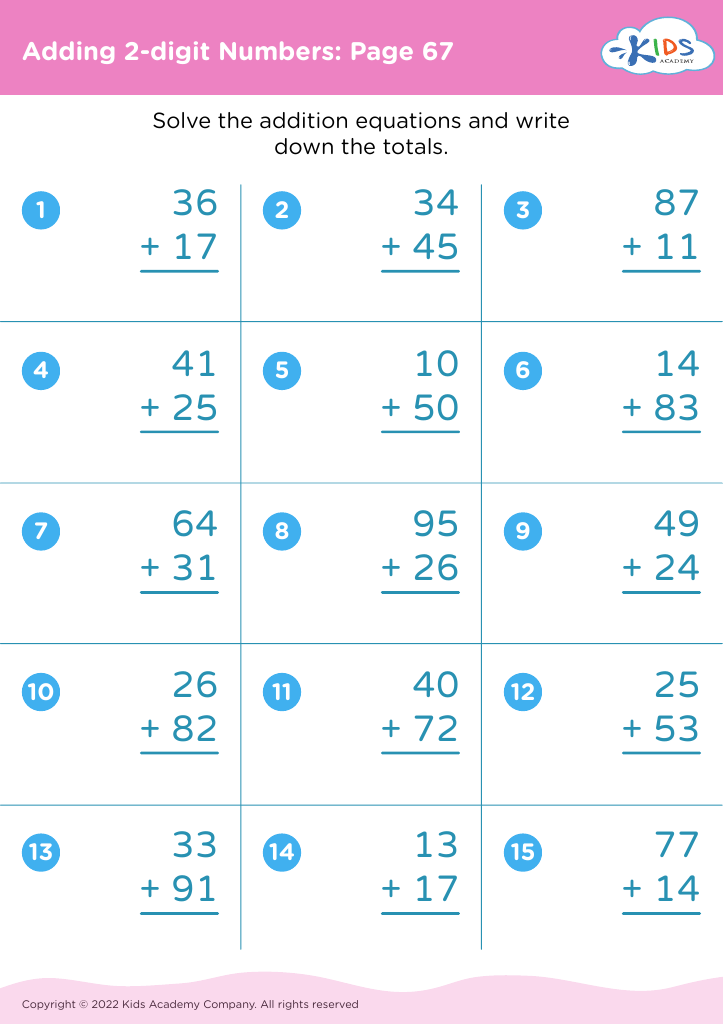
Adding 2-digit Numbers: Page 67

Adding 2-digit Numbers: Page 67

Adding 2-digit Numbers: Page 67
Worksheet
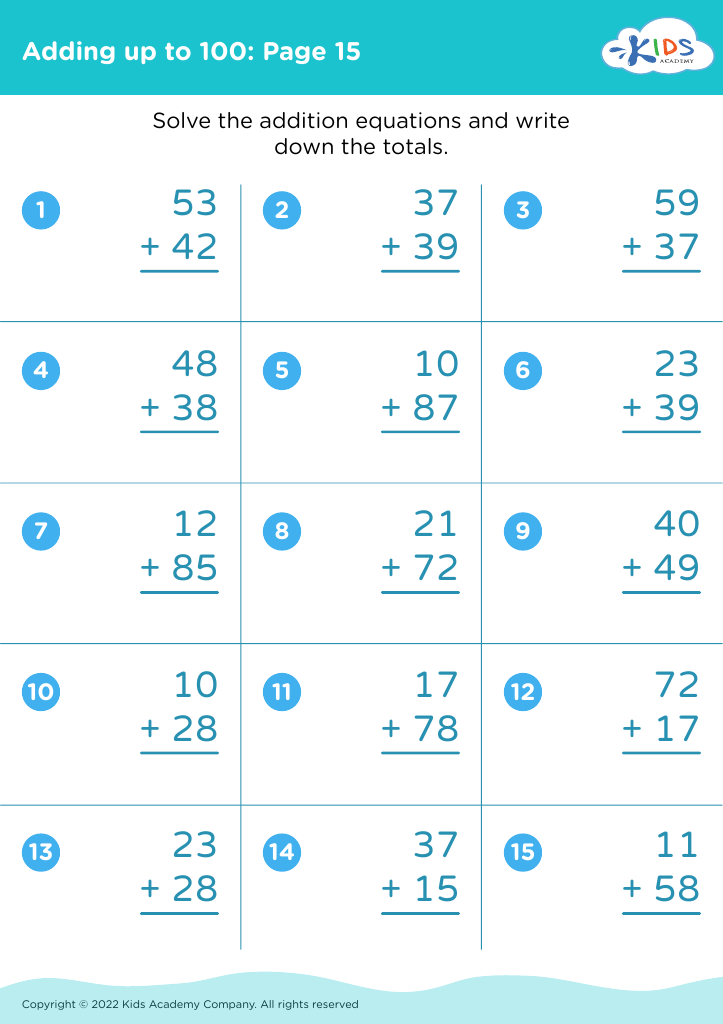
Adding up to 100: Page 15

Adding up to 100: Page 15

Adding up to 100: Page 15
Worksheet
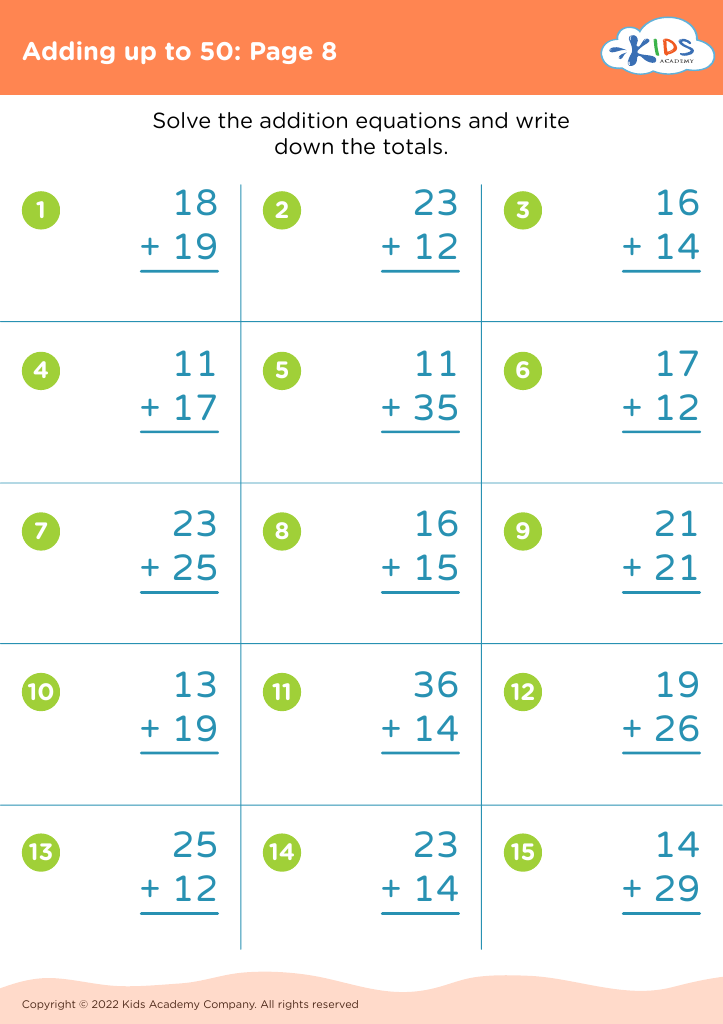
Adding up to 50: Page 8

Adding up to 50: Page 8

Adding up to 50: Page 8
Worksheet
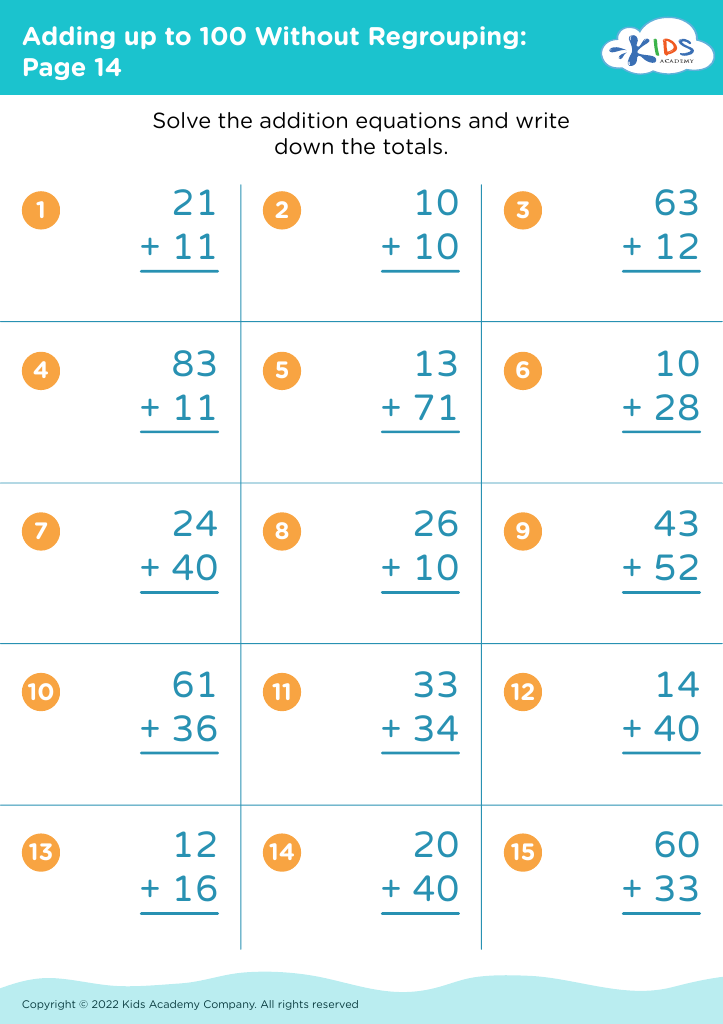
Adding up to 100 Without Regrouping: Page 14
Worksheet
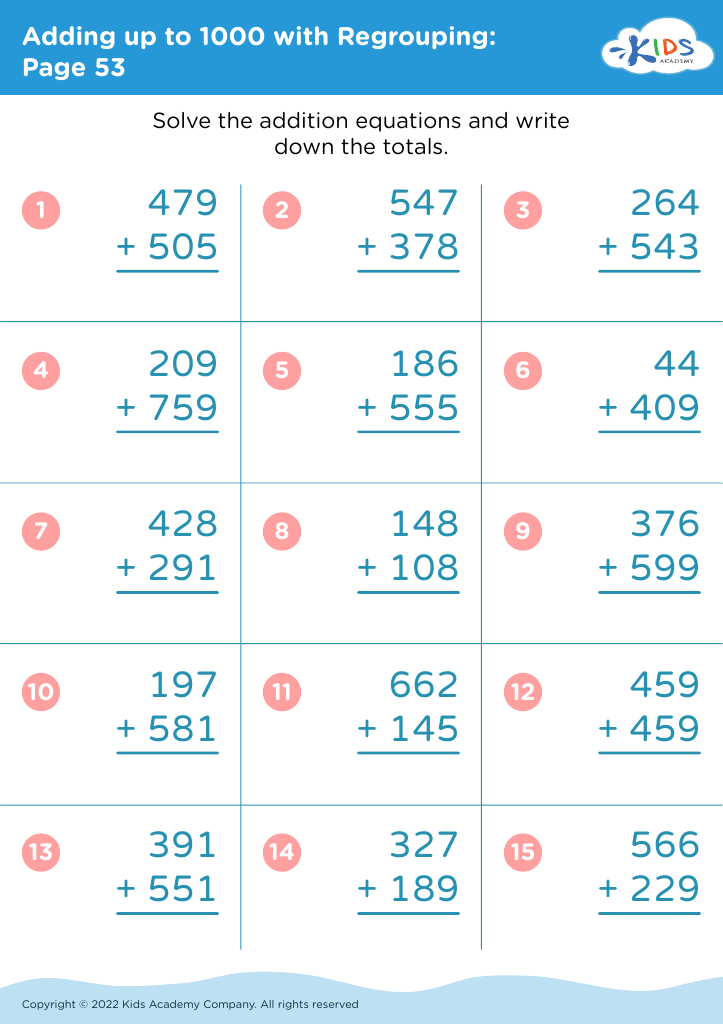
Adding up to 1000 with Regrouping: Page 53
Worksheet


Parents and teachers should prioritize subtraction practice in addition to addition for children aged 8-9 because these skills form the foundation for more advanced math concepts. At this developmental stage, students are typically transitioning from basic arithmetic to more complex problem-solving. Proficient subtraction skills can help reinforce number sense, allowing children to comprehend mathematical relationships better.

Moreover, subtraction is often intertwined with addition in mathematics. Understanding one operation enhances the understanding of the other; for example, recognizing that subtraction is essentially finding out how much remains after taking away a quantity. This synergy strengthens overall numerical fluency, essential for higher-order math skills.

Additionally, mastering subtraction allows students to tackle real-world problems, ranging from managing time and money to understanding simple data. Enhancing these skills creates a sense of accomplishment, boosting their confidence, which is particularly critical at this age when students begin to form their math identities.

Lastly, consistent practice reinforces memory and cognitive processing speed, leading to greater accuracy and fluidity in math tasks. In short, balancing the practice of both addition and subtraction is crucial for a well-rounded mathematical foundation, setting the stage for future academic success and lifelong problem-solving skills.