Subtraction skills Addition Worksheets for Ages 8-9
12 filtered results
-
From - To
Enhance your child's math proficiency with our engaging Subtraction Skills Addition Worksheets for ages 8-9! These carefully designed, printable resources combine subtraction practice with addition concepts, helping young learners develop crucial mathematical skills in a fun and interactive way. Each worksheet reinforces foundational subtraction techniques while encouraging critical thinking and problem-solving. Ideal for classroom or home use, our worksheets cater to various learning styles and offer varying levels of difficulty to suit your child's needs. Foster a love for math as your child builds confidence and mastery through our enjoyable and effective learning tools. Start your journey to math success today!
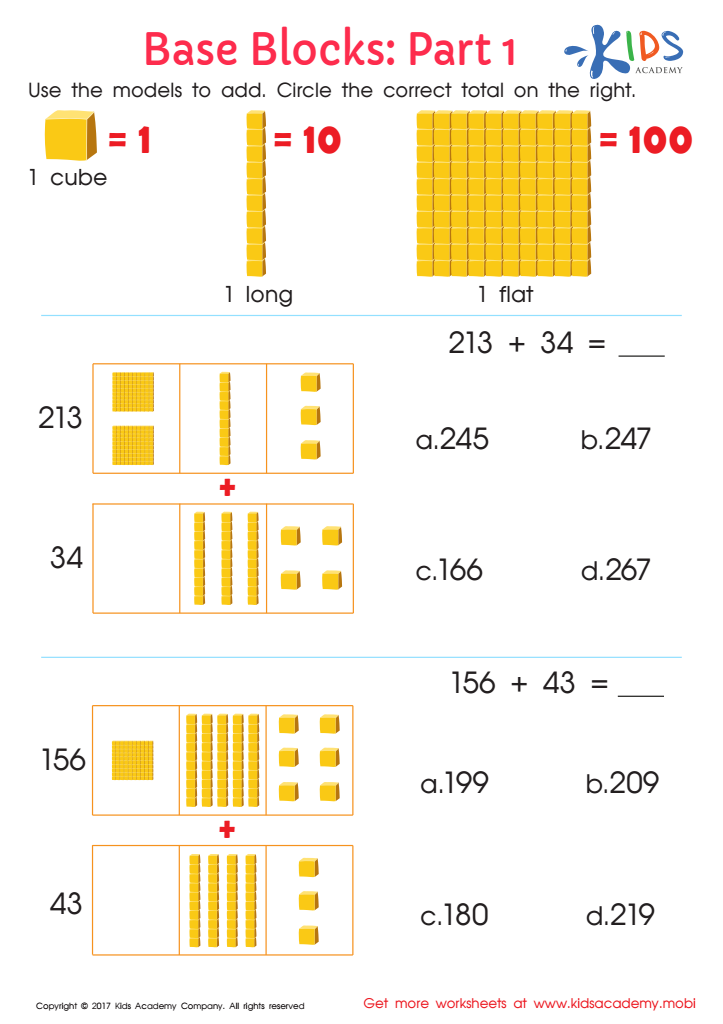
Base Ten Blocks Worksheet: Part 1
 Assign to My Students
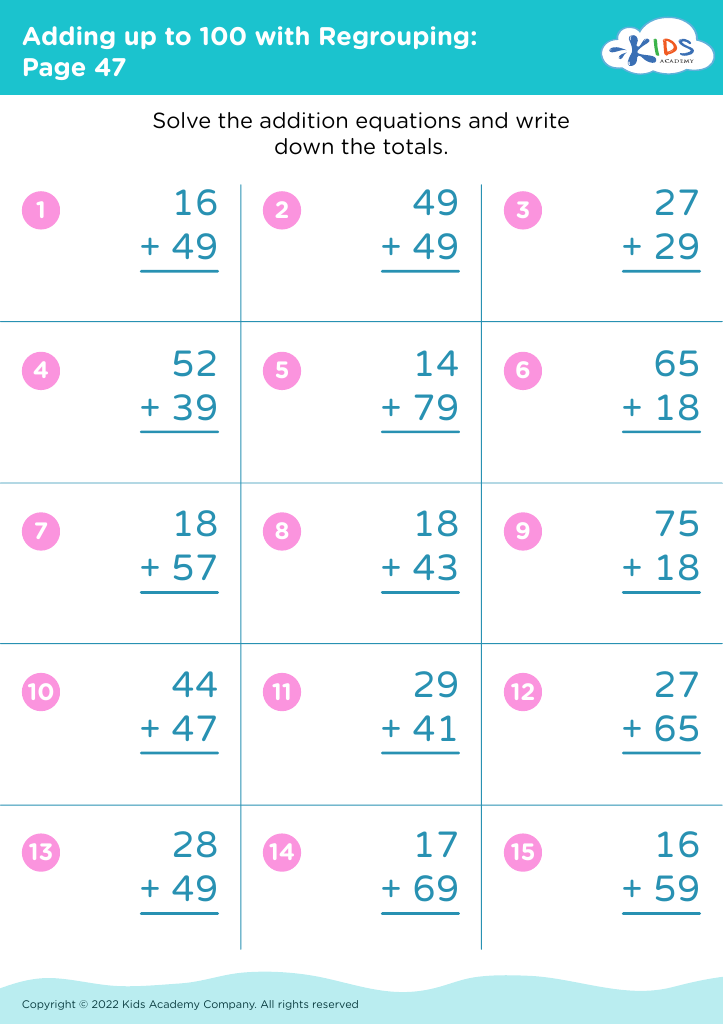
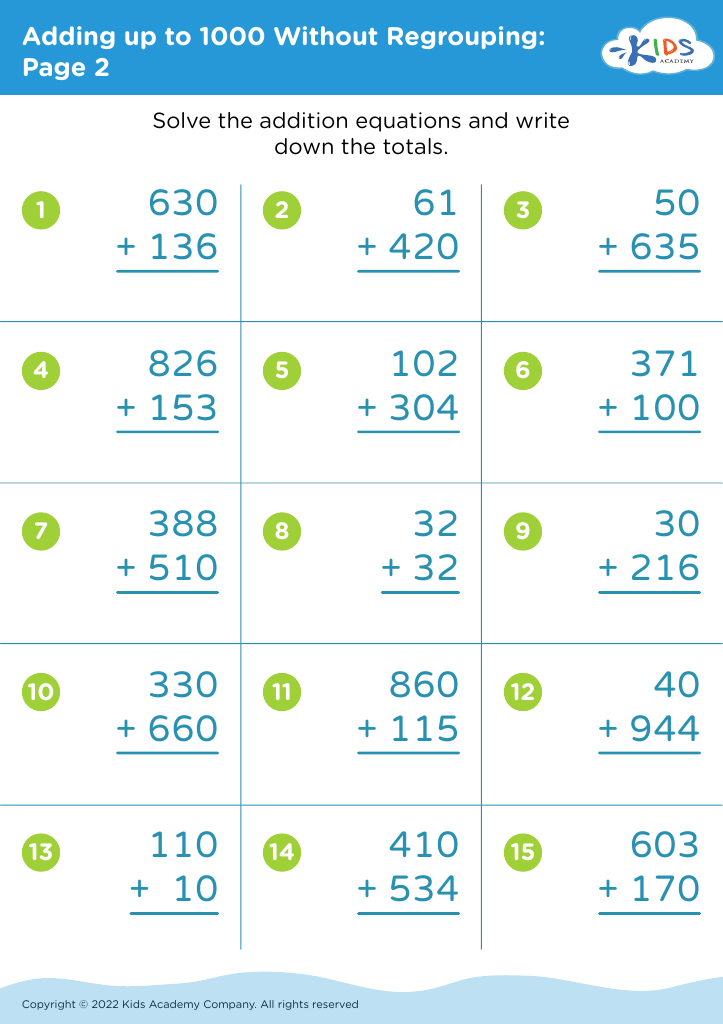
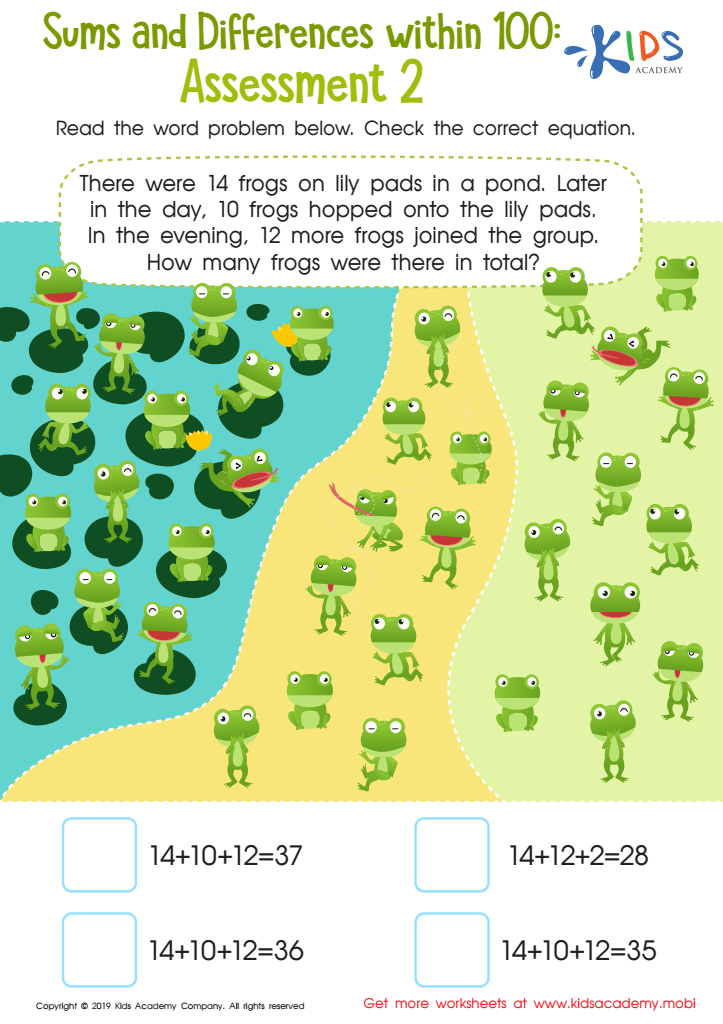
Sums and Differences Within 1 - Assessment 2 Worksheet
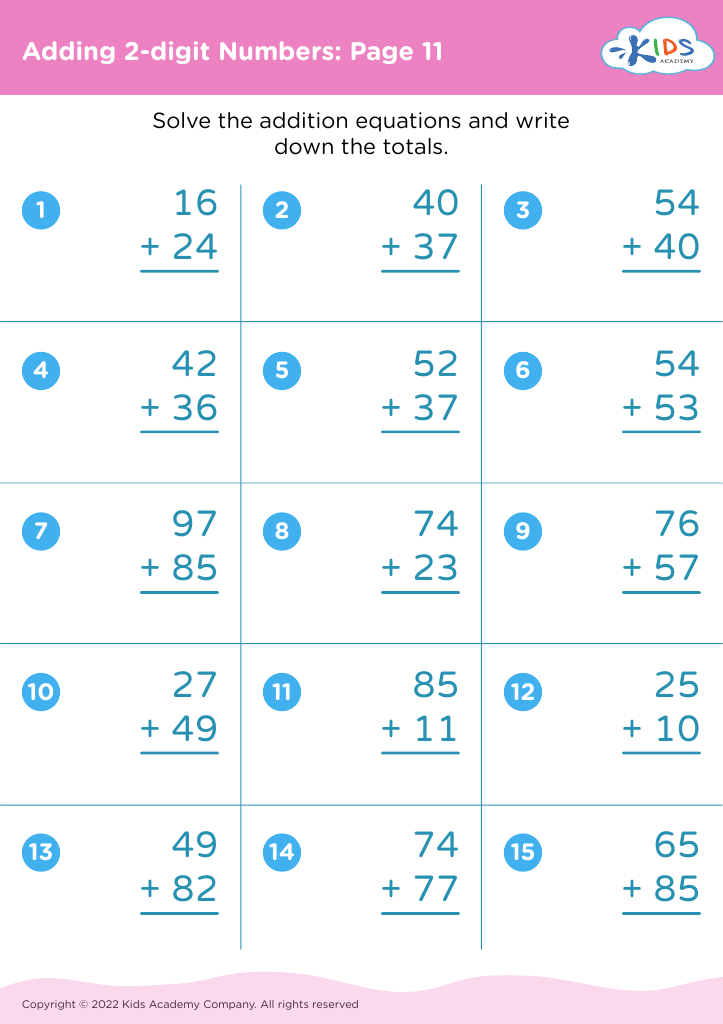
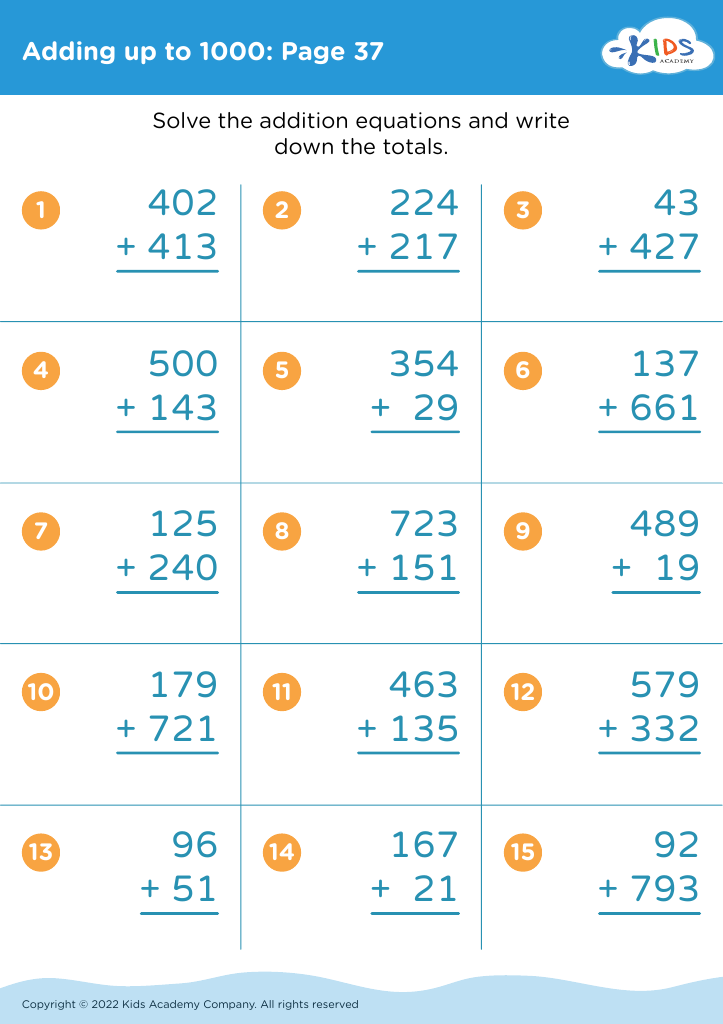
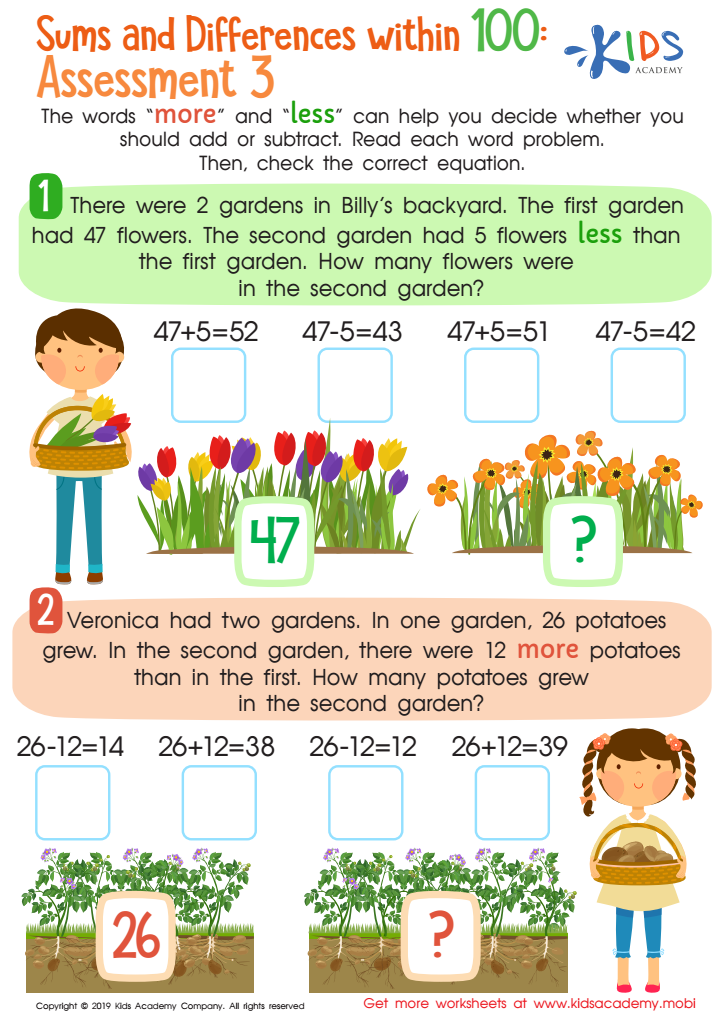
Sums and Differences Within 1 - Assessment 3 Worksheet
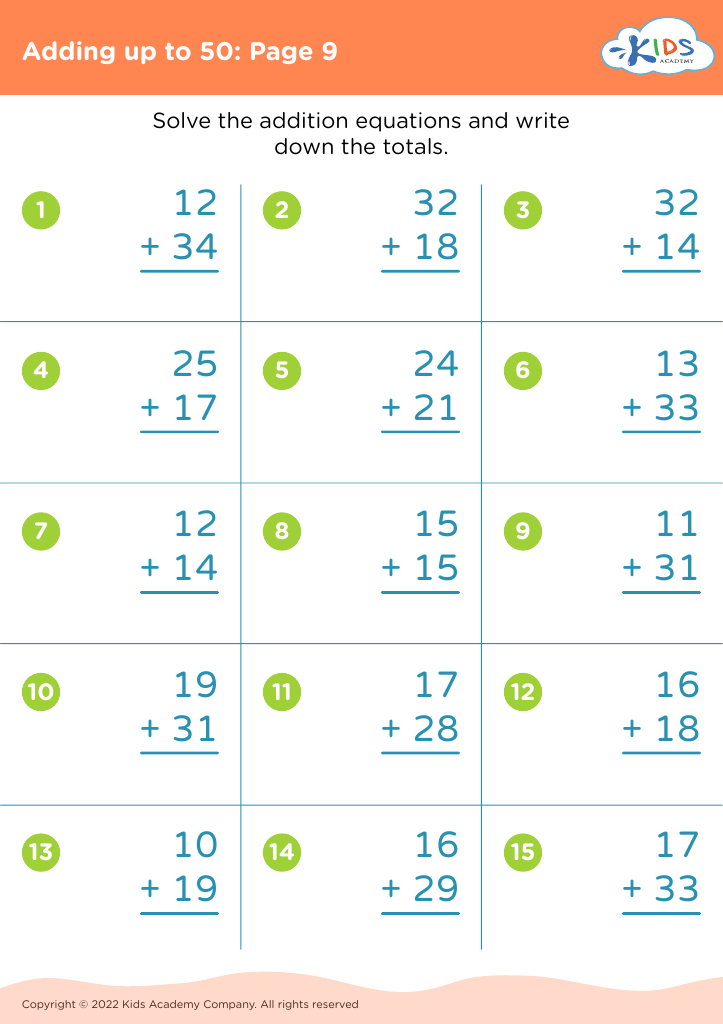
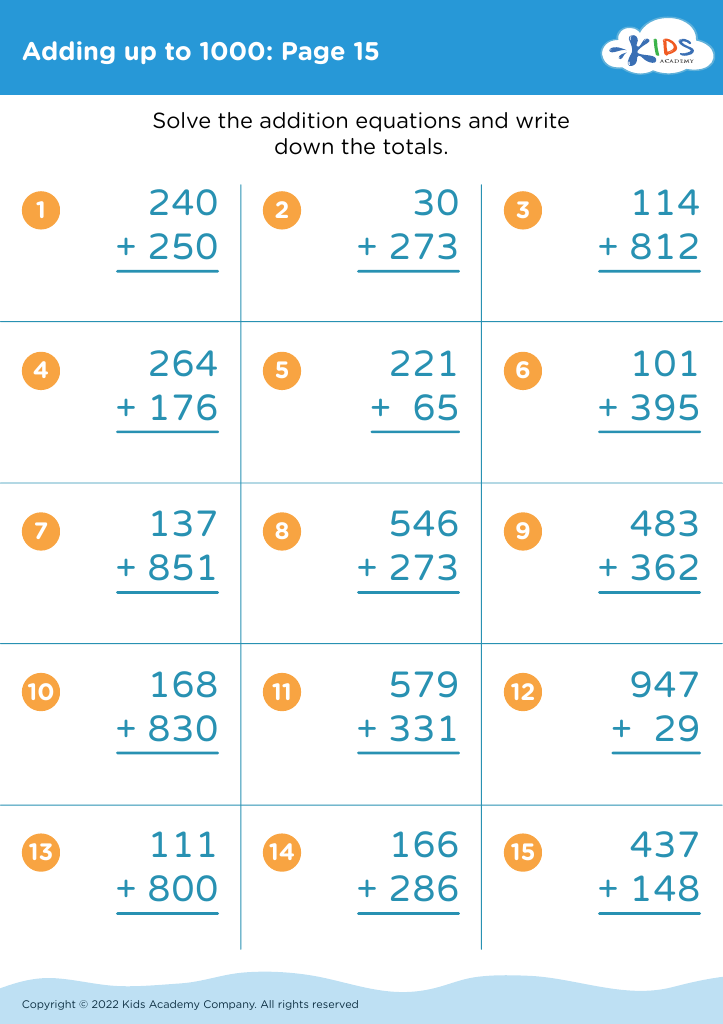
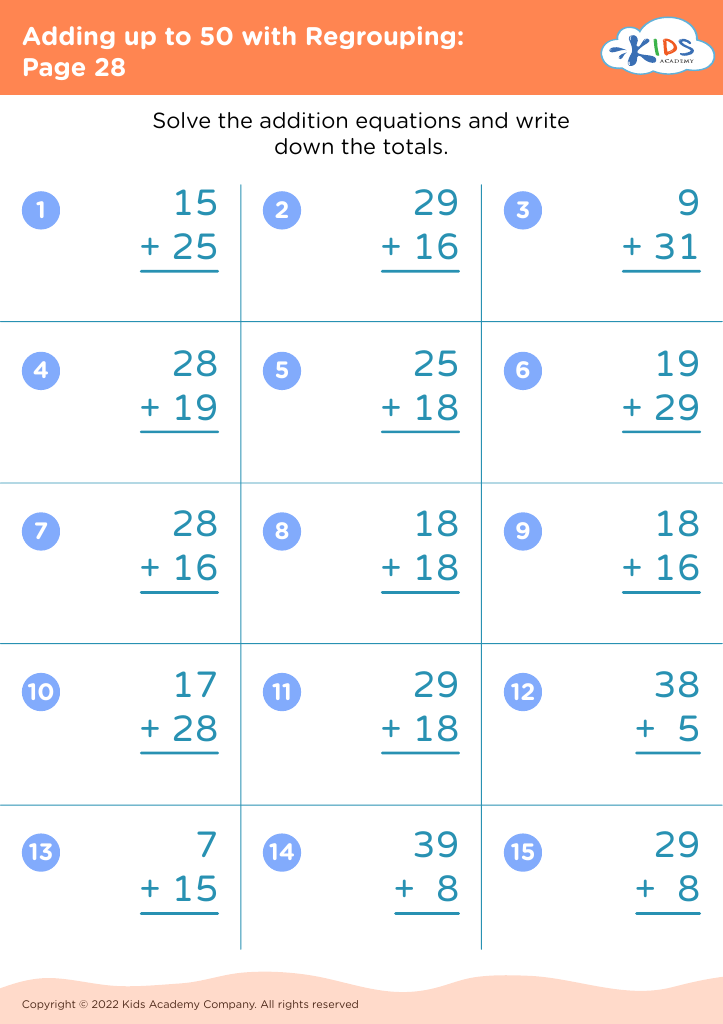
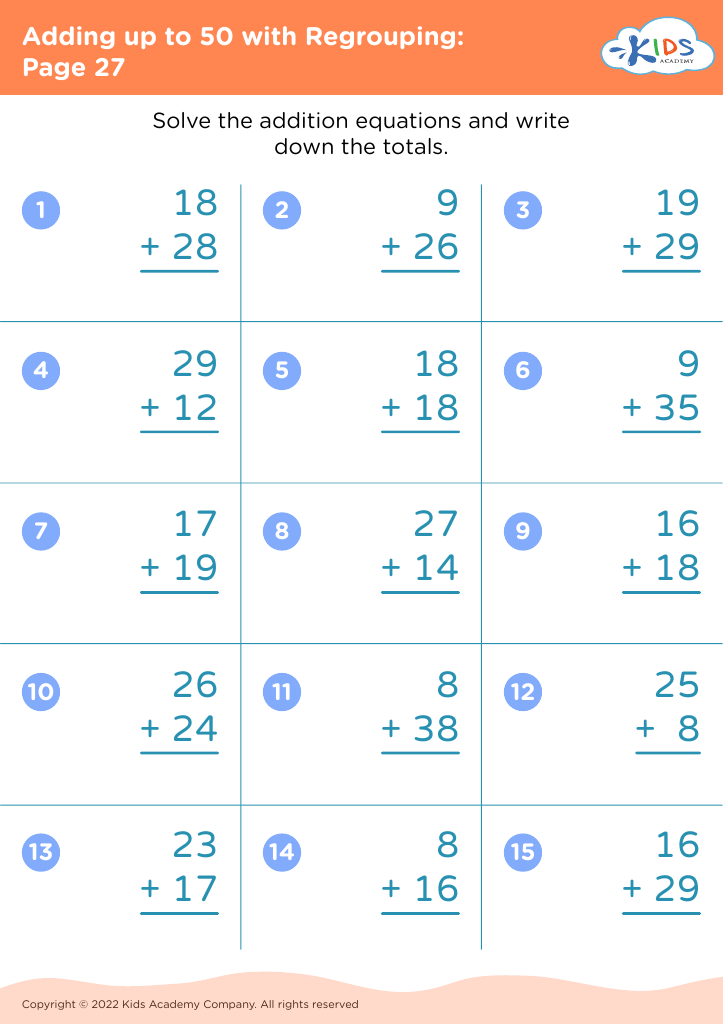
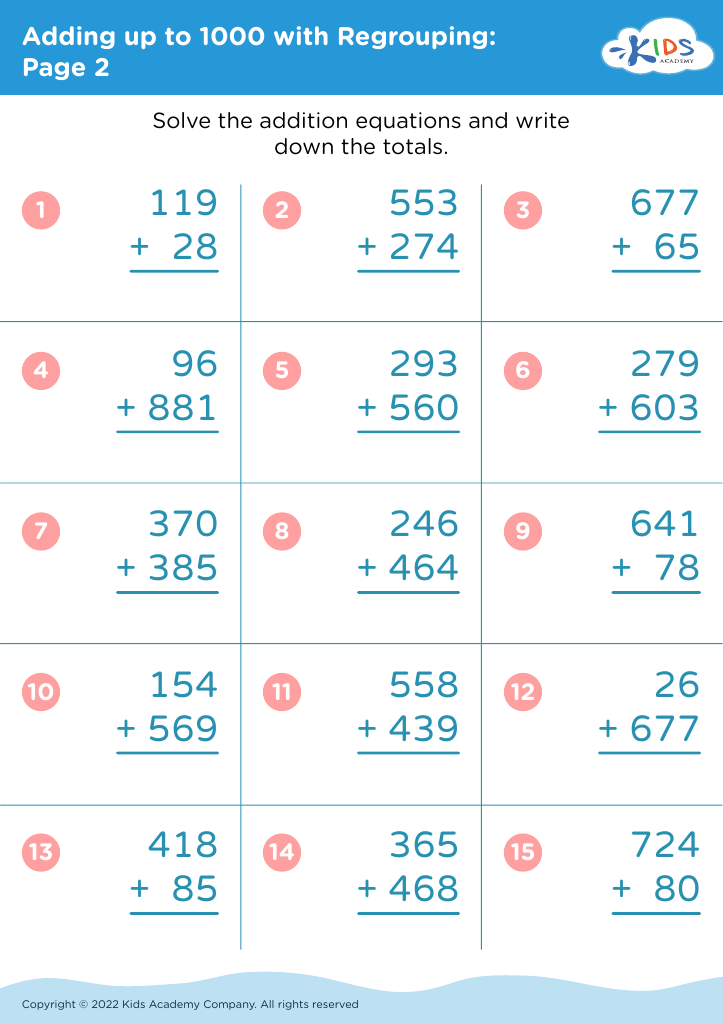








Parents and teachers should pay close attention to subtraction skills for children ages 8-9 due to its pivotal role in their overall mathematical development. At this age, children transition from basic arithmetic to more complex problem-solving and critical thinking. Mastery of subtraction is fundamental, as it forms the basis for understanding more advanced concepts such as multiplication, division, fractions, and algebra.
Subtraction skills enhance cognitive abilities, encouraging children to develop logical reasoning and analytical thinking. As they encounter real-life situations, from budgeting to measuring, strong subtraction skills enable them to make informed decisions. Additionally, proficiency in this area boosts their confidence in math, reducing anxiety and building a positive attitude toward the subject.
Moreover, the ability to understand and apply subtraction fosters resilience and persistence. Challenges in solving subtraction problems can teach children perseverance and the value of practice. For educators and parents, nurturing these skills is essential not just for academic success but also for instilling a lifelong love for learning and problem-solving. By investing in subtraction skills, they can empower children to excel both in school and in their future endeavors, laying a strong foundation for lifelong mathematical literacy.








