Understanding equations Addition Worksheets for Ages 8-9
4 filtered results
-
From - To
Enhance your child's mathematical skills with our "Understanding Equations Addition Worksheets" designed specifically for ages 8-9! These engaging worksheets focus on helping young learners grasp the concept of equations through addition. With a variety of interactive exercises, children will practice solving simple equations, reinforcing their understanding of number relationships and problem-solving techniques. The worksheets cater to different learning styles, ensuring that each child can thrive and build confidence in their math abilities. Encourage your child's love for math with these fun and educational resources that foster critical thinking and lay a strong foundation for future math success!
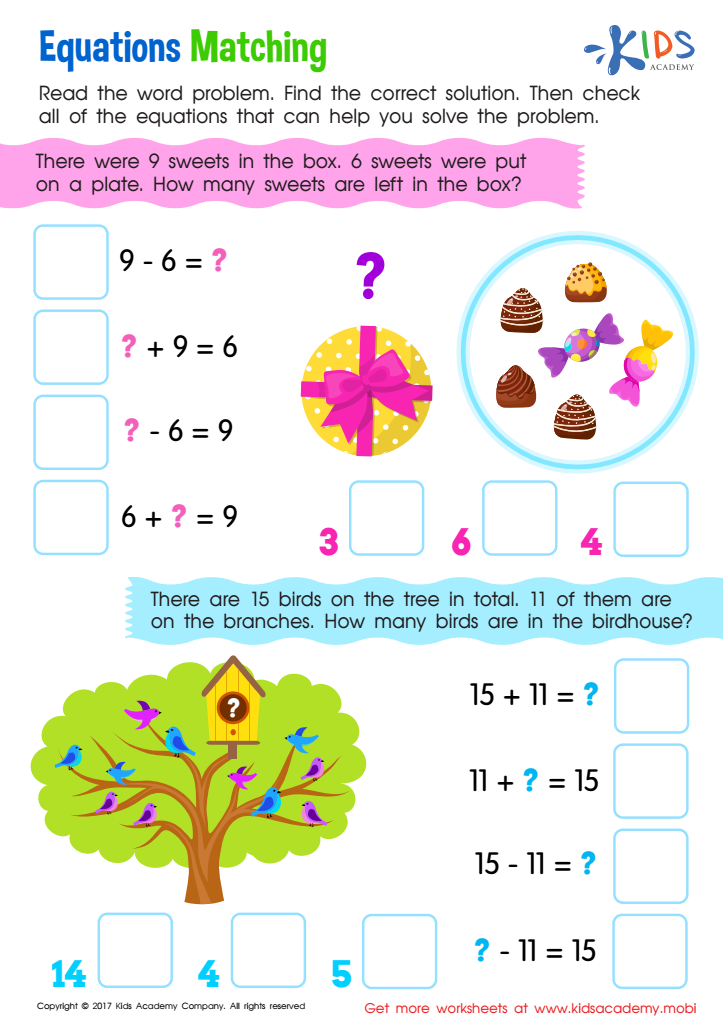
Equations Matching Word Problems Worksheet
 Assign to My Students
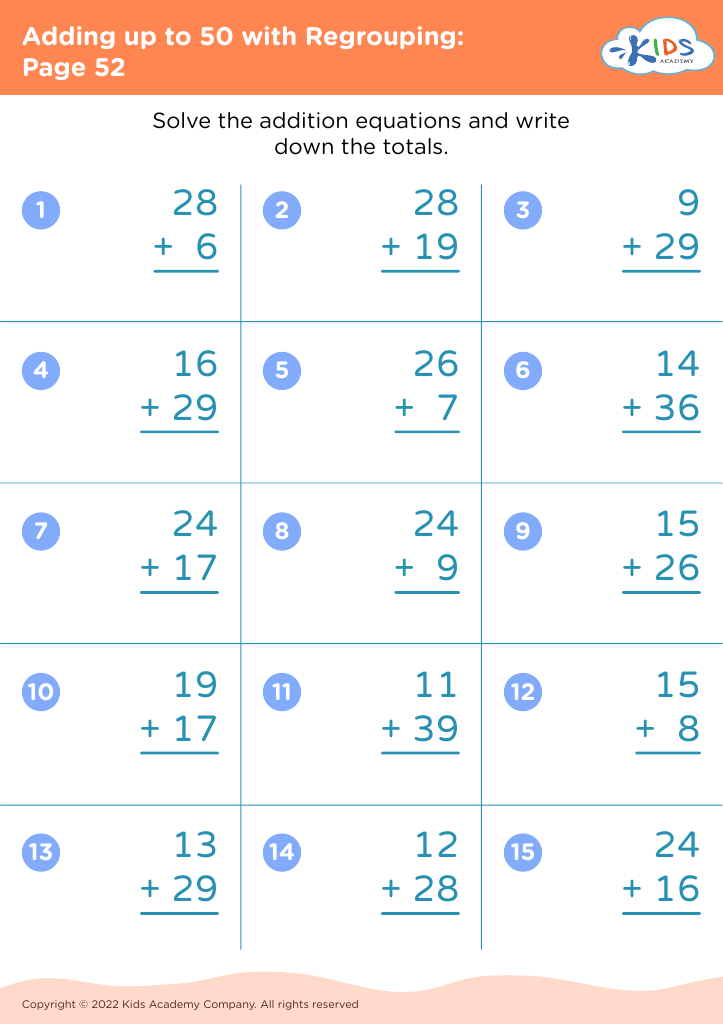
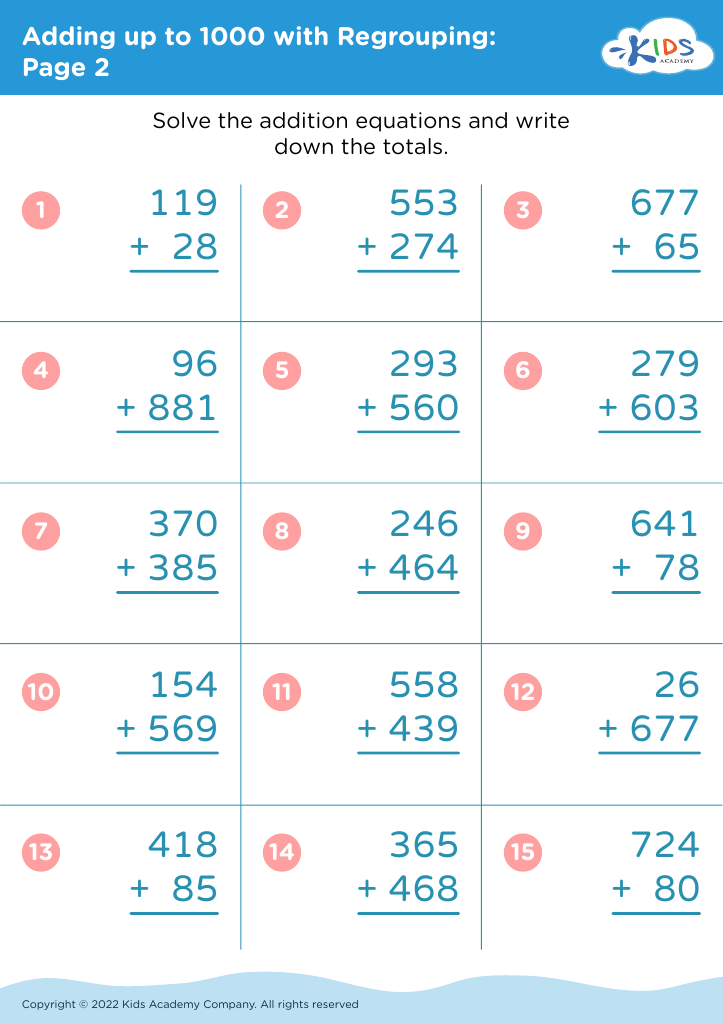
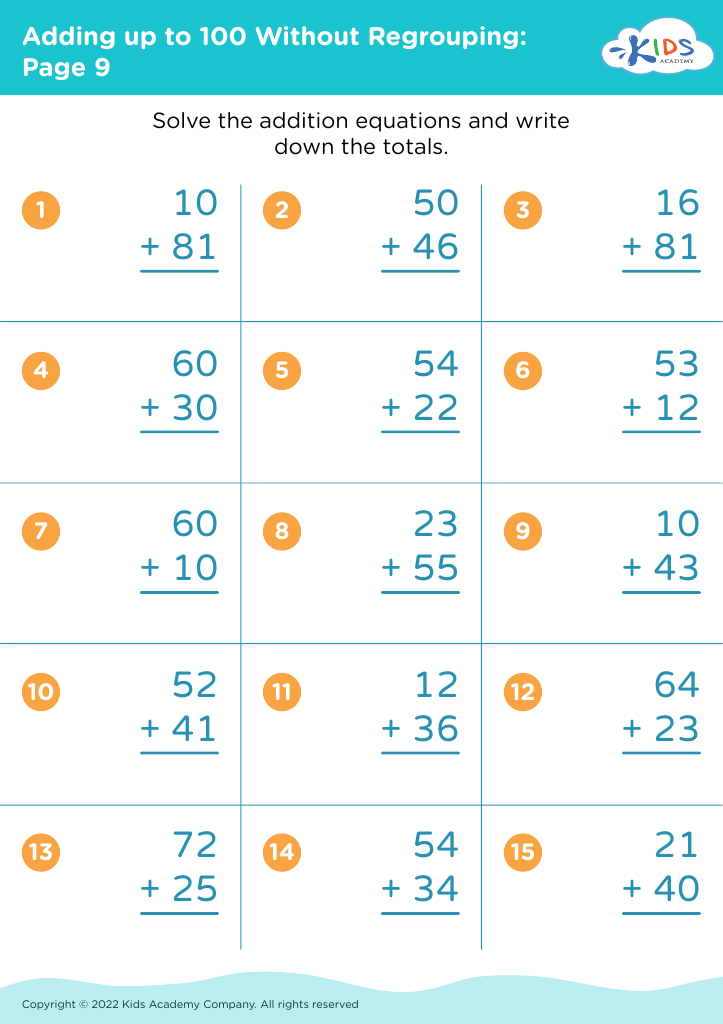








Understanding addition equations is crucial for children ages 8-9 as it forms the foundation for more complex mathematical concepts they will encounter in higher grades. At this stage, students begin transitioning from using concrete objects to represent numbers to employing abstract thinking, which is vital for problem-solving and critical thinking. Mastering addition equations enhances their ability to manipulate numbers, allowing them to explore various strategies for solving problems.
When students grasp the principles behind addition equations, they develop greater confidence in their numerical abilities. This confidence is essential, as it encourages a positive attitude toward learning math. Parents and teachers play a pivotal role by fostering an environment that complements classroom learning. Activities that promote engaging, hands-on experiences with addition equations, such as games and real-world applications, can be instrumental in reinforcing these concepts.
Moreover, early mastery of addition equations sets the stage for understanding subtraction, multiplication, and division, effectively bolstering students’ overall mathematical literacy. This foundation is particularly critical as the curriculum becomes more advanced and interconnected. By caring about their children's understanding of these equations, parents and educators can ensure that students are well-equipped for future mathematical challenges.








