Understanding Sequences Addition Worksheets for Ages 8-9
13 filtered results
-
From - To
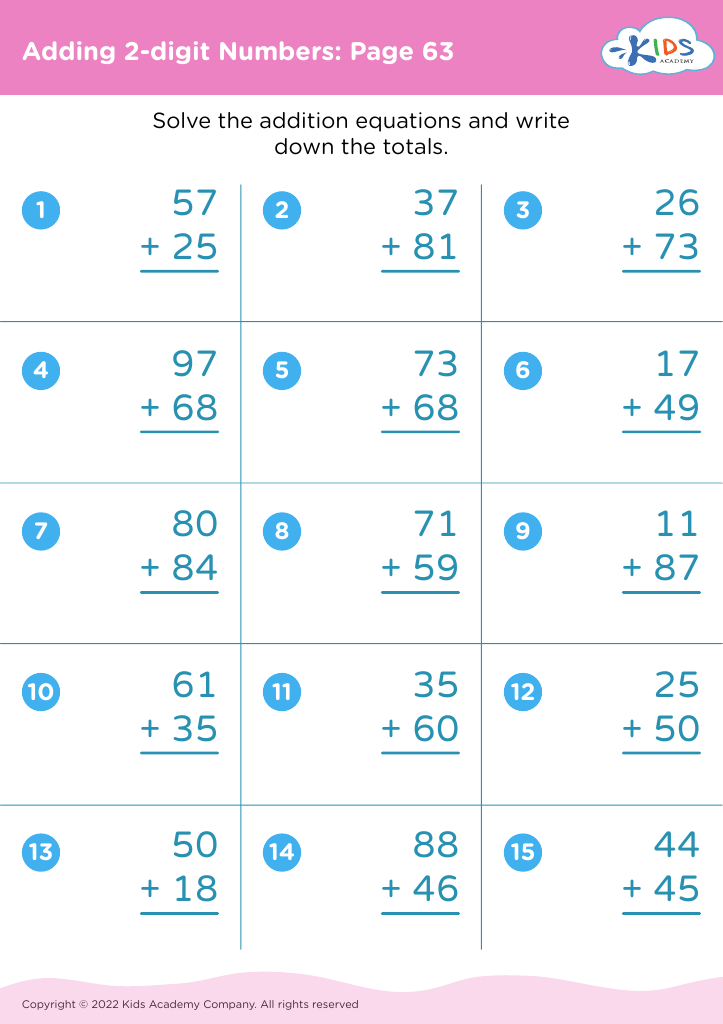
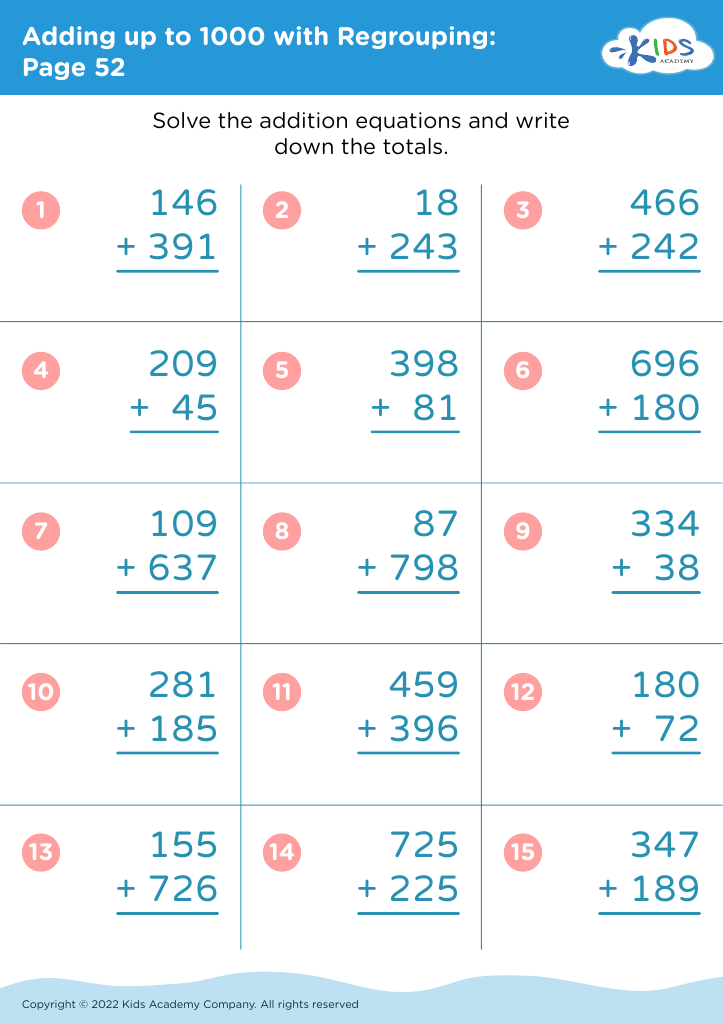
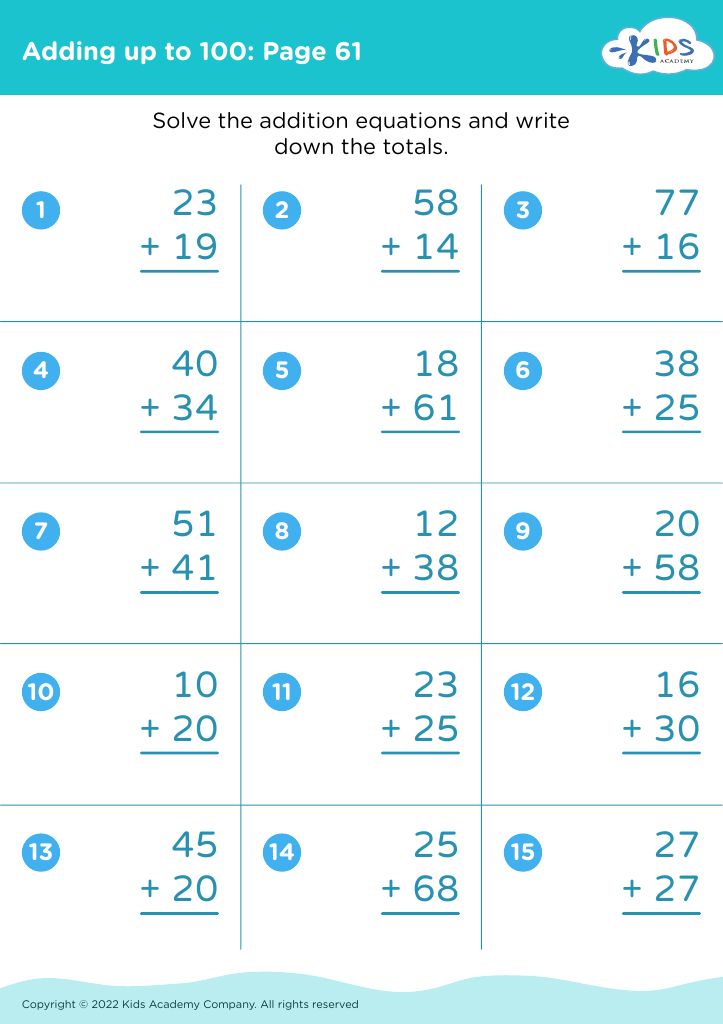
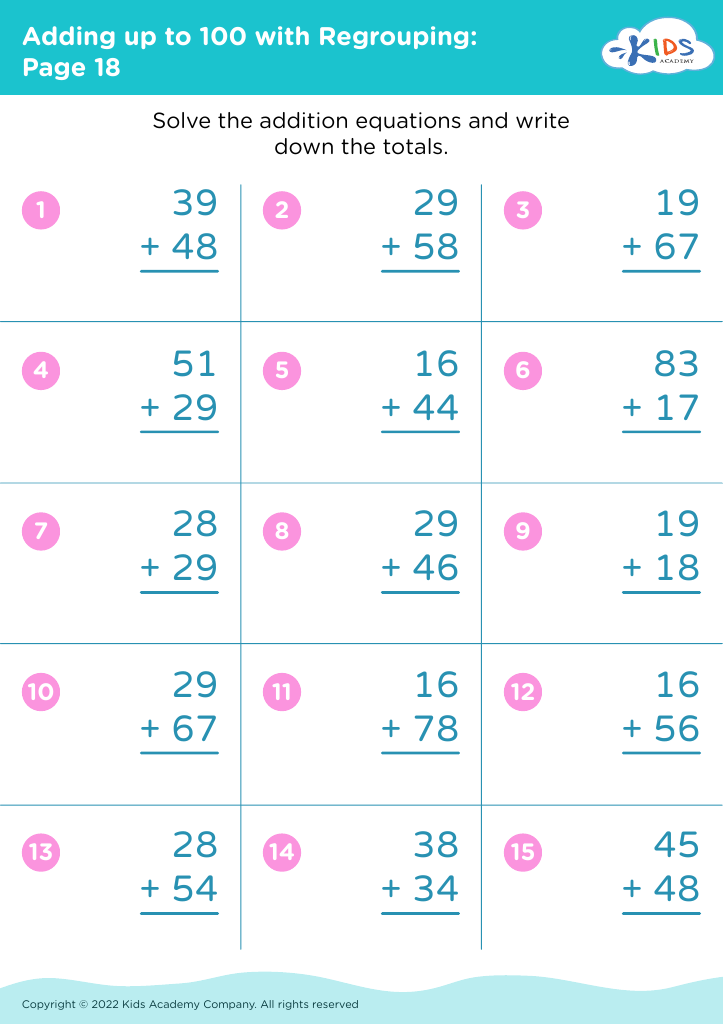
Enhance your child's math skills with our "Understanding Sequences Addition Worksheets" designed for ages 8-9. These engaging worksheets focus on building a solid foundation in sequence addition, allowing children to grasp the concept of number patterns and progressive addition. Interactive exercises include identifying sequences, continuing patterns, and solving problems that strengthen critical thinking skills. Perfect for reinforcing classroom learning or as supplemental materials at home, our worksheets cater to various learning styles, ensuring every child can thrive. Help your child flourish in math while having fun—explore our collection today and watch their confidence grow!
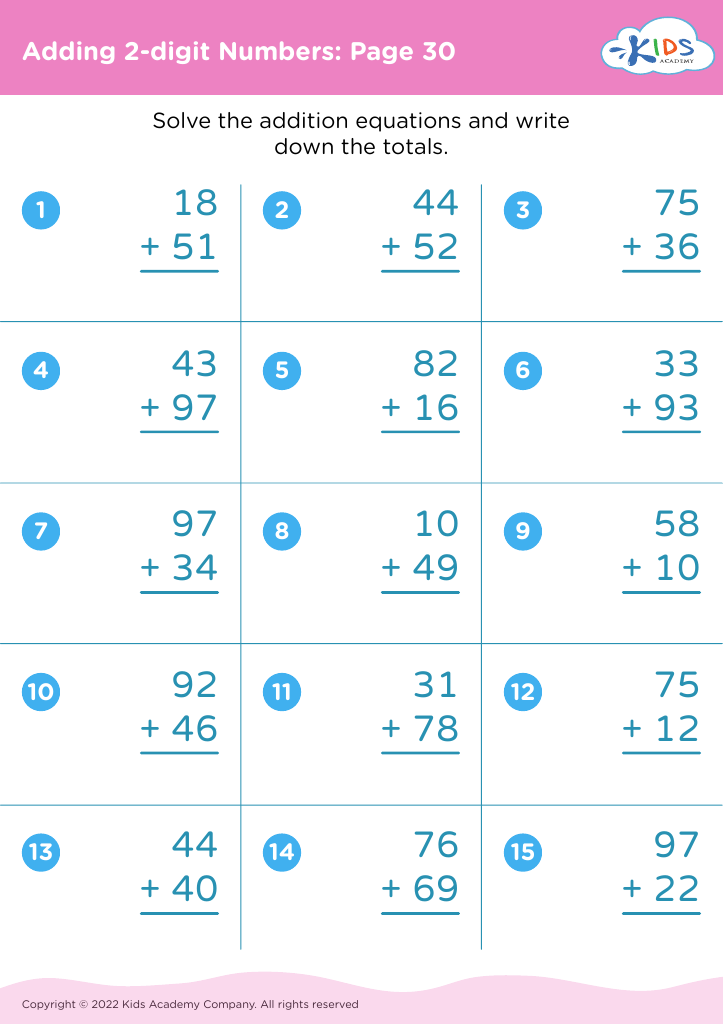
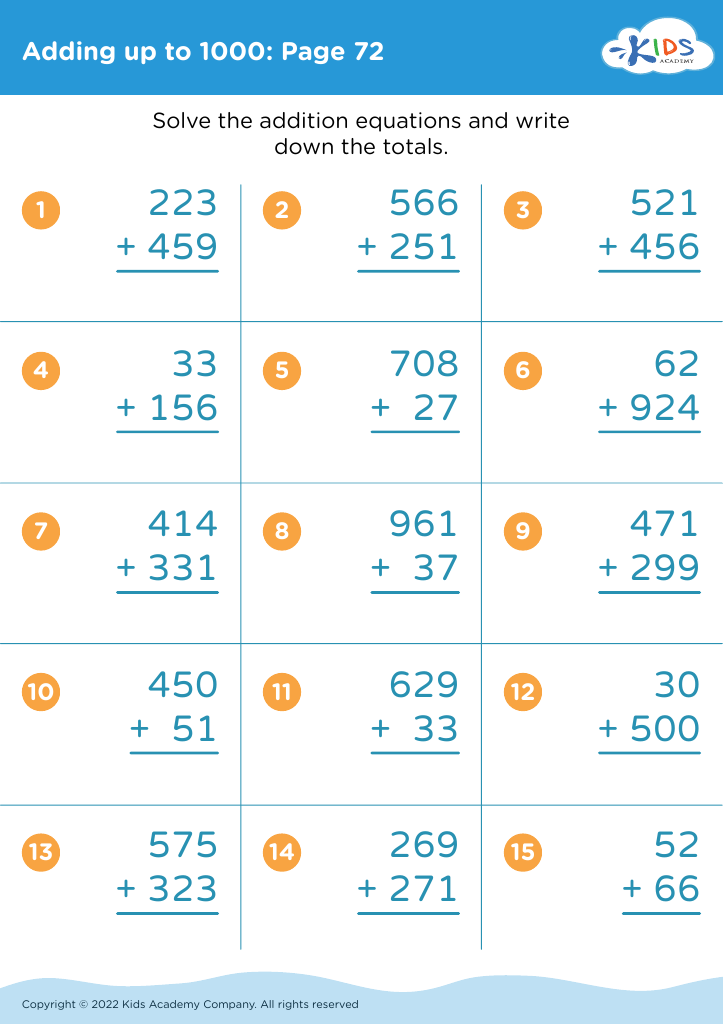
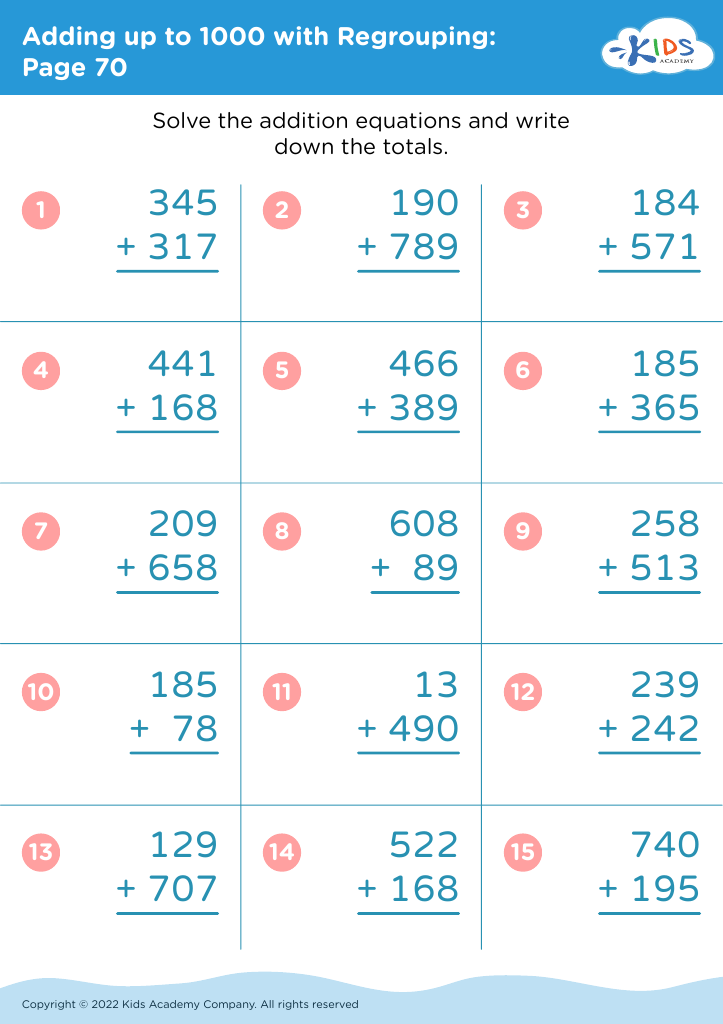
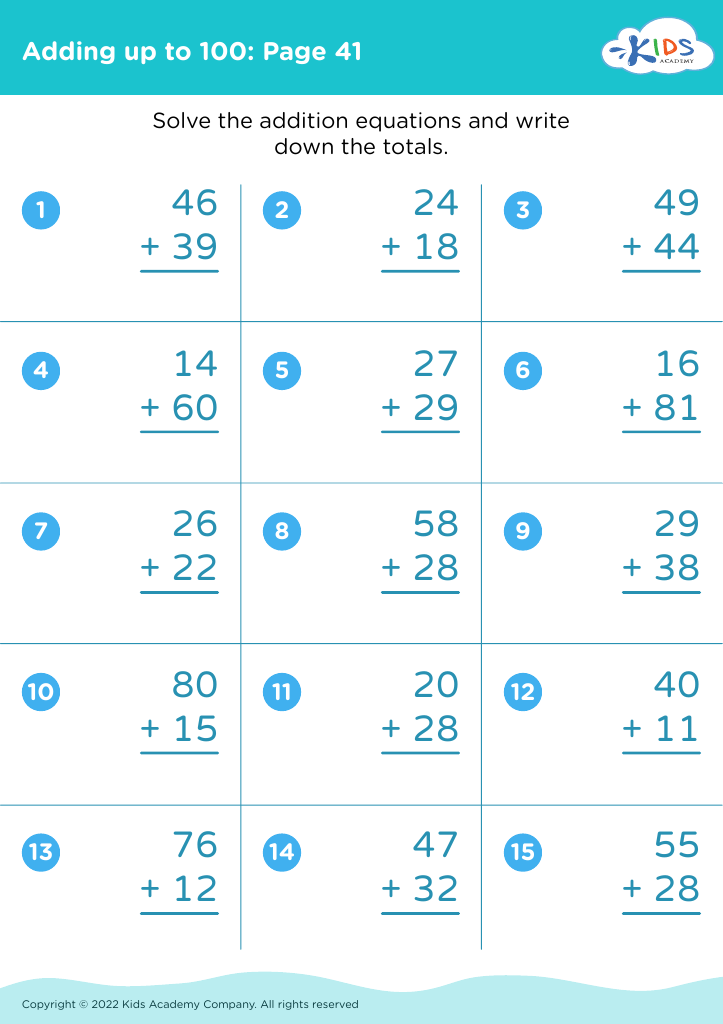
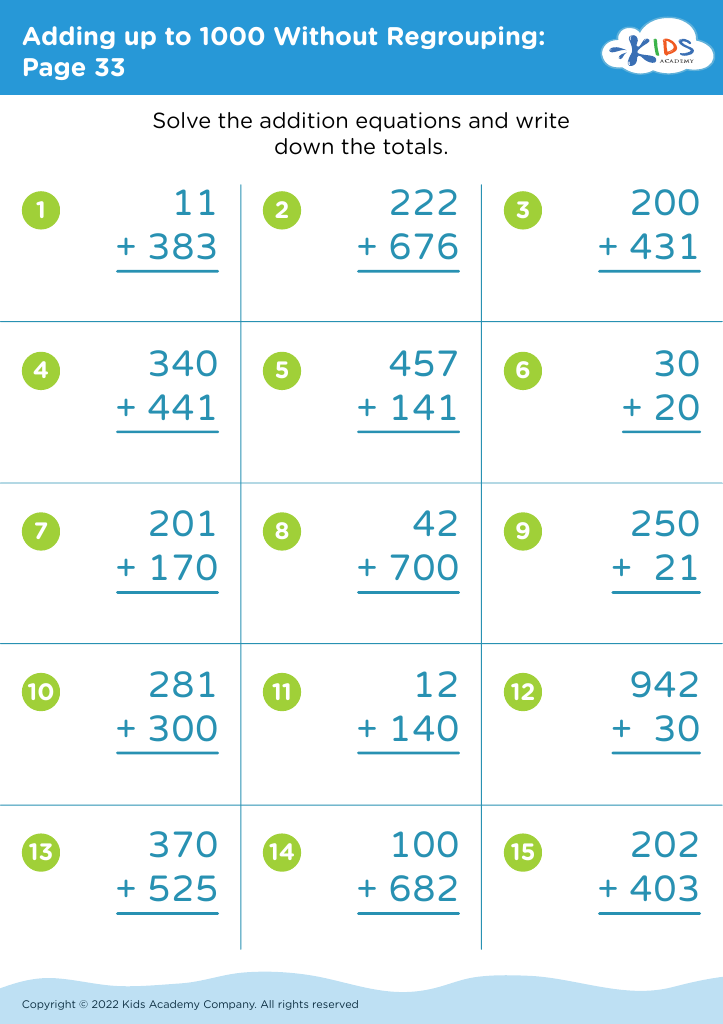








Understanding sequences in addition is crucial for children aged 8-9 as it lays a foundation for more advanced mathematical concepts, such as multiplication, algebra, and problem-solving strategies. At this age, children are developing their number sense and learning to recognize and create patterns. Sequencing involves recognizing the order of numbers and understanding relationships between them, which is essential in both everyday situations and more complex mathematical tasks.
When parents and teachers emphasize sequences, they help children enhance their critical thinking and analytical skills. Recognizing patterns can make addition more intuitive and engaging, allowing children to solve problems more efficiently. For instance, knowing that adding 5 to a number repeatedly results in a predictable sequence can simplify calculations and make them less daunting.
Furthermore, understanding sequences promotes confidence in mathematics, reducing anxiety and fostering a positive attitude toward learning. This foundational skill supports overall cognitive development and can spark interest in more challenging areas of mathematics as children progress in their education. By investing time in teaching sequences, parents and teachers equip children with the essential tools needed to thrive academically and develop a lifelong appreciation for math.








